

OpenEden is a unified Real World Asset (RWA) protocol built to simplify how users access institutional-grade U.S. Treasury yields on-chain. It combines tokenized Treasury bills with transparent on-chain mechanics to deliver secure, liquid, and yield-bearing products. The project focuses on bridging traditional finance with blockchain while maintaining full regulatory compliance and transparency. As an RWA leader, OpenEden empowers individuals, institutions, and DeFi protocols to earn stable yields from real-world assets without leaving the blockchain. With the native EDEN token powering governance and incentives, it aims to become the go-to infrastructure for tokenized Treasury products in Web3.
Read more: Top 10 Blockchains for Real‑World Asset (RWA) Tokenization Projects in 2026
Key Takeaways
- OpenEden tokenizes U.S. Treasuries to bring institutional-grade yield on-chain.
- Users receive yield-bearing tokens like TBILL that generate real-world returns.
- EDEN is the governance and utility token of the OpenEden ecosystem.
- The protocol emphasizes transparency, compliance, and seamless integration with DeFi.
- BingX stands as the top choice for trading OpenEden (EDEN) on spot and perpetual futures.
What is OpenEden (EDEN)?
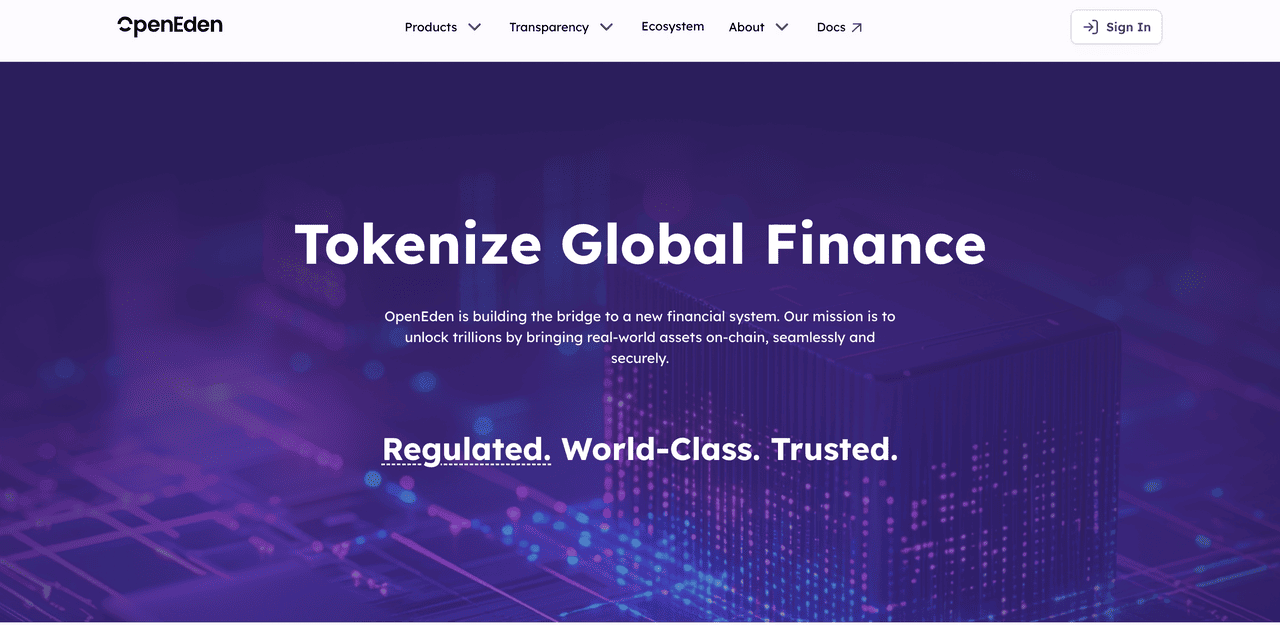
OpenEden (EDEN) is a Real World Asset (RWA) protocol that provides tokenized access to U.S. Treasury securities on blockchain networks. It allows users to deposit stablecoins and receive yield-bearing tokenized Treasuries that generate real-world returns while remaining fully liquid and usable in DeFi. Instead of traditional finance’s slow processes and high minimums, OpenEden (EDEN) delivers institutional-grade Treasury exposure directly on-chain with daily yield accrual and transparent proof-of-reserves. The protocol is backed by regulated custodians and focuses on security, compliance, and accessibility for both retail and institutional participants. A core aspect of OpenEden (EDEN) is its role as a bridge between TradFi and DeFi, enabling users and protocols to earn stable, low-risk yields from real-world assets.
Read More: A Beginner's Guide to Stablecoins and How They Work (2026)
What are the Key Features of OpenEden?
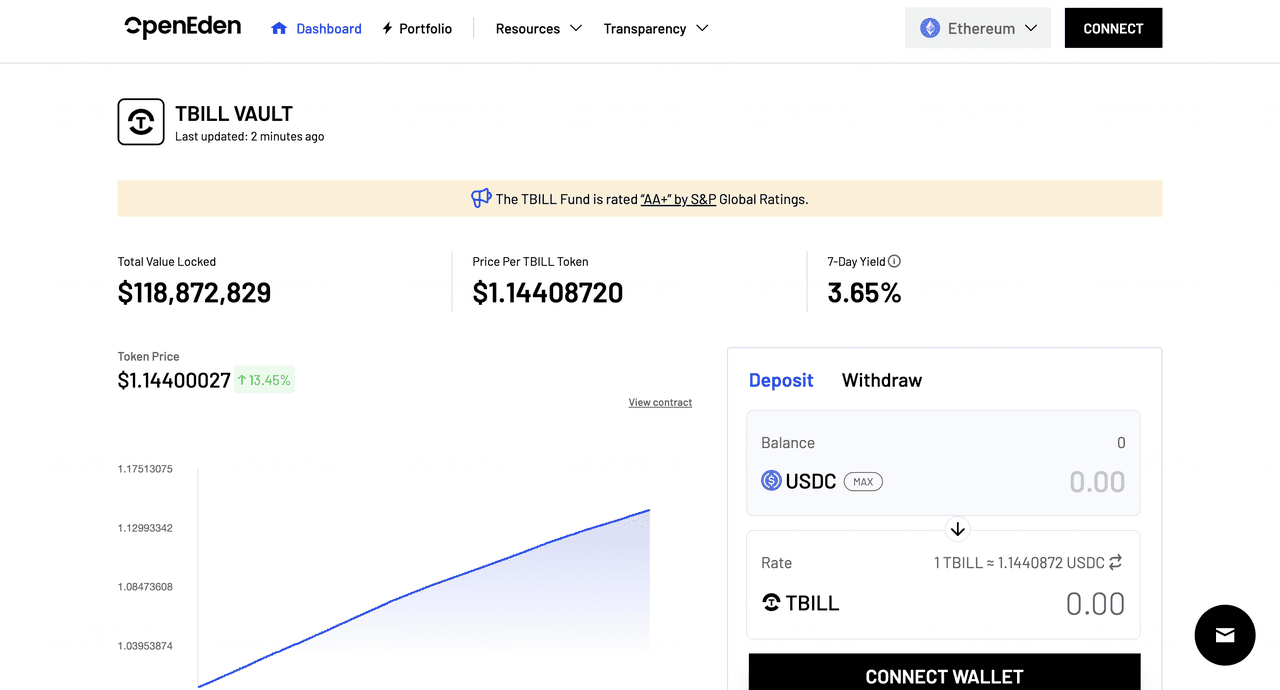
OpenEden (EDEN) stands out through several advanced capabilities tailored for RWA users. Tokenized U.S. Treasuries (such as TBILL) provide daily accruing yield while remaining fully transferable and composable in DeFi. The protocol maintains high transparency with regular attestations and proof-of-reserves. Additional features include seamless integration with major blockchains, institutional-grade custody, and governance through the EDEN token. OpenEden products are designed for capital efficiency, allowing users to earn yield without locking up assets or leaving the blockchain ecosystem.
What are the Use Cases of OpenEden?
OpenEden (EDEN) offers several practical and high-impact use cases. Retail users can earn competitive Treasury yields directly on-chain with full liquidity. DeFi protocols integrate OpenEden products as collateral or yield sources to enhance capital efficiency. Institutions use OpenEden (EDEN) for compliant on-chain Treasury exposure and portfolio diversification. Developers build applications on top of OpenEden’s tokenized assets for lending, derivatives, and structured products in the growing RWA sector.
OpenEden Token Breakdown
- zTBILL: Tokenized exposure to short-dated U.S. T-Bills, minted with USDC and redeemable at NAV by whitelisted wallets.
- USDO: Yield-bearing stablecoin pegged to 1:1 USD that distributes T-Bill yield via daily rebasing.
- cUSDO: Wrapped, non-rebasing USDO that accrues the same yield internally for venues that do not support rebasing.
- EDEN: Ecosystem token for governance, incentives, growth programs, and potential fee perks.
- xEDEN: Staked receipt token you get by staking EDEN to unlock program utilities.
What are the Tokenomics of EDEN token?
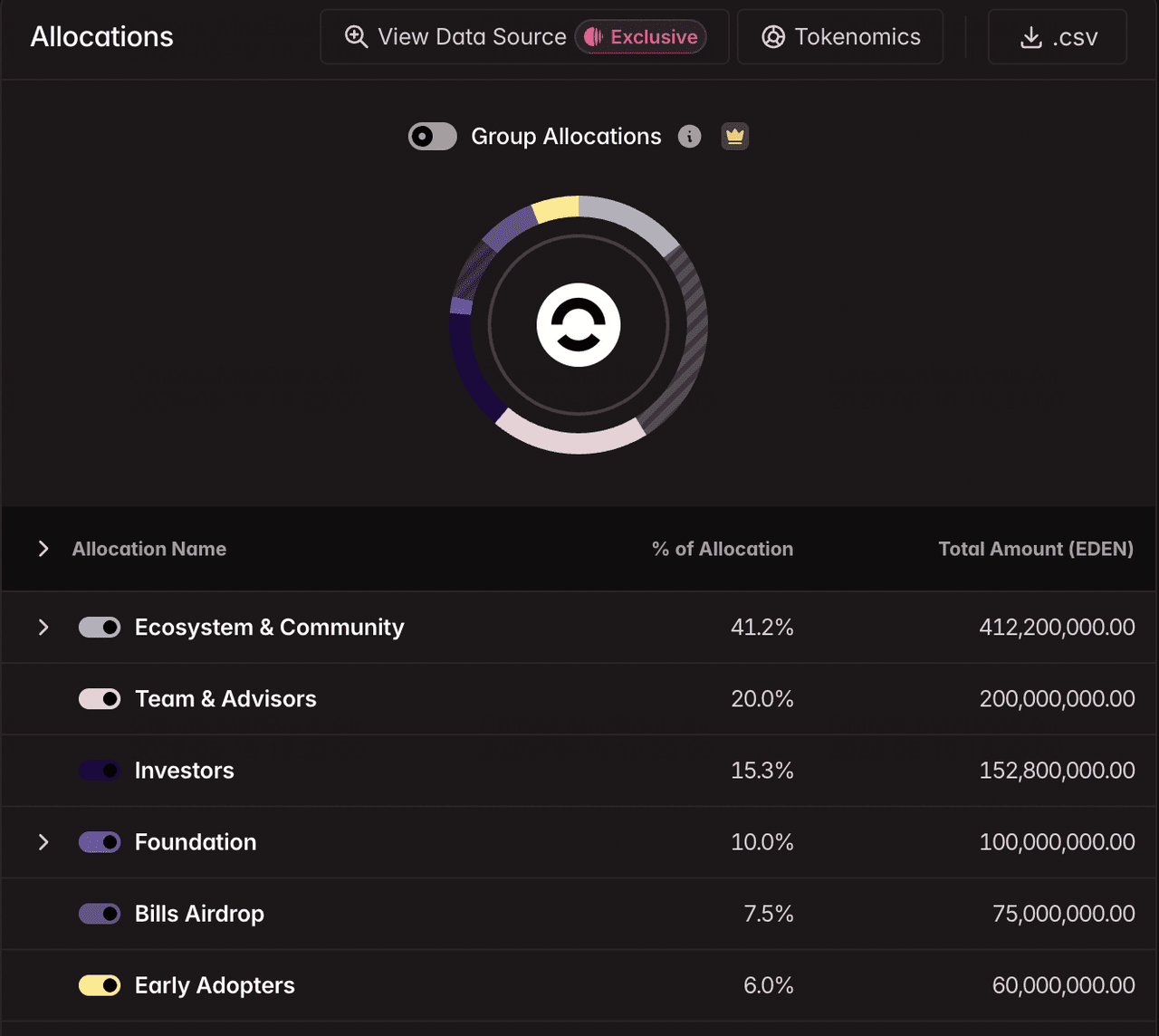
Source: OpenEden on Tokenomist
The EDEN token is the native governance and utility token of the OpenEden ecosystem. It is used for participating in protocol governance, staking to earn incentives, and accessing premium features. The tokenomics are designed to align long-term incentives between users, liquidity providers, and the protocol’s sustainable growth. OpenEden’s token model uses a capped supply of 1,000,000,000 EDEN. The allocation is built to balance community growth, long term ecosystem funding, contributor incentives, and regulated operations around its real world asset products. Rather than an emissions schedule, the design relies on clearly defined buckets with specific unlocks and vesting. A holder bonus mechanism applies to certain distributions to encourage gradual claiming and reduce short term churn.
Read more: What Is Ethena’s USDe Yield‑Bearing Stablecoin and How Does It Work?
EDEN Token Allocation
- Ecosystem & Community: 41.22%: Unlocked at TGE. Budgeted for staking rewards, liquidity incentives, listings support, liquidity provisioning, and other participation programs. This pool also includes a 2,500,000 EDEN contribution to the Bills. Unlocked at TGE: 34.75%.
- Team & Advisors: 20.00%: Minimum 6 month cliff, then linear vesting over 24 months. Reserved for builders and advisors.
- Investors: 15.28%: Minimum 6 month cliff, then linear vesting over 24 months. Reserved for strategic capital partners who helped bootstrap development.
- Foundation: 10.00%: 20% unlocked, remainder subject to cliff and vesting. Intended to support operations, grants, governance aligned initiatives, potential token buyback mechanisms, and future expansion.
- Bills Airdrop: 7.50%: Distributed to Bills Campaign participants. The EDEN Hodler Bonus mechanism applies. Unlocked at TGE: 21.3%.
- Early Adopters: 6.00%: Reserved for contributors since 2023 who drove early adoption and TVL growth. A mechanism similar to the Bills Airdrop applies. Unlocked at TGE: 10%
How to Buy EDEN on BingX: A Step-by-Step Guide
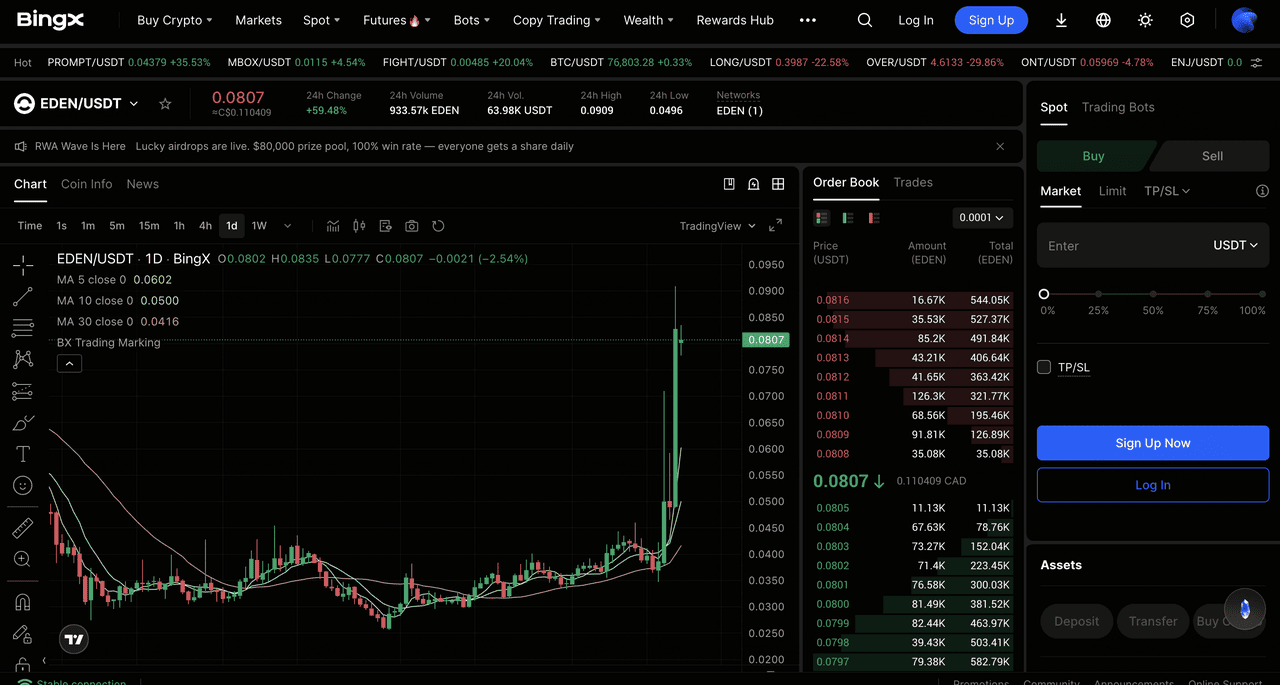
Source: OPENEDEN/USDT Trading Pair on BingX
You can access EDEN through the spot market and use them within their respective ecosystems. Here's a step-by-step guide on how to buy EDEN on BingX Spot Market:
Step 1: Log in or Create a BingX Account
Log in to your BingX account. If you don't have one, you can register using an email or mobile number. Completing identity verification (KYC) is required for full access to trading features.
Step 2: Deposit Funds
Go to the Buy Crypto section to deposit funds into your account. BingX supports several payment options such as bank transfer, credit or debit card, and peer-to-peer (P2P) transactions.
Step 3: Find the OPENEDEN/USDT Pair
Navigate to the Spot trading section and search for OPENEDEN/USDT and select the pair to view the trading interface. Use BingX AI tools to analyze EDEN trends and make smarter trading decisions.
Step 4: Place Your Order
Choose between a Market Order to buy at the current price or a Limit Order to set your preferred entry. Enter the amount and confirm the order.
How to Trade EDEN Futures on BingX
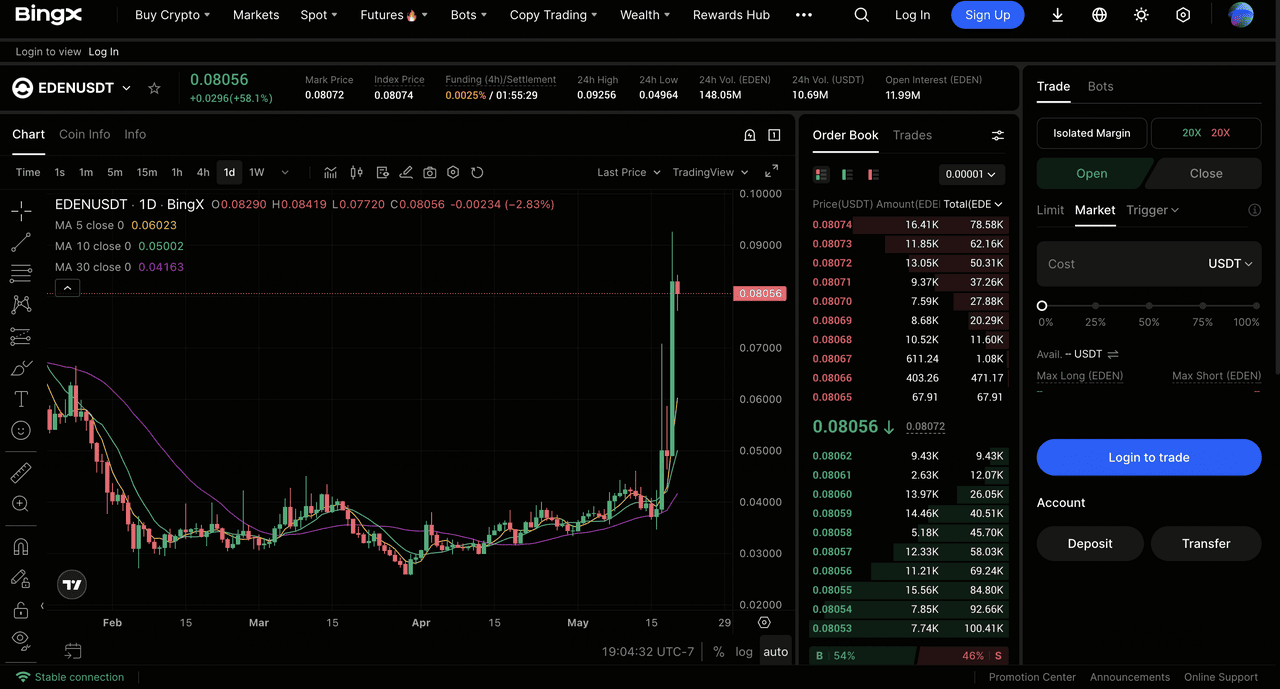
BingX, a user-friendly centralized exchange, supports EDEN trading with pairs like EDEN/USDT and offers tools for efficient purchases. Amid the hype, the token is already listed on major centralized exchanges, including BingX, where users can trade OPENEDEN/USDT perpetuals in the futures market. Follow these steps to trade EDEN securely:
Step 1: Create and Fund Your BingX Futures Account
Sign up on BingX and complete identity verification. Deposit USDT into your account and transfer your funds into your Futures Wallet.
Step 2: Open the Futures Trading Interface
Navigate to the Futures trading section and search for "EDEN" or the OPENEDEN/USDT perpetual contract trading pair. Review the current price, chart, and market data for informed decision-making.
Step 3: Choose Long or Short
- Go long if you expect EDEN's price to rise
- Go short if you expect EDEN's price to decrease
Step 4: Set Leverage and Order Type
Adjust leverage based on your risk tolerance. Choose market order for instant execution or limit order for a specific price entry.
Step 5: Manage Risk
Always use stop-loss (SL) and take-profit (TP) to manage downside risk. Monitor margin levels to avoid liquidation. This approach mirrors traditional gold futures trading, but with crypto-native speed, leverage, and flexibility. Monitor your position using BingX's advanced charting tools, set price alerts, and manage risk with stop-loss orders given the high volatility of memecoins. Always consider exchange fees, market conditions, and your risk tolerance before trading.
Read more: Risk Management in Crypto Trading: 7 Rules Every Trader Must Know
Conclusion: Why You Should Trade OpenEden (EDEN) on BingX
OpenEden (EDEN) represents a leading advancement in Real World Assets by delivering secure, transparent, and liquid access to U.S. Treasury yields on-chain. Through tokenized products and strong compliance standards, it bridges traditional finance with DeFi while offering competitive returns and capital efficiency. BingX serves as the top choice for trading OpenEden (EDEN) on both spot and perpetual futures markets, combining ease of use, robust liquidity, leverage options, and trusted infrastructure. Whether earning yield, hedging exposure, or participating in the RWA narrative, BingX enables efficient entry and management. As tokenized real-world assets continue to grow, integrating innovative RWA protocols like OpenEden (EDEN) with reliable centralized platforms such as BingX offers users greater flexibility, security, and confidence in navigating this expanding sector of the crypto market.
Related Reading
- Top 10 Blockchains for Real‑World Asset (RWA) Tokenization Projects in 2026
- What Is Chainlink: the Oracle Network Powering DeFi, RWAs, and the Future of Finance?
- What Is Pendle Finance? A Beginner’s Guide to V2 Yield Tokenization and Boros Yield-Trading Platform
- What is Plume Network: The Future of Real World Asset Integration