

ShareX Network (SHARE) is a pioneering Web3 infrastructure protocol designed to bridge the multi-billion dollar sharing economy with on-chain liquidity. By integrating Internet of Things (IoT) hardware, such as power bank stations, e-scooters, and vending machines, with decentralized settlement layers, ShareX allows users to earn rewards and participate in the real-world economics of physical service networks.
As of May 2026, the ShareX ecosystem is rapidly scaling its mission to become the financial backbone of ShareFi. With a footprint spanning 22 countries and over 540,000 devices shipped, the protocol provides a transparent, revenue-backed alternative to traditional asset management.
This article examines how ShareX tokenizes physical hardware, the mechanics of its Deshare Protocol, the utility of the SHARE token, and how to trade it on BingX.
What Is ShareX Network (SHARE) ShareFi Protocol?

Categories of sharing economy supported by ShareX Network | Source: ShareX docs
ShareX Network (SHARE) is a decentralized infrastructure layer that connects sharing economy operators with Web3 participants. Unlike purely digital projects, ShareX is built on the physical backbone of urban convenience: unattended retail and rental hardware.
The platform's core thesis is that the sharing economy suffers from data silos and centralized trust issues. ShareX solves this by offering:
- Standardized Onboarding (Deshare Toolkit): Allowing existing Web2 sharing brands to connect their hardware directly to the blockchain.
- Verifiable Settlement: Ensuring that every rental or transaction is recorded as tamper-proof on-chain data.
- Revenue-Based RWAs: Turning physical devices into liquid assets that generate yields based on actual usage.
How Does the ShareX Ecosystem Work?
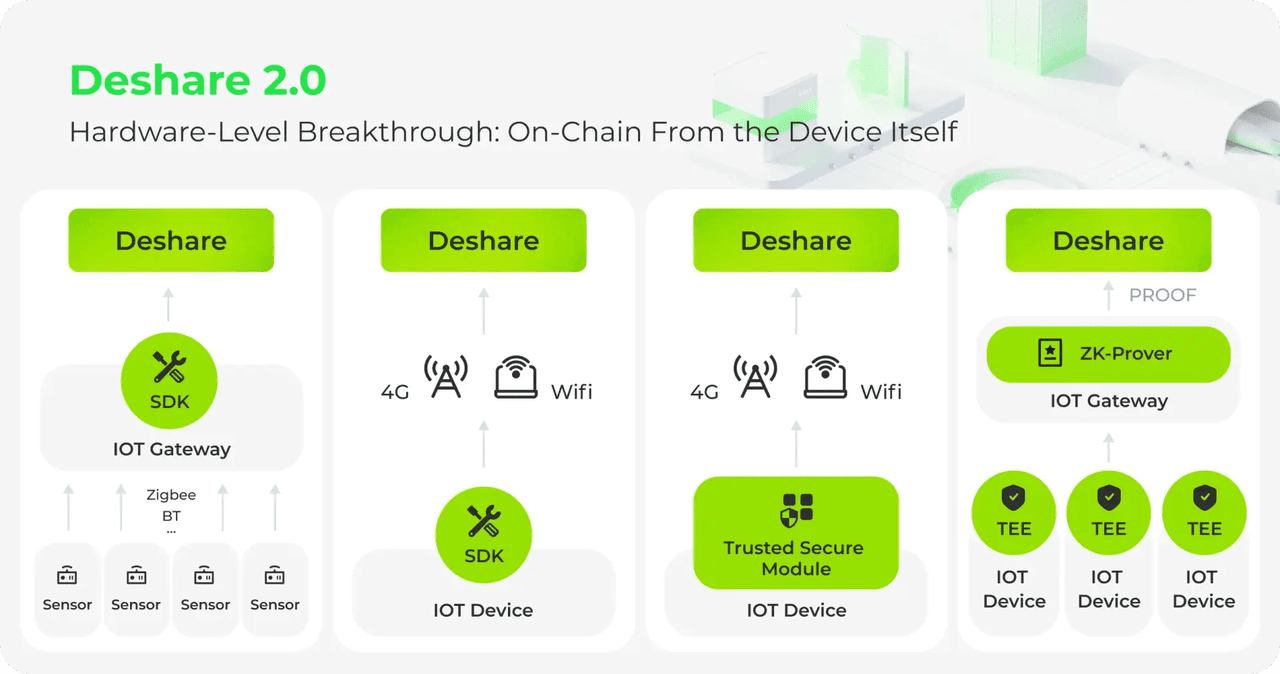
How ShareX's Deshare protocol works | Source: ShareX docs
ShareX operates as a multi-layered DePIN (Decentralized Physical Infrastructure Network) that synchronizes physical hardware with digital value:
- The Deshare Protocol: The core identity and settlement layer. It assigns a Digital Twin to every physical device, recording identities and usage events without requiring brands to overhaul their existing business logic.
- The Deshare Alliance: A consortium of over 20 leading brands, such as PowerNow and YoPoint, that have integrated their fleets into the ShareX network, bringing millions of Web2 users into the crypto ecosystem.
- TreasureX Share-to-Earn Campaigns: An engagement engine where users perform real-world missions, like renting a power bank, to earn rewards. This creates a Real-World Action to Asset to Adoption loop.
- Consumer-Grade RWAs: Through the PowerPass DApp, users can claim or participate in the revenue streams of specific hardware clusters, e.g., a group of vending machines in Singapore, receiving a portion of the generated cash flow.
What Is the $SHARE Token Utility?
Within the ecosystem, the SHARE token serves as the primary medium for coordination and value transfer:
- Service Payments: Users can utilize SHARE to pay for rentals or services across the Deshare Alliance network, often with gasless transactions via Account Abstraction (AA).
- Protocol Staking: Operators and users stake SHARE to secure the network and gain access to advanced operational tools or premium RWA tiers.
- Governance: SHARE holders vote on protocol upgrades, new hardware category eligibility, and the allocation of ecosystem grants.
- Incentive Rewards: Distributed to users for physical engagement and to operators for maintaining high-uptime hardware nodes.
What Is ShareX (SHARE) Tokenomics?
The SHARE token has a fixed total supply of 100,000,000 (100 million), creating a capped framework that aligns with the protocol's long-term scarcity model.
- Mining (20%): Dedicated to rewarding device operators and hardware participants who contribute data and uptime to the network.
- Ecosystem (20%): Allocated for development, technical grants, and partnership integrations to grow the Deshare Alliance.
- Treasure & Reserve (20%): Managed for protocol stability and future incentives, subject to long-term vesting (up to 96 months).
- Community & Marketing (15%): Used for airdrops and user acquisition campaigns. A significant portion was unlocked at TGE in May 2026 to bootstrap the TreasureX community.
- Investors & Team (20%): Subject to a strict 12-month cliff and 24-month linear vesting to ensure alignment with project longevity.
- Early Liquidity (5%): Unlocked at TGE to ensure smooth trading across major exchanges.
How to Claim ShareX (SHARE) Airdrop
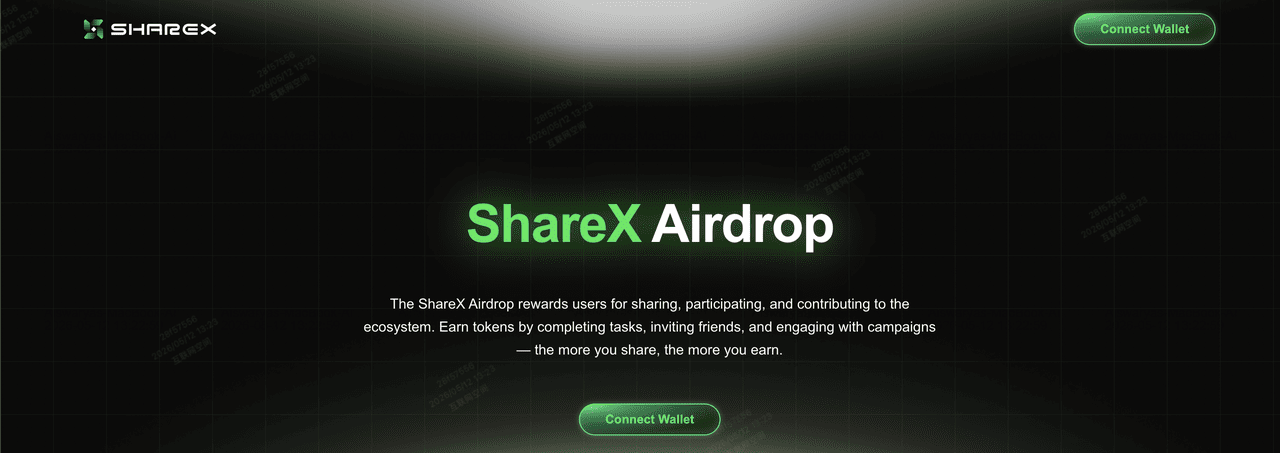
Source: ShareX Network airdrop
The $SHARE airdrop is a community-driven distribution event launched on May 8, 2026, to reward early supporters, infrastructure participants, and ecosystem contributors. Designed to bootstrap the ShareFi economy, the airdrop recognizes users who engaged with ShareX’s real-world missions, held specific ecosystem NFTs, or participated in partner platform events.
Eligibility for the main project airdrop was determined by a snapshot taken on May 5, 2026. Eligible wallets include those belonging to PowerPass holders, ShareX Keys (Rare Series) owners, and active participants in TreasureX Season 1. Additionally, many users qualified through exchange-specific Alpha point systems, where a minimum threshold, e.g., 230 points on Binance Alpha, allowed for a direct claim of SHARE tokens.
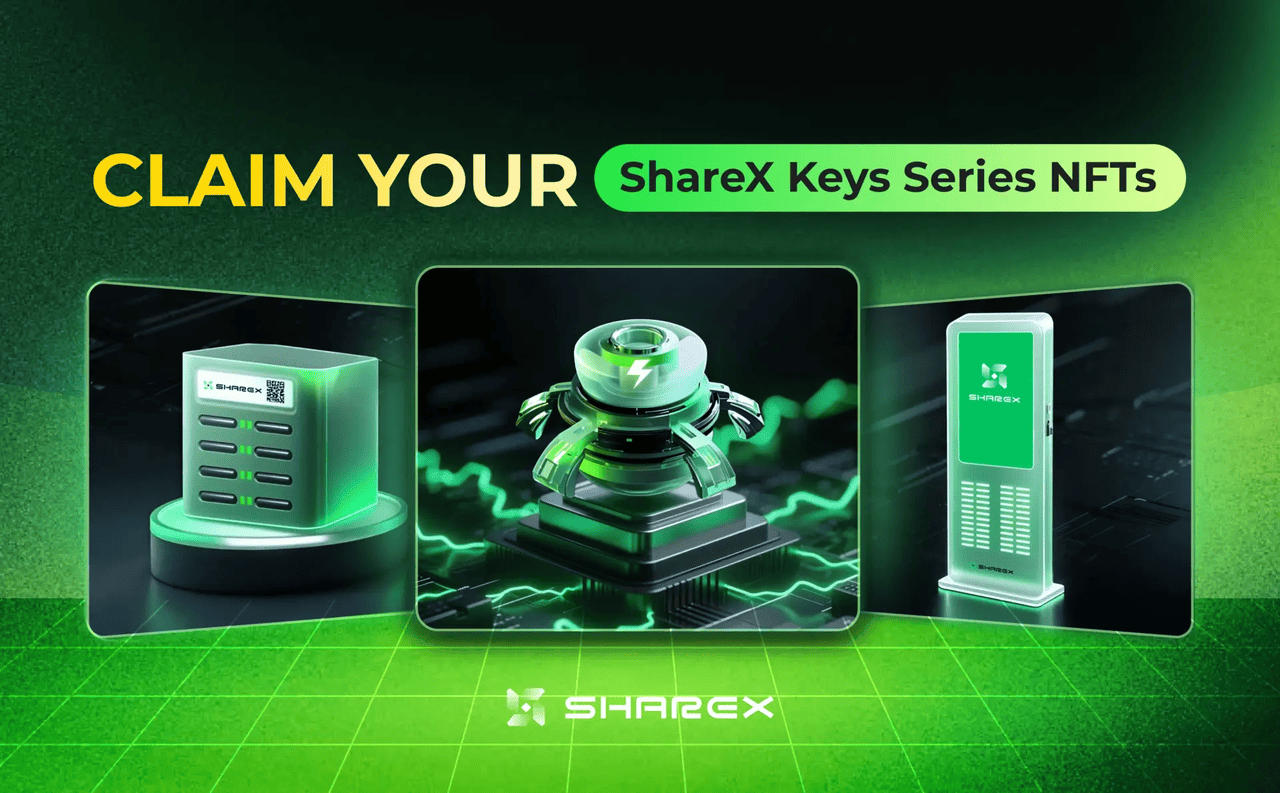
ShareX Keys Series NFTs | Source: ShareX docs
How to Claim Your $SHARE Tokens: Step-by-Step Guide
- Access the Official Portal: Navigate to the official ShareX airdrop page. Always verify the URL via the official @ShareX_Network X account to avoid phishing scams.
- Connect Your Web3 Wallet: Click Connect Wallet and link the address you used for ecosystem activities, e.g., MetaMask, Rabby, or Trust Wallet. Ensure you are on the BNB Smart Chain (BSC) network.
- Verify Eligibility: The portal will automatically scan the snapshot database. If your address is eligible, your specific allocation of $SHARE will be displayed on the dashboard.
- Execute the Claim: Click the Claim button. You will need a small amount of BNB in your wallet to cover the network gas fees for the transaction. You can buy BNB on BingX to fund your wallet before claiming your $SHARE airdrop.
- Confirm Receipt: Once the transaction is confirmed, the tokens will appear in your wallet. If they aren't visible, manually add the SHARE contract address.
- Secure Your Assets: For maximum security, consider transferring your claimed tokens to your BingX Fund Account to take advantage of institutional-grade custody or immediate trading opportunities.
Read more: How to Claim ShareX Network (SHARE) Airdrop Rewards Following the May 8 TGE
ShareX (SHARE) vs. Other RWA Projects: Key Differences
|
Feature |
ShareX Network (SHARE) |
Traditional RWA Projects |
|
Collateral Base |
High-frequency IoT Hardware |
Real Estate / Bonds / Credit |
|
Yield Source |
Daily Service Revenue (Rentals) |
Interest Payments / Rental Income |
|
Data Verification |
Real-time IoT Sensors |
Periodic Audits / Legal Filings |
|
User Barrier |
Low (Consumer-grade) |
High (Accredited Investors) |
While traditional Real-World Asset (RWA) projects like Ondo or RealT focus on tokenizing static, low-velocity assets like U.S. Treasuries or real estate, ShareX Network targets high-frequency, yield-generating hardware. This ShareFi model transitions the RWA narrative from speculative asset appreciation to cash-flow-driven utility, where the protocol tokenizes the micro-revenue generated by physical devices such as power banks and vending machines. As of May 2026, ShareX's differentiation is backed by its scale of over 540,000 shipped devices across 22 countries, providing a more granular and diverse revenue stream than projects dependent on a single property or a specific interest rate environment.
Practically, ShareX functions as a hybrid DePIN-RWA infrastructure rather than just a financial wrapper. While standard RWA projects rely on opaque, retrospective monthly audits to verify collateral, ShareX utilizes the Deshare Protocol and IoT sensors to provide real-time, on-chain verification of device uptime and usage. This architectural advantage allows for Consumer-grade RWAs with lower entry barriers; for instance, the PowerPass system allows users to participate in the revenue of hardware clusters without the complex legal onboarding or high minimums required for institutional-grade bond or property tokens.
How to Trade ShareX (SHARE) on BingX
BingX offers high-liquidity markets for SHARE, allowing you to capitalize on the growth of the DePIN sector while utilizing BingX AI to analyze real-time market sentiment and technical indicators for smarter trade execution.
Trade SHARE Perpetuals on the Futures Market
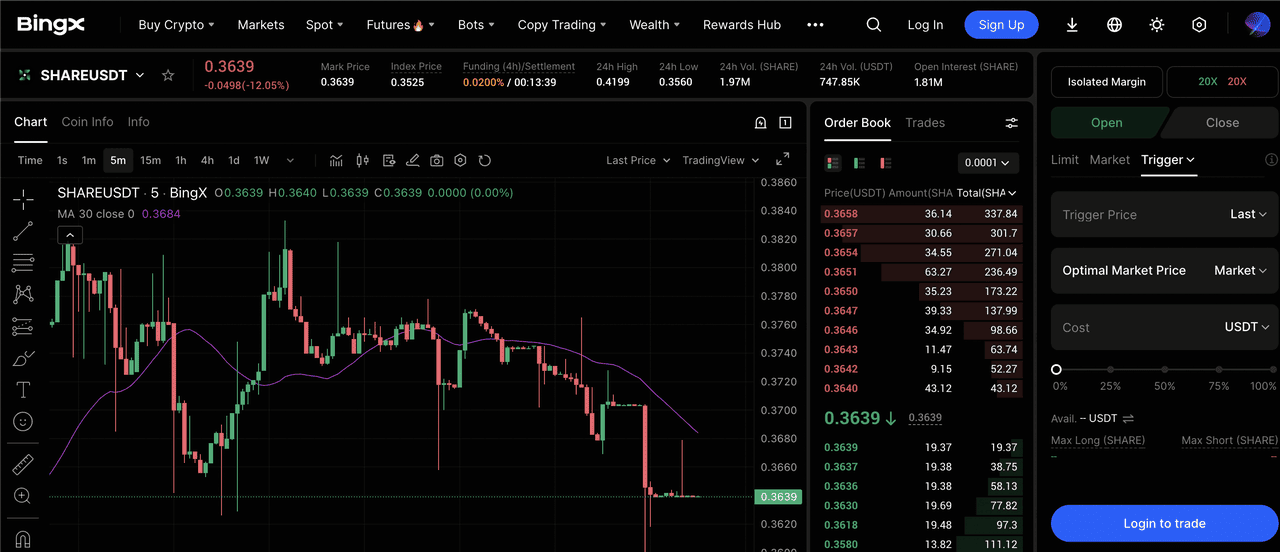
SHAREUSDT perpetuals on BingX futures market
- Access Futures: Navigate to the Perpetual Futures section and search for the SHARE/USDT perpetual contract.
- Set Leverage: Adjust your leverage of up to 50x based on your risk tolerance.
- Execute: Open a Long position if you expect DePIN adoption to rise, or a Short position to hedge your holdings.
5 Key Considerations Before Investing in ShareX Network (SHARE)
Before allocating capital to the $SHARE ecosystem, it is essential to evaluate the structural risks of its hardware-dependent model and the technical nuances of the protocol's real-world infrastructure dependencies.
- Hardware Lifecycle: Physical devices have a lifespan. The protocol must constantly onboard new hardware to replace depreciated assets.
- Market Adoption: The value of SHARE is highly dependent on the number of Real-World Actions performed within the Deshare Alliance.
- Regulatory Compliance: As a bridge between IRL hardware and Web3, shifts in local sharing economy laws or crypto-RWA regulations could impact growth.
- Operational Risk: Revenue depends on the physical uptime of machines. Maintenance issues in specific regions could affect localized yield.
- Vesting Cycles: Monitor the release of team and investor tokens after the initial 12-month cliff to understand potential market supply shifts.
Final Thoughts: Is ShareX the Future of ShareFi and the Sharing Economy?
As of May 2026, ShareX Network has successfully transitioned the RWA narrative from static financial products to high-velocity, consumer-facing hardware. By standardizing the integration of shared devices via the Deshare Protocol, the platform provides a pragmatic solution to the transparency and liquidity gaps currently hindering the $400 billion sharing economy. For participants, the network's value lies in its ability to bridge physical utility with digital value, allowing everyday actions, like renting a power bank or using a smart locker, to be recorded as verifiable on-chain assets.
The long-term viability of the ecosystem will depend on the continued expansion of the Deshare Alliance and the consistent conversion of Web2 users into active Web3 participants. As ShareX scales its infrastructure across more diverse hardware categories, $SHARE functions as a foundational tool for on-chain commerce and decentralized infrastructure management. Strategic engagement requires a balanced approach: utilizing the protocol’s real-time data for revenue participation while remaining mindful of the physical maintenance and depreciation cycles inherent in hardware-backed networks.
Risk Reminder: Digital asset investments in DePIN and RWA sectors involve technical and physical risks. The value of SHARE is tied to hardware performance and market adoption. Always perform your own research and manage your risk effectively. BingX is not responsible for any trading losses.
Related Reading
- What Is USDai (CHIP) InfraFi for GPU-Backed Yield and How Does It Work?
- What Are the Top 10 DePIN Crypto Projects to Know in 2026?
- Top 5 DePIN Projects to Watch in the Solana Ecosystem 2026
- Top Real-World Asset (RWA) Tokenization Projects of 2026
- What Is XPIN Network (XPIN) AI-Powered DePIN and How Does It Work?
- What Is World Mobile Token (WMTX), the DePIN Powering Global Connectivity?
