

The global capital markets in mid-2026 are closely monitoring the banking sector as the lines between traditional brick and mortar financial institutions and agile fintech platforms permanently dissolve. SoFi Technologies, Inc. (NASDAQ: SOFI) serves as a primary vehicle for global investors aiming to capture this massive secular shift toward branchless digital banking. By anchoring its core operations in an all-in-one financial services application and a fast growing, cloud native infrastructure as a service platform, the San Francisco headquartered multinational presents a unique tactical allocation for the current macroeconomic climate.
As digital neobanks scale their balance sheets to compete directly with legacy tier one financial institutions, platform operators are optimizing their technology stacks to capture higher fee based net margins. Wall Street analysts indicate that the traditional valuation metrics for high growth consumer banks are undergoing a thorough re rating throughout the second half of 2026. For international traders monitoring secular shifts in consumer banking and cross border payment rails, tracking the performance metrics of the company has become a core strategic imperative. You will also discover how to trade SoFi Technologies, Inc. (NASDAQ: SOFI) futures on BingX TradFi with USDT collateral.
Read more: Alphabet (GOOGL) Stock Outlook 2026: Can Gemini and Google Cloud AI Drive GOOGL Cross $420?
Key Highlights: Top 5 Things for Tech Investors to Know in 2026
- The National Bank Charter Moat: Operating with a coveted U.S. national bank charter from the OCC, the company holds low cost customer deposits to fund its loans. This structural advantage insulates its lending division from outside investor liquidity issues and improves its net interest margin.
- Pioneering Regulated Blockchain Frameworks: Following regulatory shifts under the GENIUS Act, the company has emerged as the first U.S. national bank to offer native in app cryptocurrency trading and issue its own stablecoin, SoFiUSD, directly on a public blockchain.
- The Fintech AWS Infrastructure Play: Through its strategic acquisitions of Galileo and Technisys, the company does not just face consumers, it powers rival platforms. Its infrastructure division provides account, cloud banking, and API payment processing to over 120 million enabled accounts across the Americas.
- A Diversified, High Fee Revenue Mix: Moving beyond its roots in student loan refinancing, the company entering mid-2026 derives more than 40% of its annualized revenue from non interest, fee-based financial services. This category includes loan platform referrals, insurance partnerships, and interchange fees.
- Deep Member Monetization: By cross-selling low-cost checking, active investing options, and AI tools to its base of nearly 15 million members, the company reduces its customer acquisition costs while driving lifetime value through its financial services productivity loop.
Read more: Strategy (MSTR) Stock Outlook 2026: Can MSTR Cross $700 on Bitcoin Treasury Strategy?
What Is SoFi Technologies, Inc. (NASDAQ: SOFI)?
Source: Google
SoFi Technologies, Inc. (short for Social Finance) is an American financial technology company and branchless consumer bank that operates the largest online lending and digital banking platform in the United States. Founded in 2011 by Mike Cagney, Dan Macklin, James Finnigan, and Ian Brady, four graduate students at the Stanford Graduate School of Business, the company initially disrupted the market with a peer to peer, alumni funded student loan refinancing model. On June 1, 2021, the firm went public on the Nasdaq exchange under the ticker symbol SOFI via a high profile SPAC merger backed by Chamath Palihapitiya, valuing the company at approximately $9 billion at listing.
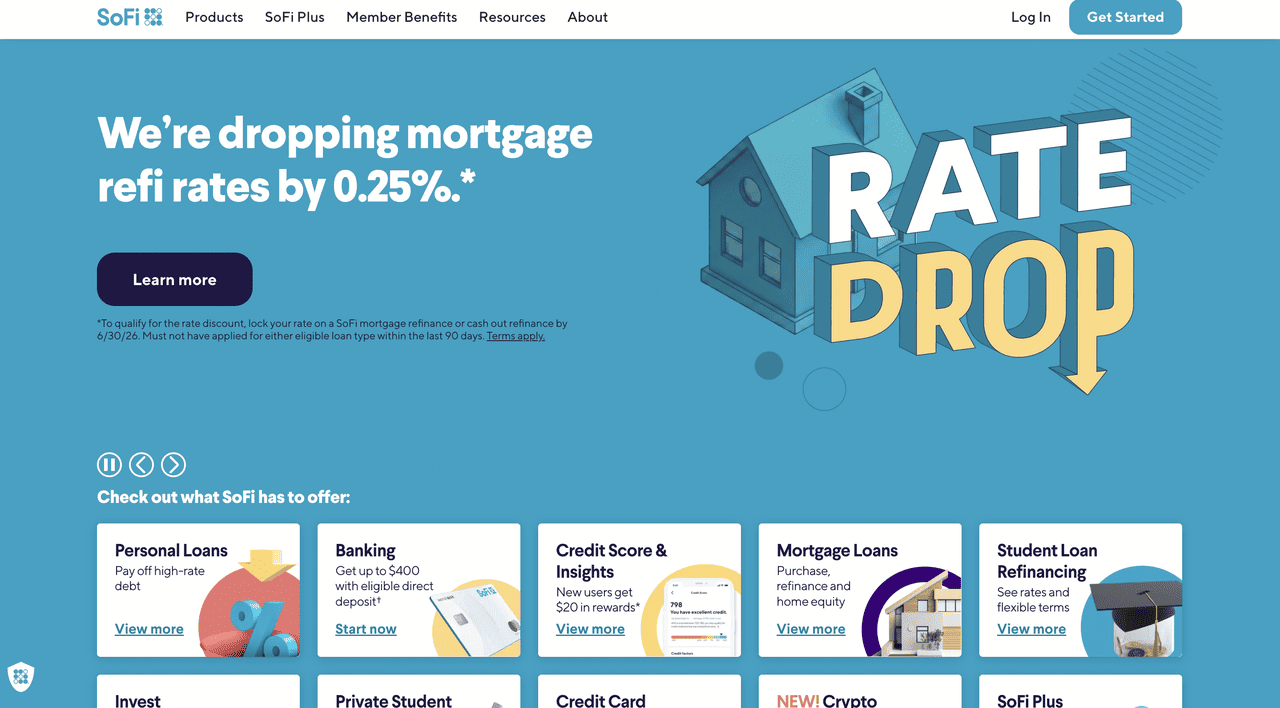
Today, the platform stands as a fully regulated financial powerhouse operating across three distinct segments:
- Lending: This legacy division comprises automated origination and underwriting for personal loans, mortgages, and student loan refinancing, maintaining a commanding majority share of the domestic unsecured credit refinancing market.
- Financial Services: This consumer facing digital wing hosts checking and savings accounts, credit cards, insurance options (SoFi Protect), personal budgeting suites (SoFi Relay), and an interactive retail brokerage app (SoFi Invest) featuring commission free equity trading and options access.
- Technology Platform: This business-to-business infrastructure ecosystem utilizes Galileo's payment APIs and Technisys' cloud core banking architecture to power global fintech applications and traditional financial firms.
With its high profile 20 year, $30 million annual naming rights deal for SoFi Stadium in Los Angeles, the firm has built massive brand equity. In 2026, it operates as a deeply integrated ecosystem where consumer deposits, automated algorithmic financial advice, and public blockchain clearing networks exist side by side.
Read more: Intel (INTC) Stock Forecast 2026: Foundry Breakthrough to $89 or Value Trap?
Key Metrics of SoFi Technologies (SOFI) Stock
- Primary Exchange Position: Nasdaq Global Select Market / Top-Tier Fintech Constituent
- Inception Date: Founded 2011 (Listed publicly via SPAC on June 1, 2021)
- Corporate Headcount: Approximately 5,000 global employees
- Global Headquarters Location: San Francisco, California, United States
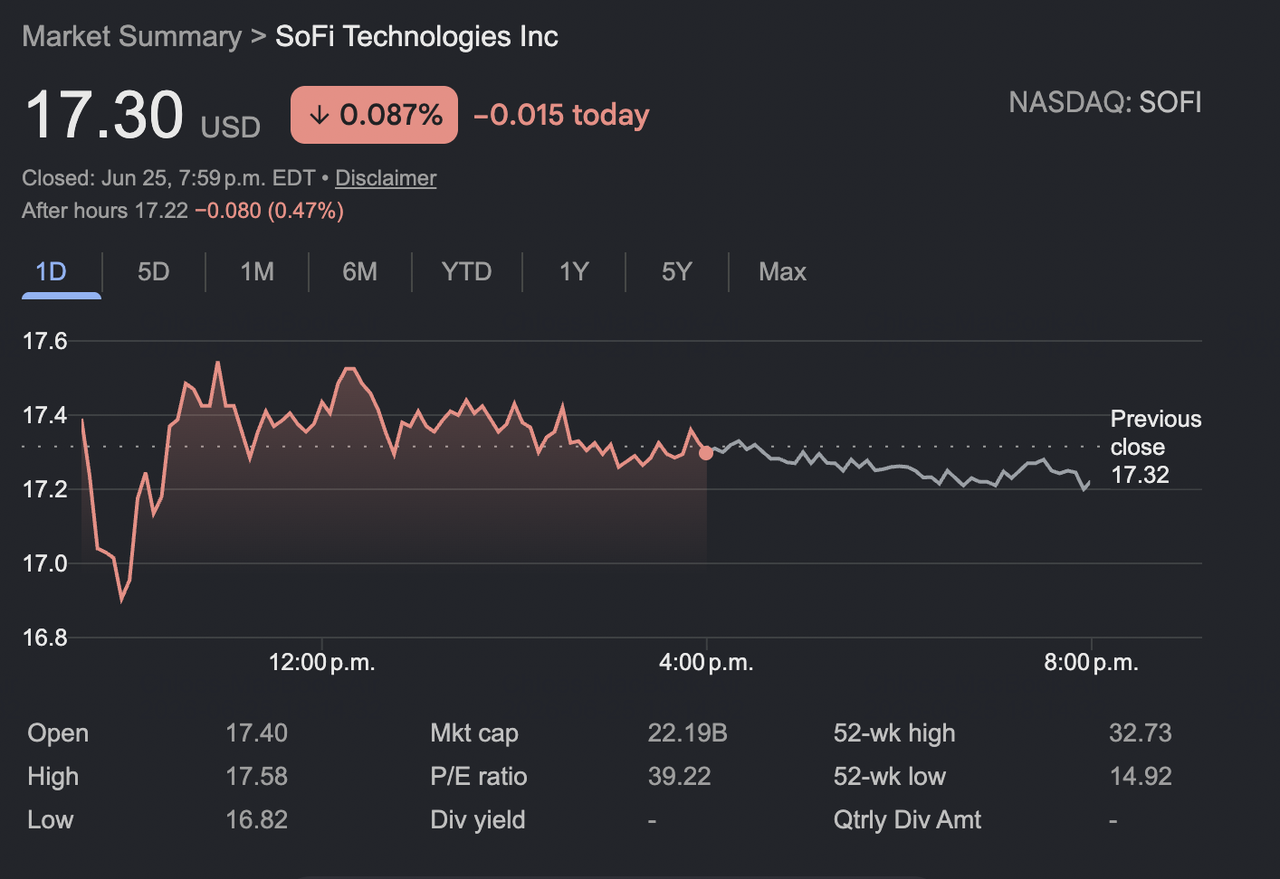
- Current Market Price: As of the June 25, 2026 market close, the stock finished trading at a market valuation reflecting an estimated capitalization of $22.19 Billion.
SOFI's Key Financial and Operating Metrics Table
The fundamental data tracking the company's balance sheet growth highlights the platform's scale heading into the second half of the 2026 fiscal year:
|
Financial and Operating Metric Category |
2026 Stated Value Status |
|
Current Stock Price |
$17.30 USD |
|
Estimated Corporate Valuation (Market Cap) |
Approx. $22.19 Billion |
|
52-Week Trading Range |
$14.92 to $32.73 USD |
|
Active Customer Base (Total Members) |
Near 15.0 Million Members |
|
Technology Platform Enabled Accounts |
Approx. 128 Million Accounts |
|
Annualized Net Revenue Rate |
Approx. $3.61 Billion |
|
Annual Consolidated Net Income |
Approx. $481.0 Million |
|
Total Backing Assets On Balance Sheet |
Approx. $50.66 Billion |
|
Total Equity Reserves |
Approx. $10.49 Billion |
2026 Tech Sector Investment Comparison
The table below contrasts the financial parameters, underlying attributes, and structural tailwinds defining the prime fintech, traditional banking, and tech infrastructure channels in the 2026 market cycle.
|
Asset Class / Strategy |
Implied Focus Sector |
Primary Revenue Driver |
Primary Growth Tailwinds |
Structural Risks and Roadblocks |
|
SoFi Technologies Equity |
Integrated Digital Neobanking and Financial APIs |
Net Interest Income and Enterprise B2B Platform Fees |
Global rollout of SoFiUSD stablecoin settlement; scaling fee revenue via Big Business Banking. |
Vulnerable to shifting regulatory oversight; competitive pricing pressures on deposit APY. |
|
Traditional Money Center Banks |
Multi-National Commercial and Retail Banking |
Traditional Spread Income and Investment Banking |
Deep institutional capital reserves; massive legacy corporate asset management operations. |
Heavy real estate branch maintenance overhead; slower integration of on-chain clearing systems. |
|
iShares Expanded Tech-Software ETF (IGV) |
Enterprise Application and Cloud Systems Software |
Pure-Play Software Licensing Contracts |
Rapid deployment of enterprise software; predictable recurring SaaS revenue. |
High dependency on compute pricing; zero defense against stock multiple compression shocks. |
Recent Corporate Developments and Strategy in SoFi Technologies
Rather than relying purely on interest rate spreads from unsecured personal loans, the company's mid-2026 layout focuses on institutional blockchain integration and small business corporate deposits.
1. On-Chain Settlement Ramps Via Mastercard
In a milestone partnership for the banking sector, the company and Mastercard implemented an agreement allowing the SoFiUSD stablecoin to act as a native settlement option across Mastercard’s worldwide payment network. This custom integration allows international enterprise users to clear cross border remittances and B2B money transfers in seconds without navigating multiple intermediary clearinghouses.
2. Deployment of Big Business Banking Tools
Expanding past retail banking consumers, the platform debuted its Big Business Banking product suite. This allows small to medium enterprises (SMEs) to manage fiat and cryptocurrency positions in one place, clear corporate transactions over SoFi Pay networks, and optimize operational cash balances using the platform's proprietary AI engines.
The Investment Thesis in SoFi for 2026: 5 Pillars of Market Valuation
Source: MarketBeat
1. The Low-Cost Deposit Funding Moat
With total customer deposits clearing multi-billion dollar thresholds, the bank self funds its loan originations at a fraction of the cost faced by non-bank fintech rivals. This structural edge creates a high net interest margin buffer that protects the company during changing macroeconomic cycles.
2. Cross-Border Monetization Via SoFi Pay
Active in over 30 countries across Europe, Latin America, and Asia, the blockchain enabled SoFi Pay processing layer allows the company to collect consistent transaction fees on global money movements, insulating it from localized U.S. credit consumer drops.
3. The AI Cash Coach Engagement Engine
The deployment of specialized consumer tools like Cash Coach and SoFi Coach automates retail budgeting. By analyzing account habits in real time to minimize credit card interest expenses and optimize deposit yields, the AI tool drives active user engagement without additional human advisor overhead.
4. White-Label Infrastructure Revenue Scaling
Through Galileo, the company provides the underlying infrastructure for external banks and fintechs to white label its payment systems. Because these alternative configurations match and trade at par with SoFiUSD, the company collects high margin service fees on third party transactional volume.
5. Proven Customer Acquisition Efficiencies
The synergy between its financial products allows the platform to transition a single checking account user into an investment, credit card, or mortgage client. This systematic cross selling loop reduces marketing spend and expands profit margins as the platform scales.
SoFi Valuation and Performance Forecasts for 2026: Bull vs. Bear Outlook
Institutional research desks maintain an active dialog regarding the stock trajectory, balancing its technology driven margin upside against changing banking regulations.
|
Institution / Analyst Desk |
2026 Target Valuation Range |
Market Outlook / Stance |
|
Citi Research Fintech Division |
$30.00+ |
Highly Bullish: Driven by fast institutional adoption of the Mastercard stablecoin network and strong business deposit growth. |
|
Mizuho Securities |
$29.00+ |
Bullish: Supported by the scalability of Galileo's international payment processing and expanding fee margins. |
|
Stephens |
$25.00+ |
Moderate Bull: Expects strong growth upside driven by cloud banking architecture and infrastructure segments. |
|
UBS |
$21.00+ |
Neutral / Market Perform: Constructive on member growth numbers, but cautious on credit loss provisions in the personal loan wing. |
|
Deutsche Bank Equity Research |
$18.00+ |
Neutral / Hold: Expects steady revenue generation, but notes potential margin pressure from competitive retail deposit yields. |
|
Goldman Sachs |
$17.00+ |
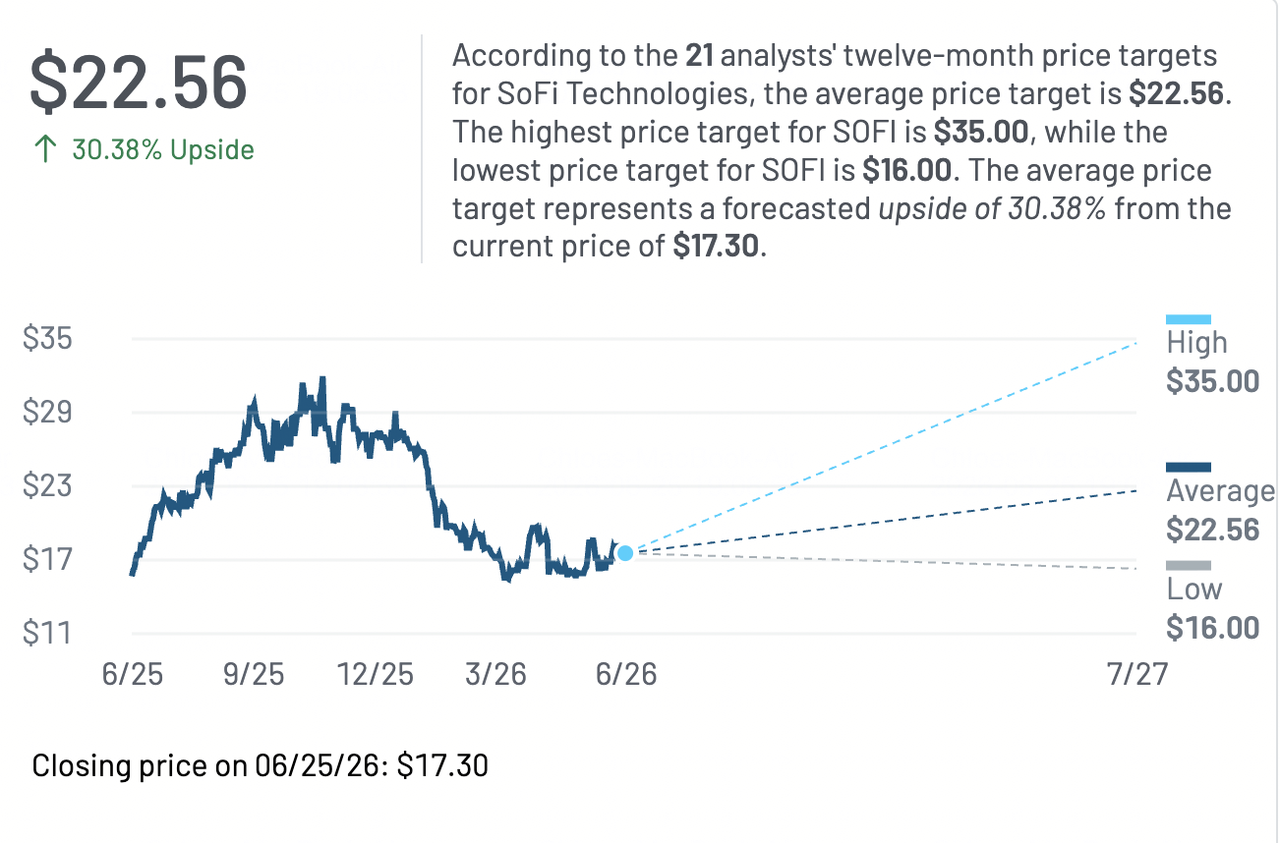
Hold: Cautious stance keeping targets right at current lines due to potential slowing in consumer loan originations. |
|
Morgan Stanley |
$16.00+ |
Underweight: Concerned about compliance costs for on-chain banking services and macroeconomic strain on retail balances. |
The Bull Case: High-Margin Product Expansion Powers Fee Revenue
Bulls argue that as businesses adopt the platform's Big Business Banking tools and stablecoin rails, fee-based revenues will outpace traditional net interest spreads. This shift toward high margin software and platform revenues would justify a technology style multiple expansion, lifting the stock well above historical ranges.
The Bear Case: Compliance Costs and Credit Cycles Slow Growth
Bears note that operating a nationally chartered consumer bank alongside public blockchain assets brings significant regulatory oversight. If compliance costs rise or if unsecured personal loan defaults increase, profit margins could face near term pressure, keeping the valuation tied to traditional banking multiples.
Competitive Risks and Sector Pressures for SOFI Traders
While the company benefits from strong member growth and a diversified product mix, its leadership team must carefully manage several structural headwinds:
- Evolving Crypto and Stablecoin Regulatory Rules: Operating the first national bank issued stablecoin exposes the firm to intense scrutiny. Any sudden changes in federal stablecoin reserve requirements or digital asset compliance mandates could impact its transaction clearing lines.
- Intense Retail Deposit Yield Competition: To retain its low cost deposit funding moat, the bank must offer competitive annual percentage yields (APY). If traditional banks launch aggressive cash incentive programs, the cost of retaining retail deposits could increase, compressing margins.
- Macro Credit Quality Fluctuations: As the largest U.S. online lender, the company's balance sheet remains tied to the consumer credit lifecycle. An unexpected rise in unsecured personal or student loan defaults would require larger capital reserves, directly impacting quarterly net income.
Read more: Oracle (ORCL) Stock Price Outlook for 2026: Can AI Cloud Infrastructure Take ORCL Back to Its Highs?
How to Trade SoFi Technologies, Inc. (SOFI) on BingX
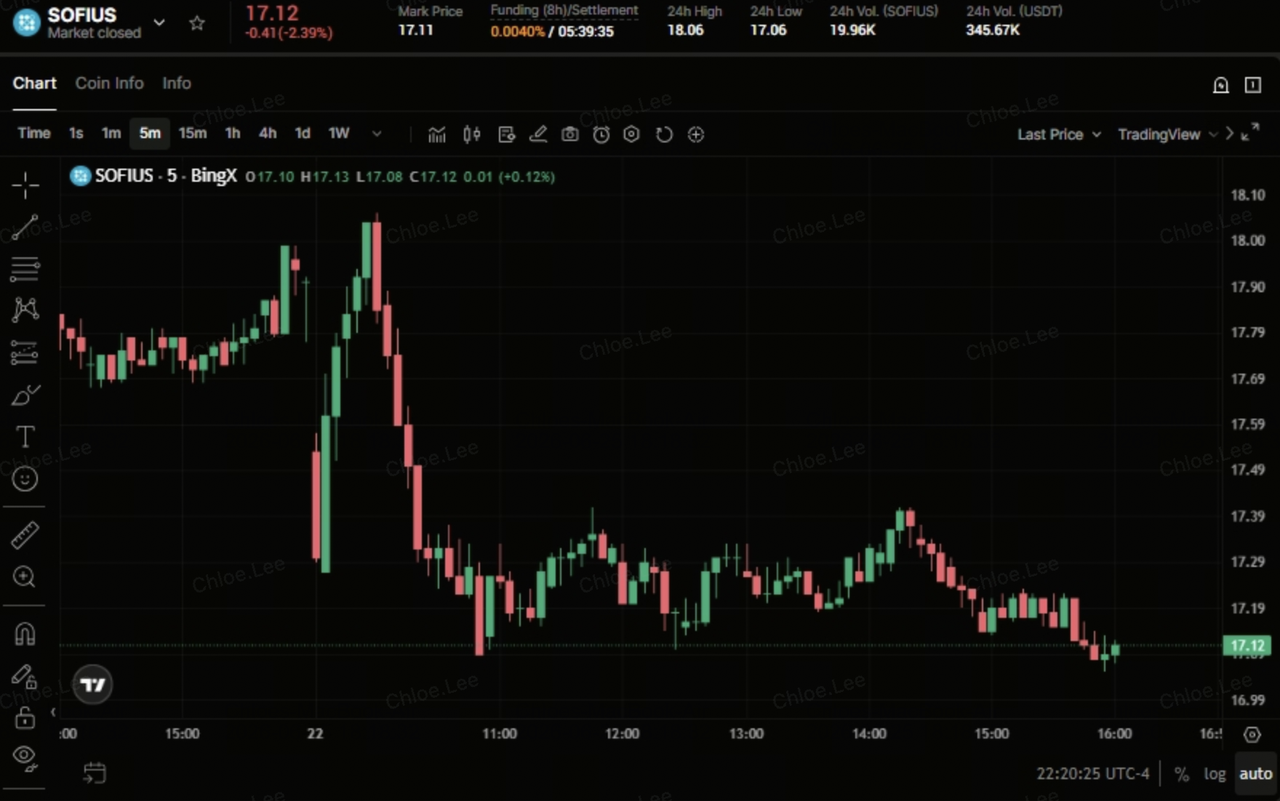
For global market participants looking to take advantage of the volatility surrounding fintech earnings and digital asset product rollouts, trading derivative contracts offers a highly flexible, capital efficient alternative to physical stock ownership. This vehicle allows active traders to manage risk or target short term price movements around major platform milestones, much like how tech investors track updates across traditional finance (TradFi), semiconductor leaders like NVIDIA, or core digital assets like Bitcoin.
- Go to the BingX TradFi section and select Stock Futures.
- Search for the SOFIUS/USDT perpetual contract.
- Check the trading session before placing your order. Liquidity is typically lower during extended sessions, which can result in wider spreads and higher volatility.
- Select your Margin Mode (Isolated or Cross) and set your leverage.
- Choose Open Long if you expect momentum, strong chip architecture updates, or positive analog cycle inventory recovery. Choose Open Short if you anticipate margin pressures from heavy CapEx spending, factory execution delays, or valuation pullbacks.
- Set Take-Profit (TP) and Stop-Loss (SL) levels immediately to manage risk against SPCE's price swings driven by earnings, news, or global semiconductor production milestones.
Read More: Arm Holdings (ARM) Stock Outlook 2026: AI Licensing and the $200+ Price Target
Conclusion: How to Navigate the Digital Banking Frontier on BingX TradFi
The financial services sector in 2026 is moving through a major evolution. The companies positioned for sustainable growth are those that successfully merge traditional banking licenses with modern digital infrastructure. The strategic transition of this platform from a niche student lender into a fully charted national bank, complete with custom B2B payment APIs and an active public blockchain stablecoin framework, demonstrates a clear long term growth plan.
While investors must monitor potential credit cycles and changing fintech compliance rules, the structural power of its low cost deposit funding model and recurring software fee streams continue to support the company's outlook. For short term derivatives traders and long term tech investors alike, tracking the ecosystem provides a direct way to participate in the future of consumer finance as on-chain clearing models and mobile banking apps establish a new global standard.
Risk Reminder: Trading high-growth technology and aerospace equities involves immense capital risk due to extreme valuation multiples, capital-intensive deployment timelines, and concentrated corporate governance. Always implement strict risk management, appropriate position sizing, and automated stop-loss protocols.
Related Reading
- Intel (INTC) Stock Forecast 2026: Foundry Breakthrough to $89 or Value Trap?
- Oracle (ORCL) Stock Price Outlook for 2026: Can AI Cloud Infrastructure Take ORCL Back to Its Highs?
- Palantir (PLTR) Stock Outlook for 2026: Can AI-Driven Enterprise Supercycle Take PLTR to $235+?
- Reddit (RDDT) Price Outlook for 2026: Can AI Data Licensing Drive RDDT Back to $200?
- Nvidia (NVDA) Stock Price Outlook for 2026: Can Blackwell and Vera Rubin Take NVDA Back to $300?
