
Anyone who trades cryptocurrencies regularly has likely noticed that the same exchange charges different fees depending on how an order is placed. This is neither an error nor a hidden fee — it is the maker-taker model, the commission structure adopted by most major crypto exchanges worldwide. According to data from Kaiko Research, trading fees account for a significant share of the total cost of operations on centralized exchanges, and a difference of just 0.05% in fees can represent up to a 15% variation in annualized net profit for active traders. For retail crypto traders, understanding this model is no longer just a technical detail — it has become essential for achieving consistent profitability.
Quick Answer: A maker fee is charged when you add liquidity to the order book using an order that is not executed immediately (typically limit orders). A taker fee is charged when you remove liquidity by executing an existing order in the order book (typically market orders). Makers usually pay lower fees because they contribute liquidity to the platform. To reduce costs: use limit orders whenever possible, monitor your monthly trading volume to unlock VIP tiers, use native exchange tokens for discounts, and choose exchanges with competitive fee structures that match your trading profile.
What Are Maker Fees and Taker Fees
The maker-taker model originated in traditional U.S. financial markets and was adopted by the crypto industry for the exact same reason: incentivizing liquidity. An exchange operates as a marketplace where buyers and sellers meet, and for this market to function efficiently, there must always be orders available in the order book.
A maker is a trader who places an order into the order book without having it executed immediately. Imagine you want to buy Bitcoin at R$ 580,000 while the current market price is R$ 585,000. You place a limit order at R$ 580,000, and the order remains waiting in the order book. In this scenario, you are effectively “creating” liquidity for the platform. That is why the exchange rewards you with a lower trading fee.
A taker is a trader who enters the market and accepts the currently available price, executing an order already posted by another trader. When you buy Bitcoin “at market” and the order is filled instantly, you are “removing” liquidity from the order book. Exchanges charge higher fees for this action.
A practical analogy is a traditional marketplace: the maker is the vendor who sets up a stall and waits for customers. The taker is the customer who arrives, checks the price, and buys immediately. The marketplace only functions because the vendors are there every day, so they receive more favorable conditions.
Positive Maker and Negative Maker Fees
Some advanced exchanges implement a negative maker fee model, where the platform literally pays a rebate to traders who add liquidity. This is especially common in highly competitive futures markets where exchanges compete aggressively for trading volume. In such cases, makers receive a small rebate instead of paying a fee. This model is more common on institutional-grade exchanges, but it is increasingly appearing in VIP tiers on retail trading platforms as well.
How the Order Book Works and Why It Matters
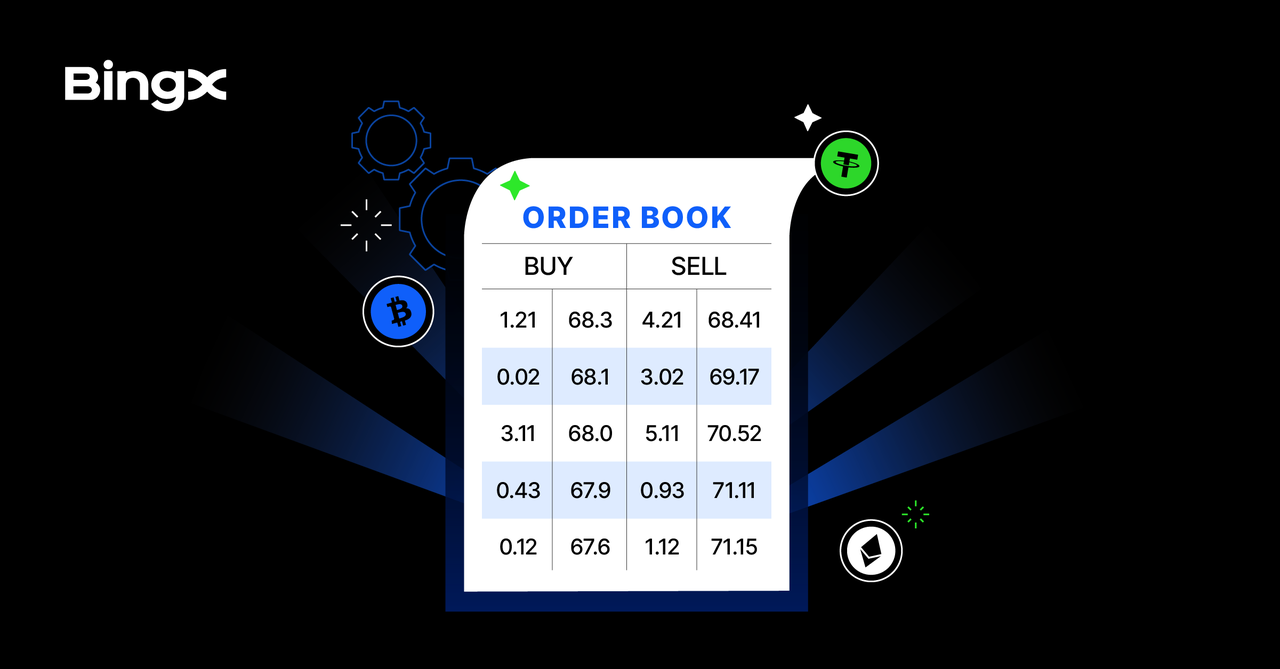
To fully understand the maker-taker model, it is important to understand how the order book operates. The order book is a real-time list of all buy orders (bids) and sell orders (asks) that have not yet been executed on an exchange.
When you place a market order, the system instantly matches your trade with the best available counterparty in the order book and executes the transaction. Result: you are classified as a taker. When you place a limit order that does not immediately find a matching counterparty, the order is added to the order book and becomes available to other traders. Result: you are classified as a maker.
The spread — the difference between the best available buy price and the best available sell price in the order book — is directly influenced by the amount of active limit orders. The more makers participating in the market, the tighter the spread becomes, creating a more efficient trading environment for everyone trading that pair.
In decentralized exchanges (DEXs) operating with an AMM (Automated Market Maker) model, such as Uniswap or PancakeSwap, the maker-taker concept works differently through liquidity providers and liquidity pools. However, on centralized exchanges (CEXs), which still account for most crypto trading volume in Brazil, the order book model with maker-taker fees remains the industry standard.
Maker and Taker Fee Calculation Formula
The calculation itself is straightforward, but the cumulative impact often surprises traders who have never carefully analyzed their fee expenses.
Formula:
Trading Fee = Trade Value × Fee Rate
Practical Example: Spot Trade with a Market Order (Taker)
Scenario: you buy R$ 10,000 worth of Bitcoin using a market order on the BingX spot market with a taker fee of 0.10%.
Fee = R$ 10,000 × 0.0010 = R$ 10.00
You receive R$ 9,990 worth of Bitcoin after the trading fee is deducted.
Practical Example: Spot Trade with a Limit Order (Maker)
Same trade, but this time you place a limit order that gets filled. Maker fee: 0.08%.
Fee = R$ 10,000 × 0.0008 = R$ 8.00
That is a R$ 2.00 difference on a single trade. It may seem small, but a trader executing 10 trades per day at this volume would spend an additional R$ 200 per month simply for not using limit orders.
Annualized Impact for an Active Trader
Here is what happens for someone trading a total monthly volume of R$ 50,000:
|
Scenario |
Fee Rate |
Monthly Cost |
Annual Cost |
|
Always taker (0.10%) |
0.10% |
R$ 50.00 |
R$ 600.00 |
|
Always maker (0.08%) |
0.08% |
R$ 40.00 |
R$ 480.00 |
|
VIP maker tier (0.03%) |
0.03% |
R$ 15.00 |
R$ 180.00 |
|
BingX futures maker (0.02%) |
0.02% |
R$ 10.00 |
R$ 120.00 |
The difference between the worst and best-case scenario in this example is R$ 480.00 per year. For larger trading volumes, the savings scale proportionally.
Maker and Taker Fees Across Major Exchanges
Comparing trading fees requires evaluating three key variables: the base fee for non-VIP users, the volume-based discount structure, and whether the exchange offers additional discounts through a native token.
BingX
The BingX platform charges a standard fee of 0.10% for both maker and taker trades in the spot market, in line with the industry average. The key advantage lies in its derivatives markets: on perpetual contracts and futures products, fees start at 0.02% for makers and 0.05% for takers, making it highly competitive for retail traders using leverage. For users with a 30-day trading volume exceeding US$ 15 million, fees can drop to as low as 0.014% for makers and 0.04% for takers. Unlike some competitors, the platform does not require users to hold a native token in order to progress through VIP tiers, which is a practical advantage: fee reductions are based on trading activity rather than mandatory exposure to an additional asset.
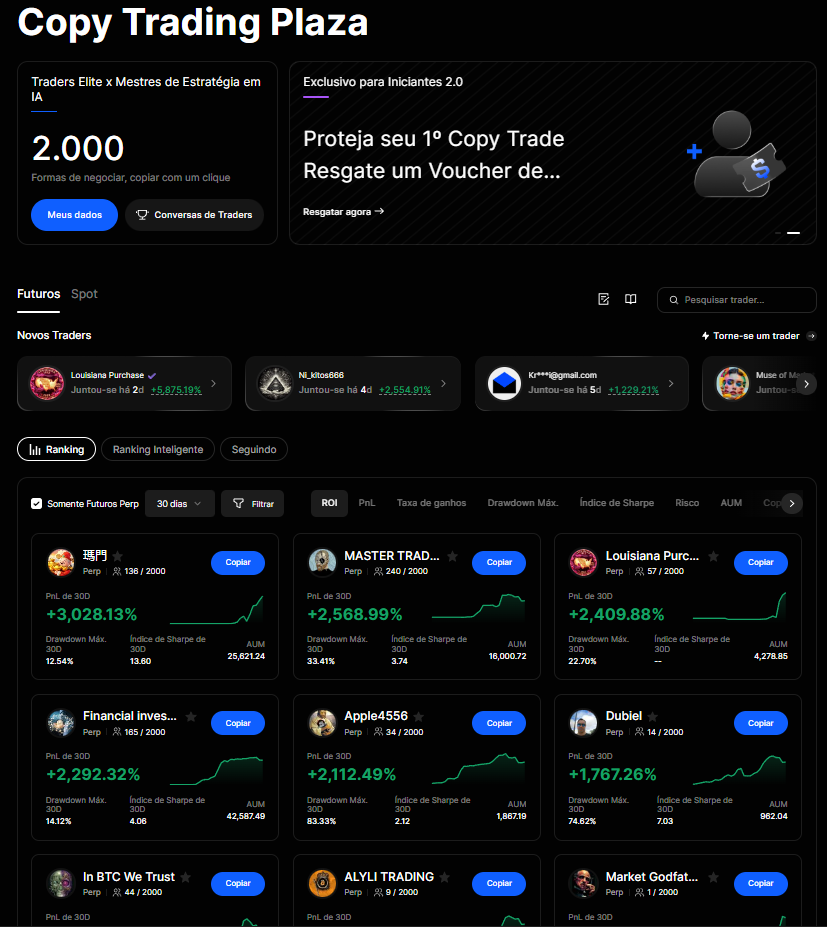
Another important point for retail traders is that BingX integrates copy trading directly into its trading ecosystem, allowing users to replicate strategies from experienced traders while maintaining the same fee conditions as their primary account. Check the BingX fee guide for the latest tier-based fee schedule.
Binance
Standard spot trading fees are 0.10% for both maker and taker orders. Users receive a 25% discount when paying fees with BNB, reducing the effective rate to 0.075%. In futures markets, fees start at 0.02% for makers and 0.05% for takers at the entry level.
Bybit
Spot trading fees start at 0.10% for both maker and taker trades at the base tier, while Supreme VIP users can access rates as low as 0.03% maker and 0.045% taker. In perpetual futures markets, fees begin at 0.01% for makers and 0.06% for takers, with the highest VIP tiers offering 0% maker fees.
OKX
Standard spot trading fees are 0.08% for makers and 0.10% for takers. For users holding OKB tokens and maintaining high trading volume, fees can be reduced to as low as 0.02% maker and 0.05% taker.
Comparative Summary
|
Exchange |
Spot Maker |
Spot Taker |
Futures Maker |
Futures Taker |
|
BingX |
0.10% |
0.10% |
0.02% |
0.05% |
|
Binance |
0.10% |
0.10% |
0.02% |
0.05% |
|
Bybit |
0.10% |
0.10% |
0.01% |
0.06% |
|
OKX |
0.08% |
0.10% |
0.02% |
0.05% |
|
Industry Average |
0.15% |
0.19% |
— |
— |
Base rates for non-VIP users. Subject to change by each platform.
How to Identify Whether You Paid Maker or Taker Fees
Most exchanges display this information directly in the order history section. Here is what you should look for:
In spot trading, check the “Role” or “Position” column within your trade history. Platforms such as BingX and Binance explicitly indicate whether an order was executed as maker or taker. You can also infer it logically: if your limit order was filled because the market price moved toward your target price, you acted as a maker. If you used a “market buy” or “market sell” order, you were a taker.
In perpetual futures and derivatives contracts, the same principle applies. A limit order with the “post-only” option enabled is one of the safest ways to ensure you never accidentally become a taker: the order will only enter the order book and never remove liquidity. If the order cannot be executed as a maker order, it will be automatically canceled.
Strategies to Reduce Your Trading Fees
Use Limit Orders Instead of Market Orders
This is the behavioral adjustment with the most immediate impact. Instead of accepting the current market price instantly, define the price you want to pay and place a limit order. In most trading scenarios that do not require immediate execution, this alone is enough to secure maker-level fees.
The main caution is during periods of high volatility, where a limit order may fail to execute if the market moves too quickly. For emergency exits in leveraged positions, combining your setup with stop-loss and take-profit orders is considered best practice for proper risk management.
Enable Post-Only Mode
Exchanges such as BingX allow traders to activate the “post-only” option when placing orders. When enabled, the platform guarantees that your order will only enter the market as a maker order. If the order would otherwise execute as a taker order, it is automatically canceled. This feature is particularly useful for scalpers and traders who require precise control over entry pricing and trading costs.
Track Your Volume and Move Up VIP Tiers
Most exchange VIP tier systems are based on cumulative trading volume over the previous 30 days. Concentrating your trading activity on a single platform instead of spreading it across multiple exchanges may be enough to unlock higher VIP levels and lower fees. On BingX, for example, a 30-day trading volume above US$ 15 million reduces the maker fee for futures trading to as low as 0.014%.
Evaluate Native Tokens Carefully
Some exchanges offer 20% to 25% fee discounts when trading fees are paid using the platform’s native token (such as BNB on Binance or BGB on Bitget). This can be worthwhile if you already hold exposure to the token for other strategic reasons. However, purchasing a token solely to save on trading fees may not make sense if the token’s price volatility could outweigh the savings generated by the discount.
Compare Futures Fees Separately
Traders who primarily operate in derivatives markets should evaluate futures fees independently from spot trading fees. Platforms such as BingX offer futures maker fees as low as 0.02%, significantly below the broader market average, creating a materially lower operating cost for active perpetual futures traders. The BingX AI suite can also help identify optimal market entry opportunities to maximize the use of limit orders.

Maker-Taker on DEXs: How It Works Differently
On decentralized exchanges (DEXs) operating under the AMM model, there is no traditional order book. Liquidity is provided through pools managed by smart contracts, and the equivalent of makers are liquidity providers (LPs), who deposit token pairs into liquidity pools.
Users trading on a DEX pay a swap fee, which is partially distributed to LPs and partially allocated to the protocol itself. Fees vary depending on the liquidity pool, protocol design, and liquidity concentration. On Uniswap v3, for example, pools can charge 0.01%, 0.05%, 0.30%, or 1.00% fees depending on the expected volatility of the trading pair. To interact with DEXs, users need a compatible Web3 wallet and must also account for gas fee costs.
The major difference compared to CEXs is the existence of price impact, which refers to the price movement caused by the size of your own order within a liquidity pool. Large trades executed in pools with shallow liquidity can become significantly more expensive than any maker-taker fee charged by a centralized exchange with sufficient market depth.
Tax Treatment of Trading Fees in Brazil
Trading fees paid on exchanges can be added to the acquisition cost basis when calculating income tax obligations. Under Brazilian Federal Revenue Service regulations established through Normative Instruction 1.888, trading fees paid during the purchase of crypto assets can be included in the total acquisition cost used to calculate taxable capital gains.
Example: if you purchased R$ 10,000 worth of BTC and paid R$ 10 in fees, your acquisition cost becomes R$ 10,010 rather than R$ 10,000. This detail reduces your taxable gain calculation and can make a meaningful difference over time. Keep all fee statements and exchange records, as they serve as valid supporting documentation for annual tax reporting. BingX provides exportable trading reports that simplify this process during annual tax filing season.
Frequently Asked Questions
1. What is a maker fee in crypto?
A maker fee is the commission charged when you place an order that is not executed immediately and instead remains available in the exchange’s order book waiting for a counterparty. Because this action adds liquidity to the market, maker fees are typically lower than taker fees. Limit orders resting in the order book before execution are the most common example.
2. What is a taker fee in crypto?
A taker fee is charged when you execute an order that is already available in the order book, immediately removing liquidity from the market. Market orders, which are filled instantly at the best available price, are the classic example of taker activity. The fee is higher because the trader is consuming liquidity created by other participants.
3. Why are maker fees lower than taker fees?
Because exchanges have a strong economic incentive to encourage traders to place more orders in the order book. A deep and liquid order book attracts more trading volume, improves execution efficiency, and makes the platform more competitive overall. To incentivize this behavior, exchanges charge lower fees to traders who add liquidity and higher fees to those who remove it.
4. How can I know whether my order was maker or taker?
Check your trade history on the exchange. Platforms such as BingX explicitly display whether an order was executed as maker or taker. As a general rule: market orders are always taker orders. Limit orders that enter the order book before being filled are maker orders. A limit order that executes immediately because there was already matching liquidity at your selected price may still be treated as a taker order depending on the exchange.
5. Is it always worth using limit orders to pay lower fees?
For most trading situations, yes. The cost savings are real and consistent over time. The exception is when immediate execution is critical, such as exiting a leveraged position that is rapidly moving against you. In those moments, paying the taker fee is the cost of execution certainty. Traders can also use automated trading bots to build strategies that maximize the use of limit orders without requiring constant monitoring.
6. What is the post-only option on exchanges?
Post-only is an order placement mode that guarantees your order will only enter the market as a maker order. If the order would otherwise execute immediately as a taker order because the market price has already reached your level, the platform automatically cancels it. It is a feature commonly used by traders who want full control over their fee structure.
7. Are futures fees different from spot fees?
Yes, and they are generally lower. On BingX, for example, spot trading fees start at 0.10% for both maker and taker trades, while perpetual futures fees start at 0.02% for makers and 0.05% for takers. This pattern is common across most major exchanges. Traders who primarily operate in futures markets generally benefit from lower average trading costs compared to spot traders with similar activity profiles. You can view the full breakdown in the BingX fee guide.
8. How does monthly trading volume affect the fees I pay?
Most exchanges calculate your total trading volume over the previous 30 days and assign a VIP tier accordingly. The higher the volume, the lower the fees. This calculation is usually updated daily. Concentrating your trading volume on a single platform can be a valid strategy for reaching higher VIP tiers faster instead of splitting activity across multiple exchanges.
Key Takeaways
- A maker adds liquidity to the order book (a limit order waiting for execution), while a taker removes liquidity (a market order or a limit order executed immediately)
- Maker fees are always lower than taker fees because exchanges incentivize liquidity creation
- The difference between consistently trading as a maker versus a taker can represent hundreds of dollars in annual savings for medium-volume traders
- Limit orders with post-only enabled ensure you never accidentally pay taker fees
- In derivatives markets, fees are generally lower than spot trading fees across most major exchanges
- 30-day cumulative trading volume is the primary factor used for fee reductions through VIP programs
- Trading fees paid on crypto transactions are tax-deductible when calculating crypto-related income tax obligations in Brazil
- On AMM-based DEXs, there is no traditional maker-taker model, but price impact can exceed any CEX trading fee when executing large trades in low-liquidity pools. Keep your assets in secure wallets and use Proof of Reserves as a selection criterion when deciding where to concentrate your trading volume
