
Dego Finance is one of the most versatile NFT-DeFi hybrid platforms, functioning as an open incubator for innovation in the memecoin, AI, and Gaming sectors. As of March 2026, DEGO has seen an explosive surge in market activity, driven by a 254% spike in trading volume and renewed interest in its decentralized launchpad, Delta. By providing the tools to manage the full lifecycle of an NFT, from AI generation to liquidity mining, Dego has established itself as a cornerstone of the modular Web3 economy.
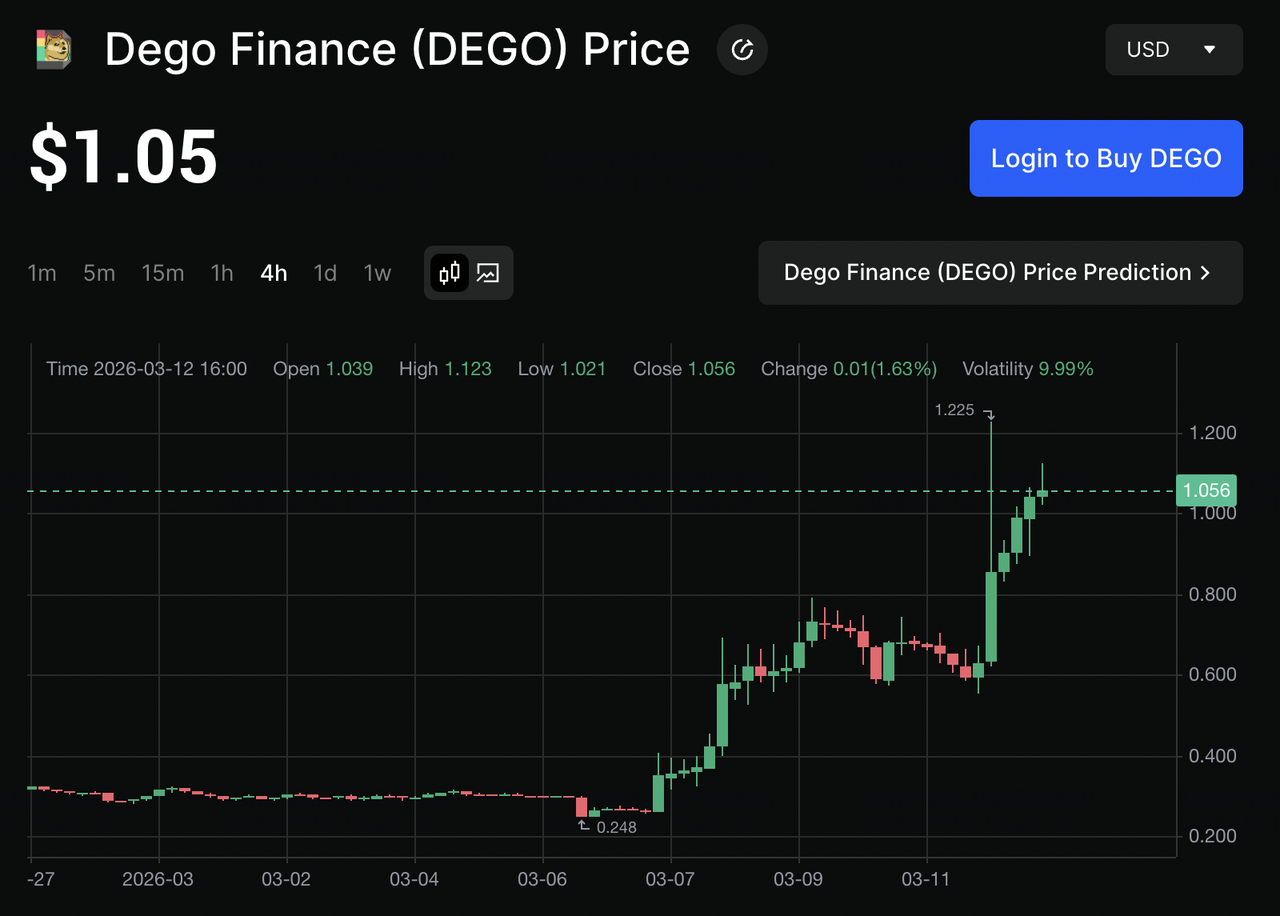
Dego Finance (DEGO) soars over 70% in mid-March 2026 | Source: BingX
In this article, you will learn what Dego Finance is, how its unique NFT Foundry and AI tools work, the role of the DEGO token in governance, why the platform is trending in March 2026, and how to trade DEGO on BingX spot and futures markets.
What Is Dego Finance (DEGO) Web3 Incubator?
Dego Finance is a decentralized ecosystem that views blockchain protocols as bricks that can be stacked together, much like LEGO. Launched in 2020 and having expanded across Ethereum, BNB Chain, and Solana, it provides an infrastructure layer where anyone can launch and manage NFT-based products.
Unlike traditional NFT marketplaces, Dego treats NFTs as financial instruments. Every NFT minted through Dego can be backed by underlying tokens, giving the digital asset intrinsic value. In 2025 and early 2026, the protocol evolved into a massive incubator, launching sub-platforms like Defusion (AI) and Delta (Launchpad) to capture the intersection of generative technology and decentralized finance.
Dego operates through three primary pillars:
- NFT Lifecycle Management: Tools like NFT Foundry for minting and NFT Mining for staking.
- AI & Incubation: The Defusion platform for AI-generated content and Delta for bootstrapping new Web3 projects.
- Cross-Chain Infrastructure: Utilizing bridges (like deBridge) and multi-signature security to allow assets to flow between Ethereum, Solana, and BNB Chain.
How Does Dego Finance Work?
Dego replaces the static nature of NFTs with a dynamic, value-backed model. It follows a modular design where different sub-systems handle specific functions of the ecosystem.
1. Value-Backed NFT Minting: NFT Foundry
In the Dego ecosystem, NFTs aren't just art; they are containers. When a user mints an NFT via the NFT Foundry, they deposit tokens (DEGO, ERC-20, or BEP-20). These tokens are locked inside the NFT. If a user decides they no longer want the NFT, they can decompose it, destroying the NFT but releasing the original deposited tokens.
2. Algorithmic Rarity and Mining
Dego uses a mathematical approach to NFT rarity. When minting, NFTs are assigned rarity grades (Bronze to Kryptonite) based on an algorithm. These grades determine the Mining Power of the NFT. Users can then stake these NFTs in Mining Pools to earn DEGO rewards, turning digital collectibles into productive yield-bearing assets.
3. AI Integration: Defusion.ai
Recognizing the shift toward AI in 2024–2025, Dego launched Defusion. This platform allows users to use Generative AI to create NFT art directly on-chain. This integrates the AI Incubation arm of the project, allowing creators to go from a text prompt to a minted, stakeable asset in one workflow.
What Are the Key Products in the Dego Ecosystem?
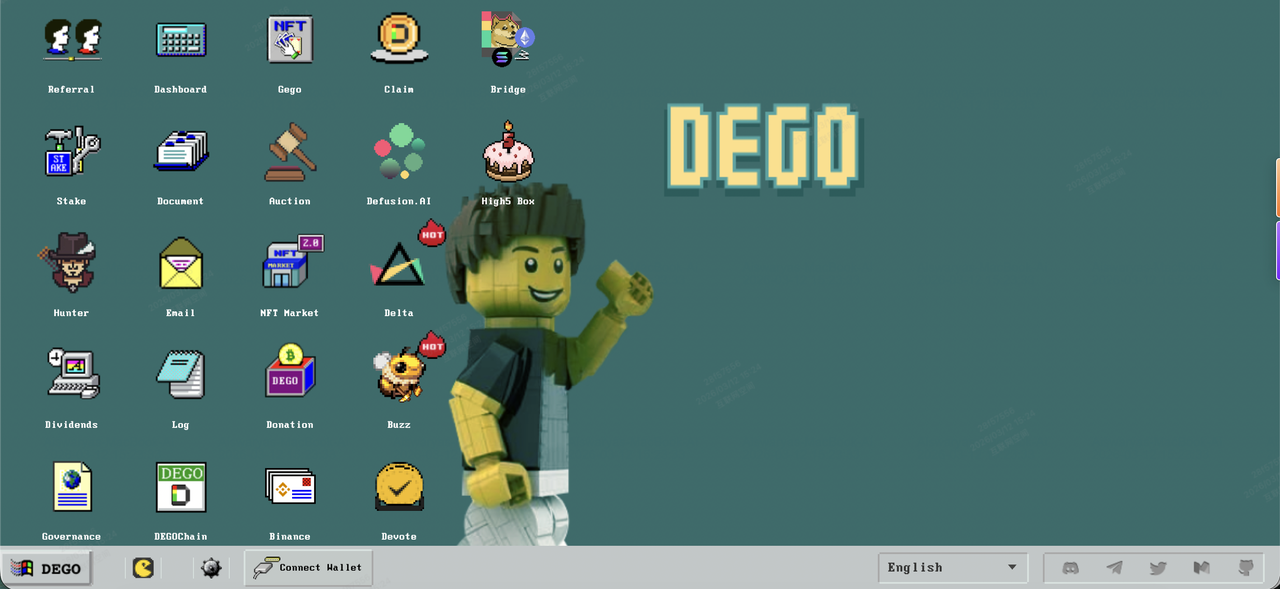
Source: Dego Finance
Dego Finance offers a comprehensive suite of tools designed to drive the LEGO philosophy of decentralized applications.
- Delta Launchpad: Delta is Dego's premier launchpad for Web3 projects. It focuses on incubating memecoin and AI projects, providing them with the initial liquidity and community exposure needed to scale. In early 2026, Delta became a major driver of DEGO's value as new successful projects launched through its staking tiers.
- NFT Foundry and Mining:
- Foundry: Allows users to create Gears, specialized NFTs with varying attributes.
- Mining: A DeFi-style staking platform where users lock their Gears to earn a share of the daily DEGO reward pool. The higher the rarity grade of your gear, the higher your yield.
- Cross-Chain Bridging: Dego has successfully implemented cross-chain functionality, allowing DEGO tokens to move seamlessly between Ethereum, Solana, and BNB Chain. This is facilitated by a multi-signature system (4/5 multisig) to ensure that the treasury and bridge contracts remain secure from single-point-of-failure attacks.
- ScanDrop: A mobile-friendly dApp that enables users to participate in NFT airdrops by simply scanning QR codes. This bridges the gap between physical events (like conferences or meetups) and on-chain asset distribution.
What Is the DEGO Token Used For?
The DEGO token (ERC-20 / BEP-20 / SPL) is the utility and governance backbone of the platform. With a strictly capped supply of 21 million tokens, it is designed with scarcity in mind.
- Governance: DEGO holders vote on platform parameters, such as reward distribution rates and new product incubations, via the DEGO DAO.
- Ecosystem Fuel: DEGO is required for minting high-rarity NFTs, participating in auctions, and accessing premium tiers on the Delta launchpad.
- Incentives: Tokens are used to reward users for bounty hunting, referrals, and providing liquidity.
- Deflationary Mechanics: The protocol includes a transfer and destroy fee of 0%-20%, which can be activated by the DAO to reduce the circulating supply over time.
How to Trade Dego Finance (DEGO) on BingX
Using BingX’s advanced analytical tools, you can trade DEGO with real-time insights into its current volatility and volume trends.
How to Buy DEGO on the Spot Market
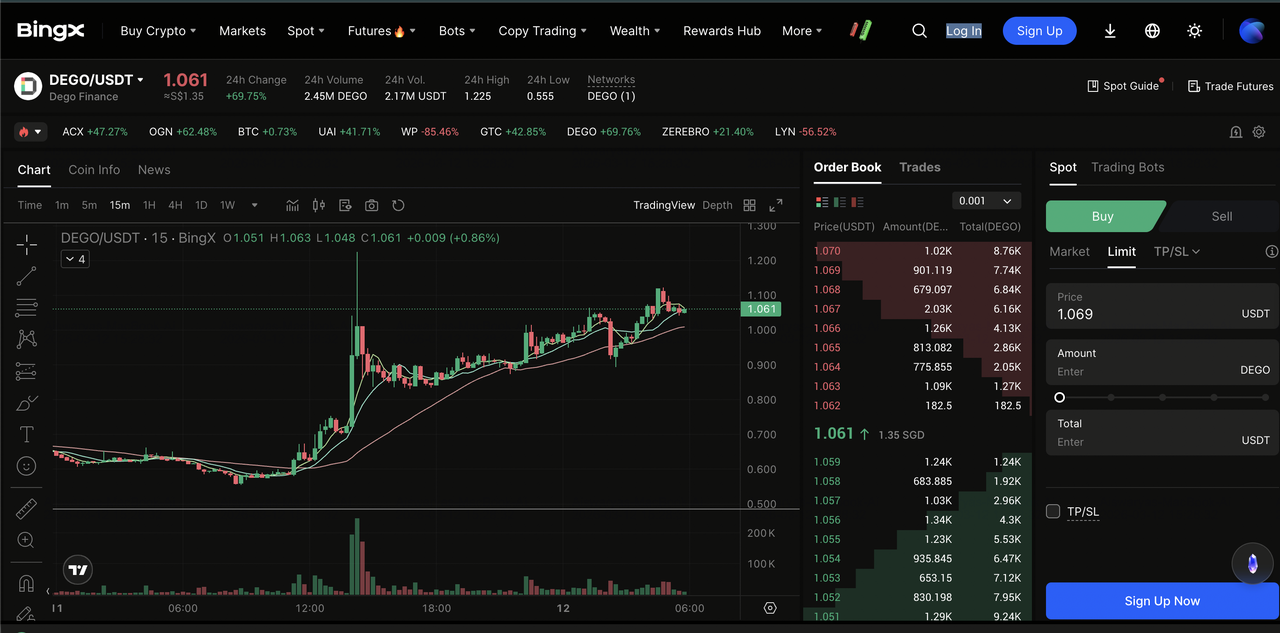
DEGO/USDT trading pair on the BingX spot market
- Fund Your Account: Log in to BingX and deposit USDT into your spot wallet.
- Search for DEGO: Go to the Spot market and search for the DEGO/USDT pair.
- Execute Trade: Use a market or limit order to purchase DEGO tokens and store them in your secure BingX wallet.
Learn more about how to buy Dego Finance in our comprehensive guide.
Trading DEGO Perps with Leverage on the Futures Market
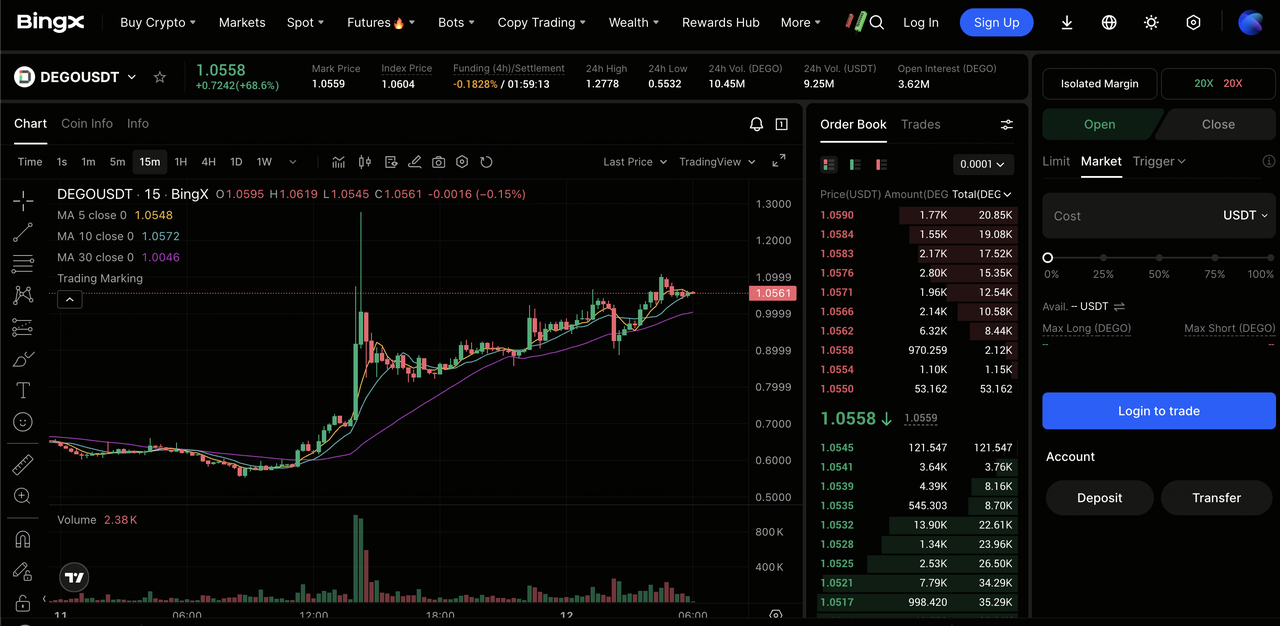
For experienced traders, BingX offers DEGO perpetual contracts, allowing you to go long or short on the token's price action with flexible leverage. Always monitor your margin closely during high-volatility periods like the current March 2026 rally.
- Transfer Funds: Move USDT from your Spot wallet to your Futures account.
- Choose Your Side: Open a Long position if you expect a breakout, or a Short position if you anticipate a pullback.
- Set Leverage and Margin: Select Isolated Margin to cap risk, and adjust your leverage slider according to your risk tolerance.
- Confirm Order: Input your Stop Loss and Take Profit levels to automate your exit strategy, then click Open Long or Open Short.
3 Key Considerations Before Investing in Dego Finance
Before adding DEGO to your portfolio, it is essential to evaluate the structural risks and long-term sustainability of this modular NFT-DeFi hybrid.
- Exchange Compliance and Listing Risk: As of March 2026, DEGO carries a Monitoring Tag on major exchanges. This signals a higher risk of potential delisting if the project fails to meet updated volume, liquidity, or regulatory standards, which could severely impact long-term liquidity.
- Anonymous Team and Governance Reliance: The DEGO founding team remains anonymous, a common but high-risk factor in DeFi. Investors must rely entirely on the transparency of the DEGO DAO and third-party smart contract audits rather than a central corporate entity for long-term project accountability.
- Sustainable Utility vs. Speculative Volatility: While DEGO’s LEGO modularity is innovative, its price is currently driven by extreme speculative turnover as of March 2026. For a long-term hold, you must assess if the Delta Launchpad and AI tools can attract consistent developer adoption once the initial trading hype cools.
Final Thoughts: Is Dego Finance (DEGO) a Good Buy in 2026?
Dego Finance has proven its resilience by evolving from a simple NFT minter into a sophisticated AI and DeFi incubator. Its recent price surge in March 2026 highlights a strong organic demand for its LEGO-like infrastructure. If Dego continues to successfully incubate meme and AI projects through its Delta launchpad, it could become a primary hub for low-cap gems.
However, the recent parabolic move makes it a high-risk entry. Investors should watch for sustained trading volume and a successful hold of key support levels before committing to long-term positions.
Related Reading
- What Is UnifAI Network (UAI) Agentic Finance Layer for Autonomous DeFi and How to Buy?
- Top 7 AI Agent Tokens on Solana to Watch in 2026 Amid the Rise of the Machine Economy
- What Is Freysa (FAI) Sovereign AI Agent Stack on Base and How to Trade FAI?
- What Is Fabric's ROBO Token for Empowering the Global Robot Economy and How to Trade ROBO?
