
Entering the crypto market in Brazil in 2026 is faster and more secure than ever, thanks to the universal adoption of PIX and a robust regulatory framework established by the Central Bank (BCB). However, with the full implementation of the DeCripto reporting system and new rules for Virtual Asset Service Providers (VASPs), investors must now choose their path based on a balance of convenience, privacy, and control.
This guide explains what Brazil’s crypto environment looks like in 2026 and provides a practical comparison of the three main on-ramp methods to help you buy your first digital assets safely. Whether you are looking for the institutional-grade security and automated DeCripto reporting of a global leader like BingX, the privacy of a decentralized swap, or the flexibility of a peer-to-peer marketplace, choosing the right entry point is the first step toward building a resilient digital portfolio.
Brazil Crypto Market Outlook in 2026: PIX, Rules, and DeCripto
Brazil remains the undisputed crypto leader in Latin America, receiving over $318.8 billion in crypto value annually. As of March 2026, the market has moved from a wild west phase into institutional maturity. Under BCB Resolutions 519 and 520, all authorized exchanges must now legally separate user funds from corporate assets, ensuring a level of protection comparable to traditional banking.
The most significant change in 2026 is the DeCripto system, which automates tax reporting for transactions performed on regulated platforms. While the R$35,000 monthly exemption for capital gains still applies to many retail traders, the transparency requirements are stricter. For investors, this means choosing a platform isn't just about the lowest fees but is also about how that platform handles your data and your digital property.
Read more: Bitcoin Post-Halving Cycle: Will BTC Enter a Bull Market or Face a Bear Market Reset in 2026?
4 Key Factors for Brazilian Crypto Investors to Consider in 2026
- Instant Fiat Entry: PIX remains the global gold standard for on-ramping, allowing BRL-to-crypto conversions in under 10 seconds, 24/7.
- Tax Transparency: Regulated CEXs provide automated reports to the Receita Federal, reducing the paperwork burden for compliant investors.
- Asset Segregation: Your BRL and crypto holdings are legally protected from exchange insolvency under new 2026 mandates.
- Custody Responsibility: As regulations tighten, the choice between keeping funds on an exchange (custodial) or in a personal wallet (self-custody) becomes a strategic security decision.
Read more: How to Buy Your First Crypto in Brazil Using PIX: A Step-by-Step Guide (2026)
CEX vs. DEX vs. P2P: What Is the Best Way for Brazilian Crypto Users to On-Ramp?
When choosing an on-ramp in Brazil, you must decide between three distinct paths. Here is how they stack up in the 2026 landscape:
1. Centralized Exchanges (CEXs) Like BingX
Centralized exchanges remain the gold standard for accessibility in Brazil, with BingX leading the charge by bridging the gap between local convenience and global opportunity. Functioning as a secure, regulated gateway, BingX manages the technical complexities of the blockchain for you, allowing you to move from the Brazilian Real to digital assets like Bitcoin or USDT in a matter of seconds. By prioritizing a PIX-first infrastructure, BingX ensures that your capital is always moving at the speed of the modern Brazilian economy, 24/7.
The true strength of the BingX CEX experience lies in its institutional-grade security and localized compliance. In 2026, BingX is fully integrated with the DeCripto reporting system, meaning your transactions are automatically logged to help streamline your annual tax filings with the Receita Federal. Beyond just simple on-ramps, BingX offers Brazilian investors exclusive access to Copy Trading and TradFi tools, allowing you to diversify into global indices and stocks using your crypto as collateral, all while benefiting from the lowest BRL withdrawal fees in the region.
- Pros of CEXs: Industry-leading BRL liquidity, near-instant PIX settlements, and 24/7 multilingual support. Superior asset protection through Resolution 519 compliance and automated tax reporting.
- Cons: Requires standard CPF verification (KYC) and operates on a custodial model, though backed by verified Proof-of-Reserves.
CEXs are best for: Newcomers looking for a safe super-app experience, active traders who need high-speed execution, and anyone wanting a direct, hassle-free link to their accounts at Nubank, Itaú, or Bradesco.
Read more: Cashing Out: How to Sell Crypto and Withdraw Brazilian Reals (BRL) in 2026
2. Decentralized Exchanges (DEXs)
Decentralized Exchanges (DEXs) represent a shift toward complete financial sovereignty by removing the intermediary from the trading process. Operating through automated smart contracts on blockchains like Ethereum or BNB Chain, these platforms allow Brazilian users to execute trades directly from personal wallets such as MetaMask. This non-custodial model is a key consideration for those who prioritize the "not your keys, not your coins" philosophy, as it ensures that assets remain under the user’s private control at all times, independent of any corporate entity’s solvency.
However, the primary trade-off for this autonomy is the lack of a direct fiat bridge. In the 2026 landscape, DEXs do not natively support PIX or BRL deposits; users must first acquire a liquid asset, typically a stablecoin like USDT, through a centralized on-ramp before they can participate in decentralized markets. Furthermore, while DEXs offer unparalleled access to early-stage long-tail tokens and DeFi yielding protocols, they place the full burden of security on the individual. In this environment, transaction failures due to slippage or network congestion are irreversible, making these platforms most suitable for experienced participants who have already secured their initial crypto capital via an exchange.
- Pros: Full self-custody of private keys, high levels of pseudonymity (no KYC for swaps), and immediate access to experimental DeFi assets.
- Cons: No native BRL/PIX support, higher technical complexity, and exposure to smart contract risks.
DEXs are Best for: Privacy-focused veterans and yield farmers who already hold crypto and seek to diversify beyond the assets listed on major centralized platforms.
Read more: What Are the Top 10 Decentralized Exchanges (DEXs) of 2026?
3. Peer-to-Peer (P2P) On-Ramps
Peer-to-Peer (P2P) on-ramps function as a managed marketplace where Brazilian buyers and sellers transact directly, using the exchange as a neutral escrow agent. This model is particularly significant in the 2026 Brazilian market because it allows for high-precision trading; users can often find exchange rates that sit closer to the global spot price than standard instant buy interfaces. By utilizing platforms like the BingX P2P Marketplace, investors gain access to a wide network of verified local merchants who accept a variety of payment methods beyond standard banking, including PIX, Mercado Pago, and even specific retail-based transfers.
The primary consideration for P2P users is the balance between flexibility and settlement time. Unlike the sub-second execution of a CEX's internal ledger, a P2P trade relies on the human element; the buyer must manually initiate a PIX transfer, and the seller must verify receipt before the escrowed crypto is released to the buyer's wallet. While the BingX escrow system provides a critical safety net by locking the seller's digital assets during the trade, users must remain vigilant regarding counterparty reputation and strictly follow platform security protocols to avoid disputes. This method remains a staple for those optimizing for cost or using non-traditional financial rails.
- Pros: Highly competitive, negotiable exchange rates; supports a vast array of local Brazilian payment methods; zero-fee trading on many major platforms.
- Cons: Variable settlement speed (minutes to hours); requires manual interaction and confirmation; potential for counterparty disputes if instructions aren't followed.
P2P platforms are best for: Cost-sensitive traders looking for the best BRL/USDT spreads and users who prefer direct, non-corporate transaction flows.
Read more: How to Buy Bitcoin and Crypto with P2P on BingX
How to Buy Crypto in Brazil on BingX: An On-Ramp Step-by-Step Guide
BingX has optimized its platform for the 2026 Brazilian market, offering a seamless bridge between PIX and global markets.
Option 1: The Direct Path via Fiat Deposit
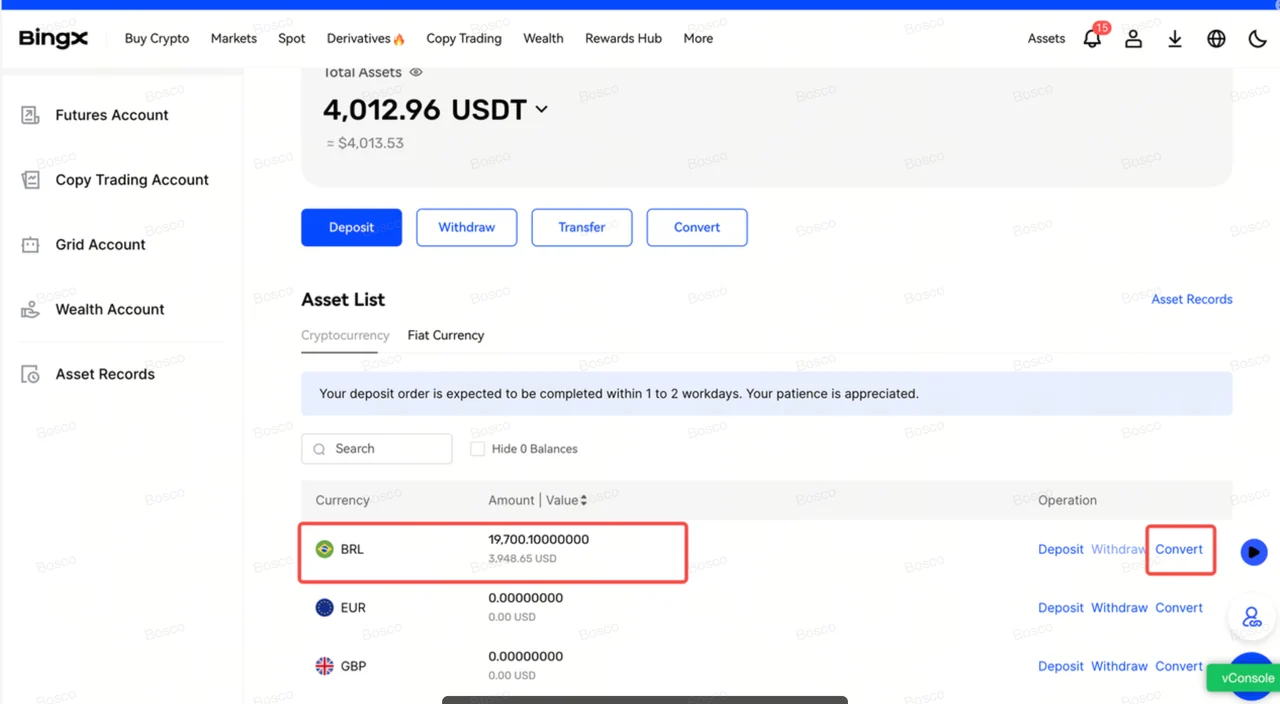
- Verify: Complete your CPF verification (KYC) on BingX, a legal requirement for 2026.
- Deposit: Go to Buy Crypto and Fiat Deposit, select BRL, and enter your amount.
- PIX: Scan the generated QR code using your banking app. Funds arrive in seconds.
- Convert: Use BingX Convert to swap your BRL balance for BTC, ETH, or USDT instantly.
Option 2: The Market Path via P2P Trading
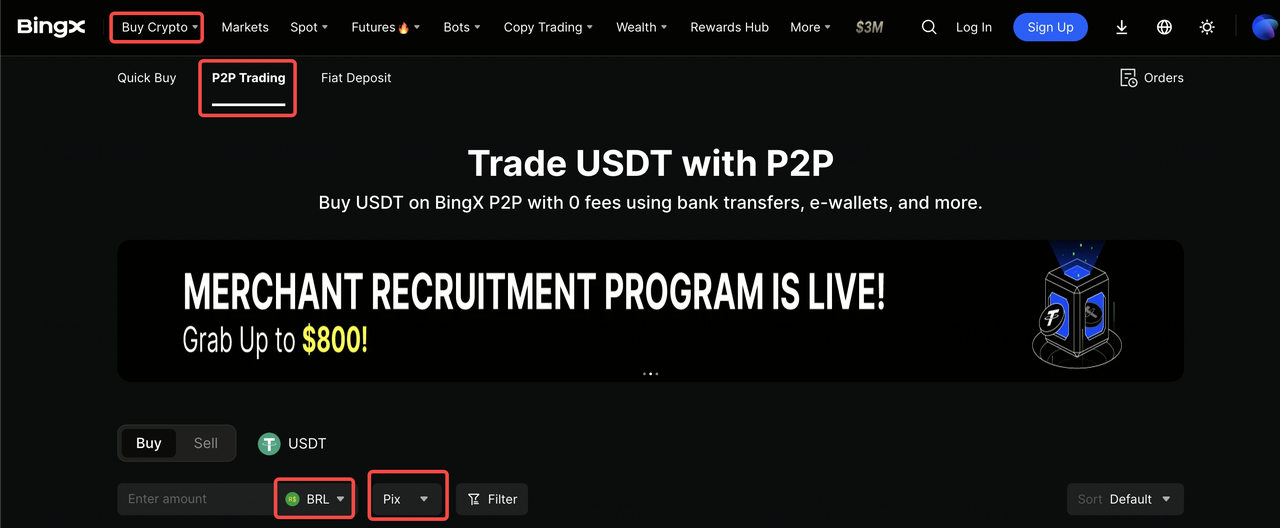
- Navigate: Go to Buy Crypto and P2P Trading.
- Filter: Select BRL and choose PIX as your payment method.
- Trade: Choose a verified merchant with a high completion rate.
- Transfer: Send the PIX to the seller's account. Once they confirm receipt, BingX releases the crypto to your wallet.
Learn more about how to buy crypto with P2P trading on BingX.
Top 5 Safety Tips for Brazilian Crypto Investors in 2026
Managing your digital wealth in Brazil’s regulated 2026 landscape requires a proactive approach to both cybersecurity and tax compliance.
- Strict Adherence to the Same-Ownership Rule In 2026, Central Bank anti-fraud protocols are automated and unforgiving. Your PIX transfer must originate from a bank account registered to the exact same CPF as your BingX account. Attempts to fund your account via a spouse’s or friend’s bank account will result in automated reversals or flagged accounts, as authorized VASPs are now legally required to block third-party fiat inflows to prevent money laundering.
- Mandatory App-Based 2FA (No SMS) While SMS-based verification was common in the past, 2026 security standards emphasize app-based authenticators like Google Authenticator or BingX’s internal 2FA for both logins and withdrawals. This protects you against SIM-swap attacks, which remain a primary vector for crypto theft in Latin America. Always save your backup secret keys in a physical location, never digitally.
- Strategize Around the R$35,000 Tax Threshold Under current 2026 regulations, capital gains tax is generally triggered only if your total monthly sales, including crypto-to-crypto swaps exceed R$35,000. To optimize your tax position, keep a real-time log of your Fair Market Value in BRL at the time of each trade. Using BingX’s automated DeCripto reports can save you hours of manual calculation during the annual DIRPF filing season.
- Phishing Defense and URL Verification As crypto adoption hits record highs, phishing scams have become more sophisticated, often mimicking official PIX confirmation pages. Always verify that you are interacting with the official bingx.com domain and be wary of urgent emails or Telegram messages asking for your password or 2FA codes. No legitimate BingX employee will ever ask for your private credentials.
- Utilize Cold Storage for Long-Term Wealth While CEXs are significantly safer in 2026 due to mandatory asset segregation (Resolution 519), the Gold Standard for security remains self-custody. For any assets you do not plan to trade within the next 30 days, move them to a hardware wallet (cold storage). This ensures that even in the event of extreme market volatility or platform downtime, your private keys remain exclusively in your possession.
Final Thoughts: How to Navigate the 2026 Brazilian Crypto Lanscape with BingX
In 2026, Brazil has established itself as a global benchmark for the integration of digital assets into the traditional financial system. The speed of the PIX-to-Crypto bridge, combined with the structural safety of Resolution 519, has transformed cryptocurrency from a speculative asset into a functional component of a modern portfolio. Whether you prioritize the streamlined compliance of a centralized exchange, the autonomy of a decentralized swap, or the rate optimization of a P2P marketplace, the key to success lies in matching your chosen on-ramp to your specific goals for liquidity and asset control.
For the majority of Brazilian investors, a regulated platform like BingX provides the most practical starting point by balancing immediate BRL access with advanced diversification tools. By utilizing a super-app that handles DeCripto reporting and offers a direct bridge to TradFi, you can focus on strategy rather than technical hurdles. As you gain experience, the best approach is often a hybrid one: leveraging the liquidity of BingX for your daily entries and exits, while exploring self-custody for long-term wealth preservation.
Risk Reminder: Cryptocurrency trading is subject to high market risk and price volatility. While the 2026 regulatory framework provides a safer environment for fiat-to-crypto transactions, the underlying value of digital assets can fluctuate significantly. Never invest more than you can afford to lose, and ensure you are fully aware of the tax obligations and technical risks associated with self-custody.
Related Reading
- How to Buy Your First Crypto in Brazil Using PIX: A Step-by-Step Guide (2026)
- Cashing Out: How to Sell Crypto and Withdraw Brazilian Reals (BRL) in 2026
- How to Buy Bitcoin and Crypto with P2P on BingX
- Best Ways to Buy Small Amounts of Bitcoin Under $100 with Low Fees
FAQs on On-Ramping in Brazil
1. Is it legal to buy crypto via P2P in Brazil?
Yes, P2P is legal. However, 2026 rules require major P2P platforms to perform KYC and monitor for suspicious activity to prevent money laundering.
2. How long does a PIX deposit take on BingX?
Under normal conditions, PIX deposits are credited in under 5 minutes, 24/7.
3. Do I have to report my crypto to the Receita Federal?
Yes. In 2026, authorized exchanges report most data automatically via DeCripto, but you are still responsible for your annual DIRPF declaration if you hold more than R$5,000 in assets.
4. Can I use a credit card to buy crypto in Brazil?
While possible, it is often discouraged in Brazil due to higher fees (IOF tax) and interest rates compared to the nearly free and instant PIX method.