

USDG is a USD-pegged stablecoin designed for payments, trading, and digital dollar settlement. It is backed 1:1 by cash and short-term U.S. government securities, giving users a regulated dollar asset that can move across crypto exchanges, wallets, fintech platforms, and payment networks. What makes USDG different from most stablecoins is its economic model: instead of keeping most reserve income at the issuer level, USDG shares the majority of that yield with the platforms that help drive its adoption.
USDG is issued by Paxos, a regulated stablecoin infrastructure provider responsible for minting, redemption, reserve management, and compliance. Its adoption is supported by the Global Dollar Network (GDN), a partner ecosystem that includes exchanges, banks, fintechs, wallets, and payment processors. Through GDN, eligible partners can earn a share of reserve yield by holding, minting, or accepting USDG. This guide explains how USDG works, how GDN supports its growth, how USDG’s supply model functions, the main risks to consider, and how to buy USDG on BingX.
What Is USDG?
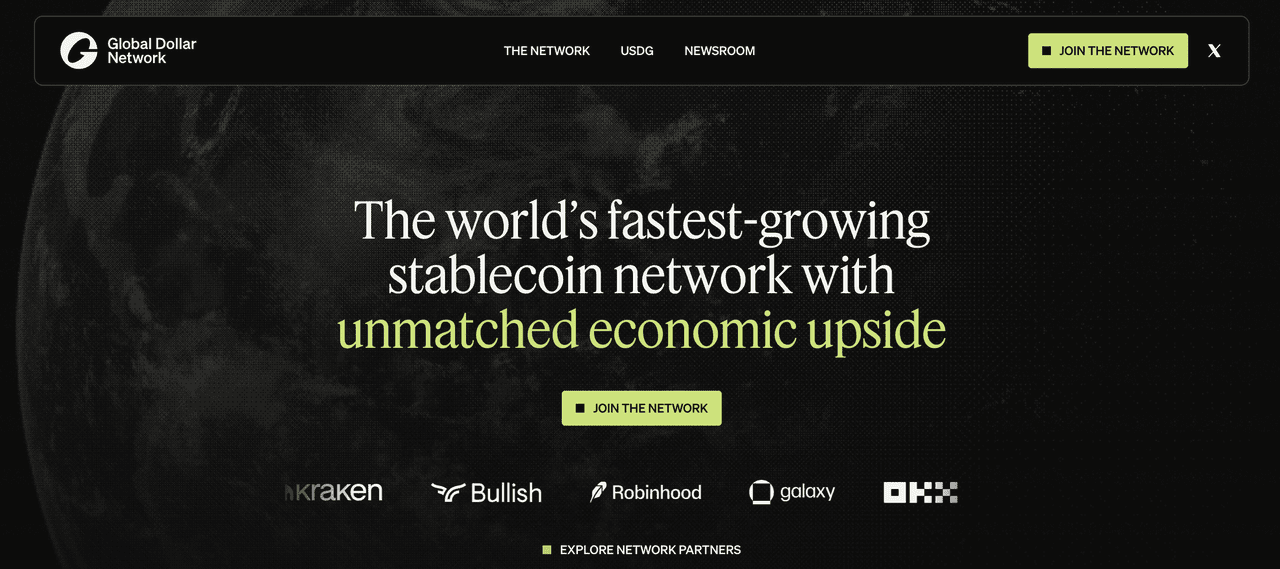
USDG, also known as Global Dollar, is a USD-pegged stablecoin issued by Paxos Digital Singapore and backed 1:1 by cash and short-term U.S. government securities. It launched in November 2024 as part of the Global Dollar Network, with founding partners including Robinhood, Kraken, Galaxy Digital, Anchorage Digital, Bullish, Nuvei, and Paxos. USDG is issued under the supervision of the Monetary Authority of Singapore (MAS) and, since July 2025, under the European Union’s Markets in Crypto-Assets (MiCA) regulation through Paxos Issuance Europe.
The core idea behind USDG is to create a more open economic model for stablecoin distribution. In the traditional stablecoin model, issuers earn reserve yield while exchanges, wallets, banks, and payment platforms help drive adoption. USDG changes that structure by redirecting over 90% of reserve yield back to Global Dollar Network partners, giving platforms a direct financial incentive to hold, mint, accept, and distribute USDG.
This design gives USDG a clearer identity in the stablecoin market:
- Reserve-backed: USDG is backed by cash and short-term U.S. government securities rather than algorithmic mechanisms.
- Regulated: USDG is issued under regulatory frameworks in Singapore and the European Union.
- Yield-sharing: USDG shares most reserve yield with eligible ecosystem partners instead of keeping it only at the issuer level.
- Adoption-focused: USDG aims to grow by making distribution economically attractive for exchanges, wallets, fintechs, and payment platforms.
For traders and stablecoin users, USDG is designed to function as a compliant digital dollar. For platforms, it is designed to make stablecoin distribution economically attractive.
USDG vs. Global Dollar Network vs. Paxos: What Are the Differences?
- USDG the token: USDG is the stablecoin itself. It is pegged 1:1 to the U.S. dollar, redeemable at par through Paxos, and deployed on Ethereum, Solana, and Ink, Kraken’s ZK-rollup Layer 2 network. Each USDG token is backed by cash deposits and short-term U.S. government securities held in segregated, bankruptcy-remote accounts.
- Global Dollar Network (GDN): GDN is the partner ecosystem built around USDG. It connects exchanges, wallets, fintechs, banks, and payment processors that help distribute and support USDG. Partners can earn a share of the yield generated by USDG reserves when they mint, hold, or accept USDG. As of May 2026, GDN has grown to more than 130 partners.
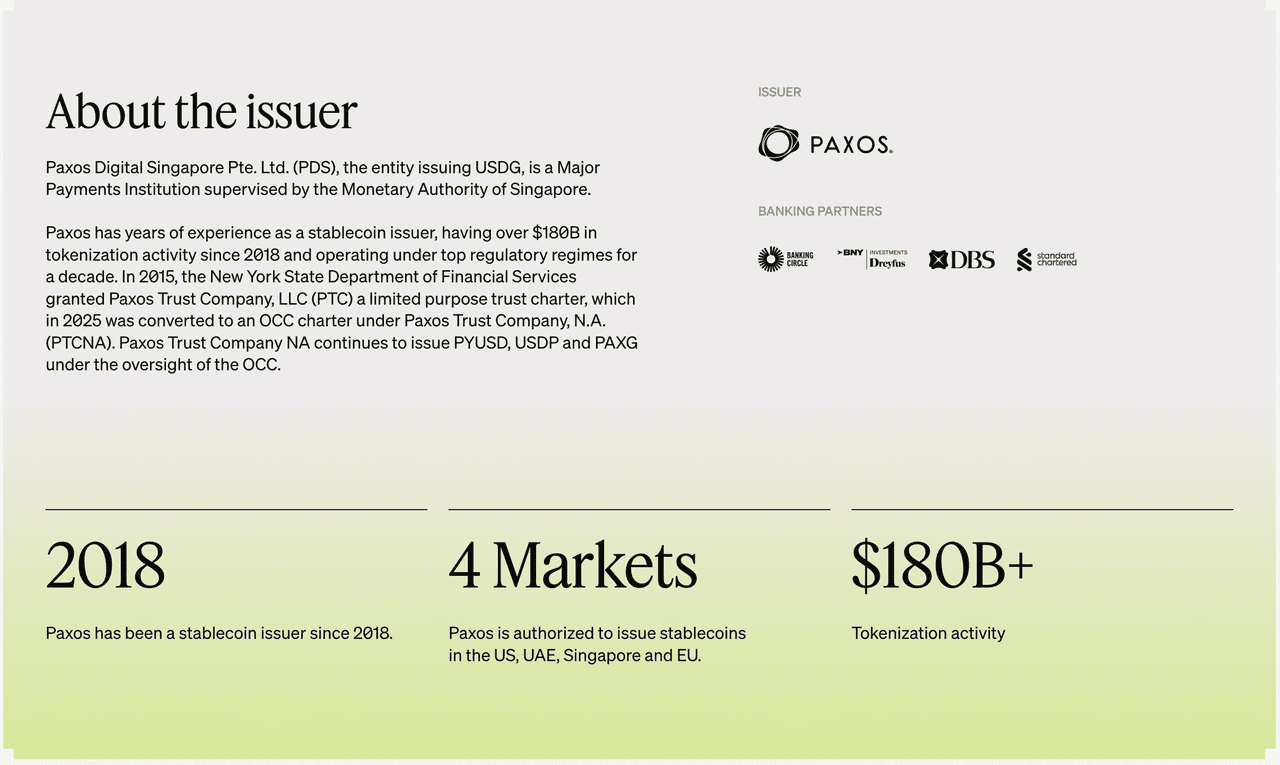
- Paxos: Paxos is the issuer and reserve manager behind USDG. It operates through two regulated entities: Paxos Digital Singapore, supervised by MAS, and Paxos Issuance Europe, supervised by FIN-FSA under MiCA. Paxos handles minting, redemption, reserve management, and monthly reserve transparency reports, while retaining only a small share of reserve yield to cover operating costs.
How Does USDG Work?
USDG works through reserve-backed issuance, a mint-and-burn supply model, partner yield sharing, and multi-chain deployment. Together, these mechanisms keep USDG backed by real assets while giving platforms a financial reason to support its adoption.
Source: globaldollar.com
- Reserve-backed issuance: Every USDG in circulation is backed by an equivalent value in U.S. dollar deposits or short-term U.S. government securities. Reserves are held in segregated, bankruptcy-remote accounts at regulated financial institutions, including DBS Bank. Paxos also publishes monthly third-party attestation reports to confirm that reserves match circulating supply.
- Mint and burn mechanism: When an institutional partner or qualified user deposits USD with Paxos, an equivalent amount of USDG is minted. When USDG is redeemed, the token is burned and USD is returned. This keeps USDG supply aligned with actual reserve backing and prevents unbacked supply expansion.
- Revenue-sharing model: USDG reserves generate yield from cash deposits and short-term Treasuries. Instead of keeping most of that yield at the issuer level, the Global Dollar Network redistributes over 90% of reserve yield to partners based on their contribution to USDG adoption. Partners can earn by minting USDG, holding USDG balances, or enabling USDG payments, while Paxos keeps a small share for operational costs.
- Multi-chain deployment: USDG is available on Ethereum, Solana, and Ink, Kraken’s ZK-rollup Layer 2 network. Ethereum supports DeFi integrations, Solana supports faster and lower-cost payments, and Ink supports exchange-native trading and settlement. This multi-chain design helps USDG serve different use cases across crypto, fintech, and payment platforms.
USDG vs. USDT vs. USDC: Key Differences
USDG, USDC, and USDT are all USD-pegged stablecoins, but they are built around different models:
- USDG: Issued by Paxos and tied to the Global Dollar Network, with a reserve-yield sharing model for partner platforms.
- USDC: Issued by Circle and known for its regulated structure, reserve transparency, and institutional use.
- USDT: Issued by Tether and remains the largest stablecoin by liquidity, trading volume, and exchange adoption.
The biggest difference is how reserve income is handled. USDG shares most reserve yield with eligible Global Dollar Network partners, while USDC and USDT generally retain reserve income at the issuer level. Their regulatory and transparency profiles also differ, with USDG and USDC positioned around regulated reserve-backed issuance, while USDT has the deepest market liquidity but has faced more scrutiny over reserves and disclosures.
|
Feature |
USDG |
USDC |
USDT |
|
Issuer |
Paxos |
Circle |
Tether |
|
Regulatory profile |
MAS-supervised in Singapore and MiCA-regulated in the EU |
U.S.-regulated issuer with strong compliance focus |
Offshore issuer with higher regulatory uncertainty |
|
Reserve backing |
Cash and short-term U.S. government securities |
Cash and short-term U.S. Treasuries |
Treasury bills, cash, secured loans, and other reserve assets |
|
Reserve yield model |
Over 90% shared with Global Dollar Network partners |
Retained by Circle |
Retained by Tether |
|
Transparency |
Monthly third-party reserve attestations |
Monthly reserve attestations |
Quarterly attestations, with historical transparency concerns |
|
Main difference |
Partner yield sharing |
Compliance and institutional trust |
Liquidity and market dominance |
Major USDG Developments: From Launch to Global Expansion
USDG's history reflects rapid institutional expansion driven by the appeal of its revenue-sharing model and regulatory clarity. Its key milestones combine partner growth, chain deployment, and geographic expansion.
|
Milestone |
Date |
Main Purpose |
|
USDG Launch |
November 2024 |
USDG launched with founding GDN partners including Robinhood, Kraken, Galaxy Digital, Anchorage Digital, Bullish, and Nuvei |
|
Solana Deployment |
Early 2025 |
USDG expanded to Solana, supporting high-throughput payment and DeFi use cases |
|
EU MiCA Launch |
July 2025 |
USDG became one of the first stablecoins fully compliant with MiCA, making it available to over 450 million consumers across 30 EU countries |
|
OKX Joins GDN |
July 2025 |
OKX joined as a core partner, bringing USDG to 60 million customers across 180 countries |
|
Mastercard and Worldpay Join |
Mid-2025 |
Major payment infrastructure providers joined GDN, expanding USDG into traditional payment rails |
|
$1 Billion Market Cap |
December 2025 |
USDG surpassed $1 billion in circulating supply, validating the revenue-sharing model's ability to drive adoption |
|
Robinhood Retail Listing |
April 2026 |
Robinhood listed USDG for retail users, expanding access to millions of individual investors |
|
$2.75 Billion Circulating Supply |
May 2026 |
USDG reached approximately $2.75 billion in circulating supply with over 130 GDN partners |
- USDG Launch (November 2024): USDG launched as the core asset of the Global Dollar Network, with founding partners including Robinhood, Kraken, Galaxy Digital, Anchorage Digital, Bullish, Nuvei, and Paxos.
- Solana Deployment (Early 2025): USDG expanded from Ethereum to Solana, adding faster and lower-cost support for payments, DeFi, and stablecoin transfers.
- EU MiCA Launch (July 2025): USDG became available under the EU’s MiCA framework through Paxos Issuance Europe, extending its regulated footprint across Europe.
- OKX, Mastercard, and Worldpay Join GDN (Mid-2025): GDN added major crypto and payment partners, including OKX, Mastercard, and Worldpay, strengthening USDG’s reach across exchange liquidity and traditional payment infrastructure.
- $1 Billion Market Cap (December 2025): USDG passed $1 billion in circulating supply within its first year, supported by more than 100 GDN partners.
- Robinhood Listing and $2.75 Billion Supply (2026): Robinhood listed USDG for retail users in April 2026. By May 2026, USDG reached about $2.75 billion in supply, with more than 130 integration partners.
What Are the USDG Tokenomics?
USDG has a reserve-driven supply model. Unlike most crypto assets, it has no fixed maximum supply, no block rewards, no staking emissions, and no governance token. New USDG is minted only when USD is deposited with Paxos, and USDG is burned when users redeem it for dollars.
This means USDG supply expands or contracts based on real market demand rather than a preset issuance schedule. Its tokenomics are designed around reserve backing, transparent reporting, and partner-based yield distribution.
USDG Supply and Reserve Mechanisms
- 1:1 reserve backing: Every USDG is backed by cash deposits or short-term U.S. government securities held in segregated, bankruptcy-remote accounts.
- Mint and burn model: USDG is minted when USD enters the system and burned when USDG is redeemed. This keeps circulating supply tied to actual reserves.
- Yield sharing: USDG reserves generate yield from cash and Treasury instruments. Over 90% of that yield is distributed to eligible Global Dollar Network partners, while Paxos keeps a small share for operations, development, and compliance.
- No inflationary issuance: USDG does not rely on mining, staking rewards, or token emissions. Supply grows only when new reserves are added.
- Monthly attestations: Paxos publishes monthly third-party reserve reports to confirm that USDG remains fully backed by eligible reserve assets.
- Par redemption: USDG is designed to be redeemable through Paxos at 1 USDG for 1 U.S. dollar, which supports its 1:1 peg.
USDG Reserve Composition
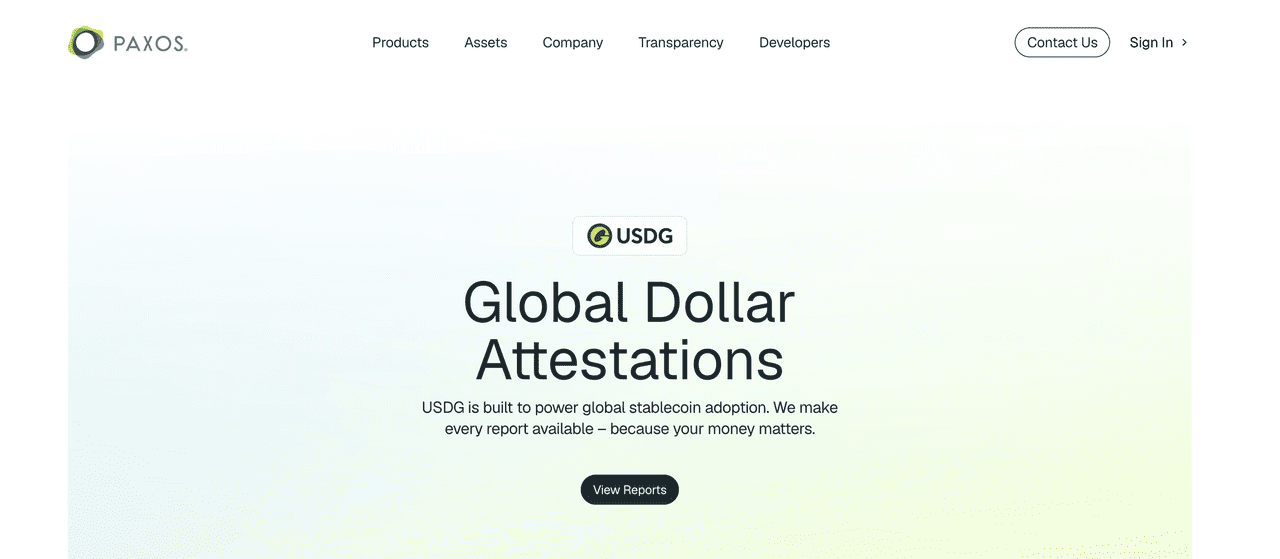
USDG’s reserve composition is designed to keep the token simple and liquid. Instead of relying on volatile crypto assets, algorithmic mechanisms, or complex collateral structures, USDG is backed by cash and short-term U.S. government securities.
|
Reserve Component |
Description |
|
Cash deposits |
U.S. dollars held in segregated accounts at regulated financial institutions, including DBS Bank. |
|
Short-term U.S. government securities |
Treasury bills and similar liquid instruments used to maintain backing while generating reserve yield. |
These reserve assets are legally separated from Paxos’s corporate balance sheet, which helps protect USDG holders’ redemption claims. This structure is important because stablecoin users need confidence that reserves are not mixed with the issuer’s operating funds or exposed to unrelated business risks.
Together with monthly third-party attestations, USDG’s reserve setup is designed to support the 1:1 peg, maintain liquidity for redemptions, and give institutions clearer visibility into how the stablecoin is backed.
How to Buy USDT on BingX
USDG may not be available on BingX, but users can still access stablecoin liquidity through USDT, the main USD-pegged asset used across BingX for spot trading, futures margin, transfers, and account settlement.
Step 1: Log in and complete account setup. Sign up or log into your BingX account, complete any required identity verification in your region, and enable security settings such as two-factor authentication.
Step 2: Open Buy Crypto. On the BingX app or website, go to Buy Crypto. Depending on your region, BingX supports several ways to buy crypto with fiat, including Quick Buy, P2P trading, and Bank Deposit.
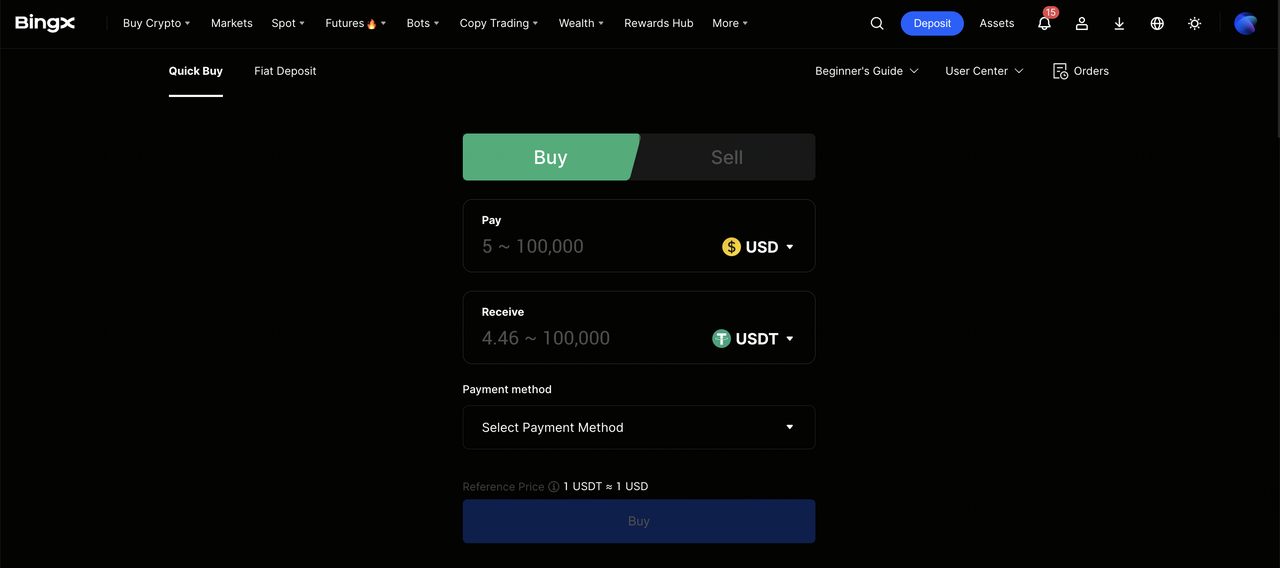
Step 3: Choose how to buy USDT.
- Quick Buy: Select your fiat currency, choose USDT, enter the purchase amount, and pay with a supported method such as card, Apple Pay, or Google Pay where available.
- P2P Trading: Choose Buy USDT, select your currency and payment method, compare merchant offers, place an order, and pay the seller through the listed payment method. BingX P2P supports many local payment options and uses escrow during the transaction.
- Bank Deposit: Where supported, deposit fiat through bank transfer and use it to buy USDT on BingX.
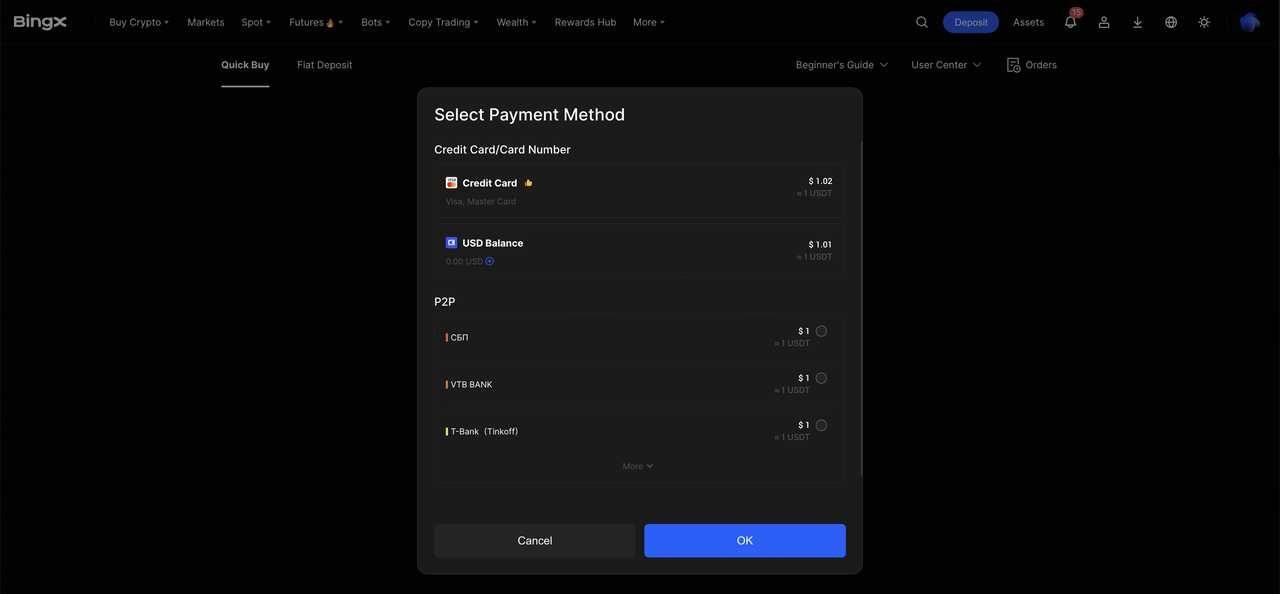
Step 4: Confirm receipt and manage your USDT. Once the purchase is completed, USDT will appear in your BingX account. You can hold it, use it for spot trading, transfer it to futures as margin, or withdraw it to a supported wallet.
Risks and Considerations Before Using USDG
USDG has strong regulatory backing and a clear yield-sharing model, but users should still consider its issuer, liquidity, rate, and regulatory risks.
- Issuer reliance: USDG depends on Paxos for minting, redemption, reserve management, and compliance. Bankruptcy-remote reserves help protect users, but Paxos remains the key operational counterparty.
- Interest rate sensitivity: USDG’s partner rewards depend on yield from cash and short-term Treasuries. If rates fall, the yield available for Global Dollar Network partners may shrink.
- Smaller scale than USDT and USDC: USDG is still much smaller than the leading stablecoins, which can limit liquidity, trading pairs, DeFi depth, and payment adoption.
- Partner concentration: USDG adoption relies on major partners such as Kraken, OKX, and Robinhood. Reduced support from key partners could slow growth.
- Regulatory changes: USDG is regulated under MAS and MiCA, but global stablecoin rules are still evolving. New requirements could affect issuance, access, or distribution.
- No price upside: USDG is designed to stay near $1, so it does not offer capital appreciation like volatile crypto assets.
Final Thoughts: Should You Use USDG in 2026?
USDG is one of the more interesting stablecoins to watch in 2026. With MAS and MiCA regulatory coverage, a partner yield-sharing model, more than 130 GDN partners, and deployment across Ethereum, Solana, and Ink, USDG has built a credible alternative to USDT and USDC in a short period of time.
The key question is whether USDG can turn partner incentives into deeper liquidity and real user adoption. Its revenue-sharing model gives exchanges, fintechs, wallets, and payment platforms a reason to support USDG, but it still needs to close the scale gap with USDT and USDC. For users, USDG may be useful as a regulated digital dollar for payments, settlement, DeFi, or stable value storage. For platforms, its main appeal is the ability to participate in stablecoin economics rather than only distribute another issuer’s token.
Related Reading
- What Is USDT in 2026? Complete Beginner's Guide to Tether's Stablecoin
- What Is USDC in 2026? Complete Beginner's Guide to Circle's Stablecoin
- Understanding 6 Different Types of Stablecoins: A 2026 Breakdown
- USDC vs. USDT: Key Differences and Which Stablecoin to Choose in 2026?
- What Is USAT (USA₮), Tether’s U.S.-Based Stablecoin Built for GENIUS Act Compliance?
