


The regulatory grace period for the European Union's Markets in Crypto-Assets (MiCA) regulation has officially ended. As of July 1, 2026, all crypto platforms operating within the European Economic Area (EEA) must comply with strict rules regarding E-Money Tokens (EMTs). This sudden structural shift has split the multi-billion-dollar stablecoin sector into two clear paths: authorized digital assets and non-compliant offshore tokens.
Under MiCA Title III, any exchange or custodian facilitating trading for non-authorized stablecoins faces severe regulatory penalties. Because Tether has chosen not to seek an official EMT license under this framework, the world's largest stablecoin, USDT, has been systematically stripped of its universal shelf space across European centralized exchanges. Conversely, Circle's USDC and EURC have secured first-day compliance, capturing the vacuum left behind.
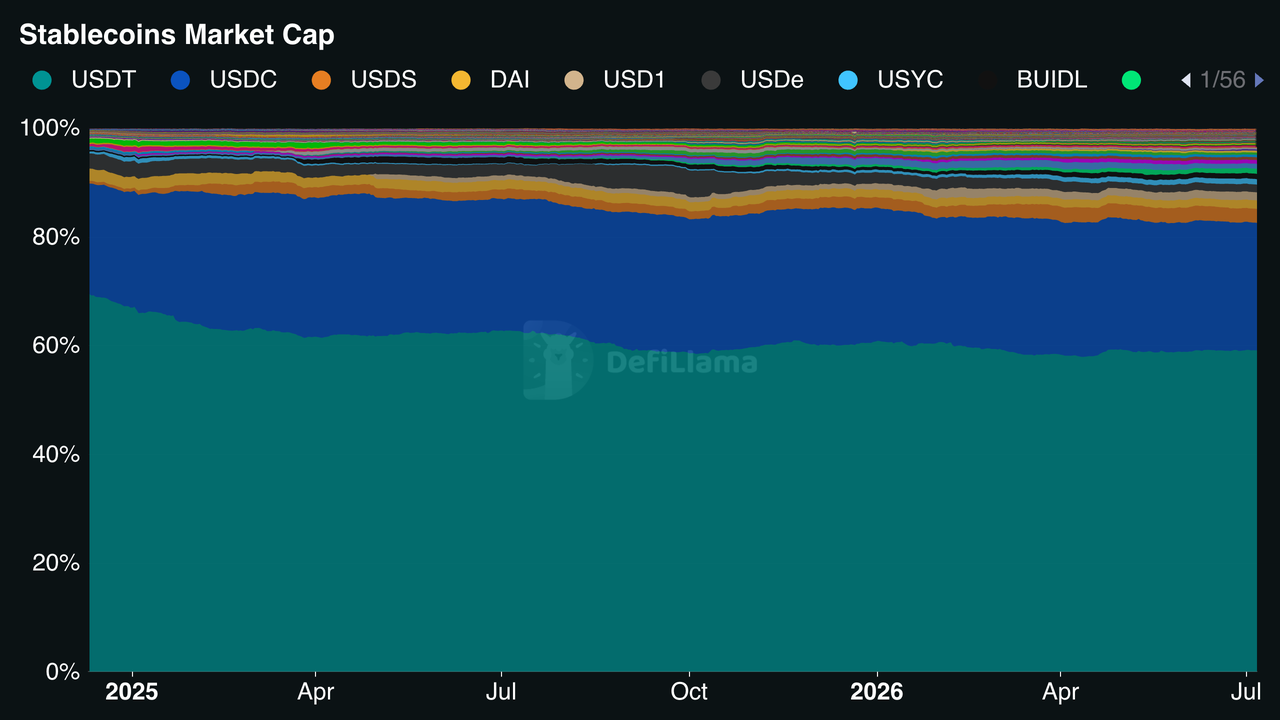
Stablecoin dominance by market cap | Source: DefiLlama
This guide breaks down why Tether is retreating from the EU, how Circle capitalized on the regulatory transition, and what this liquidity migration means for your portfolio.
EU's MiCA, New Rules of Digital Value in Europe
The European Union’s MiCA regulation has fundamentally rewritten the rules for the global stablecoin market, ending its wild-west era of opaque offshore backing. Fully enforced as of July 1, 2026, MiCA establishes a strict, harmonized framework across all 27 EU member states, replacing a fragmented patchwork of national virtual asset registries. By targeting the legal perimeter of centralized exchanges, custodians, and brokers, collectively licensed as Crypto-Asset Service Providers (CASPs), the regulation effectively acts as an institutional gatekeeper for digital wealth inside the European Economic Area (EEA).
Under MiCA, stablecoins that peg their value to a fiat currency are strictly classified as E-Money Tokens (EMTs). To legally operate, issue, or be listed on an authorized trading venue within the EU, an EMT issuer must be a licensed credit institution or an authorized Electronic Money Institution (EMI). This regulatory boundary has created a stark bifurcation between the two largest stablecoin issuers in the world:
Tether (USDT) vs. Circle's USD Coin (USDC) After MiCA Regulations
|
Structural Attribute |
Tether (USDT) |
Circle (USDC) |
|
MiCA Regulatory Status |
Non-Compliant / Unlicensed |
Fully Authorized (via France EMI Passport) |
|
Primary Reserve Asset |
~80% Short-Dated U.S. Treasuries |
Supervised Bank Cash + Treasury Repos |
|
EEA Platform Availability |
Systematically Delisted / Geofenced |
Fully Liquid Across All 27 Member States |
|
Institutional Pipeline |
Restricted to Offshore / P2P Channels |
Fully Integrated (e.g., BNY, Corporate FinTech) |
|
On-Chain Volume Growth |
Stagnant/Declining inside Europe |
Double that of USDT ($1.21T in June 2026) |
- Tether (USDT): Lacking a MiCA-compliant EMI license and openly rejecting the EU's strict reserve location mandates, Tether's $184B+ global liquidity engine has been stripped of its primary exchange shelf space across Europe, triggering a wave of regional delistings.
- Circle (USDC): By proactively acquiring first-day MiCA authorization through a French banking passport, Circle has turned compliance into a major market opening, positioning USDC and its sister token Euro Coin (EURC) as the default, legally compliant settlement rails for European commerce.
For active traders and institutional asset managers, navigating this post-MiCA stablecoin landscape requires a highly practical understanding of where liquidity is concentrating, how reserve structures dictate systemic risk, and why the choice of your base stablecoin now carries real regulatory consequences.
Read more: Top 5 EU MiCA Compliant Stablecoins Dominating Europe in July 2026
Why Tether’s USDT Is Under Pressure in the EEA After MiCA Rollout
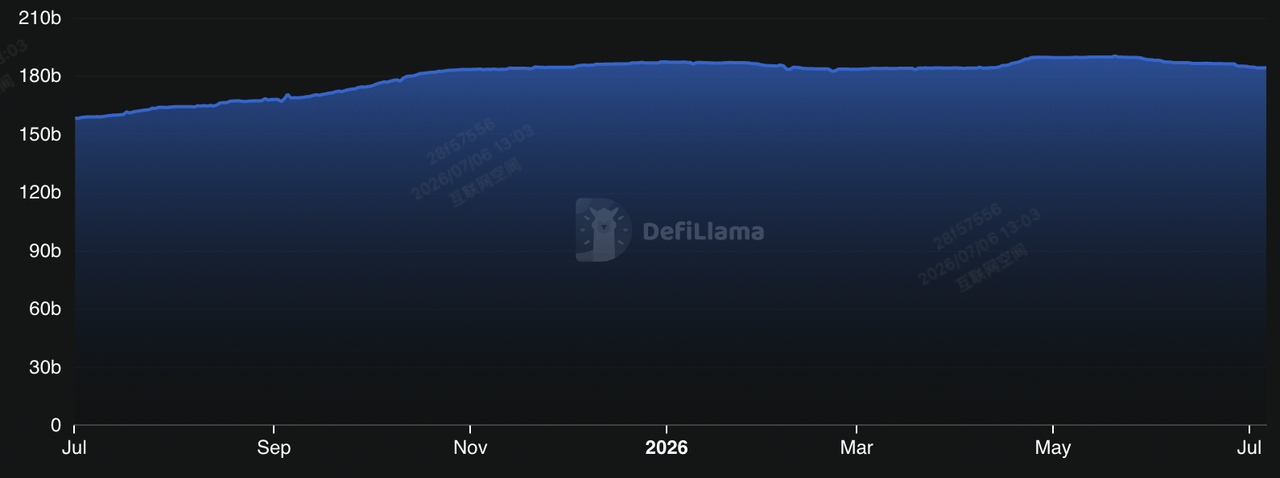
USDT market cap over the past year | Source: DefiLlama
Despite maintaining an absolute global market capitalization of roughly $184 billion to $186 billion, accounting for a commanding 59.16% of the entire stablecoin market, Tether has been systematically shut out of the European Union's regulated trading corridors. This is not a temporary technical delay or an operational oversight. It is a direct, structural clash over reserve allocation and systemic banking risk under the final enforcement phase of the Markets in Crypto-Assets (MiCA) regulation.
1. The 60% Bank Deposit Floor (Article 48/88 Gating)
MiCA categorizes single-currency fiat-pegged tokens like USDT as E-Money Tokens (EMTs). Under this strict regime, significant EMT issuers are legally required to hold a minimum of 60% of their backing reserves in cash deposits distributed across multiple authorized EU credit institutions. For an asset of Tether's scale, complying would require moving over $110 billion out of sovereign debt and directly into the balance sheets of European commercial banks.
2. Tether’s Stated Position on Systemic Banking Risk
Tether CEO Paolo Ardoino has repeatedly rejected MiCA’s deposit floor, calling it "bad and dangerous" for stablecoin stability. Tether’s reserve thesis relies heavily on risk mitigation via asset isolation; according to its disclosures, the firm allocates roughly 80% of its reserves to short-dated U.S. Treasuries and maintains cash deposits close to just 5%.
Tether argues that placing tens of billions in uninsured commercial bank deposits introduces massive counterparty risk. If a major EU bank faces insolvency, a sudden 20% redemption run on USDT could spark a severe banking crisis and force asset impairment, mirroring the fractional-banking failures seen during the Silicon Valley Bank collapse in 2023. Rather than re-engineer its reserve model to fit the EU's policy preferences, Tether has consciously prioritized capital preservation for emerging and non-EEA markets.
3. The Audit Gating Barrier
To secure an Electronic Money Institution (EMI) license in the EU, issuers must undergo exhaustive, independent third-party prudential audits. Tether has long relied on quarterly financial attestations rather than a full, traditional corporate audit. While Tether noted it has sought a top-tier global accounting firm since 2025, major legacy auditors remain cautious about stablecoin liability, leaving Tether without the specific regulatory documentation needed to clear European Securities and Markets Authority (ESMA) hurdles.
4. The Phased Exchange Dominos
Because Title V conduct rules strip EU-licensed Crypto-Asset Service Providers (CASPs) of their licenses if they offer unauthorized EMTs, a coordinated wave of regional delistings occurred across the continent:
- Coinbase Europe and Crypto.com: Led the early retreat by scrubbing USDT spot pairs for EEA retail clients.
- Binance and Kraken: Implemented strict geofencing tools, placing USDT into restricted "sell-only" or conversion modes for European IP addresses.
- Revolut's Staged Elimination: The digital banking giant, valued at $75 billion with 75 million customers, announced a hard wind-down timeline. Revolut halted fresh USDT purchases on July 6, 2026, will completely terminate incoming deposits by July 30, 2026, and will execute a mandatory, automatic fiat conversion for any remaining user balances on August 31, 2026.
Why Circle’s USDC Is Winning the European Market in July 2026
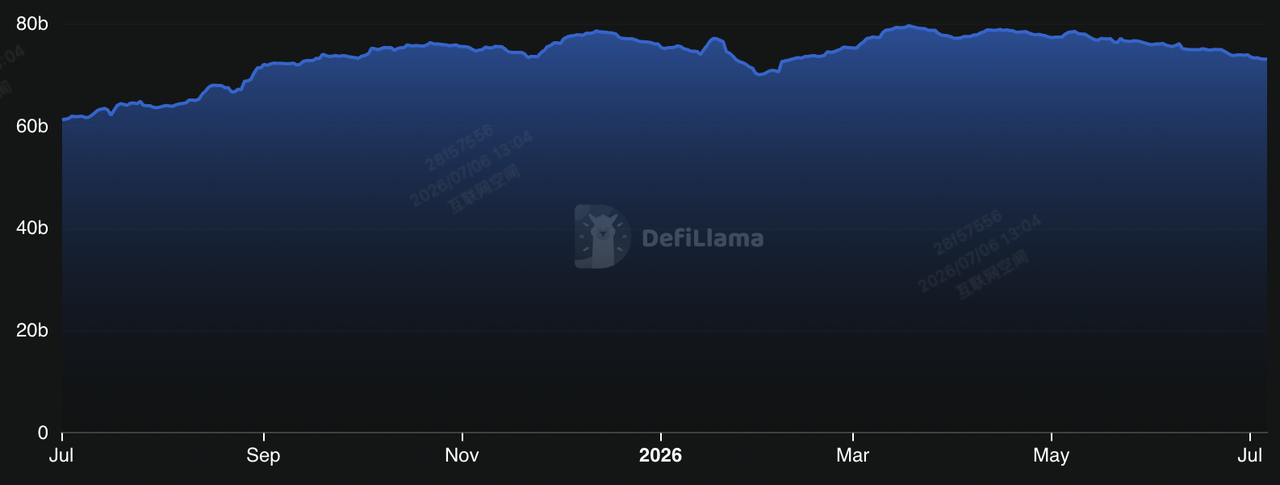
USDC market cap changes over the past year | Source: DefiLlama
While Tether executed a strategic retreat from Europe, Circle spent years aligning its corporate infrastructure directly with Brussels' impending legal timeline. This regulatory bet has transformed USD Coin (USDC) from a secondary stablecoin option into the undisputed corporate rail for European digital finance.
1. The French EMI Passport
Circle secured first-mover dominance by obtaining an Electronic Money Institution license from the French National Competent Authority (ACPR). This allowed Circle to legally passport both USDC and its Euro-denominated counterpart, EURC, across all 27 EU member states simultaneously. By choosing compliance over geographic arbitrage, Circle secured permanent, frictionless access to the EU’s institutional on-ramps.
2. The Great Liquidity Flips
The commercial payoff of Circle’s regulatory alignment has been concrete. Visa data confirmed that as the July 1 transition window shut, USDC on-chain transfer volume reached $1.21 trillion, effectively doubling Tether's volume in the same period.
Simultaneously, liquidity for Euro-based assets has exploded. Backed by MiCA's strict legal guarantees of par redemption on demand, Circle's EURC captured a massive 42% market share of the Euro-stablecoin sector over a 12-month period. As unlicenced offshore competitors exited the scene, market-maker order books on Coinbase, Bitvavo, and Kraken fully rebalanced their base trading pairs from USDT to USDC.
3. Institutional Validation: The BNY Catalyst
The split between the two stablecoin models is further widened by traditional finance integration. Just 24 hours prior to the final MiCA enforcement cliff, BNY (Bank of New York Mellon) formally announced the addition of USDC to its Digital Asset Custody platform. For the first time, tier-one global institutional clients can store, transfer, mint, and burn USDC within a systemically important U.S. banking infrastructure.
While Tether continues to power high-velocity trading across offshore decentralized networks and emerging markets, Circle has successfully integrated USDC as compliant financial middleware, linking traditional investment banking directly to the Eurozone's digital economy.
Impact of USDT Delisting and USDC Growth After MiCA Regulations on Traders
The enforcement of MiCA changes the operational reality for every crypto user, but the effects are highly dependent on where your assets sit:
1. Centralized Exchanges (CASPs)
If you hold capital on a licensed EU platform like Bitvavo, Kraken, or Coinbase, you can no longer buy, sell, or hold USDT. Order-book depth has completely migrated to USDC or native Euro tokens like EURC. Large institutional blocks are temporarily experiencing slightly wider spreads as liquidity pools deepen on these newly compliant pairs.
2. Self-Custody and DeFi Are Exempt
The Decentralization Carve-out: MiCA Recital 22 explicitly leaves pure self-custody outside its regulatory perimeter.
Holding USDT in a non-custodial hardware wallet remains entirely legal across Europe. You can still send peer-to-peer transfers or interact with fully decentralized protocols (DEXs) on Ethereum, Solana, or Tron using USDT, as long as an authorized centralized intermediary is not involved.
Top To-Dos and Considerations for EU Crypto Traders and Stablecoin Holders
The final enforcement of MiCA means that managing digital wealth within the European Economic Area (EEA) requires active adjustments. You can no longer leave your stablecoin portfolio on autopilot.
To safeguard your capital, optimize execution costs, and maintain uninterrupted market access, prioritize the following strategic actions:
1. Audit Your Centralized Exchange (CASP) Balances Immediately
If you hold assets on centralized platforms, check your current stablecoin balances and your exchange's specific wind-down timeline.Proactively convert any remaining centralized USDT holdings into USDC or EURC to avoid forced automatic liquidations. Platforms like Revolut have structured cutoffs running through August 31, 2026.
Leaving unauthorized tokens on these platforms past their respective deadlines triggers an automated conversion to fiat, exposing you to sudden spread markups and unexpected tax-crystallization events on your capital gains.
2. Transition Exchange Trading Workflows to USDC and EURC Base Pairs
With USDT liquidity pool depth collapsing by over 70% on regulated European venues, old trading habits must change. Re-calibrate your automated trading bots, API routing systems, and charting indicators to default to USDC or EURC base pairs.
While global markets outside the EU still lean on USDT, executing large block trades on EU venues using non-compliant pairs will result in temporarily wider spreads, higher slippage, and thin order books. Transitioning to Circle's authorized pairs ensures optimal, tight spot execution (frequently within 5 basis points of pre-MiCA levels).
3. Establish Clear Self-Custody Boundaries
Understand where the regulatory perimeter stops so you can legally utilize global liquidity tools without breaking EU compliance. Move long-term stablecoin holdings meant for decentralized finance (DeFi) or peer-to-peer (P2P) transfers into a non-custodial hardware wallet.
MiCA Recital 22 explicitly carves out software and hardware wallets where the user retains exclusive ownership of the private keys. Holding, sending, or routing USDT through decentralized automated market makers (AMMs) on chains like Ethereum, Solana, or Polygon remains entirely legal. Only use centralized exchanges as compliant fiat gateways, while keeping your core Web3 operations self-custodied.
4. Prepare for Strict Travel Rule and DAC8 Logging
Every transaction touching a regulated intermediary inside the EU is now subject to unprecedented data transparency. Ensure your personal accounting software is linked directly to your exchange APIs to track every off-chain and on-chain movement.
Under the parallel Transfer of Funds Regulation (TFR), the traditional €1,000 Travel Rule floor has been dropped to zero for EU CASPs. Every single transfer out of an exchange to a self-custody wallet requires verified originator and beneficiary documentation. Furthermore, data collected under this framework automatically feeds into the DAC8 Directive, making hidden capital gains technically impossible to maintain on authorized platforms.
5. Evaluate the Native Euro Stablecoin Opportunity
For European businesses and traders who operate fundamentally in Euros, the dollar is no longer an unavoidable intermediary. Explore allocating a portion of your operational treasury or trading float directly into compliant Euro stablecoins like EURC.
Driven by MiCA’s strict legal guarantee of par redemption on demand, Euro stablecoins have surged from a structural afterthought to a multi-hundred-million-euro asset class. Settling natively in EURC eliminates the hidden foreign-exchange (FX) volatility and conversion friction inherent in constantly bouncing between the Euro and the U.S. Dollar.
Final Thoughts: Why EU's MiCA Regulation Is the New Era of Regulated Capital
The stablecoin landscape is moving away from absolute size and toward verifiable compliance. Tether has chosen to trade its European access to protect its offshore reserve structure, while Circle has captured a regulated continent. For active traders, standardizing your exchange workflows around fully authorized tokens like USDC is the most direct way to eliminate sudden venue delisting risks.
Risk Reminder: Digital asset prices are highly volatile. Regional compliance rules, token listings, and funding rails can change rapidly based on your jurisdiction. Always verify the regulatory standing of your asset service provider before deploying capital.
Related Reading
- Top 5 EU MiCA Compliant Stablecoins Dominating Europe in July 2026
- What Is the EU’s Markets in Crypto Assets (MiCA) Regulation for Crypto Compliance? 2026 Guide
- Achieving MiCA Readiness: BingX's Commitment to Responsible Growth in Europe
- MiCA Winners and Losers: Which Major Crypto Platforms Are Fully Compliant in July 2026?
- Top Euro‑Pegged Stablecoins to Know in 2026
FAQs on MiCA and Stablecoins
1. Is it illegal to own USDT in the European Union?
No. Owning, sending, or receiving USDT via a personal self-custody wallet is completely legal. MiCA only restricts licensed centralized service providers (CASPs) from offering non-authorized tokens to public clients.
2. What happens to my USDT if I miss an exchange's delisting deadline?
Most compliant platforms, like Revolut, operate a staged wind-down. After a grace period where deposits are halted, any remaining USDT balances are automatically converted to fiat or an authorized stablecoin like USDC at prevailing market rates.
3. Will Tether ever return to regulated European exchanges?
Tether could re-enter the regulated EU market if it establishes an authorized EU subsidiary and restructures its reserves to meet the 60% bank deposit requirement. However, Tether's leadership has signaled no current intention to alter its global treasury model.
