
Etherscan emerges as a critical tool for DeFi users worldwide, where transparency and data accessibility are paramount for secure participation. As of late 2025, the Ethereum (ETH) network processes an average of 1.55 million transactions daily, supports over 618,000 active addresses, and boasts a market capitalization exceeding $363 billion, underscoring the scale and activity within this blockchain ecosystem.
Etherscan, the leading blockchain explorer for Ethereum, offers real-time visibility into transactions, addresses, tokens, smart contracts, and more, attracting millions of users with its comprehensive insights. With monthly web visits reaching approximately 6 million and ranking among the top websites globally for blockchain data, Etherscan has become indispensable for verifying trades, analyzing trends, and ensuring safety in DeFi.
This beginner's guide delves into what Etherscan is, how it operates, its key features, practical usage tips, and advanced functionalities like NFT viewing and scam prevention. By equipping users with these tools, Etherscan not only demystifies complex blockchain data but also empowers informed decision-making in a market where Ethereum's total value locked in DeFi protocols has surged to new heights, reflecting growing adoption and innovation.
What Is Etherscan?
Source: Etherscan
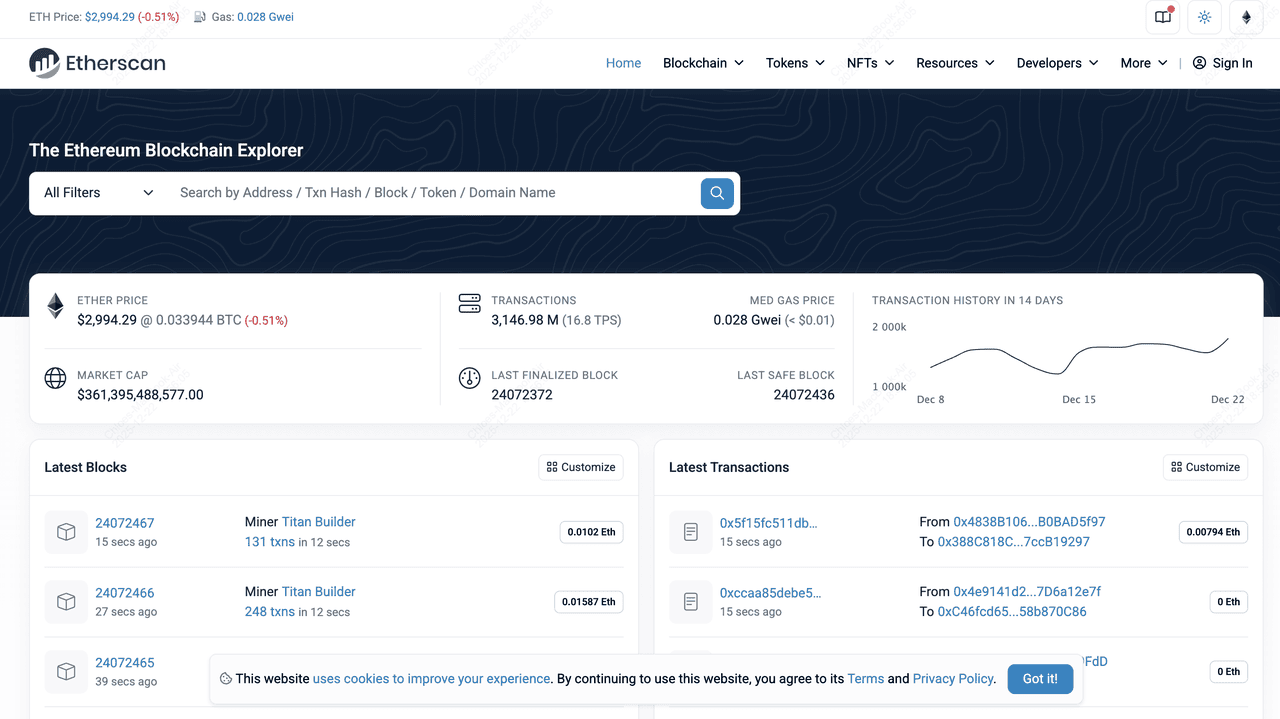
Etherscan serves as the premier blockchain explorer tailored exclusively for the Ethereum network, functioning much like a powerful search engine that unveils intricate details of the blockchain's inner workings. Launched in August 2015, it provides users with in-depth information on transactions, wallet addresses, smart contracts, tokens, NFTs, and overall network statistics, all presented in an accessible format.
As of 2025, Etherscan handles queries for a blockchain that has accumulated over 3.14 billion total transactions and 362 million addresses, making it a vital resource for tracking the flow of Ether (ETH) and other assets. Users can confirm transaction confirmations, monitor gas fees which averaged around $0.60 per transaction over the past year, review past interactions with decentralized applications (dApps), trace cryptocurrency trails, and even view historical NFT trades.
Its popularity is evident from traffic analytics, with 1.6 million monthly visitors in the US alone and a global ranking that places it among the top 7,000 sites, highlighting its role in fostering trust and transparency in Ethereum's ecosystem. Beyond basic lookups, Etherscan aids in on-chain analysis, helping traders spot trends like whale movements or token distributions, and ensures legitimacy before engaging with DeFi protocols or sending funds from exchanges.
How Does Etherscan Work?
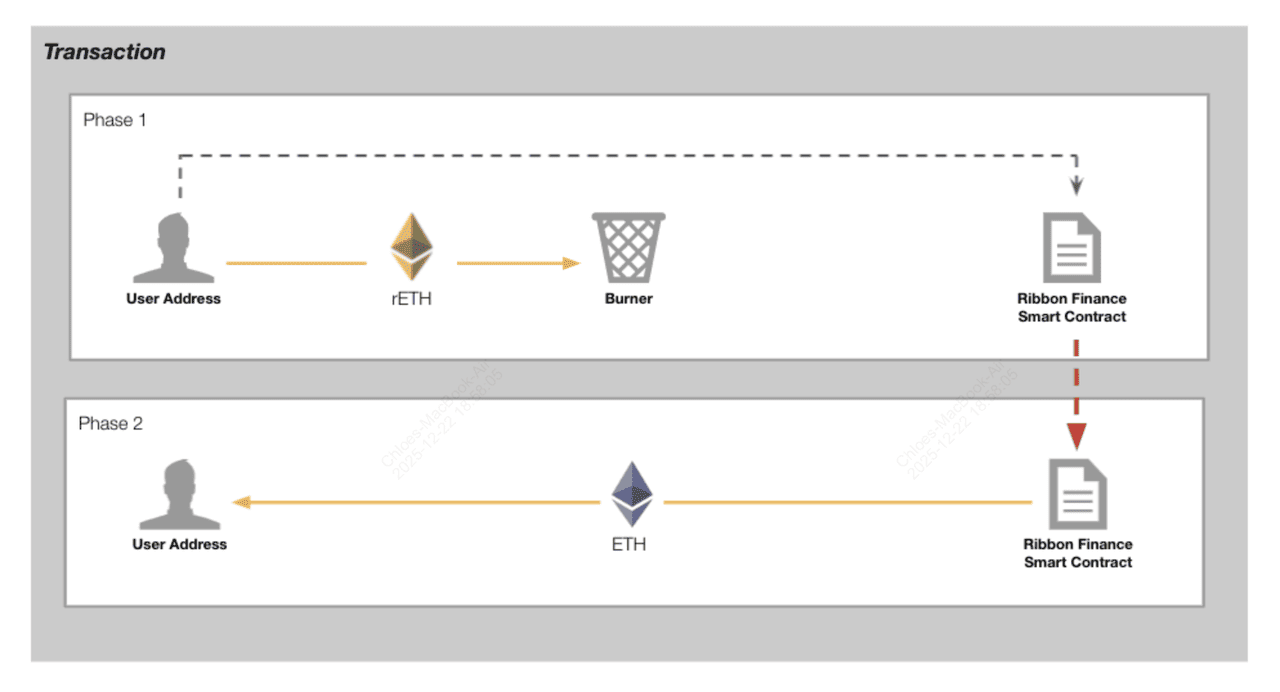
Etherscan operates by continuously indexing and pulling data directly from the Ethereum blockchain, delivering real-time updates and maintaining an exhaustive historical archive of all activities. It retrieves live metrics such as transaction volumes, which hit 1.73 million on peak days in 2025, block details, and smart contract interactions, while translating raw, technical blockchain information into intuitive, user-friendly displays like charts and searchable tables.
Functioning as a sophisticated search engine, users can input queries for specific hashes, addresses, or tokens, with the platform processing millions of requests daily to provide insights into gas usage, event logs, and network health. This capability is supported by advanced APIs that handled a peak of nearly 1 billion calls in a single month during 2025, enabling developers and analysts to integrate Etherscan's data into their tools.
By keeping records of Ethereum's entire history since its inception, including the transition to Proof-of-Stake in 2022, Etherscan ensures that even novice investors can navigate complex concepts like token transfers or contract executions without deep technical knowledge, promoting broader accessibility in a network that sees over 72,000 transactions per hour on average.
Who Created Etherscan?
Etherscan was founded by Matthew Tan, a visionary entrepreneur with over 15 years of experience in the IT industry, who launched the platform in 2015 to democratize access to Ethereum's blockchain data. As CEO and founder based in Kuala Lumpur, Malaysia, Tan drew from his background in managing technical solutions across various sectors to build Etherscan into a leading analytics tool.
Under his leadership, the company has grown to a team of over 70 members, achieving milestones like becoming one of the top 1,000 websites by traffic in 2021 and expanding services to over 50 blockchains by 2025. Tan's focus on innovation led to key developments, including the introduction of smart contract verification in 2016 and the acquisition of Solscan in 2024, solidifying Etherscan's position in the crypto space. His Malaysian Chinese heritage places him among influential figures in blockchain, contributing to a platform that now serves millions globally and continues to evolve with features like multichain support and advanced APIs.
What Are the Key Features of Etherscan?
Etherscan is packed with essential features that cater to both beginners and advanced users in the Ethereum ecosystem, including real-time transaction tracking, detailed wallet balance checks, smart contract verification, and comprehensive token analytics for ERC-20 and ERC-721 standards. Its Gas Tracker, launched in 2018, provides live updates on fees, with average gas prices charted daily and helping users optimize costs amid Ethereum's fluctuating network demands, where daily gas used can spike significantly during high-activity periods.
Users benefit from event log decoding, NFT trackers displaying holders and transfer histories, and developer tools like read/write interfaces for direct contract interactions, all backed by an API that supports billions of monthly calls. Additional analytics include multichain portfolio views across 25+ networks, on-chain metrics such as transaction volume and active addresses, which reached 618,000 daily in 2025, and whale monitoring for strategic insights.
With no reported major security breaches and high reliability, these features make Etherscan a cornerstone for verifying DeFi legitimacy, monitoring network health, and conducting thorough on-chain research on a blockchain that processes over 21 transactions per second.
Key Features of Etherscan
• Ideal for verifying transactions, token contracts, wallet balances, and ensuring contract legitimacy before trading.
• Useful for inspecting DeFi or NFT contract interactions in detail at the transaction and code level.
• Transaction and wallet views show exact amounts, timestamps, gas usage, and event logs for full transparency.
• Token and NFT trackers display holders, top addresses, and transfer histories for ERC-20 and ERC-721 assets.
• Contract verification and read/write tools let you inspect source code, interact directly with smart contracts, and decode logs.
On Etherscan, you can double-check a token's contract address from an official source, then confirm on Etherscan that liquidity and holders look organic, and not dominated by a single suspicious wallet, before sending funds from your BingX withdrawal to a DeFi address.
How to Use Etherscan and Why Use It?
Navigating Etherscan is intuitive: simply visit etherscan.io and input a wallet address, transaction hash, or smart contract into the central search bar to instantly access detailed overviews, balances, and histories. This ease of use is why millions turn to it for verifying transactions before trading, checking gas fees via the real-time tracker which displays median prices around 0.026-0.035 Gwei, and ensuring contract legitimacy in a network with over 120 million circulating ETH.
Users leverage it to inspect DeFi interactions at the code level, track token holder distributions to avoid rugs, and monitor large wallet movements that could signal market shifts. When used correctly, on-chain analytics from Etherscan help you validate or challenge your technical setups, time entries and exits around liquidity shifts or whale moves, and avoid tokens with overly concentrated ownership or weak fundamentals.
They also let you track new narratives like DeFi, AI agents, RWA (real-world assets), and memecoins early by watching how capital and users start to move on-chain. In 2025, with Ethereum's on-chain activity hitting highs like 200,000 new addresses in spikes, Etherscan's transparency aids in spotting organic liquidity and preventing scam engagements.
It's particularly valuable for on-chain analysis, studying metrics like exchange flows and active addresses to predict prices, making it a go-to for traders in a DeFi space with $97 billion locked. Overall, Etherscan enhances safety, informs decisions, and democratizes blockchain data for all levels of users.
How to Look Up Transactions or Wallets on Etherscan?
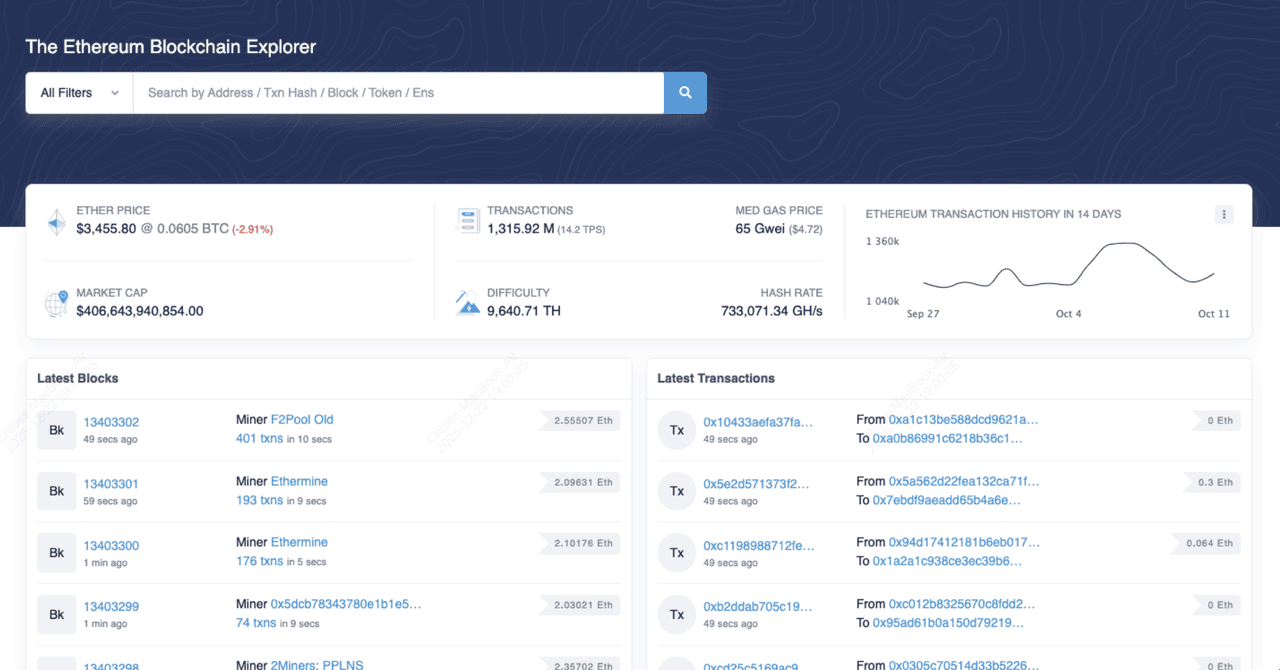
Looking up a wallet on Etherscan involves entering the Ethereum address into the homepage search bar, which redirects to a detailed page displaying the current ETH balance, complete transaction history, token holdings, and additional tabs for multichain portfolios or analytics tracking value fluctuations over time.
For transactions, paste the unique TxHash to view specifics like involved parties, fees, and status, with options to explore internal transfers or logs for deeper insights. This process is streamlined for Ethereum's vast network, where daily new addresses exceed 64,000 and total addresses surpass 362 million, allowing quick verification amid high volumes.
Users can scroll through historical data to identify patterns, such as past dApp interactions or token movements, essential in a blockchain with 1.73 million daily transactions. These lookups provide transparency, helping confirm trades from exchanges like BingX and ensuring accuracy before further actions in DeFi or NFT markets.
What Are the Key Transaction Fields on Etherscan?
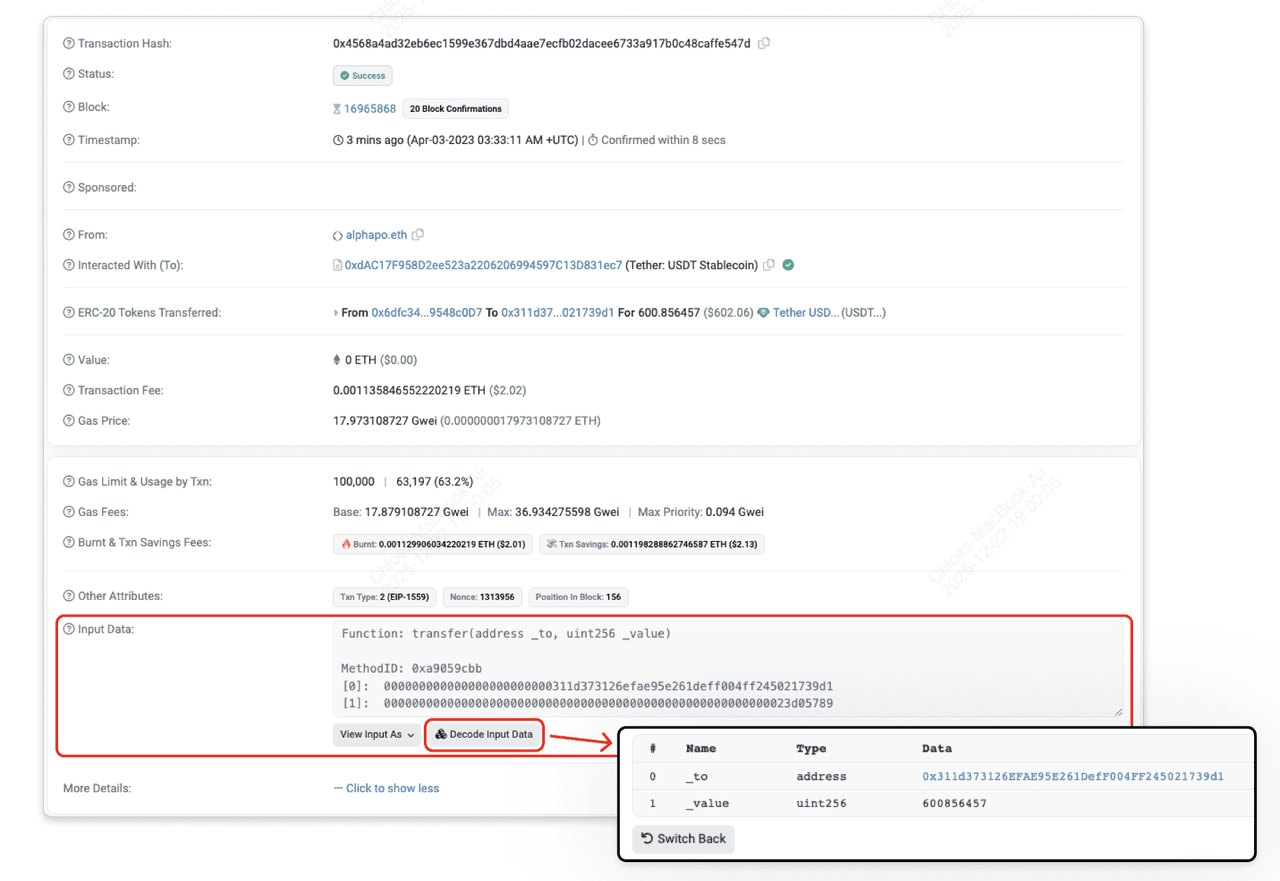
When examining a transaction on Etherscan, key fields offer a breakdown of the event:
1. Transaction Hash serves as its unique identifier,
2. Status indicates if it's successful, failed, or pending in Ethereum's block confirmation process.
3. Block number reveals when it was added to the chain, with From and To addresses showing participants, clickable for further exploration.
4. Value displays the ETH transferred, Gas Used/Price details fees paid (crucial as average gas prices fluctuate daily), and
5. Timestamp notes the exact date and time.
6. Tokens Transferred lists ERC-20 or NFT movements, providing full context in a network where transaction volume helps gauge demand.
These elements ensure users can audit costs and outcomes precisely, especially useful in 2026 when Ethereum's median gas fees influence trading strategies.
How to Use Etherscan to Review NFTs
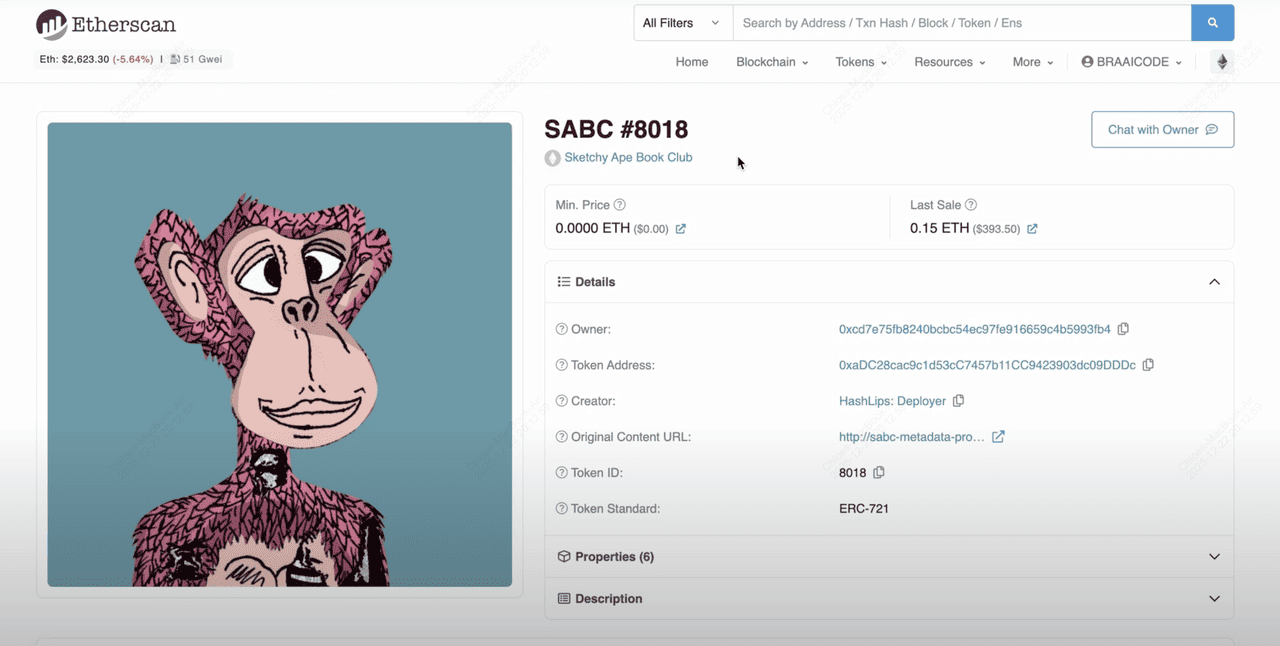
Etherscan facilitates viewing NFTs and their transactions by navigating to a collection's contract page and selecting the "Inventory" tab, which lists Token IDs, current owners, metadata, and small thumbnail images for visual reference.
On individual wallet pages, the "Token" or "NFT" tab reveals holdings with detailed properties, transfer histories, and transaction timestamps, including the crypto amounts involved. This feature is invaluable in Ethereum's thriving NFT market, where platforms like OpenSea integrate similar data, and Etherscan's transparency helps track provenance amid billions in annual volume. Users can verify authenticity and ownership seamlessly, enhancing trust in digital collectibles.
How Do I Avoid Scams on Etherscan?
To steer clear of scams on Etherscan, be vigilant against address poisoning, a prevalent tactic where fraudsters send tiny transactions from nearly identical addresses to contaminate your history, tricking you into copying the wrong one, resulting in losses like the $50 million USDT theft in late 2025 or $1.6 million weekly hauls in August.
Always inspect the full address character-by-character, not just prefixes/suffixes, and utilize wallet whitelisting features to restrict sends. Cross-verify contract addresses from official sources, scrutinize holder distributions for anomalies like single-wallet dominance, and avoid clicking unverified links or falling for dusting techniques using GPU-generated fakes or Unicode tricks.
Etherscan's detailed views aid in spotting red flags, such as suspicious transfers, ensuring safer navigation in Ethereum's transparent yet vulnerable landscape.
Does Etherscan Support Other Blockchains Beyond Ethereum?
Although Etherscan originated for Ethereum, it has evolved to offer multichain capabilities through its Blockscan platform, which supports over 30 blockchains including Layer-2 solutions, BNB Chain, and Solana as of 2025. The API V2, launched in 2024, enables unified access across 60+ chains with a single key, allowing seamless portfolio tracking and transaction searches beyond Ethereum.
For non-EVM networks like Bitcoin, dedicated explorers are recommended, but Etherscan's expansions, including the acquisition of Solscan, position it as a versatile tool in the broader crypto space. This multichain focus caters to users managing diverse assets in an interconnected blockchain world. You can then execute and manage trades on BingX, using this on-chain and market data as a decision layer, and not as a guarantee.
How to Buy Ethereum (ETH) Directly on BingX
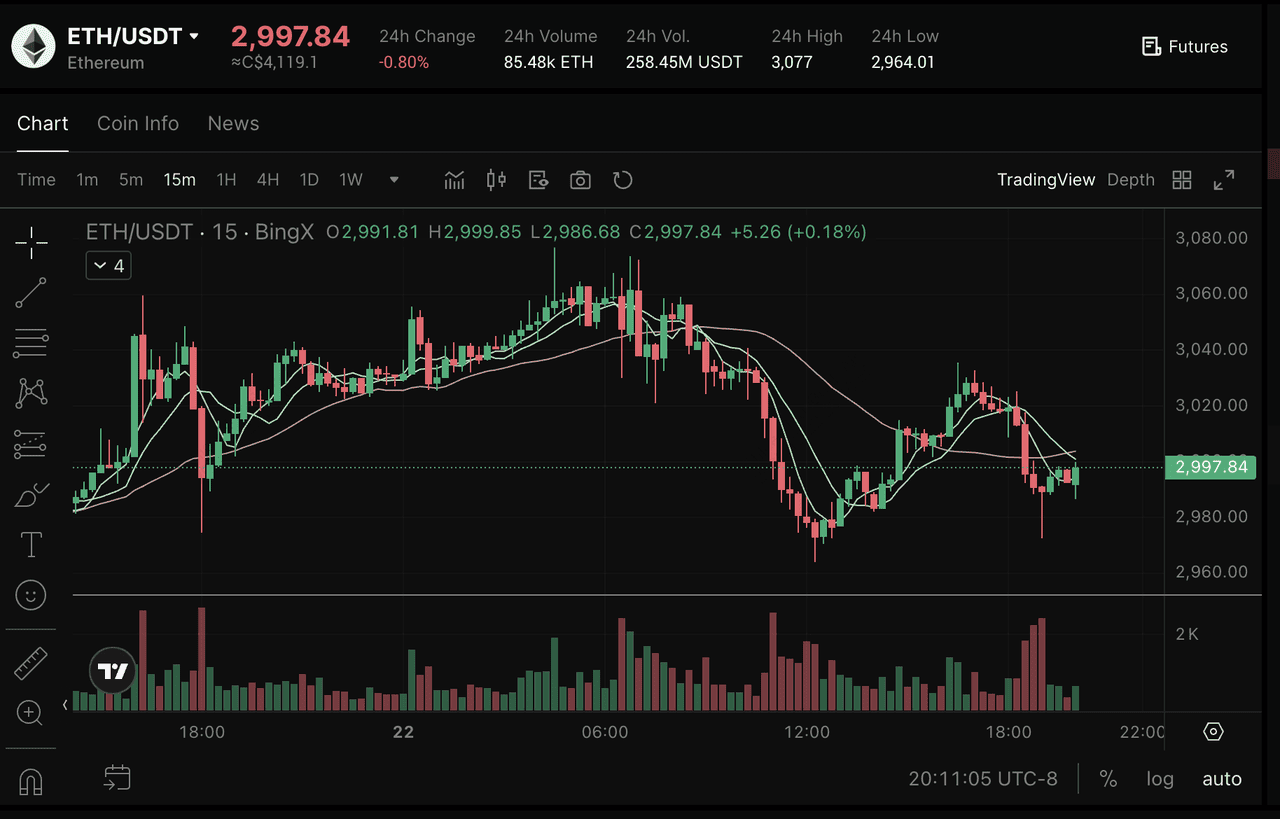
ETH/USDT trading pair on the spot market powered by BingX AI insights
Follow these quick steps to buy Ethereum (ETH) instantly on the BingX Spot Market, with real-time insights powered by BingX AI.
1. Create or log in to your BingX account: Sign up with your email or mobile number and complete KYC if required in your region.
2. Deposit funds: Fund your account with USDT or USDC using card payments, P2P trading, bank transfer, or crypto deposits.
3. Go to Spot Trading: Open the Spot Market and search for ETH/USDT
4. Use BingX AI for market insights: Check AI-generated signals, market trends, and price analysis to make informed decisions before placing your trade.
5. Enter the amount of ETH you want to buy: Choose Market Order for instant execution or Limit Order to set your preferred price.
6. Confirm your purchase: Review your order, tap Buy, and your ETH will be added to your BingX Spot Wallet.
7. Store or transfer your ETH tokens: Keep your ETH securely on BingX or withdraw to a self-custody wallet for DeFi, staking, or Web3 apps.
How to Automate your Trading Strategy with Etherscan
Use APIs from Ethercsan to trigger alerts for whale trades, funding spikes, unlock events, or volatility signals. Combine these signals with BingX AI inside your BingX account to get real-time trade insights, risk alerts, and automated pattern detection that help refine your final trade decisions. You can then execute and manage trades on BingX, using this on-chain and market data as a decision layer, and not as a guarantee.
Conclusion
Etherscan stands as an indispensable, free-to-use platform that simplifies exploration of the Ethereum blockchain, offering unparalleled transparency and user-friendly interfaces for tracking everything from transactions to NFTs. In 2025, amid Ethereum's robust growth with 1.55 million daily transactions, 618,000 active addresses, and a $363 billion market cap, Etherscan's features empower users to verify data, analyze trends, and safeguard against scams effectively.
From its inception by Matthew Tan to its current status serving millions with advanced tools like the Gas Tracker and multichain support, it continues to evolve, making crypto accessible for beginners while providing depth for experts. Dive into Etherscan today to unlock on-chain insights and elevate your blockchain journey in this ever-expanding digital frontier.
