
Liquidity is the factor that separates a profitable trade from one filled with unpleasant surprises. According to 2024 data from Kaiko Research, exchanges with low market depth can generate average slippage above 1.2% on orders larger than US$10,000, which directly erodes the performance of any strategy. For Brazilian traders, who already have to deal with FX spreads and BRL volatility, choosing an exchange with high liquidity is not a minor detail: it is a fundamental requirement for trading.
Quick answer: Liquidity on an exchange is the platform’s ability to execute orders quickly, at the expected price, without moving the market against you. To choose well: (1) compare 24h trading volume, (2) analyze order book depth, (3) check the average spread on the pairs you trade, and (4) test with smaller orders before deploying larger size.
What Liquidity Means on a Crypto Exchange
In traditional financial markets, liquidity refers to how easily an asset can be bought or sold without materially impacting its price. In crypto, the concept is the same, but the environment is more volatile and fragmented.
Think of it this way: you want to buy R$5,000 worth of Bitcoin. On an exchange with high liquidity, there are dozens of sellers ready to trade at that exact moment, at the price displayed on screen. On an exchange with low liquidity, your order may “eat through” multiple price levels in the order book before it is fully filled. This phenomenon is known as slippage, and it can turn a well-planned entry into a trade with a real cost far higher than expected.
There are two types of liquidity that matter for traders using centralized exchanges (CEXs):
- Market liquidity: the total volume available in the order book at a given moment, measured by the depth of bids and asks across different price levels.
- Exchange liquidity: the platform’s reputation and infrastructure for attracting market makers and maintaining tight spreads over time, even during periods of elevated volatility.
How to Measure Exchange Liquidity: The Metrics That Matter
24-Hour Trading Volume
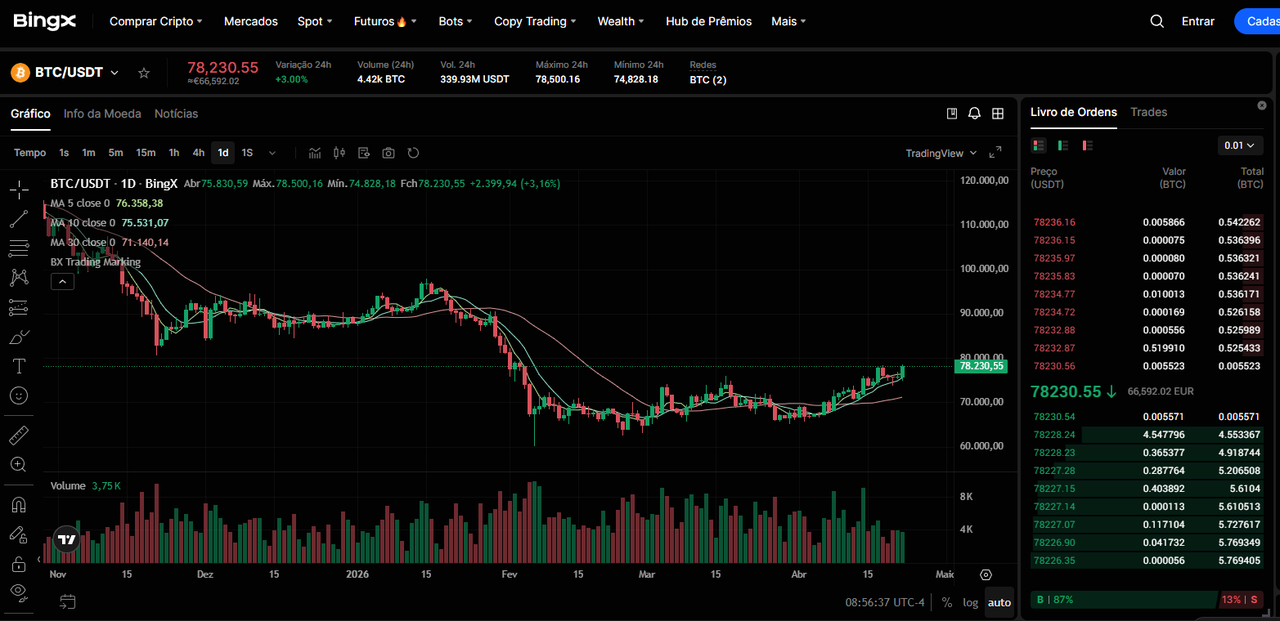
BTC/USDT on BingX spot market
It is the most visible indicator, but also the easiest to manipulate. Smaller exchanges have already artificially inflated volume through wash trading. That is why you should always cross-check reported volume with independent sources such as CoinGecko or CoinMarketCap, which filter suspicious data.
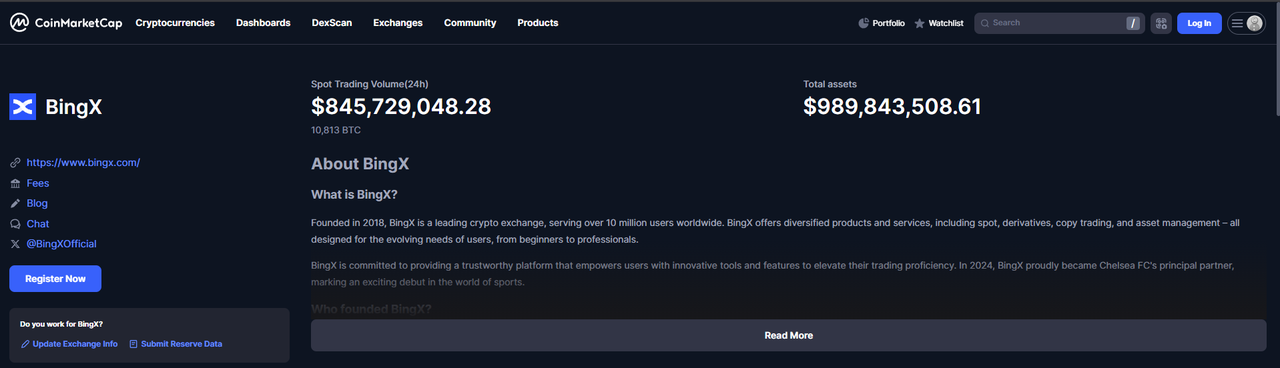
Source: CoinMarketCap
High and consistent 24h volume over multiple weeks is a strong signal of real trader and market maker participation on the platform.
Order Book Depth
This is the most honest liquidity indicator. It measures the volume available for buying and selling within price bands close to the current price, usually expressed as percentage distances (0.1%, 0.5%, 2%).
An exchange with solid depth at the 0.1% level means you can execute large orders at virtually the reference price. Kaiko Research monitors this metric in real time, and it is the preferred benchmark for institutional traders when evaluating where to trade.
Bid-Ask Spread
This is the difference between the best bid price and the best ask price. A narrower spread means execution closer to fair value. In Bitcoin, spreads below 0.05% are considered healthy on top-tier exchanges.
Number of Active Trading Pairs
More pairs with real liquidity mean you do not need to make unnecessary intermediary conversions to build a position, which reduces operational costs.
Exchanges with the Highest Liquidity for the Brazilian Trader Profile
BingX
The BingX platform has been one of the fastest-growing options among Brazilian retail traders in recent years, combining meaningful volume with an accessible interface for users transitioning from traditional brokerages into crypto.
In liquidity terms, BingX operates with robust market depth across major pairs such as BTC/USDT, ETH/USDT and SOL/USDT, with competitive spreads that benefit traders in both the spot market and the perpetual futures market.
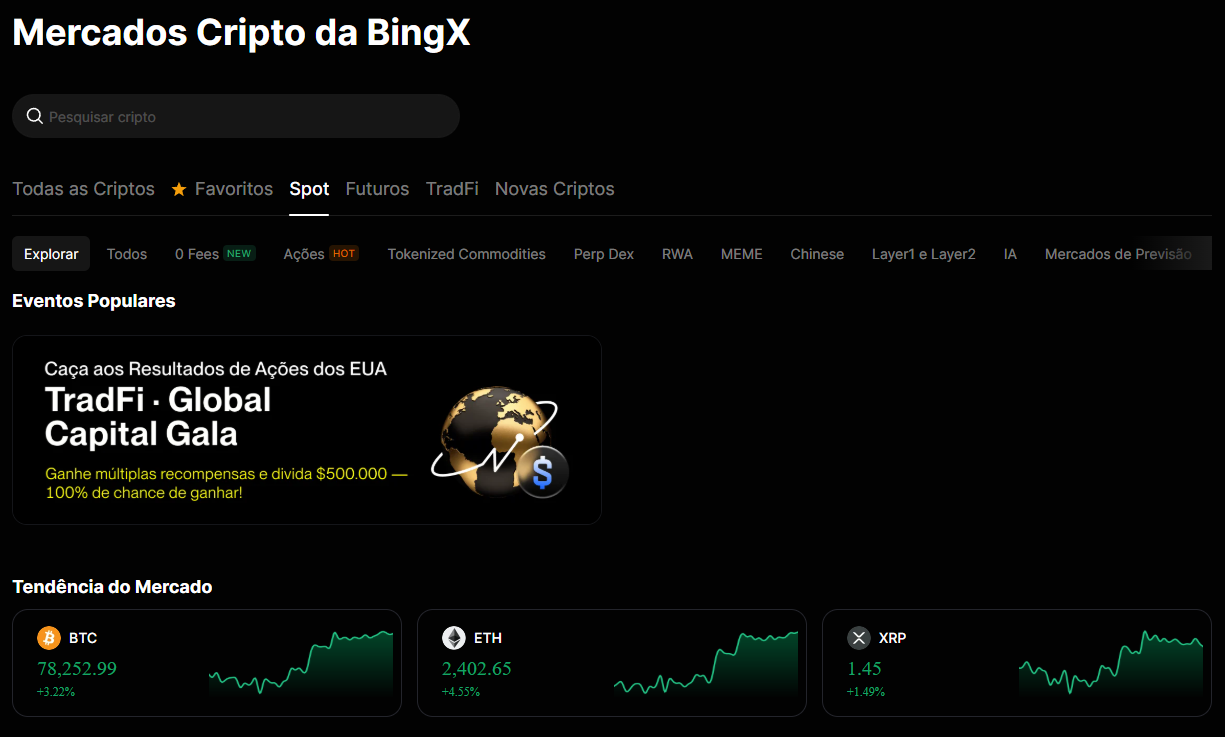
The BingX copy trading feature has attracted additional liquidity to the platform because trades executed by professional traders and automatically replicated by thousands of users generate steady organic volume. This directly benefits order book depth, especially during lower global trading activity windows.
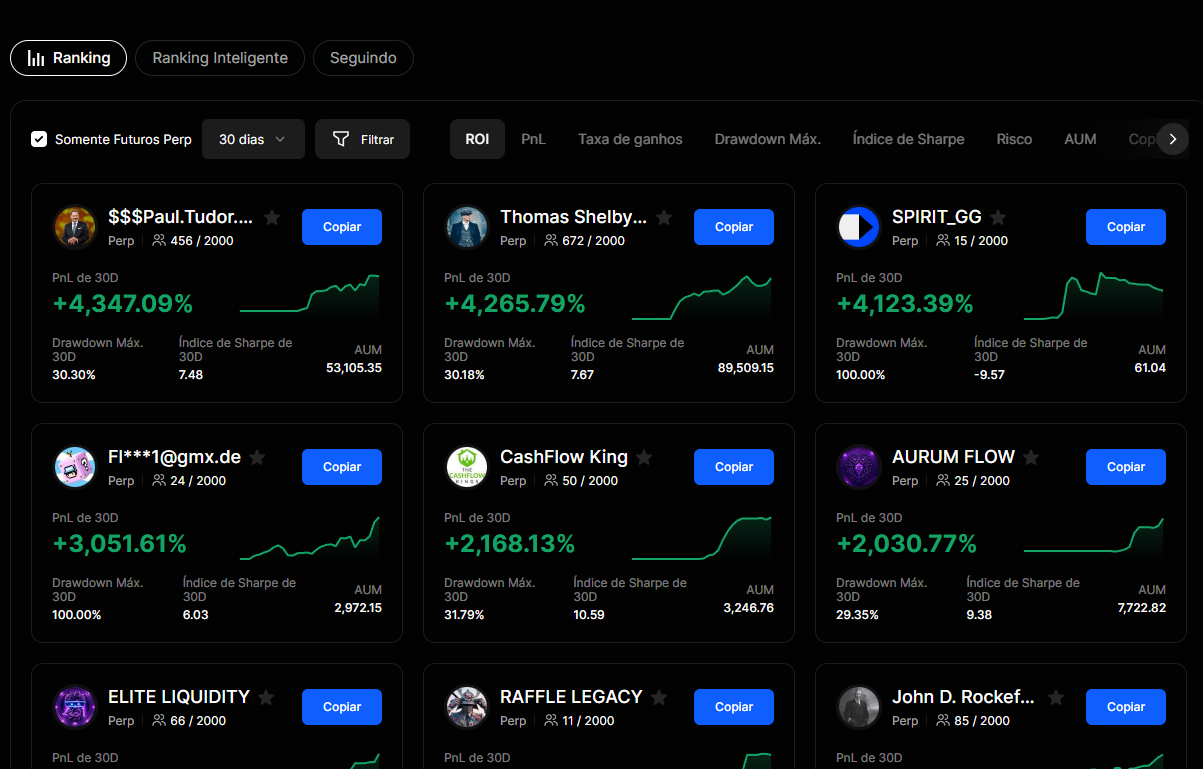
Another relevant point for Brazilian users: BingX supports deposits via PIX through the P2P market, which removes friction from intermediate FX conversion steps and enables faster entry and exit from the market.
The platform also provides real-time market depth data directly in the interface, with support from BingX AI for trend analysis and more efficient execution.
Binance
Binance maintains virtually zero spread during periods of high activity and order book depth capable of supporting orders in the multi-million-dollar range.
The key consideration for Brazilian users is the platform’s regulatory track record in the country. In 2023, Brazil’s Federal Revenue Service placed Binance under closer reporting scrutiny, and the exchange went through operational adjustments in the region. For traders executing larger size, this is a context worth monitoring.
For retail traders seeking pure liquidity in large-cap altcoins, Binance remains a benchmark option. For those who want to combine liquidity with localized support and a user experience tailored to Brazil, other platforms may offer a better fit.
Bybit
Bybit has strong liquidity in perpetual contracts and an active market maker program that keeps spreads tight across the most-traded pairs.
For Brazilian traders focused on futures and looking for market depth for mid-sized positions, Bybit is a valid alternative. Portuguese-language support is limited, and the platform has a steeper learning curve for beginners.
OKX
OKX combines high volume with a comprehensive interface for liquidity analysis. Its order book visualization tools are detailed and allow users to identify support and resistance zones based on real resting orders.
Like Bybit, localized support for Brazil is weaker than what regionally focused platforms such as BingX provide. For advanced traders who prioritize analytical tools and depth across less conventional pairs, OKX has a technical edge.
Comparative Table: Liquidity Across the Leading Exchanges
|
Exchange |
24h Volume (average) |
BTC 0.1% Depth |
pt-BR Support |
PIX/BRL |
Brazil Focus |
|
BingX |
High |
Competitive |
Yes |
Yes |
High |
|
Binance |
High |
Competitive |
Partial |
Yes |
Medium |
|
Bybit |
High |
High (futures) |
Limited |
Not direct |
Low |
|
OKX |
High |
High |
No |
No |
Low |
Data based on averages reported by CoinGecko and Kaiko Research. Volume may vary depending on the period and market conditions.
Why Low Liquidity Costs More Than Exchange Fees
Many traders compare platforms by looking only at maker/taker fees. This is a classic beginner mistake.
Consider the following example:
You want to buy US$5,000 worth of ETH using a market order.
- Exchange A: 0.1% fee + 0.04% spread = total cost of 0.14%, or US$7.00 for the trade.
- Exchange B: 0.05% fee (cheaper on paper) + 0.3% spread due to lower liquidity = total cost of 0.35%, or US$17.50 for the same trade.
Exchange B charges half the fee, but ends up costing 2.5x more per trade because of inferior liquidity. Multiplied across hundreds of trades over a year, that difference represents real capital lost without the trader clearly realizing where the underperformance came from.
The Formula for Real Trading Cost
Real Cost (%) = Trading Fee (%) + Average Spread (%) + Estimated Slippage (%)
To calculate estimated slippage, review the order book depth for the size you intend to trade before executing the order. If the order book has only US$2,000 available at the current price level and you plan to buy US$5,000, the excess US$3,000 will be filled at worse price levels. Good risk management includes calculating this cost before every trade.
DEX vs CEX Liquidity: What Changed in 2025
The liquidity efficiency of decentralized exchanges (DEXs) has improved significantly since the introduction of the Uniswap V3 model. Protocols such as Uniswap, Curve, and PancakeSwap now operate with more efficient liquidity across specific price ranges.
Even so, for Brazilian traders executing more than US$1,000 per trade, CEXs still provide more efficient execution across most pairs. DEXs charge gas fees that fluctuate with blockchain congestion, and slippage is harder to predict during periods of heightened volatility.
A hybrid approach makes sense in some scenarios: use DEXs to access tokens that are not yet listed on CEXs, and use CEXs for most trades where precise and predictable execution is the priority.
How to Test an Exchange’s Liquidity Before Depositing
Before allocating capital to any platform, follow these steps:
- Simulate execution: use the exchange’s order simulator or order book view. Enter the position size you intend to trade and see how many price levels would be needed to fill the order.
- Observe both ends of the trading day: liquidity at 2:00 PM Brasília time, with U.S. markets open, is very different from liquidity at 3:00 AM. Test both scenarios if you trade across different time windows.
- Track the spread throughout the day: open the pair you trade and record the spread every hour over a full day. The average and the variation will show the true stability of liquidity on that platform.
- Use CoinGecko as a benchmark: the “Markets” tab for any token on CoinGecko shows the exchange trust score, the specific pair, the volume, and the reported spread. It is a fast way to compare venues before opening an account.
Frequently Asked Questions
1. What is liquidity on a crypto exchange?
Liquidity on an exchange is the platform’s ability to execute your orders quickly and at the expected price. An exchange with high liquidity has many active buyers and sellers at the same time, which reduces spread and minimizes slippage in your trades.
2. How can I tell whether an exchange has real liquidity or inflated volume?
Use independent sources such as CoinGecko or Kaiko Research, which apply filters against wash trading. Beyond volume, analyze order book depth: if 24h volume is high but the order book has little depth near the current price, the volume is likely inflated.
3. Which exchange has the most liquidity for trading Bitcoin in Brazil?
For Bitcoin, the exchanges with the highest global liquidity are BingX, Binance, Bybit, and OKX. For Brazilian traders who need both liquidity and local support with PIX integration, BingX stands out by combining competitive depth with adaptation to the Brazilian market. See how to buy Bitcoin on BingX.
4. Does liquidity only affect large orders?
No. Smaller orders are also affected, especially in lower-cap altcoin pairs. Even a US$200 order in a low-liquidity token can face 1% to 3% slippage. Exchanges with a larger number of active pairs and sufficient depth protect trades of all sizes.
5. What is the bid-ask spread, and how does it affect my results?
The bid-ask spread is the difference between the price you pay to buy and the price you would receive if you sold immediately afterward. Even without any market movement, you already enter the position slightly negative. Tighter spreads, which are typical of high-liquidity exchanges, reduce this initial cost and improve the trade’s breakeven point. Review BingX trading fees to understand how spread and fees combine into real execution cost.
6. Does copy trading on BingX affect available liquidity?
Indirectly, yes. The volume generated by copy trading is real organic volume, which contributes to order book depth on the platform. For the average user, that means there is more market activity even during periods of lower global trading volume.
7. Is it worth using DEXs for larger trades?
For most retail traders in Brazil executing up to US$10,000 per trade, CEXs such as BingX, Binance, or Bybit offer more efficient execution and lower total cost. DEXs make more sense for accessing newly launched tokens before they are listed on centralized exchanges. To store those tokens securely, use compatible Web3 wallets.
8. How does PIX make trading easier on higher-liquidity exchanges?
PIX enables fast BRL deposits and withdrawals without relying on slow banking intermediaries. That means you can respond to market opportunities without losing time waiting for bank transfers or boleto processing. Exchanges with native PIX integration, such as BingX, reduce operational friction for Brazilian traders. See the tutorial for depositing via PIX on BingX.
Key Takeaways
- Real liquidity is measured by order book depth, bid-ask spread, and verified volume, not just raw 24h volume figures
- The real cost of a trade includes the trading fee, spread, and slippage. An exchange that looks cheaper on fees can end up costing more overall
- For Brazilian traders, the combination of competitive liquidity, PIX integration, and Portuguese-language support is a relevant selection criterion
- BingX delivers this combination more comprehensively for the Brazilian retail profile, with adequate depth across major pairs and features such as copy trading that increase the platform’s organic volume
- Always test liquidity at the actual position size you trade before concentrating capital on any platform. Platforms with audited Proof of Reserves, such as BingX, provide an additional layer of transparency regarding the real availability of funds
