
Most BNB buyers in 2026 have a straightforward path: open a BingX account, deposit funds, and execute a spot order at 0.10%, start to finish in under ten minutes. But for a specific segment of the market, including high-net-worth individuals, family trusts, corporate treasuries, and investors moving six-figure BNB positions, that self-service model introduces execution risks and custody responsibilities that a personal broker can eliminate.
Caleb and Brown is the most established name in that premium broker space: a 24/7 human-staffed crypto brokerage founded in 2016, acquired by Swyftx in July 2025, and now serving over 24,000 clients across 100+ countries. This review examines exactly when Caleb and Brown earns its premium fee, when BingX remains the smarter and cheaper choice for buying BNB, and how to decide which execution model fits your BNB position size and risk profile.
Read more: What Is BNB in 2026? Complete Beginner's Guide to Binance Chain's Native Token
Why High-Net-Worth Investors Prefer Personal Brokers
For the overwhelming majority of BNB buyers, BingX delivers everything needed: deep liquidity, a clean spot interface, copy trading, P2P support, and fiat on-ramps via Legend Trading at one of the lowest fee structures in the industry. The case for a personal broker only becomes relevant when the trade size, legal entity structure, or custody requirements exceed what a self-service platform is designed to handle efficiently.
Three scenarios consistently push institutional and high-net-worth buyers toward broker-facilitated execution:
- Large order sizes: A $300,000 BNB market buy on a public order book consumes depth and incurs slippage. An OTC-routed order through a broker settles at a negotiated spot price with no market impact.
- Non-individual legal structures: Corporate treasuries, family trusts, SMSFs, and self-directed IRAs require entity-level KYC, beneficial ownership documentation, and often dedicated compliance support that standard exchange onboarding does not provide.
- Fully managed custody: Investors who want their BNB held in institutional cold storage without managing private keys, hardware wallets, or withdrawal processes themselves need a custodial solution that goes beyond exchange-held funds.
Caleb and Brown's model addresses all three. Rather than routing all trades through a single liquidity source, the firm accesses OTC desks, institutional liquidity providers, and multiple exchanges simultaneously to achieve the best blended execution price. This is an infrastructure layer that BingX's standard spot interface is not designed to replicate for very large single orders.
How to Trade BNB Without Slippage or Exchange Limits
Slippage is the most underestimated cost in large crypto purchases. On any centralised exchange, including BingX, a large market buy for BNB progressively fills through the order book, with each successive lot executing at a marginally worse price. For a $50,000 BNB order on a mid-liquidity session, total slippage can reach 0.5% to 1.5%, adding $250 to $750 to the effective cost of entry before any trading fee is applied.
BingX mitigates this through its deep BNB/USDT liquidity pools and tight spreads, making it genuinely competitive for positions up to approximately $20,000 to $30,000 during active market hours. Beyond that threshold, and particularly for single-transaction positions above $100,000, OTC-routed execution through Caleb and Brown typically delivers a better blended fill price, even after the 3.5% flat fee is applied.
A second friction point for large buyers is withdrawal limits. Most exchanges, including standard verified tiers on BingX, impose daily withdrawal caps. For institutional positions requiring settlement in a single transaction above those caps, Caleb and Brown's broker model has no such ceiling.
|
Trade Size |
BingX Spot (Est. Total Cost) |
Caleb and Brown (Flat Fee, No Slippage) |
Recommended |
|
Under $5,000 |
~0.10% to 0.20% |
~3.5% |
BingX |
|
$5,000 to $25,000 |
~0.10% to 0.40% |
~3.5% |
BingX |
|
$25,000 to $100,000 |
~0.20% to 0.80% |
~3.5% |
BingX (limit orders) |
|
$100,000 to $500,000 |
~0.50% to 1.5% (slippage risk) |
~3.5% |
Caleb and Brown |
|
$500,000+ |
High slippage risk |
~3.5% (negotiable OTC) |
Caleb and Brown |
Security Features: Fireblocks Integration and Cold Storage
Security infrastructure is where Caleb and Brown's premium fee is most objectively justified, and it is worth understanding the difference between how BingX and Caleb and Brown handle custody, because they are solving different problems for different client types.
BingX holds client assets on-exchange with industry-standard protections: cold and hot wallet separation, 2FA, withdrawal address whitelisting, and real-time Proof of Reserves auditing. For active traders who need instant access to their BNB for spot, copy trading, or P2P activity, this is the right custody model. The assets need to be liquid and immediately executable.
Caleb and Brown's custody model is built for the opposite use case: long-term, secure holding where immediate tradability is secondary to asset protection. The firm uses Fireblocks, the same institutional custody infrastructure used by major banks and hedge funds, backed by MPC (Multi-Party Computation) cryptography and hardware isolation. Client balances are held 1:1, fully reserved in cold storage, and are never traded or rehypothecated without explicit client instruction. Operating capital for trade execution is funded entirely from Caleb and Brown's own balance sheet, not client funds.
For BNB specifically, the Fireblocks model means holdings are:
- Stored in institutional cold storage with MPC-encrypted key management
- Fully segregated from the firm's operating capital
- Reserved 1:1 with no fractional backing
- Accessible for trading through the client portal without hot wallet exposure
Personal Broker vs. BingX Self-Service: Is the Fee Worth It?
Caleb and Brown charges a flat 3.5% on every trade, whether a buy, sell, or swap, with no deposit fees, withdrawal fees, spread markups, or account maintenance charges. The minimum via a personal broker is $2,000; the online portal starts at $500.
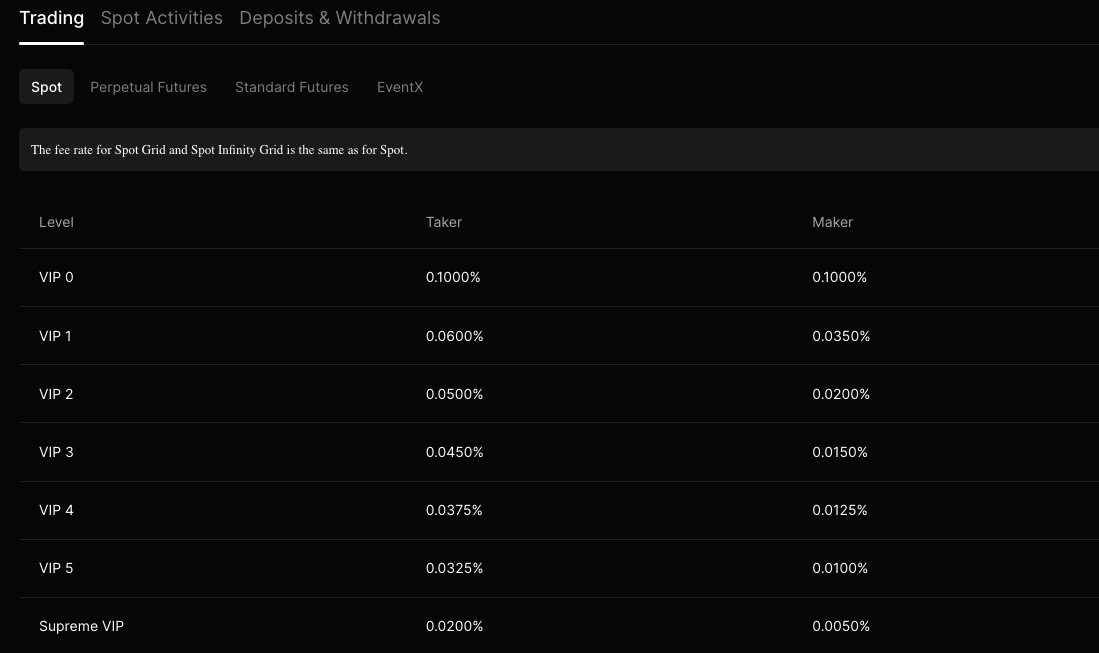
Against BingX's 0.10% spot fee, or as low as 0.035% for VIP tiers, the 3.5% headline looks steep. The comparison only becomes meaningful when the full cost stack is considered, because at 0.10%, BingX is only quoting the trading fee. For a trader self-managing their BNB position, the real cost includes the trading fee, any slippage on large fills, the cost of a hardware wallet or custody solution, and the time spent managing withdrawals, addresses, and network selections.
For most retail traders, those additional costs remain well below 3.5%, which is why BingX remains the default recommendation for the majority of BNB buyers. The Caleb and Brown fee makes economic sense when the combined value of slippage elimination, Fireblocks custody, broker support, and corporate account structure exceeds 3.5% of trade value. In practice, this threshold applies to positions above $100,000 or to entity-structure buyers who have no practical alternative on a self-service platform.
|
Factor |
BingX |
Caleb and Brown |
|
Trading Fee |
0.10% (0.035% VIP) |
3.5% flat |
|
Slippage on Large Orders |
Variable (0.1% to 2%+) |
None (OTC execution) |
|
Fiat On-Ramp |
Yes (Legend Trading, ACH, SEPA) |
Yes (bank transfer, crypto) |
|
Custody |
Exchange-held, Proof of Reserves |
Fireblocks institutional cold storage |
|
Broker Support |
Help centre / live chat |
24/7 dedicated personal broker |
|
Minimum Trade |
No minimum |
$500 (portal) / $2,000 (broker) |
|
Corporate / Trust Accounts |
Limited |
Yes (Company, Trust, SMSF, IRA) |
|
Best For |
All retail and active traders |
HNW, large positions, corporate entities |
Join BingX and access BNB spot trading with 0.10% fees and zero-slippage P2P execution. Claim your welcome bonus today.
How to Open a Caleb and Brown Account for Corporate or Trust BNB Buys
For buyers whose entity structure or position size genuinely requires the broker model, Caleb and Brown's onboarding is straightforward. The firm supports individual, company, trust, SMSF, 401(k), and self-directed IRA account types, making it one of the only crypto brokerages with a formal pathway for each.
Step-by-Step: Opening a Corporate or Trust Account
- Register Online: Go to calebandbrown.com and select your entity type. Registration takes approximately 5 minutes.
- Complete KYC/AML Verification: Corporate and trust accounts require company registration documents, trust deeds, beneficial ownership declarations, and director identification. Caleb and Brown's compliance team guides the process directly.
- Fund Your Account: Accounts can be funded via fiat bank transfer or crypto deposit. Your broker confirms receipt before executing any trade.
- Meet Your Broker: Once verified, you are assigned a dedicated personal broker for an introductory call covering your investment objectives, preferred assets, and execution preferences before placing your first BNB order.
- Execute Your BNB Buy: Your broker routes the order through OTC and liquidity networks, executes at spot price, and confirms settlement. Assets move automatically to Fireblocks cold storage upon completion.
- Ongoing Management: All future activity runs through the same broker. Corporate clients can request audit trails, transaction confirmations, and custody reports for accounting and compliance purposes.

For traders who want to stay within BingX's ecosystem for larger positions, BingX's institutional account tier and VIP program offer a strong middle path: reduced fees, dedicated account management, and higher withdrawal limits, without the full broker fee structure of Caleb and Brown.
Final Thoughts: Caleb and Brown or BingX for BNB in 2026?
For the vast majority of readers, BingX is the right answer. Its spot fee of 0.10%, deep BNB/USDT liquidity, fiat on-ramp via Legend Trading, and P2P marketplace cover every practical use case for retail and professional traders at a fraction of Caleb and Brown's cost.
Caleb and Brown earns its place for a specific and well-defined client segment: positions above $100,000 where slippage is a real cost, non-individual entity structures that need formal compliance support, and investors who want institutional cold storage custody without managing it themselves. In those scenarios, the 3.5% flat fee is not a premium. It is a bundled service package that competes favourably with the cost of replicating those capabilities independently.
Risk Reminder: Digital asset prices are subject to high market risk and price volatility. A 3.5% brokerage fee represents a meaningful cost of entry. Always calculate your break-even price before committing capital, particularly in volatile market conditions.
Related Reading
- Top 7 DeFi Projects to Watch on BNB Ecosystem in 2026
- BNB Treasury Explained: Top Corporate and Institutional BNB Holders in 2026
- What Is PancakeSwap (CAKE) Decentralized Exchange(DEX) on BNB Chain?
- What Are the Top 10 BNB Meme Coins to Buy in 2026?
- Top 7 BNB Ecosystem Projects to Watch (2026 Guide)
FAQs on Caleb and Brown and Buying BNB
1. What is the fee to buy BNB through Caleb and Brown?
A flat 3.5% on all trades, covering execution, custody, and broker support. No deposit, withdrawal, spread, or account maintenance fees on top.
2. Is BingX cheaper than Caleb and Brown for buying BNB?
Yes, significantly for most position sizes. BingX charges 0.10% (or 0.035% for VIP tiers) with no minimum trade size. Caleb and Brown's 3.5% only becomes cost-competitive for very large positions where slippage, custody, and compliance costs are factored into the total.
3. What is the minimum amount to buy BNB through Caleb and Brown?
$2,000 via a personal broker; $500 via the self-service online portal.
4. Can a company or trust buy BNB through Caleb and Brown?
Yes. Companies, trusts, SMSFs, 401(k)s, and self-directed IRAs are all supported with dedicated compliance guidance throughout the onboarding process.
5. Does BingX offer institutional or corporate BNB accounts?
BingX offers VIP and institutional tiers with reduced fees, higher withdrawal limits, and dedicated account support, suitable for most professional and high-volume traders without the full broker fee structure of Caleb and Brown.
