
The global capital markets in mid-2026 are preparing for an unprecedented tech milestone as artificial intelligence deployment shifts from hardware buildouts to enterprise software monetization. The iShares Expanded Tech-Software Sector ETF (NYSE: IGV) serves as a principal vehicle for global investors aiming to capture this operational pivot. By tracking the software and interactive media landscapes without direct exposure to volatile semiconductor capital expenditure, the fund presents a unique tactical allocation for the current financial cycle.
As organizations scale their generative AI architectures, software developers are optimizing their pricing frameworks to absorb multi-billion dollar compute infrastructure realities. Wall Street analysts indicate that the traditional valuation premium for high-growth SaaS operators is undergoing a rigorous recalculation throughout the second half of 2026. For international traders monitoring secular shifts in enterprise supply contracts, tracking IGV's performance metrics has become a core strategic imperative. You will also discover how to trade iShares Expanded Tech-Software Sector ETF (NYSE: IGV) futures and spot equities on BingX TradFi using crypto-collateralized assets.
Key Highlights: Top 5 Things for Tech Investors to Know in 2026
- The Software-Centric Growth Moat: Unlike broad-market technology ETFs heavily exposed to hardware production and chip foundry constraints, IGV allocates strictly toward application development, cloud systems software, and select digital media. This ensures an insulated investment thesis tied directly to software licensing margins.
- Tactical Weight Capping Mechanism: Individual security positions inside the index are systematically capped (typically at 8.5%) during rebalancing periods. This rule effectively prevents single mega-cap tech conglomerates from dominating the fund, leaving meaningful exposure allocations for mid-cap, hyper-growth cloud operators.
- The AI Enterprise Monetization Validation Phase: Following massive infrastructure commitments over recent years, software companies are proving their pricing power. Top holdings are aggressively converting free-tier corporate pilots into multi-year custom enterprise software agreements.
- Ecosystem Exposure to Private AI Innovations: As frontier model developers like OpenAI and Anthropic progress through confidential filings or late 2026 public listings, established software players inside IGV are integrating these exact models to supercharge their existing consumer applications.
- Evolving Valuation Multiples Amid Rate Backdrops: With international central banks sustaining rangebound interest rate environments in mid-2026, tech multiples are heavily dependent on fundamental performance, making disciplined asset selection via structural ETFs crucial.
What is iShares Expanded Tech-Software Sector ETF?
Source: Yahoo Finance
The iShares Expanded Tech-Software Sector ETF (IGV) is an exchange-traded fund managed by BlackRock that provides investors with targeted exposure to the North American technology software industry. Rather than investing broadly across the entire tech spectrum, IGV isolates its portfolio strictly within application software, systems software, and digital interactive media developers, entirely bypassing hardware and semiconductor manufacturers.
By utilizing a tactical weight-capping mechanism to keep mega-cap conglomerates from completely dominating the fund, the ETF serves as a primary benchmark for tracking enterprise software growth, recurring software-as-a-service (SaaS) revenue cycles, and global corporate integrations of cloud and AI infrastructure architectures.
Core Details of IGV ETF
- Index Tracked: S&P North American Expanded Technology Software Index
- Launch Date: July 10, 2001
- Expense Ratio: 0.39% (reflecting updated prospectus parameters)
- Issuer: BlackRock / iShares
- Net Assets of Fund: Approx. $13.68 Billion (as of mid-2026)
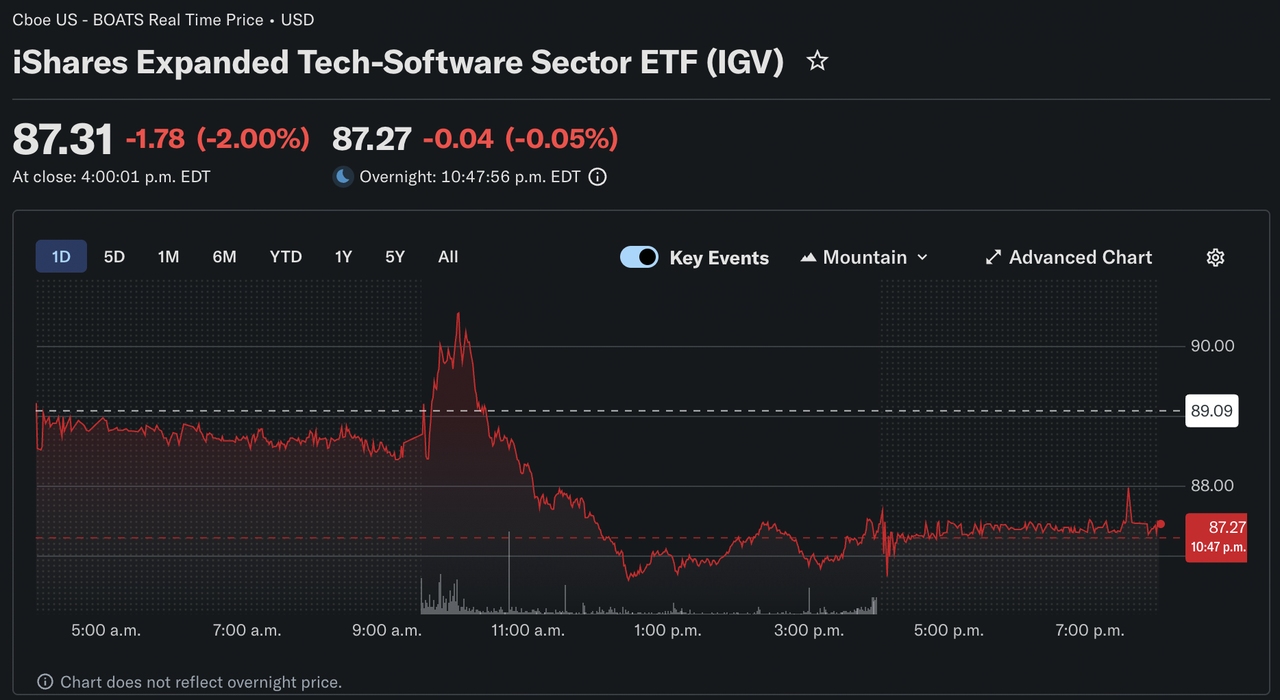
- Current Market Price: On June 22, 2026, the fund is currently trading at $87.31 per share.
IGV's Fund Composition and Strategy
Unlike traditional broad-market technology instruments, IGV operates through a highly precise mandate. The portfolio completely bypasses hardware producers, ensuring that its equity performance reflects pure software development, deployment, and digital licensing infrastructure.
Top Holdings Portfolio Distribution
Source: Stock Analysis
The core engine of IGV consists of deep-moat software operators. As of mid-2026, the primary holdings driving fund allocations are structured as follows:
|
Ticker |
Company Name |
Sector Focus |
Market Value Allocation |
Weight (%) |
|
PANW |
Palo Alto Networks Inc. |
Information Technology |
$1,212,561,030.00 |
8.87% |
|
PLTR |
Palantir Technologies Inc. |
Information Technology |
$1,175,406,331.49 |
8.60% |
|
MSFT |
Microsoft Corp. |
Information Technology |
$1,137,479,519.40 |
8.32% |
|
ORCL |
Oracle Corp. |
Information Technology |
$1,090,874,800.02 |
7.98% |
|
CRWD |
CrowdStrike Holdings Inc. |
Information Technology |
$905,680,779.52 |
6.63% |
|
CRM |
Salesforce Inc. |
Information Technology |
$645,087,615.22 |
4.72% |
|
APP |
AppLovin Corp. Class A |
Information Technology |
$600,931,473.57 |
4.40% |
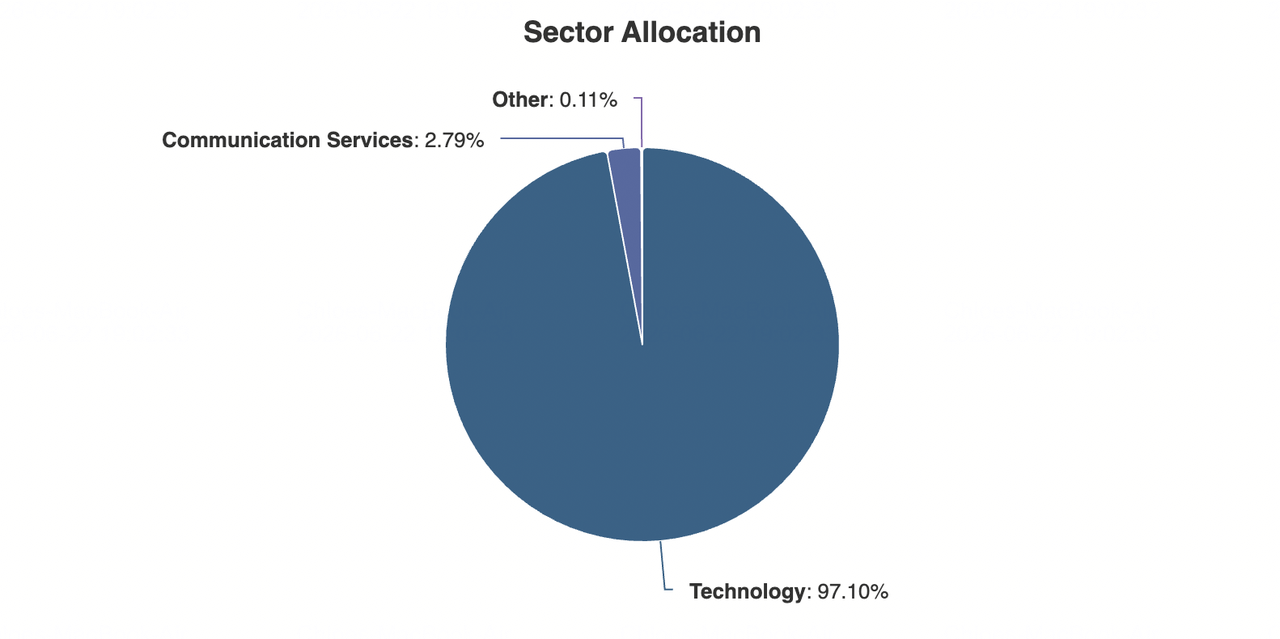
Exposure Breakdown: The aggregate architecture remains heavily oriented toward Application Software (54.06%) and Systems Software (42.35%), with minimal residual allocations distributed across Interactive Home Entertainment and Interactive Media Services.
2026 Tech Sector Investment Comparison
The table below contrasts the financial parameters, underlying attributes, and structural tailwinds defining the prime technology exposure channels, specifically contrasting IGV against broad tech and hardware-centric ETFs, in the 2026 market cycle.
|
Asset Class / Strategy |
Implied Focus Sector |
Underwriter / Issuer |
Primary Growth Tailwinds |
Structural Risks & Roadblocks |
|
iShares Expanded Tech-Software ETF (IGV) |
Application & Systems Software (approx. 96%) |
BlackRock / iShares |
New enterprise AI integration layers; expanding custom recurring revenue via multi-year enterprise contracts. |
High dependency on compute density pricing; multiple compression during margin shocks. |
|
VanEck Semiconductor ETF (SMH) |
Hardware, Foundries, Equipment Components |
VanEck |
Massive ongoing global data center buildouts; unprecedented chip demand fueled by the AI infrastructure race. |
Cyclical supply gluts; steep geopolitical trade constraints; extreme single-stock concentration risk (e.g., Nvidia). |
|
Technology Select Sector SPDR Fund (XLK) |
Multi-Sector Large-Cap Tech (Hardware, Cloud, Systems) |
State Select SPDR |
Massive cash reserves among mega-caps; highly efficient, institutional-grade vehicle with ultra-low expense fees. |
Heavy top-weighted volatility driven by individual mega-cap corrections; increasing global antitrust scrutiny. |
The IGV Investment Thesis for 2026: 5 Pillars of Market Valuation
Source: Wallet Investor
1. Shift Toward Custom Enterprise Supply Frameworks
To secure continuous access to high-performance AI engines, Fortune 500 enterprises are migrating away from sporadic Spot usage toward long-term, multi-year built-to-order software supply contracts. This transition provides companies within the index with unparalleled revenue visibility and reliable baseline cash flows.
2. Dissecting the Software "Value-Up" Structural Re-Rating
Throughout earlier software cycles, application developers traded at specific discounts when infrastructure margins were opaque. However, corporate restructuring, specialized operational adjustments, and clear monetization pathways have structurally enhanced the baseline valuation floor for major software players.
3. Insulated Exposure to Generative Intelligence Pipelines
As underlying models require ever-increasing computational capacity, pure-play software giants pass on marginal cost increases through upgraded premium licensing tiers (e.g., automated copilots, specialized algorithmic cyber defenses). This creates a direct mechanism to transform global technology capital expenditure into top-line revenue.
4. Macroeconomic Stability and Institutional Cash Allocations
With primary international central banks navigating rangebound monetary policies, institutional capital is rotating into predictable, non-correlated fundamental growth. IGV provides an efficient institutional-grade vehicle for such deployments, keeping secondary equity trading tightly tethered to true balance-sheet expansion.
5. Compelling Growth Multiples Relative to Addressable Market Expansion
Despite experiencing intermediate consolidation patterns earlier in the year, the underlying expansion of software total addressable markets (TAM) continues to outpace near-term price swings. This divergence yields highly attractive forward price-to-sales metrics relative to historical technology cycles.
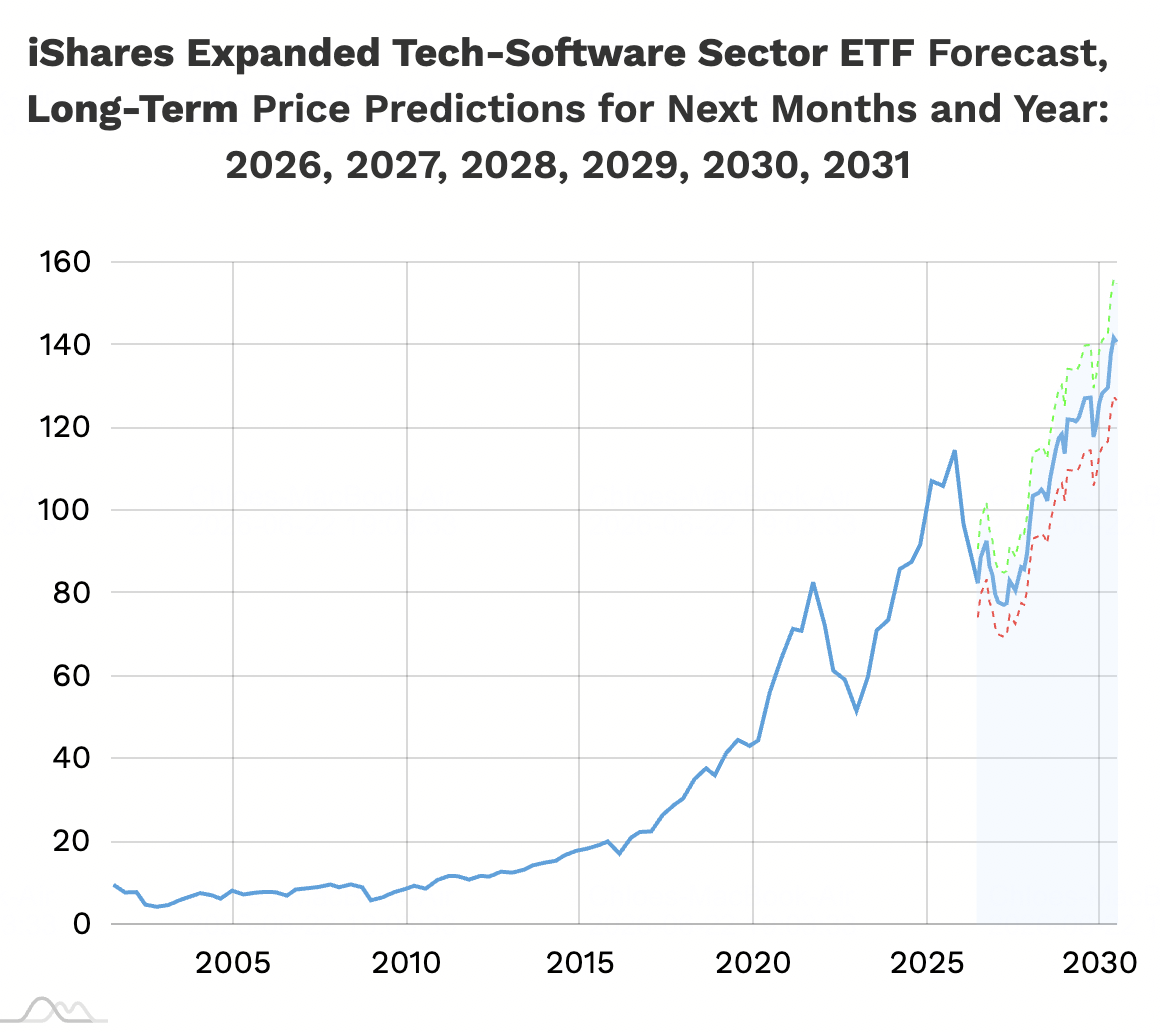
IGV Valuation and Performance Forecasts for 2026: Bull vs. Bear Outlook
Institutional desks maintain an active dialog regarding software performance trajectory, balancing core corporate adoption speed against wider macroeconomic forces.
|
Institution / Analyst Desk |
2026 Target Implied Range |
Market Outlook / Stance |
|
Citigroup Equity Desks |
$105.00 – $115.00 |
Highly Bullish: Driven by pristine execution of enterprise volume software ramps and an accelerating corporate cyber-security upgrade cycle. |
|
Mizuho Securities |
$98.00 – $109.00 |
Bullish: Upgraded based on the sustained pricing power of key holdings within enterprise cloud computing frameworks. |
|
JPMorgan Chase & Co. |
$90.00 – $98.00 |
Overweight: Constructive on expanding software margins and structural recurring cash flow dynamics across the sector. |
|
Market Consensus (Aggregated) |
$85.00 – $92.00 |
Moderate Buy: Balanced expectation of resilient subscription conversions versus short-term multiple contraction due to broader market consolidation. |
|
UBS Group |
$70.00 – $80.00 |
Neutral: Cautious on elevated platform infrastructure expenses and corporate software budget optimization initiatives. |
The Bull Case: Pervasive Monetization Drives Multiple Expansion
Bulls project that as corporate data processing and automated workflow demands accelerate past a 30% compound annual growth rate, pure SaaS business models will see rapid operating margin expansion. Successful scaling of next-generation cloud architectures allows companies within the ETF to realize significant margin leverage, driving the fund toward its highest institutional targets.
The Bear Case: Cost Pressures and Corporate Budget Adjustments
Bears note that the modern computing landscape is highly capital intensive, requiring ongoing optimization. If enterprise buyers reduce discretionary spending or experience delivery delays on advanced architecture upgrades, technology valuation multiples could temporarily contract, pressuring the fund toward historical support levels.
Competitive Risks and Tech Sector Pressures
While IGV benefits from institutional backing and deep structural growth avenues, the macro landscape highlights clear headwinds that allocation managers must closely monitor:
- The AI Demand Erosion Paradox: Continued market penetration by open-source foundation models and direct general-purpose AI platforms threatens to bypass specialized application software. If corporations choose to build custom logic layers directly on top of base LLMs, legacy software-as-a-service (SaaS) providers face localized disruption and severe margin contraction.
- Infrastructure Capital Burn Transference: The astronomical financial cost required to operate and train frontier neural architectures places systemic stress on the entire technology chain. As cloud hyperscalers adjust pricing structures to absorb compute bottlenecks, software companies encounter escalating operational expenses, directly challenging net profit margins.
- Valuation Multiple Compression: Trading at an aggregated historical premium compared to traditional value industries, the software sector is highly sensitive to persistent, rangebound central bank interest rates. Any slowdown in global enterprise software budget expansions could quickly collapse sentiment multiples, drawing sector valuations back to historical base support lines.
How to Trade iShares Expanded Tech-Software Sector ETF (IGV) on BingX
For global market participants wanting to express a directional view on software sector growth, trading IGV perpetual contracts offers a flexible, capital-efficient alternative to physical equity ownership. This instrument provides an alternative to traditional markets for capitalizing on sector shifts, much like how tech traders use digital ecosystems to track core innovations across TradFi, tech giants like NVIDIA, or crypto assets like Bitcoin.
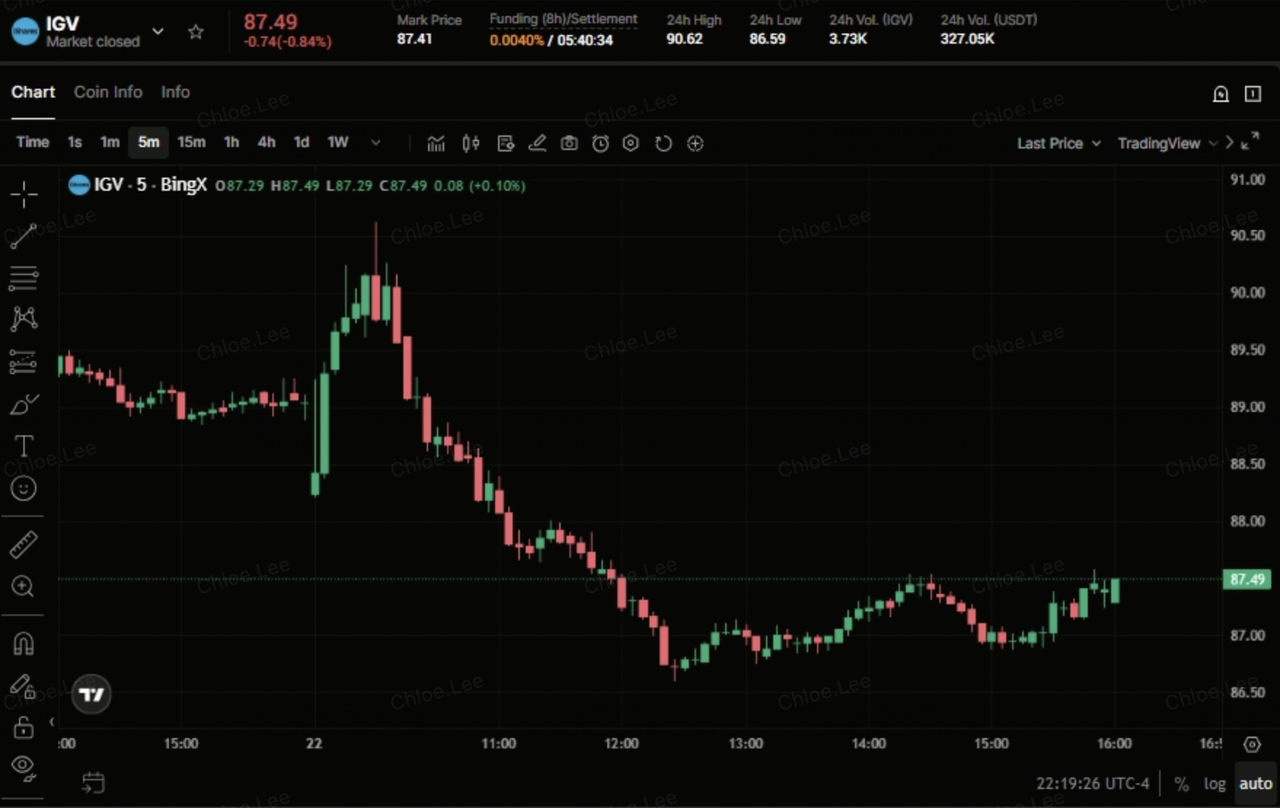
- Access the Platform: Log into your account and navigate to the specialized TradFi / Stocks section on the main BingX exchange dashboard.
- Locate the Asset: Type in the ticker search bar and select the IGV-USDT perpetual futures contract.
- Establish Your Market Direction: Choose Open Long if you believe expanding 1.6T optical portfolio deployments and strong hyperscaler traction will propel the asset to the $300 street-high target. Choose Open Short to capitalize on premium valuation adjustments and potential industry capex cool-downs.
- Configure Leverage and Margin Parameters: Set your preferred Isolated or Cross-Margin structures alongside disciplined, highly conservative leverage ratios to maximize capital allocation efficiency.
- Implement Risk Management Protocols: Deploy advanced BingX Take-Profit and Stop-Loss (TP/SL) tools to automatically shield your capital from sudden, news-driven market gaps during extended after-hours trading windows.
Conclusion: How to Navigate the Software Pivot with BingX in 2026
The technology sector in 2026 finds itself in a profound transition zone. As the immense capital expenditure boom for hardware components stabilizes, the primary burden of proof shifts directly to software execution and pricing conversion. The iShares Expanded Tech-Software Sector ETF stands at the absolute epicenter of this evolution, presenting a targeted package of leading enterprises tasked with productizing artificial intelligence at a global scale.
While market participants must carefully weigh the dual risks of compute-driven margin compression and fast-evolving competition, the structural visibility of multi-year enterprise custom contracts continues to support the underlying software narrative. For tactical investors and high-volume derivatives traders alike, navigating the IGV ecosystem provides an optimized, high-exposure conduit to capitalize on the next major wave of enterprise efficiency before secular valuations undergo their final long-term adjustment.
Risk Reminder: Trading high-growth semiconductor and technology equities involves immense financial risk due to elevated beta metrics, capital-intensive manufacturing timelines, and rapidly evolving technological cycles. Always enforce strict risk management protocols, proper position sizing, and mandatory stop-losses.
Related Reading
- Top AI Semiconductor Stocks to Buy in 2026: AI Chips and Supply Chain Complete Guide
- Top 10 Quantum Computing Stocks to Watch in 2026: Companies Driving Next-Gen Computation
- Top AI Hyperscaler Stocks to Watch in 2026: The $700 Billion Cloud Infrastructure Race
- Top AI Compute and GPU Stocks to Buy in 2026: The Shift to Inference and Custom Silicon
- Top AI Data Center Stocks to Buy in 2026: Cloud, Servers, and AI Compute Infrastructure
