In 2023, hackers stole more than US$1.7 billion in crypto assets through attacks targeting exchanges and DeFi protocols, according to data from Chainalysis. A significant portion of these losses impacted users who failed to activate basic security layers, such as two-factor authentication, withdrawing funds to self-custody wallets, and security configurations that are freely available on major platforms. The issue is rarely the exchange itself. In most cases, it is the result of decisions the user makes (or fails to make) when opening and operating an account.
Quick Answer: Crypto exchange security refers to the set of mechanisms designed to protect your account and funds against unauthorized access. To secure your assets: (1) enable 2FA through an authenticator app, never via SMS; (2) transfer funds to cold storage if you do not plan to trade in the short term; (3) configure a withdrawal address allowlist; (4) use a unique password and always verify domains before logging in.
What Is Crypto Exchange Security and Why It Matters for Brazilian Traders
When you deposit crypto into an exchange, you are entrusting custody of your assets to a third party. Unlike traditional banks, where deposit insurance systems may partially cover losses in the event of bankruptcy, the Brazilian crypto market still operates without equivalent protections for exchange-held funds.
Exchange security involves two distinct layers:
Platform security - what the exchange handles on its side: reserve cold storage, independent audits, institutional insurance coverage, emergency funds, and infrastructure architecture. Platforms that periodically publish Proof of Reserves provide an additional layer of verifiable transparency.
Account security - what you personally control: 2FA, passwords, authorized devices, withdrawal allowlists, and login habits.
Most successful attacks exploit the second layer. Phishing, SIM swap attacks, and credential stuffing are far more common attack vectors than direct breaches of major exchange infrastructures. Understanding this completely changes the approach: traders who expect the platform to “handle everything” are often more exposed than they realize.
How 2FA Works on Exchanges: Types and Protection Levels
2FA (two-factor authentication) adds a second verification layer beyond your password. Even if someone obtains your password, they still cannot access the account without the second authentication factor.
There are three primary types available on Brazilian exchanges:
SMS-Based 2FA
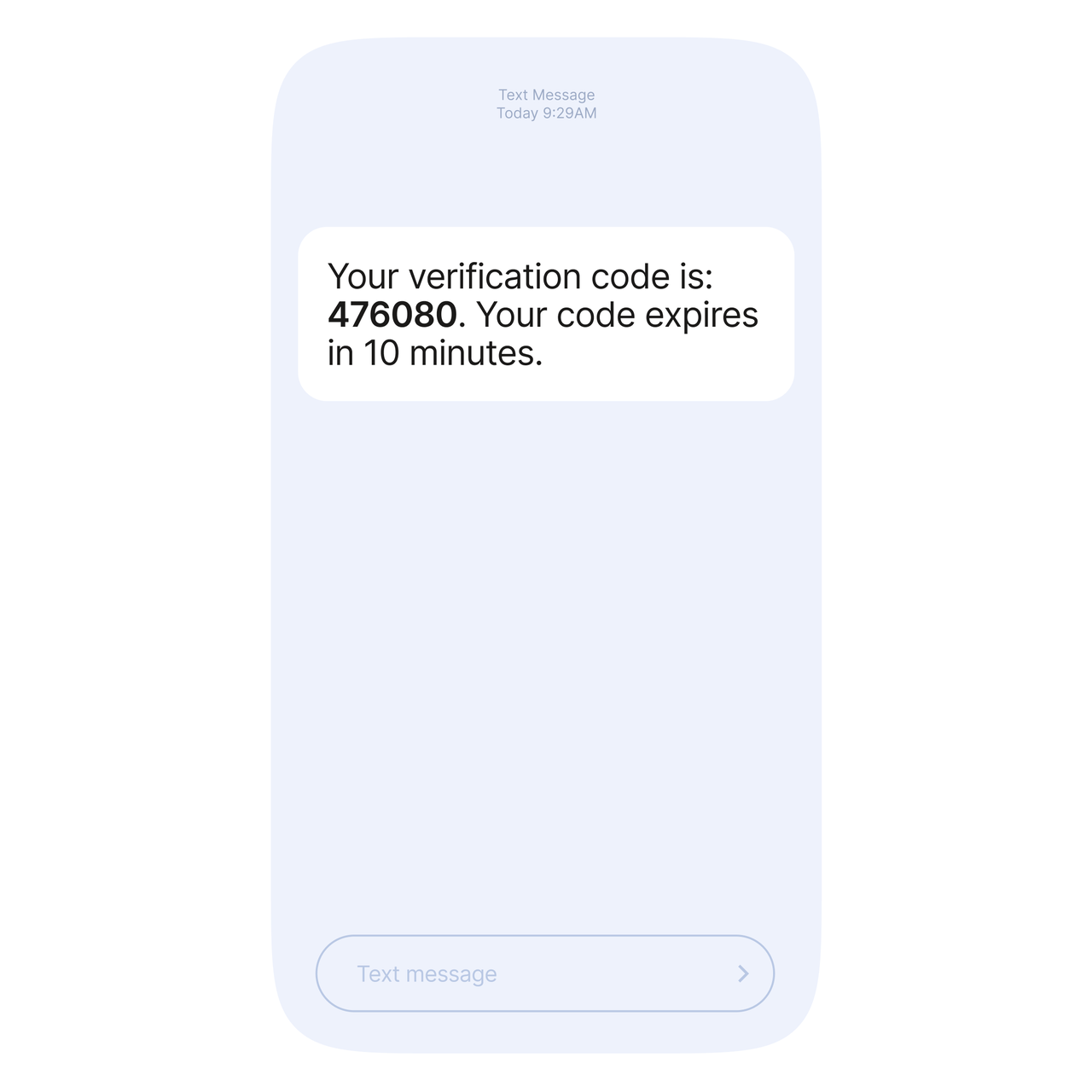
The easiest option to configure and also the most vulnerable. Verification codes are sent to the registered mobile number. The issue is that SIM swap attacks allow criminals to convince telecom providers to transfer your number to a SIM card under their control. Once this happens, they can receive your verification codes.
For Brazilian traders, this is particularly relevant: Brazil ranks among the countries with the highest rates of SIM cloning fraud, according to a 2022 GSMA report.
Authenticator App 2FA (TOTP)
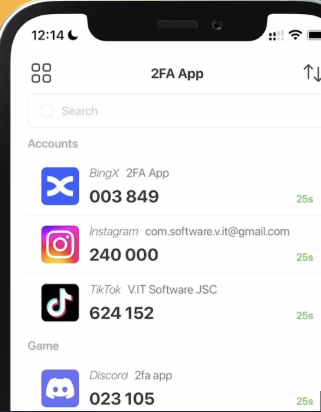
Apps such as Google Authenticator, Authy, and Microsoft Authenticator generate 6-digit TOTP (Time-based One-Time Password) codes that refresh every 30 seconds. These codes are generated locally on the device, meaning no telecom carrier is involved in the process. This effectively eliminates the SIM swap attack vector.
This is the minimum recommended security standard for any account holding a meaningful balance. See the step-by-step guide to enable 2FA on BingX.
Physical Security Keys (Hardware Token / FIDO2)
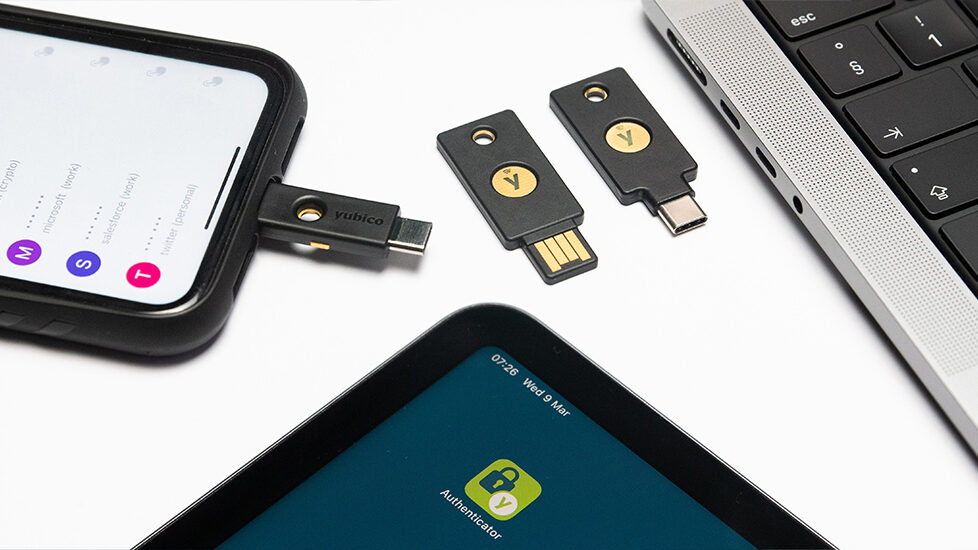
Source: Yubico
Devices such as YubiKey and Google Titan Key function as physical authenticators. You must connect or tap the device to confirm access. This represents the highest level of protection currently available and is virtually immune to remote phishing attacks, as the device validates the website domain before responding.
Only a limited number of exchanges in Brazil currently support this method, but adoption is steadily increasing.
How to Calculate Your Exchange Exposure Level
Before deciding where to store your assets, it is worth performing a simple exposure analysis:
Exchange exposure formula:
Exposure (%) = (Exchange balance / Total crypto holdings) × 100
Practical example:
A trader holds R$50,000 in BTC on an exchange and R$30,000 in ETH in a self-custody hardware wallet.
Exposure = (50,000 / 80,000) × 100 = 62.5%
This means that 62.5% of the trader’s crypto portfolio depends on the security of the exchange. For active trading purposes, keeping 20% to 30% of holdings on an exchange is generally reasonable. For investors who simply hold assets without actively trading, the ideal approach is to maintain the lowest possible balance on the platform.
Risk reference table:
|
Exchange Exposure |
Risk Profile |
Notes |
|
Up to 20% |
Low risk |
Ideal for long-term holders |
|
20% to 50% |
Moderate risk |
Suitable for active traders |
|
50% to 80% |
High risk |
Only justified with strong 2FA and withdrawal allowlists |
|
Above 80% |
Critical risk |
Not recommended under any profile |
Cold Storage vs Hot Wallet: When to Use Each
The term cold storage refers to any method of storing crypto assets offline. The lower the internet exposure, the smaller the attack surface.
Hot Wallet
Funds held on exchanges or in Web3 wallets connected to browsers, such as MetaMask or Phantom, are considered hot wallets. They provide immediate access and are essential for frequent traders, but they remain continuously exposed to online attack vectors.
Cold Storage: The Three Main Options
Hardware wallet - physical devices such as Ledger Nano X, Trezor Model T and Coldcard. Private keys never leave the device. To sign a transaction, you must physically possess the hardware wallet. Average cost: R$400 to R$1,500. Check out the best hardware wallets on the market before choosing one.
Paper wallet - private keys printed on paper. While functional, it is fragile: paper can deteriorate, be accidentally photographed, stolen, or destroyed by fire or water. It only makes sense as a secondary backup rather than a primary storage method.
Air-gapped wallet - a computer or device that has never been connected to the internet, with wallet software installed locally. It offers a security level comparable to hardware wallets, but with significantly greater operational complexity.
For Brazilian traders who actively trade while maintaining a long-term reserve, the most practical workflow is to keep only the capital needed for weekly trading activity on the exchange and transfer the remainder to a hardware wallet. Understand the difference between custodial and non-custodial wallets before deciding which model best suits your strategy.
Security Tools by Platform: Detailed Comparison
BingX
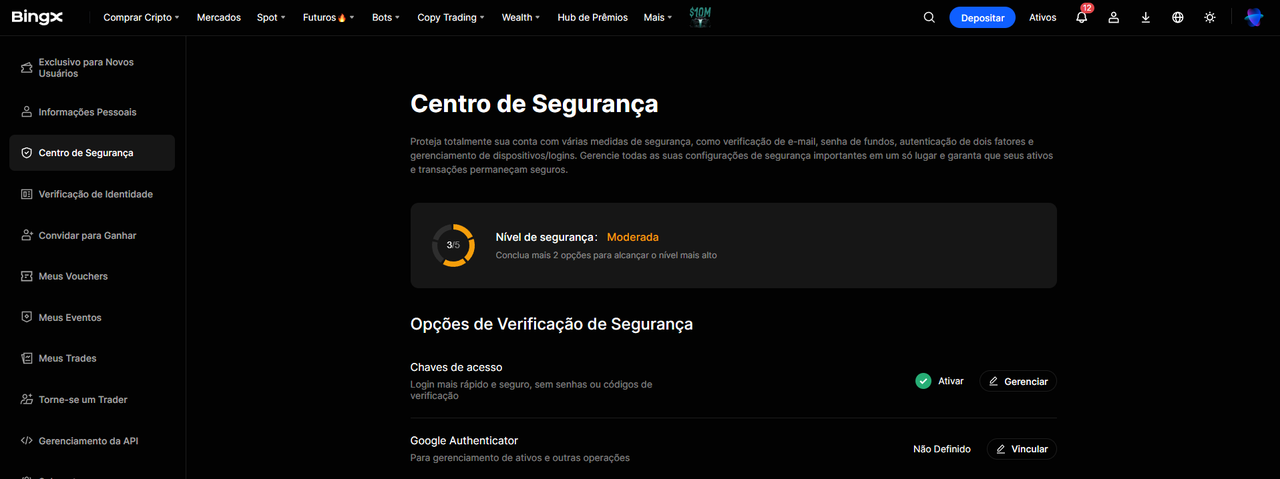
The BingX platform provides a robust set of security controls directly accessible through the user dashboard. Authenticator app-based 2FA is mandatory for withdrawals above certain thresholds, enforcing a minimum security layer even for less attentive users.
The platform offers a withdrawal address allowlist, which blocks withdrawals to any address not pre-approved, even if the account is compromised. The cooldown period after adding a new address (typically 24 hours) creates a response window for users to cancel actions if suspicious activity is detected.
BingX’s anti-phishing system allows users to set a personalized code that appears in all official platform emails. Any email missing this code is therefore fraudulent. For traders receiving high email volume, this feature is particularly effective for identifying phishing attempts.
BingX also provides detailed login logs including IP, geolocation, and device information, along with real-time notifications via email and app for any login or withdrawal activity. The platform’s protection fund covers specific security-related incidents, and the exchange publishes monthly Proof of Reserves with 100% coverage.
For withdrawals, BingX supports authenticator-based 2FA, email verification, and in some cases mobile biometric verification.
Binance
Binance supports authenticator-based 2FA, physical security keys (YubiKey), and a withdrawal address allowlist system.
Coinbase
Supports authenticator-based 2FA and physical security keys. Its historical weak point is customer support in cases of account compromise. Recovery processes may be slow for users outside the United States.
Bybit
Offers a security framework similar to other major exchanges: authenticator-based 2FA, withdrawal allowlists, anti-phishing codes, and device management controls.
Withdrawal Allowlist (Whitelist): The Most Underrated Security Feature
Among all security configurations available on exchanges, the withdrawal address allowlist provides the highest additional protection with the lowest setup effort.
Its mechanism is simple: you register wallet addresses that are authorized for withdrawals. Any attempt to withdraw to an address not on the list is automatically blocked, even if an attacker has your password and 2FA code.
This mitigates a common attack scenario: users whose accounts are compromised via phishing, but where attackers still cannot withdraw funds because the destination address is not approved.
On BingX, the allowlist can be configured with a cooldown period after each new address addition, creating an additional cancellation window in case of unauthorized access. For USDT and other high-value assets, setting this up before making significant deposits is one of the best security practices available.
How to Identify Phishing in Exchanges: Practical Checklist
Phishing is the leading cause of exchange account compromise. These attacks mimic official platform communications to steal credentials.
Before entering your password or 2FA code on any page, verify:
- The domain is exactly the official one (e.g., bingx.com, not bingx-login.com or bingX.com)
- SSL certificate is active (padlock icon in the address bar)
- The email contains your configured anti-phishing code
- The URL does not include suspicious subdomains
- You did not land on the page via a sponsored Google ad (a common attack vector)
If you receive an email asking you to “urgently verify your account” or “check suspicious activity” with a direct link, do not click it. Always access the exchange by manually typing the official URL into your browser.
Step-by-Step Setup: Securing Your BingX Account
- Go to the Security Settings section in your account dashboard
- Enable 2FA via Google Authenticator or Authy, scan the QR code, and store the backup code securely offline
- Go to Withdrawal Address Management and add only addresses you control
- Enable the anti-phishing code: choose a combination of letters and numbers you will recognize in legitimate emails
- Review authorized devices and remove any you do not recognize
- Enable login and withdrawal notifications via email and mobile app
This process takes less than 15 minutes and significantly reduces the risk of account compromise. If you have not completed identity verification yet, complete KYC on BingX to unlock all available security features.
FAQ: Crypto Exchange Security
1. What is 2FA and why should I enable it on crypto exchanges?
2FA (two-factor authentication) is an additional verification layer beyond your password. Even if someone obtains your password, they cannot access your account without the temporary code generated by an authenticator app. Enabling app-based 2FA is one of the most effective security measures in terms of ease and protection.
2. Is cold storage mandatory for crypto investors?
No, but it is highly recommended for users holding significant amounts who do not need immediate trading access. For holdings above R$10,000 in crypto that will not be actively traded, a hardware wallet eliminates custodial risk from exchanges.
3. SMS or authenticator app: which 2FA is safer?
Always prefer an authenticator app. SMS-based 2FA is vulnerable to SIM swap attacks, where criminals trick telecom providers into transferring your number to a SIM card under their control. Brazil has a high incidence of this type of fraud.
4. What happens if I lose my phone with the authenticator app?
That is why it is critical to store your backup code (authenticator seed) securely offline before enabling 2FA. With this code, you can restore your authenticator on a new device. Without it, account recovery via the exchange may take days and require documentation.
5. Are large exchanges safer than smaller ones?
Generally yes in terms of infrastructure. Larger exchanges typically have more resources for audits, insurance, and emergency funds. However, your account security depends primarily on your own configuration, regardless of platform size. Always check whether the exchange publishes Proof of Reserves and follows regulated VASP standards in Brazil.
6. What is the risk of keeping crypto on exchanges long-term?
The main risk is not exchange insolvency, but account compromise via phishing or leaked credentials. For long-term holdings, it is best to use cold storage and keep exchanges only for active trading. You can use the BingX P2P market to convert to fiat when needed and keep minimal balances on-platform.
7. Does a withdrawal allowlist protect me even if my account is hacked?
Yes. Even with full account access, an attacker cannot withdraw funds to addresses that are not on the allowlist. It is one of the most effective yet underused security features among crypto traders.
8. What is a protection fund?
It is a reserve maintained by the exchange to cover user losses in case of platform-level security incidents, such as server hacks. It does not cover losses caused by individual account compromise (phishing, SIM swap), which remain the user’s responsibility. BingX maintains a protection fund and also publishes monthly Proof of Reserves reports.
Summary: What You Should Do Today to Secure Your Account
- Enable app-based 2FA (not SMS) across all exchanges you use
- Set up a withdrawal address allowlist immediately
- Activate your anti-phishing code for emails
- Calculate your crypto exposure on exchanges and assess whether it matches your risk profile
- If you hold more than R$10,000 in crypto without active trading needs, consider a hardware wallet
- Store authenticator backup codes in a secure physical location, never as phone photos or email files
- Review authorized devices and active sessions monthly. Use proper risk management as part of your operational routine, not only for trading positions
Related Reading
- Crypto Exchange Security in Brazil: Proof of Reserves and How to Evaluate a Platform
- How to Store Bitcoin Safely in 2026: Exchange vs Hot Wallet vs Cold Wallet
- Hot Wallet vs Cold Wallet: What’s the Difference? Crypto Security Guide
- Exchanges with Higher Liquidity for Brazilian Traders
- Best Crypto Exchanges for Beginners in Brazil
