



The global market for tokenized Real-World Assets (RWA) surged 66% in 2026, jumping from $14 billion to $23.6 billion in total on-chain value. In Brazil, this momentum is moving even faster: the national RWA market reached BRL 1.5 billion in January 2026, marking a staggering 1,000%+ growth over 12 months. For Brazilian investors, this is no longer a distant trend. It is a live market, featuring projects that tokenize US Treasuries, real estate, agricultural commodities, and even fractional shares of tech giants like Apple and Nvidia. The burning question is no longer "what is RWA?" but rather: which projects deserve your attention in 2026?
Quick take: RWA cryptocurrencies are tokens that represent off-chain physical or financial assets on the blockchain, such as bonds, real estate, and commodities. The most fundamentally sound projects in 2026 include: Ondo Finance (ONDO), Chainlink (LINK), Stellar (XLM), MANTRA (OM), and Centrifuge (CFG). To trade these tokens in Brazil, BingX provides spot pairs and perpetual contracts with competitive fees starting at just 0.003%.
What Are RWA Tokens and How Do They Work?
RWA stands for Real World Assets. The core thesis is straightforward: take an asset that exists outside the blockchain (a government bond, a piece of real estate, a commercial invoice, physical gold) and issue a digital representation of that asset as a token.
Think of it this way: just as a traditional Real Estate Credit Note (LCI) represents a financial claim on a property without requiring you to physically own the building, an RWA token represents a fractional piece of ownership or yield generated by a real-world asset. The key differentiator lies in the infrastructure: everything is executed via public smart contracts, enabling instant settlement and eliminating unnecessary intermediaries.
Tokenization is powered by smart contracts. Throughout this process, an asset can be fractionalized into multiple tokens or minted as a unique, indivisible version. The digital asset directly tracks the underlying price collateralization: when the market value of the physical asset changes, the tokens mirror that price action.
There are two primary types of RWA tokens:
Yield-bearing tokens: These represent assets that generate recurring cash flow, such as US Treasuries or corporate debentures. Token holders earn a yield proportional to their share without needing to open a US brokerage account or manage traditional custody. This mechanism operates similarly to crypto staking, but is fully backed by real-world yields.
Price-exposure tokens: These track assets whose value is driven by capital appreciation, such as tokenized equities, gold, or fractionalized real estate. While investors may not receive direct payouts, they gain pure price exposure to the underlying asset's upside.
Why the RWA Sector Exploded in 2026
Three key factors converged to make 2026 the breakout year for RWAs.
The first is institutional onboarding. The CEO of Securitize highlighted at ETHConf 2026 that the RWA sector could skyrocket from its current $30 billion baseline to $5 trillion if traditional equities and ETFs are effectively migrated to public blockchains. The global equity and ETF market sits at roughly $150 trillion. If just 2% to 3% of this capital is tokenized, the sector will hit that $5 trillion milestone.
The second is regulatory maturity. In Brazil, the asset-backed token market is undergoing a structural shift that could unlock up to BRL 7 trillion in credit starting in 2026, catalyzed by modernized regulatory frameworks. Driving this transformation is the Central Bank of Brazil's implementation of digital receivables, fully digitizing the lifecycle of commercial invoices. The expansion of regulated VASPs in the country provides the essential legal framework for this growth.
The third is scalable infrastructure. Faster blockchains, robust oracle networks, and compliant on-chain frameworks have turned what used to be conceptual whitepaper ideas into technically viable, institutional-grade products.
The Top 5 RWA Tokens to Watch in 2026
1. Ondo Finance (ONDO): The Leading Pure-Play Tokenization Platform
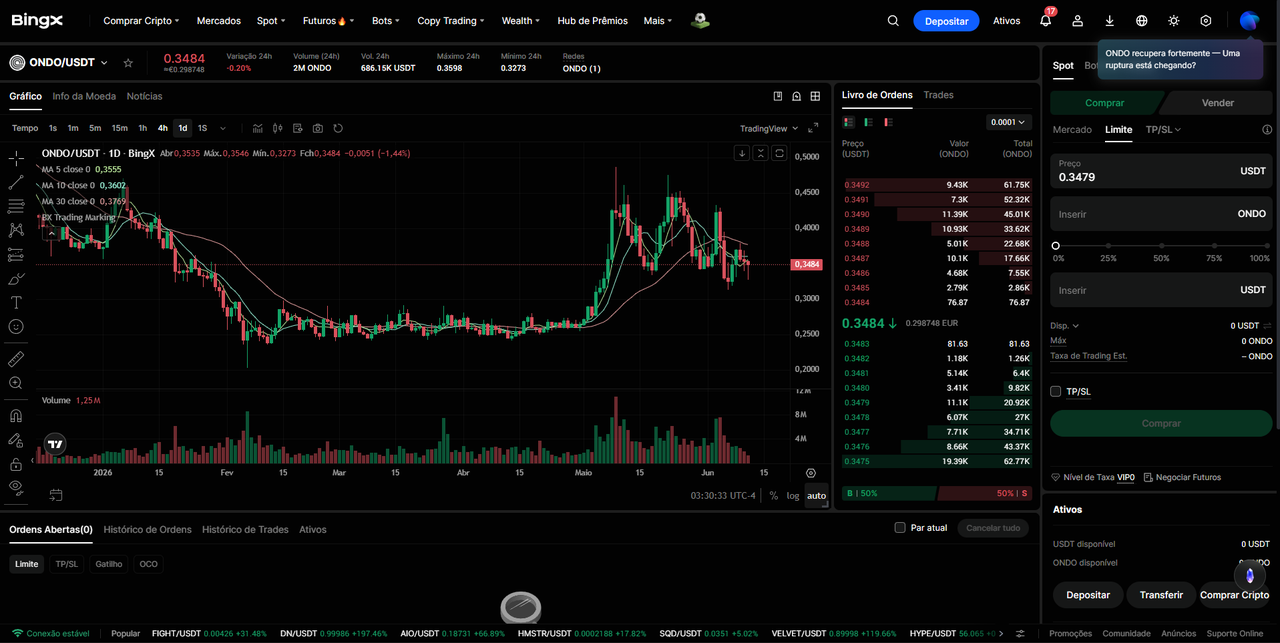
Ondo Finance has built the most comprehensive RWA ecosystem in the crypto space. As one of the largest players in the real-world asset vertical, its flagship products like OUSG and USDY have driven the platform's Total Value Locked (TVL) past $2.75 billion in early 2026, establishing clear dominance in the multi-chain tokenized Treasury market.
Ondo's premier product, OUSG, offers tokenized access to short-term US Treasuries managed by institutional heavyweights like BlackRock, Franklin Templeton, and Fidelity. For non-US investors, USDY functions as a yield-generating alternative to traditional stablecoins: instead of holding a non-yielding digital asset, investors capture native yields derived directly from US Treasuries.
Furthermore, Ondo Global Markets—a platform dedicated to tokenizing US equities and ETFs—surpassed $1 billion in TVL in under eight months from launch, doubling its metrics since January 2026. Ondo currently commands over a 70% market share among tokenized equity issuers.
The ONDO token trades at a market cap of approximately $2.19 billion, roughly 79% below its all-time high. While the market continues to reward the platform's adoption, the token itself faces some headwind because it does not directly capture protocol operational fees. This has sparked one of the most compelling debates in DeFi: to what extent should an infrastructure governance token reflect the underlying platform's institutional growth?
Primary Risk: Significant token unlocks are scheduled across 2026, 2027, and 2028, introducing roughly 6.5 billion tokens into circulation. This substantial supply expansion could create persistent downward price pressure.
How to trade on BingX: ONDO is fully available on the BingX spot market. Navigate to Trade > Spot Trading, search for the ONDO/USDT pair, and leverage the platform's advanced charting tools to optimize your entries.
2. Chainlink (LINK): The Infrastructure Powering the RWA Revolution
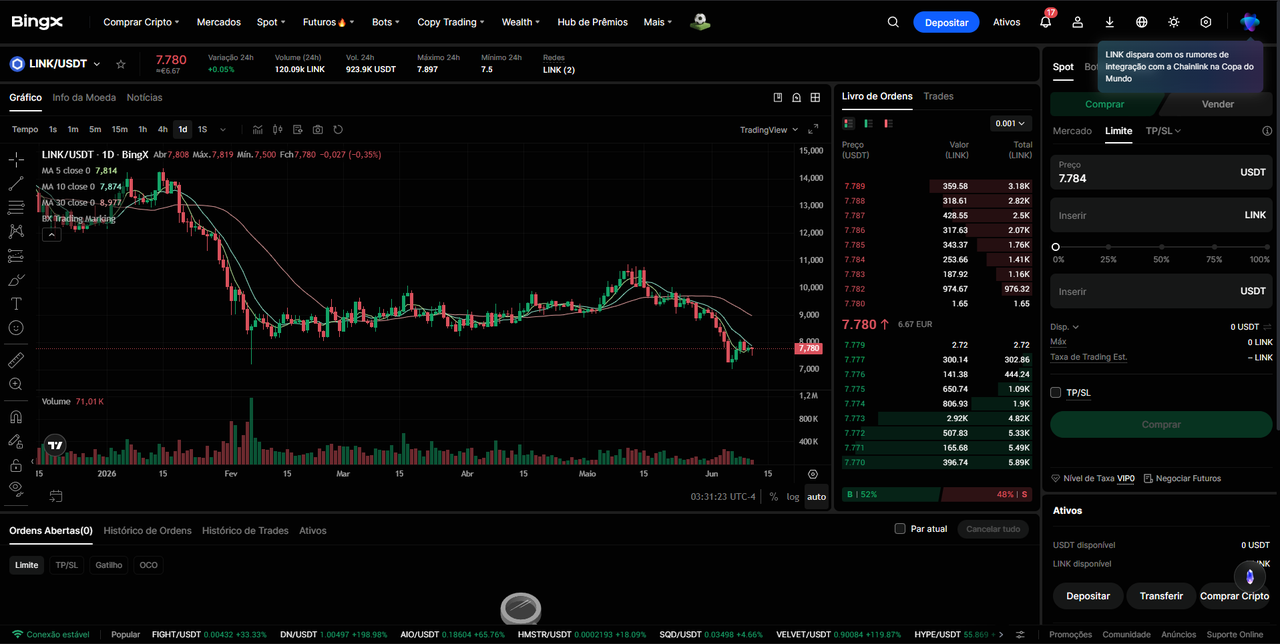
Chainlink doesn't issue tokenized assets itself. Instead, it handles something far more vital: it ensures that all other major RWA protocols operate using secure, tamper-proof, real-world data.
Chainlink powers over 80% of all RWA protocols, securing off-chain price verification for billions of dollars in assets. In 2026, its Cross-Chain Interoperability Protocol (CCIP) upgrade has made transferring RWA tokens across disparate blockchains completely seamless. The network currently processes over 10 million data feeds every single day.
Chainlink's Proof of Reserve (PoR) feeds autonomously verify that tokenized Treasuries, commodities, and funds are fully collateralized, while its NAVLink infrastructure broadcasts Net Asset Values on-chain in real time. This architecture forms the backbone of institutional pipelines, including cross-chain settlement pilots with J.P. Morgan and Ondo Finance, and is actively used by legacy institutions like Swift, Euroclear, Fidelity International, UBS, and Mastercard.
In 2026, CCIP's importance became undeniable. The infrastructure attracted over $1.1 billion in tokenized value in a single week, as dozens of protocols migrated to Chainlink following a major exploit on a competitor's bridging solution.
Competitive Advantage: Any enterprise or institution looking to bring traditional assets on-chain requires institutional-grade decentralized oracle networks. Chainlink holds an unshakeable first-mover advantage and a battle-tested validator network that would take competitors years to replicate.
How to trade on BingX: The LINK/USDT pair is liquid across both the spot market and perpetual contracts. For long-term spot accumulation, the spot exchange is ideal. For tactical traders looking to capitalize on volatility, perpetual futures using isolated margin offer precise risk management.
3. Stellar (XLM): From a Payment Network to Essential RWA Infrastructure
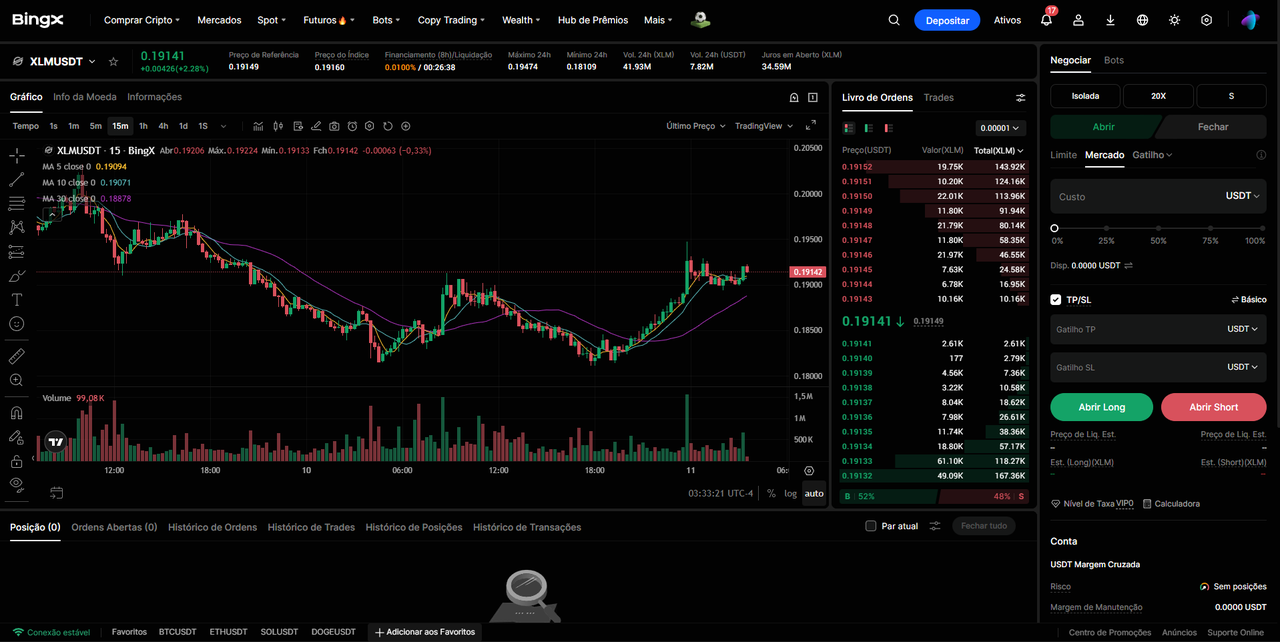
Stellar has been operational since 2014, originally focusing on fast and low-cost cross-border payments. In 2026, its long track record of compliance and speed has made it a premier destination for institutional funds looking to tokenize bonds and sovereign debt instruments.
In March 2026, the SEC and CFTC jointly classified XLM as a digital commodity, eliminating the regulatory ambiguity that historically hindered institutional entry. Around the same time, Amundi—Europe's largest asset manager—announced the rollout of a $100 million tokenized fund built natively on Stellar, reinforcing the network’s capacity to handle institutional RWA scale.
This builds on the success of Franklin Templeton's BENJI tokenized Treasury fund, which has long utilized the Stellar network. Offering sub-6-second settlement times and a negligible base fee of 0.00001 XLM per transaction, Stellar remains one of the most cost-efficient networks for high-volume value transfer, boasting one of the most expansive fiat on/off-ramp networks in crypto.
For Brazilian Investors: Stellar processes near-zero-cost international remittances, which becomes increasingly valuable as Brazil's Drex initiatives advance and cross-border CBDC interoperability becomes a core regulatory priority. You can trade XLM directly on the BingX spot market using USDT settlement pairs.
4. MANTRA (OM): Purpose-Built Layer 1 for Institutional Compliance
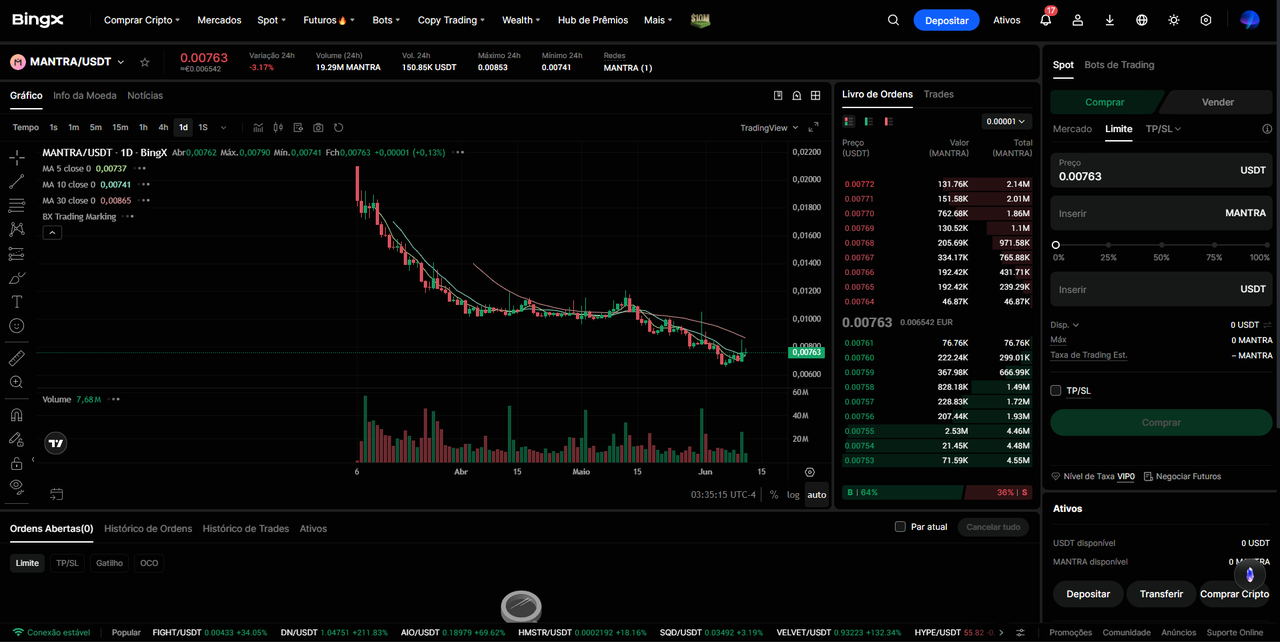
MANTRA has designed a dedicated Layer 1 blockchain tailored specifically for real-world asset tokenization, baking a comprehensive compliance framework directly into the protocol layer.
The MANTRA ecosystem secures over $300 million in tokenized bonds, offers double-digit yields across specialized pools, and has integrated with the Cosmos ecosystem to leverage instant finality. This structural approach powered a 5x surge in its TVL throughout 2025.
MANTRA's primary edge is its regulatory-first architecture. Rather than trying to retrofit permissionless blockchains for regulated products, the network was engineered from the ground up with built-in on-chain KYC/AML modules, investor-type permissions, and the automated compliance guardrails that institutional asset managers require.
In 2026, MANTRA expanded its footprint through partnerships with prominent Middle Eastern asset managers to tokenize premier real estate and sovereign debt instruments across the Gulf region. The native OM token is available on BingX for spot trading and liquidity allocation via perpetual contracts.
Risk Note: Following a severe liquidity shock in April 2025 that led to an aggressive intra-day drawdown due to concentrated sell pressure, the project overhauled its tokenomics structure. Investors should closely monitor on-chain distribution metrics and consistently implement stop-loss orders to manage risk exposure.
5. Centrifuge (CFG): The Pioneer of Tokenized Private Credit
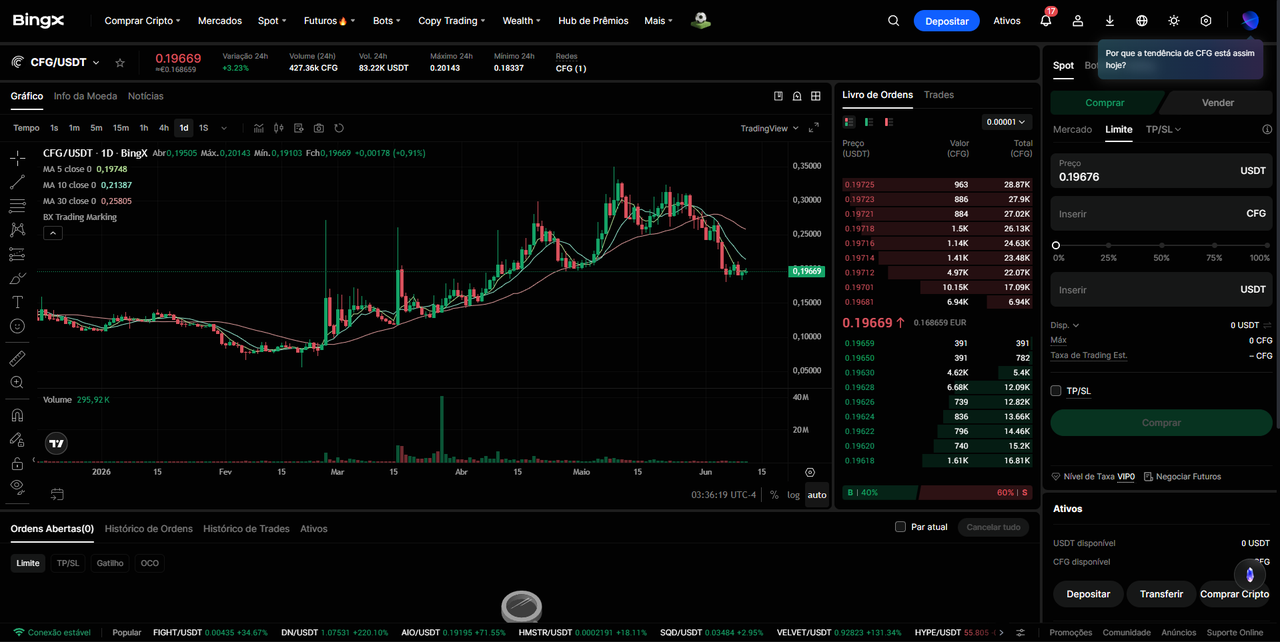
Centrifuge is one of the longest-standing projects in the RWA sector that remains operationally dominant in 2026. While newer protocols rely heavily on speculative narratives, Centrifuge relies on historical execution.
As a multi-chain real-world asset protocol, Centrifuge enables institutional issuers to spin up on-chain credit pools backed by off-chain collateral—including US Treasuries, commercial invoices, real estate, royalties, and structured credit portfolios. Operating across Ethereum, Base, and Arbitrum, it deploys a sophisticated tiered legal structure consisting of senior tranches (DROP) and junior tranches (TIN) to segment fixed-income yields from first-loss risk exposure.
Centrifuge achieved a major milestone by partnering with Janus Henderson to launch JTRSY, an institutional on-chain US Treasury fund. This partnership further expanded to tokenize Collateralized Loan Obligations (CLOs), giving DeFi native users direct exposure to diversified corporate loan portfolios.
The platform consistently commands over $200 million in TVL, processing upward of $50 million in tokenized commercial invoices monthly.
For Brazilian Investors: Centrifuge is highly relevant to the evolving private credit landscape. Brazil's commercial invoice market generates over BRL 11 trillion annually, yet only 27% is currently utilized as credit collateral. This untapped liquidity pool represents exactly the type of real-world financial asset that Centrifuge’s tokenization framework was built to unlock.
RWA Token Matrix Comparison (2026)
| Token | Primary Focus | Estimated TVL | Current Price (June 2026) | Core Differentiator |
| ONDO | Treasuries + Tokenized Equities | $2.75B | ~$0.36 | Dominant market share in institutional tokenized equities |
| LINK | Oracles + Interoperability Infrastructure | $25T Enabled | ~$7.85 | Secures over 80% of all decentralized RWA data pipelines |
| XLM | Cross-Border Settlement + Sovereign Debt | $1.2B in RWAs | ~$0.15 | ISO 20022 compliant, joint CFTC/SEC commodity designation |
| OM | Compliance-First Layer 1 for RWAs | $300M in Bonds | In Recovery | Only sovereign Layer 1 tailored purely for regulatory compliance |
| CFG | Tokenized Private Credit & Structured Loans | $200M+ | Lower Liquidity | First-mover protocol utilizing risk-segmented senior/junior tranches |
Key Risks Every RWA Investor Must Understand
Regulatory risk: Frameworks governing RWA tokens are still evolving globally. While Brazil is advancing steadily via Drex and central bank directives, sudden regulatory shifts anywhere can alter protocol operations. Trading through compliant, regulated exchanges helps mitigate this exposure.
Underlying asset custody risk: An RWA token is only as secure as the off-chain custodian holding the physical asset. Always verify the custody providers and look for public Proof of Reserves audits. The same security thesis applies to trading venues: prioritize platforms utilizing audited Proof of Reserves.
Secondary market liquidity risk: Unlike blue-chip assets like Bitcoin or Ethereum, many RWA tokens exhibit significantly lower trading volumes. Entering a large position might be seamless, but exiting at your exact target price during market stress can prove difficult.
Dilution risk (Token unlocks): Protocols like ONDO have structured unlock schedules for early backers and team members. These supply expansions can create short-term headwind on price discovery, even when protocol fundamentals remain strong.
Smart contract risk: Despite thorough code reviews, smart contract vulnerabilities can lead to loss of funds. Only allocate risk capital to battle-tested protocols with auditable track records. When interacting with DeFi dApps, manage your assets through secure Web3 wallets and always double-check contract addresses.
How to Trade RWA Tokens on BingX: Step-by-Step Guide
The BingX ecosystem supports RWA tokens across both its spot exchange and perpetual markets, centralizing access to top projects like ONDO, LINK, XLM, and OM. The platform has also expanded its RWA offerings to include tokenized stock perpetual contracts for traditional equities like Microsoft, Tesla, and Amazon, providing up to 25x leverage and ultra-competitive fees starting at 0.003%.
Executing RWA Spot Trades:
- Go to bingx.com and log in to your account. If you are a new user, complete the identity verification KYC process first.
- Navigate to Trade > Spot Trading from the main menu.
- Use the asset search bar to find your desired pair: ONDO/USDT, LINK/USDT, or XLM/USDT.
- Select your order type (Market Order for instant execution, or Limit Order to specify your entry price). Opting for limit orders places you as a maker, reducing your trading fees.
- Input your order size and click Buy to execute the position.
Trading RWA Perpetual Futures:
- Navigate to Trade > Perpetual Futures.
- Search for the RWA contract ticker you want to trade (e.g., ONDO/USDT, LINK/USDT).
- Configure your margin mode: choose Isolated Margin to confine your risk strictly to that individual position's allocated collateral.
- Set your stop-loss and take-profit parameters before opening the trade.
For passive or automated exposure, you can utilize BingX Copy Trading to mirror experienced RWA traders, or deploy automated Trading Grids to capture profits from sideways price action without constant manual monitoring.
Risk Management Tip: While fundamental RWA tokens show a lower historical correlation to Bitcoin than purely speculative memecoins, this correlation tends to spike during major market-wide liquidations. Do not view RWAs as an absolute hedge against crypto market drawdown. To fund your account efficiently, use the BingX P2P market to convert fiat directly into USDT seamlessly.
FAQ: Frequently Asked Questions About RWA Tokens
1. What is real-world asset tokenization?
Tokenization is the mechanism of bringing off-chain physical or financial assets—like real estate, corporate credit, or government bonds—onto a blockchain network. The asset is fractionalized into digital tokens, ensuring that ownership rights, yields, and transaction histories are immutably and transparently automated via smart contracts.
2. Is it safe to invest in RWA tokens?
Safety is entirely dependent on the specific protocol. Fully audited, compliant tokens with transparent Proof of Reserves present a completely different risk profile than standard altcoins. The primary risk factor is usually not the blockchain code itself, but the operational solvency of the asset custodian and the underlying asset's credit quality. Always review a protocol's legal structure first.
3. How do ONDO and LINK differ for RWA exposure?
ONDO is the native governance asset of a protocol directly creating tokenized yield products; holding it gives you exposure to the native growth of the Ondo Finance ecosystem. LINK is the utility token powering a decentralized oracle network; buying it is a macro bet on Chainlink providing the critical data infrastructure necessary for all RWA protocols. They are complementary investments rather than direct competitors.
4. Do RWA tokens distribute native yields?
Certain asset-backed tokens do, while governance tokens do not. Tokenized financial products like Ondo's OUSG and USDY distribute yields derived directly from underlying US Treasuries. Conversely, standard governance assets like ONDO, LINK, or CFG do not yield dividends; profit realization depends entirely on token price appreciation. Always read the asset prospectus to verify yield structures.
5. Can I access RWA markets from Brazil?
Yes. Global exchanges like BingX let you trade fundamental RWA-linked tokens like ONDO, LINK, and XLM directly using stablecoins. Note that direct access to underlying yield-bearing products (like OUSG) may have jurisdictional restrictions based on institutional investor status. Make sure to check protocol terms before attempting direct on-chain minting.
6. Is the RWA market expansion sustainable?
The 2026 data indicates robust structural tailwinds, highlighted by a 66% growth in on-chain volume and heavy onboarding from traditional asset managers like BlackRock, Franklin Templeton, and Amundi. Regulatory clarity is also moving forward across the EU, US, and Latin America. The main tail risk would be an aggressive regulatory reversal blocking public chain settlement, which is currently the opposite of observed global trends.
7. Should I trade RWA perpetual contracts?
For experienced market participants, perpetuals are an excellent tool. BingX offers liquid perpetual markets across major RWA tokens alongside stock derivatives like Tesla and Microsoft. Since leverage amplifies both gains and losses, always use isolated margin modes to protect your broader portfolio equity.
8. How does Proof of Reserve apply to RWA tokens?
Proof of Reserve (PoR) is an automated system allowing market participants to verify on-chain that the off-chain collateral backing a token actually exists in a bank or vault. Infrastructure providers like Chainlink feed this data to public Ledgers autonomously, functioning as an unalterable, continuous audit that eliminates reliance on blind trust in the issuer.
Key Takeaways
- The global RWA market surged to $23.6 billion in 2026, marking a 66% expansion year-to-date, with specific regional markets like Brazil growing over 1,000% in a 12-month window.
- Ondo Finance commands the sector with over $2.75 billion in TVL, controlling more than 70% of the tokenized equity sector.
- Chainlink serves as the absolute data layer for the narrative, with 80% of RWA projects utilizing its decentralized oracle networks.
- Stellar solidified its institutional appeal in 2026 following joint regulatory commodity classification and Amundi's tokenized fund deployment.
- MANTRA and Centrifuge dominate specialized niches: custom sovereign Layer 1 compliance and structured private credit tranches, respectively.
- The primary risks facing the sector involve token vesting schedules, custodian solvency, secondary market depths, and evolving compliance parameters.
- BingX streamlines access to all leading RWA projects across spot and futures markets with competitive fee tiers beginning at 0.003%.
Related Articles
- What Is Ondo Finance (ONDO)? Bringing Tokenized RWAs and Real Yields On-Chain
- What Is MANTRA (OM)? Ultimate Guide to the RWA Layer 1 Blockchain and How to Buy the Token
- Top Real-World Asset (RWA) Tokenization Projects to Watch in 2026
- What Is On-Chain TradFi (Traditional Finance): A Beginner's Guide
- How to Start Spot Trading on BingX: Step-by-Step Beginner's Guide
