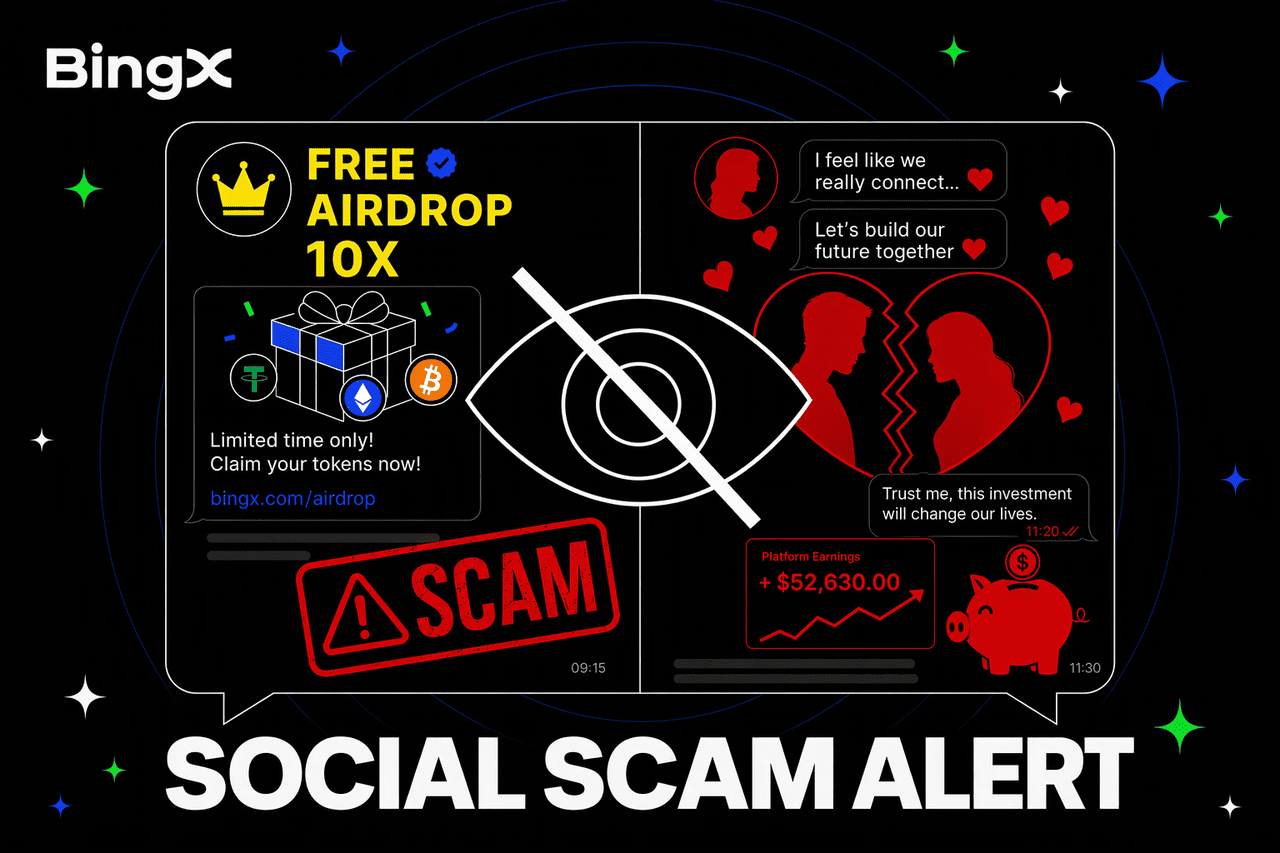
Many crypto scams begin not with a hack, but with a message from someone claiming to be customer service, an invitation to an official-looking Telegram group, or a social media post promising free tokens. These scams rely on social engineering, a technique that exploits users' trust, fear, or interest in rewards to convince them to share sensitive information, click suspicious links, or transfer funds. While the channels and tactics may differ, scammers often follow the same pattern: contacting users unexpectedly, creating a sense of urgency, and pressuring them to act before verifying the source.
Learn how to recognize the most common social scams in crypto, including impersonated customer support, fake community groups, fraudulent airdrops and giveaways, and direct messages designed to rush your decisions. Explore the warning signs behind these tactics, simple ways to verify official BingX channels, and practical steps to protect your account and assets if a scammer has already contacted you.
What Are the Most Common Social Scams in Crypto?
Social scams often use fake identities, community groups, and reward offers to gain users' trust. Scammers copy official accounts and create urgency to trick users into clicking suspicious links, sharing credentials, or transferring crypto. Four common methods include:
- Impersonated customer support: Scammers pose as BingX customer service or system assistants through social media and messaging apps. They may claim there is a problem with your account or withdrawal, then ask for passwords, verification codes, or fund transfers. Official BingX support will never request this information or ask users to transfer crypto through private messages.
- Impersonator groups: Fake Telegram or Discord groups copy the names, logos, and member counts of official communities. Inside, fake administrators post fraudulent announcements and phishing links. An unexpected group invitation, even one that looks official, should be independently verified before joining or following instructions.
- Airdrop and giveaway traps: Scammers impersonate crypto projects, exchanges, or influencers with offers such as "Follow and repost to claim a free airdrop." These promotions may lead to phishing websites, malicious wallet approvals, or requests to pay a small fee before receiving rewards. Never transfer crypto to an unfamiliar address to claim an unverified giveaway.
- DM scam scripts: Fraudulent messages often use urgency, fear, or rewards to pressure users into acting quickly. Examples include "Your account will be frozen in one hour," "Unusual login detected, verify now," or "You've won free tokens, claim here." These messages encourage users to click suspicious links before checking their authenticity.
How to Verify Official BingX Channels: 3 Quick Security Checks
Scammers often copy official logos, usernames, and announcements to make fake support accounts and community groups appear legitimate. Three simple checks can help users identify suspicious messages and verify official BingX channels before taking action:
- Use official sources only: Access BingX through official website, app, or verified social media channels. Bookmark official links and cross-check unexpected messages, group invitations, or reward announcements before responding.
- Verify before you continue: Use BingX Verify to check websites, email addresses, phone numbers, and social media accounts. You can also contact BingX Support through official channels to confirm suspicious requests or account identities.
- Never share sensitive information: Do not share passwords, verification codes, private keys, or wallet recovery phrases through private messages. Be suspicious of anyone claiming to represent BingX while requesting these details or asking you to transfer funds to an external wallet address.
Already Contacted by a Scammer? Do These 4 Things to Stay Safe
If a suspected scammer contacts you through social media, Telegram, Discord, or another messaging platform, avoid following their instructions. If you have already shared account information or transferred funds, take action to protect your remaining assets.
- Stop replying and stop transferring: Do not click additional links or send more crypto, even if the scammer claims another payment is required to unlock your funds or recover your assets.
- Keep full records: Save chat histories, screenshots, suspicious links, the scammer's account details, wallet addresses, transaction records, and timestamps before blocking the sender.
- Report the suspicious account: Use the messaging platform's reporting tools and contact BingX Support if the scam involves BingX impersonation. If your account may be compromised, review your security settings and ask support about available account restrictions.
- File a report with law enforcement: If you have experienced financial losses or unauthorized transactions, report the incident to local law enforcement or an anti-fraud authority. Your report may help authorities investigate and identify related scams, although fund recovery is not guaranteed.
A Quick Reminder: Verify Before You Trust
Official BingX representatives will never initiate private messages asking for passwords, verification codes, wallet recovery phrases, or fund transfers. They will also never ask users to pay unofficial fees to claim rewards. Always access BingX through the official website or verified channels. Logos, member counts, and verification badges can be faked, so verify suspicious accounts before following their instructions.
- Never trust unexpected contact: Verify anyone claiming to represent BingX, especially through unsolicited direct messages.
- Never share sensitive information: Keep passwords, verification codes, private keys, and wallet recovery phrases secure.
- Never pay unofficial fees to claim rewards: Be suspicious of requests to transfer crypto to unlock airdrops or giveaways.
- Never trust unfamiliar links: Use official BingX channels and verify suspicious websites or accounts through BingX Verify.
- Never rely on logos or badges alone: Fake accounts and groups can copy official branding, member counts, and profile details.
Risk Reminder: Crypto social scams can lead to irreversible asset losses. Crypto trading also involves volatility and potential loss of principal. This article is for security education only, not investment advice. Always verify official channels and contact BingX Support for account-related concerns.
