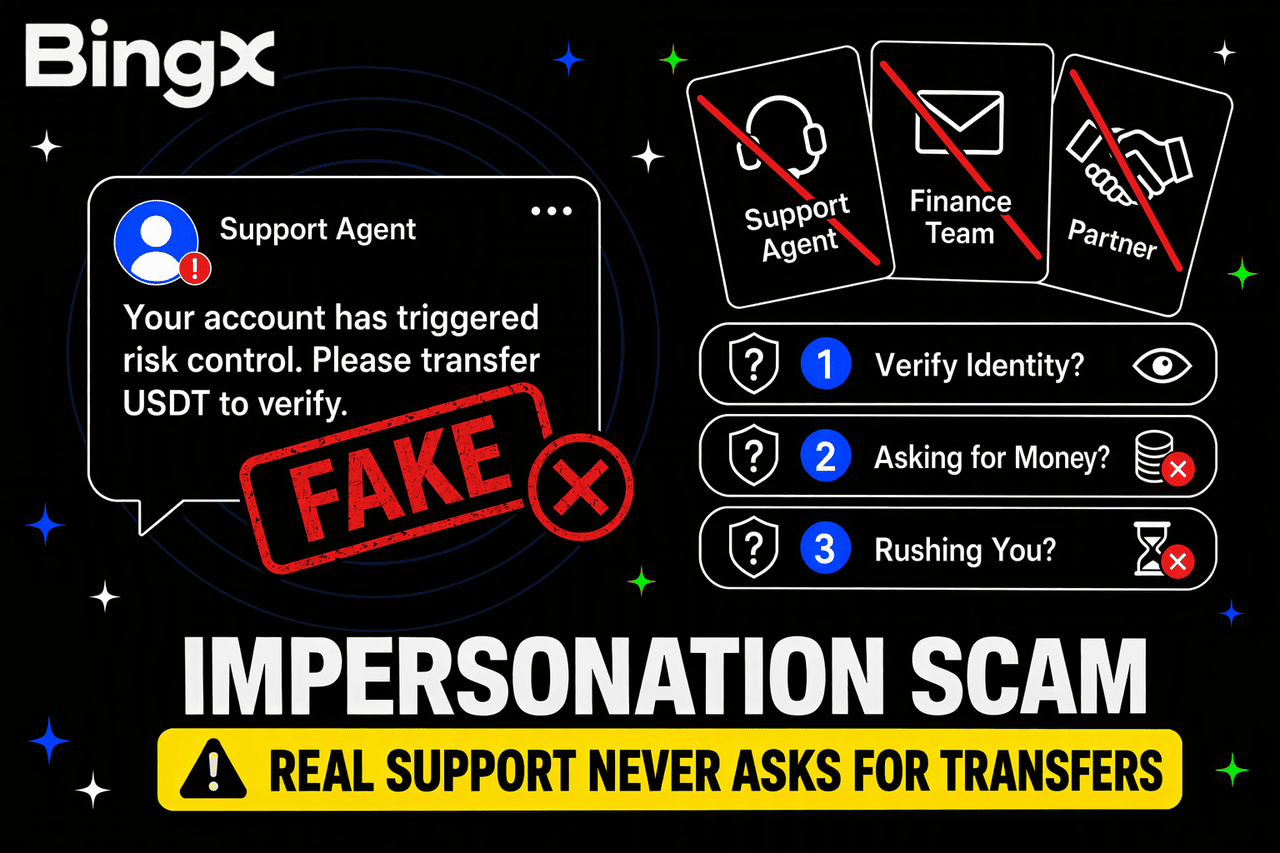
Impersonation scams are a common security threat in cryptocurrency trading. Scammers pose as customer support representatives, finance teams, or official platform partners to convince users to transfer funds for account verification, withdrawal unlocking, or trading limit upgrades. These requests often appear through social media, messaging apps, or emails that imitate legitimate exchange communications.
For example, a user named Ben receives a direct message from an account displaying the BingX logo and a familiar support name. The sender claims that his account has triggered a security review and instructs him to transfer 5,000 USDT to a specified wallet address to prevent his account from being frozen. The message promises that the funds will be returned after verification. Although the request appears official, the transfer would send his assets directly to a scammer.
What Are the 3 Most Common Types of Customer Service Impersonation Scams?
Impersonation scams use fake identities and account-related requests to gain users' trust. Scammers copy official logos, use similar account names, and create urgency to pressure users into transferring crypto. Three common methods include:
- Fake customer support agents: Scammers impersonate BingX support through Telegram, social media, or messaging apps. They may claim an account has triggered a security alert, requires verification, or faces restrictions, then instruct users to transfer funds to resolve the issue.
- Fake finance teams: Fraudsters send messages claiming users must deposit crypto to increase trading limits, verify fund sources, or unlock withdrawals. They often promise a refund after verification, but the funds go directly to the scammer.
- Fake platform partners: Scammers pose as institutional partners, mining pools, or affiliated organizations. They may use official-looking emails to claim that a pending payment requires account unlocking or an additional transfer. Unrelated domains or personal email addresses can be warning signs.
These scams may involve repeated payment requests. After an initial transfer, scammers may demand additional fees for processing, account unlocking, or blockchain verification, increasing losses without resolving the claimed issue.
Read More: Phishing Scams: How to Spot Fake Websites, Emails, and Support Requests
How to Recognize Fake Customer Service: 3 Questions Before Transferring Funds
Fake customer service messages often imitate official support accounts and security procedures. Checking the sender's identity, payment request, and urgency can help users recognize impersonation scams before transferring crypto.
- Can you verify the sender's identity? Use BingX Verify to check whether a website, email address, phone number, or social media account is official. Familiar logos and usernames do not guarantee authenticity. Verify unexpected support requests through the official BingX website or app.
- Are they asking you to transfer funds? BingX representatives will never request crypto transfers through private messages for account verification, withdrawal unlocking, or trading limit upgrades. Be suspicious of requests to send funds to external wallet addresses, even when a refund is promised.
- Are they pressuring you to act immediately? Scammers use warnings such as "Your account will be frozen within 24 hours" to discourage verification. Instead of responding, check your account through the official BingX website or app and contact support if necessary.
BingX customer support will never ask for passwords, verification codes, wallet recovery phrases, or fund transfers through private messages. If someone makes these requests, stop communicating and verify their identity through official channels.
What to Do if You Have Already Transferred Funds to a Scammer
If you have transferred crypto to someone impersonating BingX customer service, act quickly to secure your account and remaining assets. Crypto transfers can be difficult or impossible to reverse, but prompt reporting may help support teams and authorities investigate the incident.
- Stop further transfers and secure your account: Do not send additional funds, even if the scammer promises to recover your assets. If you shared login credentials or verification codes, change your password, review your two-factor authentication (2FA) settings, and remove unfamiliar devices through official BingX channels.
- Contact official BingX Support: Report the incident through the BingX Help Center or Contact Support. Provide suspicious account details, transfer amounts, wallet addresses, and transaction hashes to assist the investigation.
- Preserve evidence of the scam: Save chat histories, screenshots, suspicious links, email addresses, wallet addresses, and transaction records before deleting messages or blocking the sender.
- Report the incident to law enforcement: Contact local law enforcement or an anti-fraud authority with the available evidence. Prompt reporting may help trace suspicious transactions, although fund recovery is not guaranteed.
Avoid third-party recovery services promising guaranteed refunds or demanding additional payments. These may be secondary scams targeting previous victims.
Read More: Account Security: How to Protect Your Login Password and Account
Final Thoughts: Verify Customer Service Before Sending Crypto
Impersonation scams exploit users' trust in familiar platform names, logos, and support procedures. Fake security alerts, withdrawal restrictions, and verification requests can make fraudulent transfers appear legitimate, especially when scammers pressure users to act quickly.
Before transferring crypto in response to a support message, verify the sender through BingX Verify or contact official BingX Support. Never send funds to an unfamiliar wallet address for account verification or unlocking, and report suspicious requests through official channels.
Risk Reminder: Impersonation scams can lead to stolen credentials, unauthorized access, and irreversible crypto losses. Security measures cannot guarantee complete protection. Crypto trading also involves volatility and potential loss of principal. This article is for security education only, not investment advice. Contact BingX Support for account-related concerns.
