

Enso Network là một blockchain chuyên biệt được thiết kế để giải quyết vấn đề ngày càng gia tăng của sự phân mảnh blockchain. Khi hệ sinh thái crypto mở rộng thành hàng nghìn rollup, appchain và Layer 1, Enso hoạt động như một trình dịch vạn năng kết nối các hợp đồng thông minh rời rạc này thành một lớp thực thi duy nhất, thống nhất.
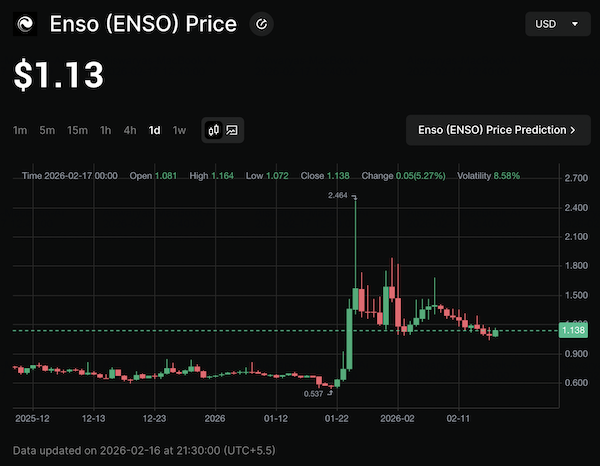
Giá Enso biểu đồ trên BingX
Tính đến tháng 2 năm 2026, Enso đã tạo điều kiện cho hơn 17 tỷ USD khối lượng on-chain và đảm bảo các tích hợp cao cấp với các mạng như Monad, cung cấp cơ sở hạ tầng cho việc trừu tượng hóa chuỗi thực sự liền mạch. Vào tháng 2 năm 2026, Enso đã trải qua một sự tăng vọt lớn trong sự quan tâm của thị trường, với giá của nó tăng 70,67% trong tháng qua để đạt vốn hóa thị trường khoảng 23,13 triệu USD.
Trong bài viết này, bạn sẽ tìm hiểu Enso Network là gì, cách công cụ dựa trên intent loại bỏ các rào cản kỹ thuật cho các nhà phát triển, tính năng tiện ích của token ENSO, và tại sao nó được định vị là một trụ cột quan trọng cho tương lai đa chuỗi.
Enso Network (ENSO) và Chain Abstraction là gì?
Enso Network là một blockchain Layer 1 phi tập trung, được xây dựng trên công cụ đồng thuận Tendermint, hoạt động như một Intent Engine. Nhiệm vụ chính của nó là cho phép các nhà phát triển và người dùng tương tác với bất kỳ hợp đồng thông minh nào trên bất kỳ chuỗi nào thông qua một giao diện duy nhất, mà không cần hiểu các phức tạp cơ bản của từng mạng riêng lẻ.
Thay vì viết các tích hợp thủ công cho mọi giao thức mới, các nhà phát triển sử dụng Enso để nêu kết quả mong muốn, một ý định, và mạng tự động tạo ra bytecode thực thi cần thiết để thực hiện nó.
Enso hoạt động thông qua ba trụ cột cốt lõi:
1. Trạng thái Mạng Chia sẻ: Một bản đồ toàn cầu ghi lại dữ liệu hợp đồng thông minh trên tất cả các blockchain được hỗ trợ như Ethereum, Solana, các chuỗi dựa trên Move, v.v. dưới dạng Entities.
2. Các Thành phần Module: Các hoạt động on-chain được chia thành Actions, ví dụ như Swap, Lend, và Shortcuts, các luồng công việc được xây dựng sẵn như Lend trên Aave sau đó Swap trên Uniswap.
3. Phối hợp Phi tập trung: Một mạng lưới của những người tham gia chuyên biệt cạnh tranh để tìm ra đường dẫn thực thi hiệu quả nhất cho bất kỳ yêu cầu nào của người dùng.
Enso Network Hoạt động như thế nào?
Enso thay thế logic giao dịch truyền thống, cứng nhắc bằng một thị trường thực thi linh hoạt, cạnh tranh. Nó chuyển từ cách thức một giao dịch được thực hiện sang kết quả cuối cùng nên là gì.
1. Gửi Intent
Một Consumer, người dùng hoặc dApp, gửi một intent tới mempool của Enso. Ví dụ: Tôi muốn hoán đổi 1.000 USDC trên Ethereum lấy tài sản sinh lãi cao nhất trên Arbitrum. Người dùng không cần biết sử dụng cầu nối nào hoặc DEX nào có thanh khoản tốt nhất; họ chỉ định nghĩa mục tiêu.
2. Tìm đường Cạnh tranh hoặc Graphers
Graphers là bộ não của mạng. Họ chạy các thuật toán phức tạp để tìm kiếm thông qua bản đồ hợp đồng thông minh của Enso để tìm ra đường dẫn tối ưu nhất. Bởi vì chỉ một giải pháp có thể thắng, Graphers cạnh tranh để cung cấp đầu ra cao nhất với chi phí gas thấp nhất.
3. Xác minh và Mô phỏng: Validators
Trước khi bất kỳ mã nào được thực thi, Validators mô phỏng các giải pháp được đề xuất trong một môi trường fork. Họ đảm bảo bytecode an toàn, các chuyển đổi trạng thái hợp lệ, và kết quả phù hợp với intent của người dùng. Điều này ngăn chặn các giao dịch thất bại và bảo vệ người dùng khỏi mã độc hại.
4. Thực thi và Phân phối Phí
Khi giải pháp thắng cuộc được chọn, bytecode thực thi sẽ được trả lại cho người dùng để thực hiện cuối cùng trên chuỗi đích. Các phí được nhúng trong giao dịch sau đó được phân phối lại cho Action Providers, Graphers, và Validators dưới dạng token ENSO.
Các Thành phần Chính của Hệ sinh thái Enso là gì?
Enso cung cấp một bộ công cụ phát triển và primitives on-chain được thiết kế để biến các chiến lược DeFi phức tạp nhiều bước thành trải nghiệm một cú nhấp.
1. Actions và Shortcuts
• Actions: Đây là các khối xây dựng nguyên tử của Enso. Họ trừu tượng hóa các lệnh gọi hợp đồng thông minh riêng lẻ thành các thành phần đơn giản, có thể tái sử dụng, ví dụ như Deposit, Borrow, Mint.
• Shortcuts: Shortcuts là các playbook kết hợp nhiều Actions thành một luồng công việc có thể chia sẻ. Các nhà phát triển có thể sử dụng các mẫu để khởi chạy ứng dụng trong vài phút bằng cách chỉ cần chọn các Shortcuts họ cần.
2. DeFi Navigator
DeFi Navigator là một bảng điều khiển thời gian thực cho hệ sinh thái Enso. Nó cho phép các nhà xây dựng khám phá các giao thức tích hợp, lọc theo TVL hoặc APY, và tạo ngay lập tức các đoạn mã SDK. Nó đảm bảo rằng các nhà phát triển luôn làm việc với dữ liệu on-chain chính xác, trực tiếp nhất.
3. Enso Checkout
Được thiết kế như Stripe của Web3, Enso Checkout là một giải pháp thanh toán phổ quát cho phép người dùng thanh toán cho các dịch vụ on-chain bằng bất kỳ token nào từ bất kỳ chuỗi nào. Nó sử dụng công cụ định tuyến của Enso để xử lý các hoán đổi và cầu nối ở chế độ nền, mang lại trải nghiệm thanh toán giống Web2.
Token ENSO được sử dụng để làm gì?
Token ENSO là tài sản tiện ích và quản trị bản địa của mạng. Nó tạo điều kiện cho một nền kinh tế tuần hoàn nơi tất cả người tham gia được khuyến khích duy trì hiệu quả mạng.
• Phí Mạng: ENSO được sử dụng để thanh toán cho việc thực thi intents và sửa đổi trạng thái trên Enso Layer 1.
• Staking và Bảo mật: Validators phải stake ENSO để tham gia vào đồng thuận. Tính đến đầu năm 2026, các chiến dịch staking suất cao đã là động lực chính để khóa nguồn cung lưu thông.
• Quản trị: Người nắm giữ có thể bình chọn về các nâng cấp giao thức, niêm yết tài sản và phân bổ ngân quỹ thông qua Enso DAO.
• Phân phối Khuyến khích: Một hệ thống đấu giá độc đáo cho phép người tham gia đặt giá thầu ENSO để yêu cầu phí thực thi xuyên chuỗi, đảm bảo giá trị chảy về mạng.
Tokenomics của Enso Network (ENSO) là gì?
Token ENSO có tổng nguồn cung genesis là 100.000.000 token, với nguồn cung tối đa được giới hạn ở 127.339.703 token sau lịch trình lạm phát được kiểm soát trong 10 năm.
Phân phối Token ENSO
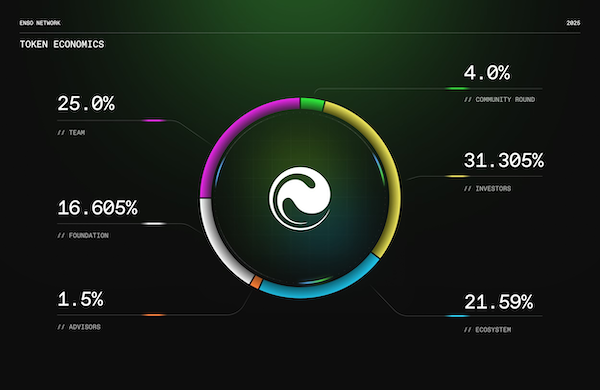
Phân bổ token ENSO | Nguồn: Tài liệu Enso
• Nhà đầu tư (31.305%): Phân bổ cho những người ủng hộ chiến lược ban đầu đã hỗ trợ dự án từ khi thành lập; các token này thường tuân theo lịch trình cliff 1 năm và vesting tuyến tính 2 năm.
• Đội ngũ (25.00%): Dành để thưởng cho những đóng góp dài hạn của các nhà phát triển cốt lõi và cộng tác viên để đảm bảo sự đổi mới giao thức liên tục.
• Hệ sinh thái (21.59%): Dự trữ cho nghiên cứu và phát triển, mở rộng giao thức, tài trợ, và các sáng kiến do cộng đồng điều hành như airdrop EnsoDrop.
• Quỹ (16.605%): Được quản lý bởi Enso Foundation để trang trải chi phí hoạt động, tăng cường quản trị, và duy trì tính bền vững lâu dài của mạng.
• Vòng Cộng đồng (4.00%): Phân phối thông qua đợt bán công khai quá mức đăng ký trên CoinList để mở rộng cơ sở người nắm giữ phi tập trung.
• Cố vấn (1.50%): Phân bổ cho các cố vấn chính đã cung cấp hướng dẫn chiến lược trong suốt hành trình phát triển của Enso.
Cách Giao dịch Enso Network (ENSO) trên BingX
BingX cung cấp các công cụ tiên tiến và thông tin chi tiết do AI điều khiển để giúp bạn điều hướng sự biến động của các token cơ sở hạ tầng như ENSO.
Cách Mua ENSO trên Thị trường Spot
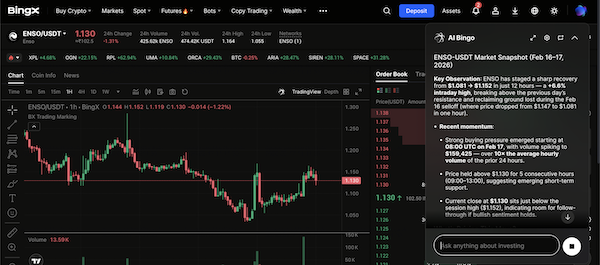
Cặp giao dịch ENSO/USDT trên thị trường spot được hỗ trợ bởi BingX AI insights
1. Nạp Tiền vào Tài khoản: Đăng nhập vào BingX và đảm bảo bạn có USDT trong tài khoản quỹ của bạn.
2. Điều hướng đến Spot: Tìm kiếm cặp ENSO/USDT trong Thị trường Spot.
3. Thực hiện Giao dịch: Chọn giữa lệnh Market hoặc Limit để có quyền sở hữu trực tiếp token ENSO.
Giao dịch ENSO với Đòn bẩy trên Thị trường Futures
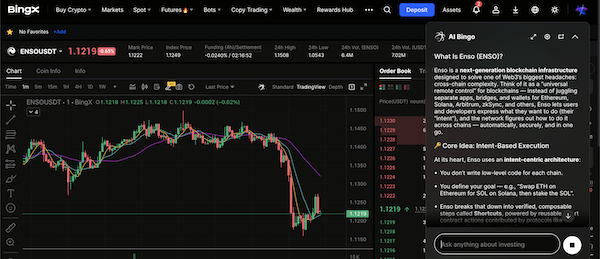
ENSO/USDT perpetuals trên thị trường futures có BingX AI
1. Mở Futures: Chuyển USDT vào tài khoản Hợp Đồng Vĩnh Viễn của bạn.
2. Chọn Hợp Đồng: Tìm kiếm hợp đồng Perpetual ENSO/USDT.
3. Đặt Đòn bẩy: Áp dụng đòn bẩy để long để dự đoán giá tăng hoặc short để dự đoán giá giảm, đồng thời sử dụng các công cụ quản lý rủi ro của BingX để theo dõi giá thanh lý của bạn.
Suy nghĩ Cuối: Bạn có nên Đầu tư vào Enso năm 2026?
Enso Network đại diện cho một bước nhảy vọt quan trọng trong khả năng sử dụng blockchain. Bằng cách trừu tượng hóa thuế phân mảnh hiện đang làm phiền DeFi, nó định vị mình như một middleware quan trọng cho làn sóng áp dụng tổ chức và bán lẻ tiếp theo. Việc khởi chạy mainnet thành công và tích hợp với các chuỗi hiệu suất cao như Monad cho thấy động lực cơ bản mạnh mẽ.
Tuy nhiên, với tư cách là một lựa chọn cơ sở hạ tầng Layer 1, giá trị của ENSO phụ thuộc rất nhiều vào việc áp dụng của nhà phát triển. Các nhà đầu tư cũng nên nhận thức về lịch trình mở khóa token và bối cảnh cạnh tranh của phối hợp xuyên chuỗi. Nếu bạn tin rằng tương lai của crypto nằm trong các ứng dụng dựa trên intent nơi người dùng không bao giờ phải nhìn thấy cầu nối nữa, Enso là một dự án đáng theo dõi chặt chẽ.