


As of May 2026, Tether (USDT) remains the world's most widely used stablecoin, with its total supply exceeding 180 billion dollars. Its multi-chain availability gives users unprecedented flexibility, but also makes choosing the right network critical. Volume flows primarily through a few key chains: TRON (TRC20), Ethereum (ERC20), and BNB Smart Chain (BEP20).
Choosing the right network directly impacts your transaction fees, processing speeds, security level, and DeFi compatibility. This comprehensive guide breaks down the five major USDT networks TRC20, ERC20, BEP20, Solana (SPL), and TON to help you make informed decisions based on your specific use cases.
Read more: What Is USDT in 2026? Complete Beginner's Guide to Tether's Stablecoin
Key Takeaways
- TRC20 and TON offer the cheapest and fastest everyday transfers.
- ERC20 provides the highest security and deepest DeFi integration.
- Solana delivers the fastest speeds with near-zero fees.
- BEP20 offers an excellent balance of speed, cost, and ecosystem support.
- BingX supports USDT trading across multiple networks with high liquidity.
What Is Tether (USDT) Stablecoin?
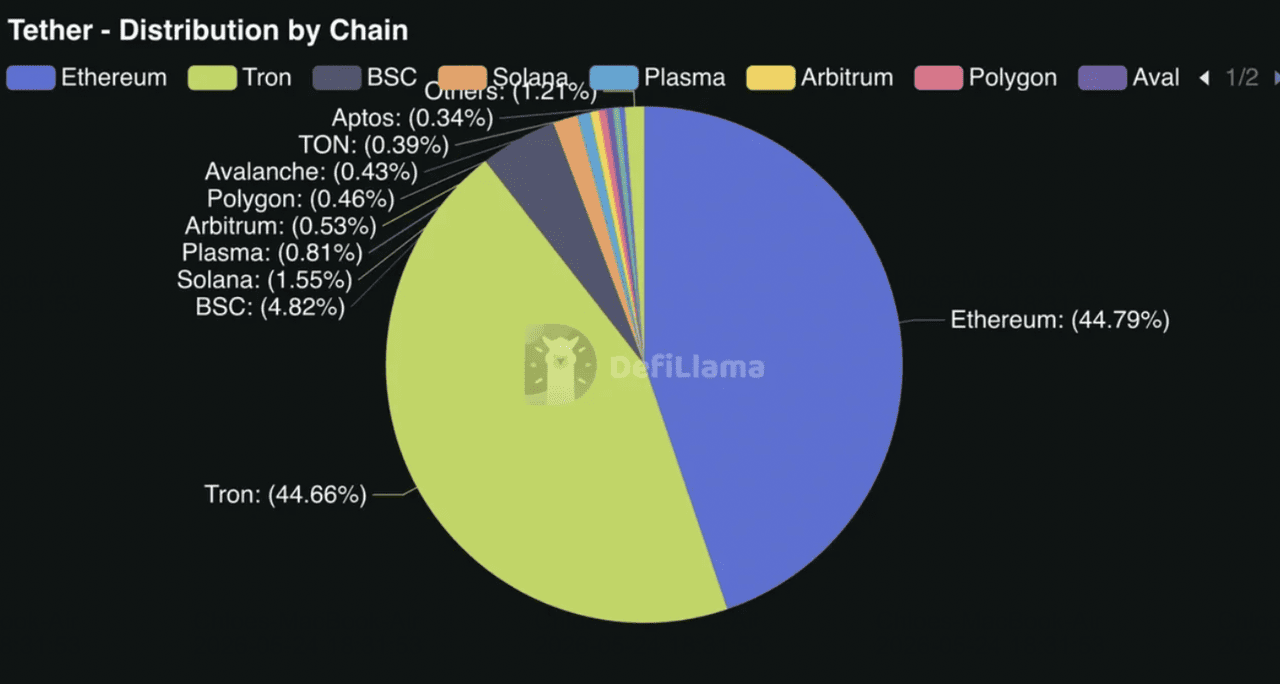
Tether market cap across leading blockchains | Source: DefiLlama
USDT is Tether’s flagship stablecoin and the most widely used digital dollar in crypto markets. With a market capitalization of roughly $186 billion and average daily trading volume exceeding $90 billion, USDT functions as the default settlement asset across centralized exchanges, derivatives platforms, and many DeFi markets. It is commonly used as a quote currency, for example, BTC/USDT, for exchange collateral, and for cross-border value transfers, especially in emerging markets where access to U.S. dollars is limited.
USDT (Tether) is a dollar-pegged stablecoin issued by Tether Holdings. As of May 2026, it remains the largest and most widely used stablecoin globally. It is designed to maintain a 1:1 peg with the US dollar through reserves held by the issuer. Instead of relying on algorithms, USDT uses reserves of cash, U.S. Treasuries, gold, and other assets to back each token in circulation. This makes it a preferred tool for traders seeking stability during volatile market conditions and for users needing fast global transfers.
A core aspect of USDT is its multi-chain availability, operating on Ethereum, Solana, Tron, and many other networks for maximum accessibility and low fees. USDT’s dominance comes from scale and liquidity, not regulatory positioning. It operates globally across multiple blockchains and jurisdictions, making it highly efficient for trading and payments, but it is not structured as a U.S.-bank-issued stablecoin under a dedicated federal framework.
Read more: What Is USDT TRC‑20, Tether Stablecoin on the TRON Network?
What are the Differences Between USDT Networks?
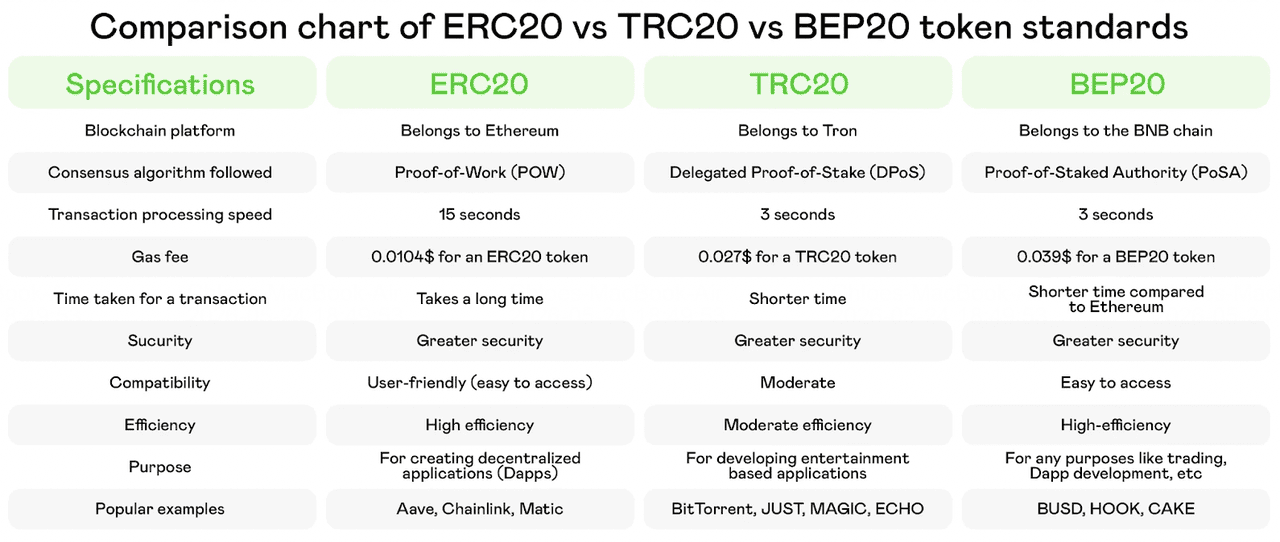
Source: Symbiosis
USDT (Tether) operates on multiple blockchains, each with different technical characteristics, fees, speeds, and use cases. In 2026, users can choose between TRC20 on Tron, ERC20 on Ethereum, BEP20 on BNB Chain, SPL on Solana, and USDT on TON. Each network offers unique advantages in terms of transaction speed, cost, security, and ecosystem integration. Understanding these differences helps users select the best network for trading, remittances, DeFi participation, or long-term holding.
Each USDT network has distinct strengths that suit different user needs. TRC20 on Tron provides very low fees and fast confirmations, making it ideal for frequent transfers. ERC20 on Ethereum offers the highest security and the most mature DeFi ecosystem but with higher fees. BEP20 on BNB Chain delivers a strong balance of speed and low cost with excellent exchange integration. Solana provides near-instant transactions and extremely low fees, perfect for high-frequency trading. TON excels in Telegram integration and ultra-low fees for everyday users.
USDT Supply Distribution in 2026
Ethereum and Tron continue to dominate USDT circulation. Ethereum holds roughly 40 to 47% of total supply, while Tron accounts for 42 to 45%. BNB Chain, Solana, and TON make up the rest, with Solana and TON showing the fastest growth in user adoption and transaction volume.
Transaction Speed and Cost Comparison
1. TRON (TRC20)
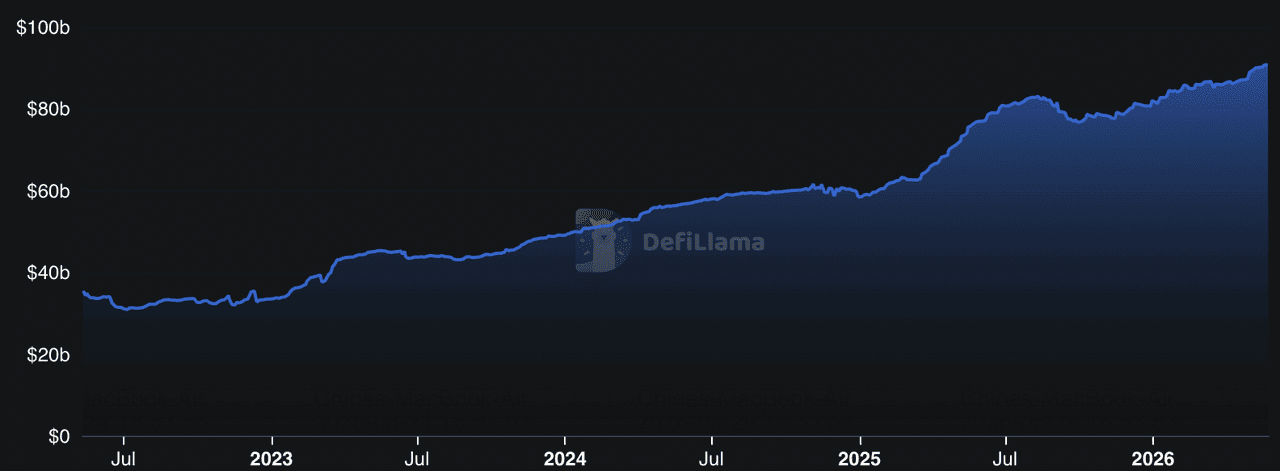
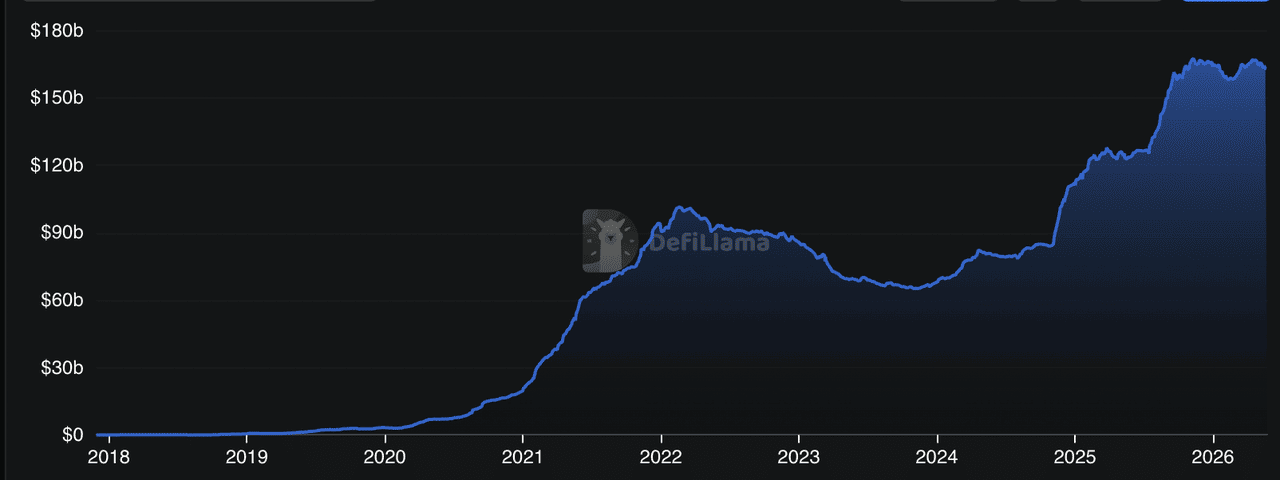
Tether (USDT) market cap on TRON Network | Source: DefiLlama
TRON (TRC20) dominates the majority of everyday transactions, retail payments, and exchange transfers. It offers very fast confirmation times, typically between 1 and 3 minutes, with extremely low and predictable fees ranging from $0.10 to $1.50. This makes TRC20 the go to network for fast, cheap everyday transfers, remittances, and moving funds efficiently between exchanges.
2. Ethereum (ERC20)
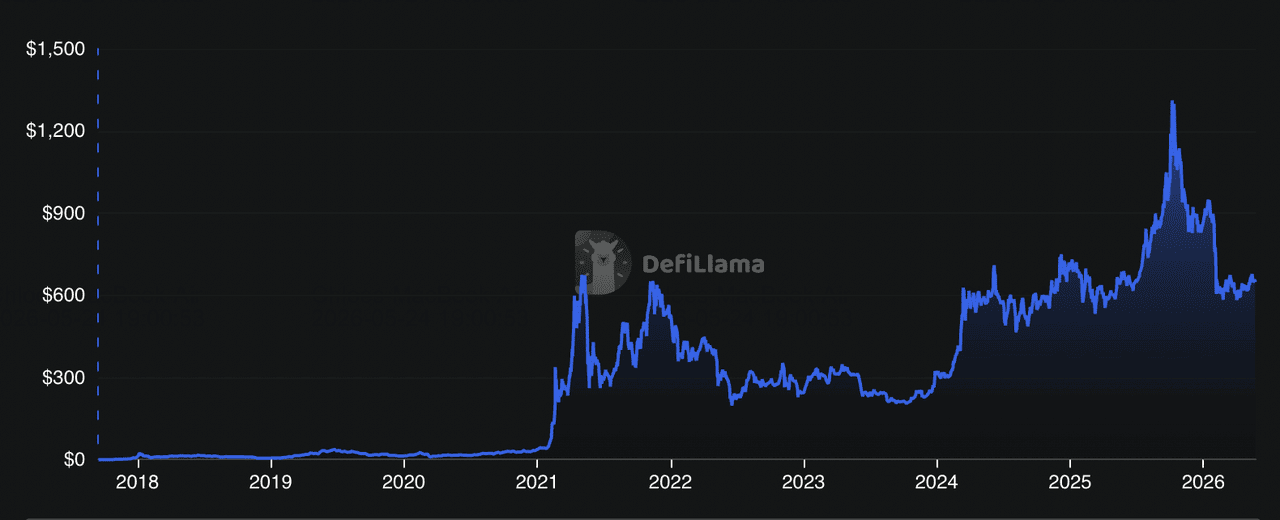
Tether (USDT) market cap on ERC20 Network | Source: DefiLlama
Ethereum (ERC20) serves as the foundational network for high value institutional settlements and complex DeFi applications. While it provides the highest level of security and deepest liquidity, it suffers from slower speeds of 5 to 15 minutes or more and significantly higher fees that can range from $5 to $35 or higher during peak congestion. ERC20 excels for large treasury movements, long term holding, and interacting with mature Ethereum-based DeFi protocols.
3. BNB Smart Chain (BEP20)
Tether (USDT) market cap on BEP20 Network | Source: DefiLlama
BNB Smart Chain (BEP20) has established itself as a strong balanced alternative. Popular on exchanges like BingX and alternative ecosystems, it delivers solid transaction speeds between 30 seconds and 3 minutes with very low fees, typically under $0.50. BEP20 is particularly well suited for lower cost ecosystem swaps, fast trading, and users who want reliable performance without Ethereum's high costs.
4. Solana (SPL)
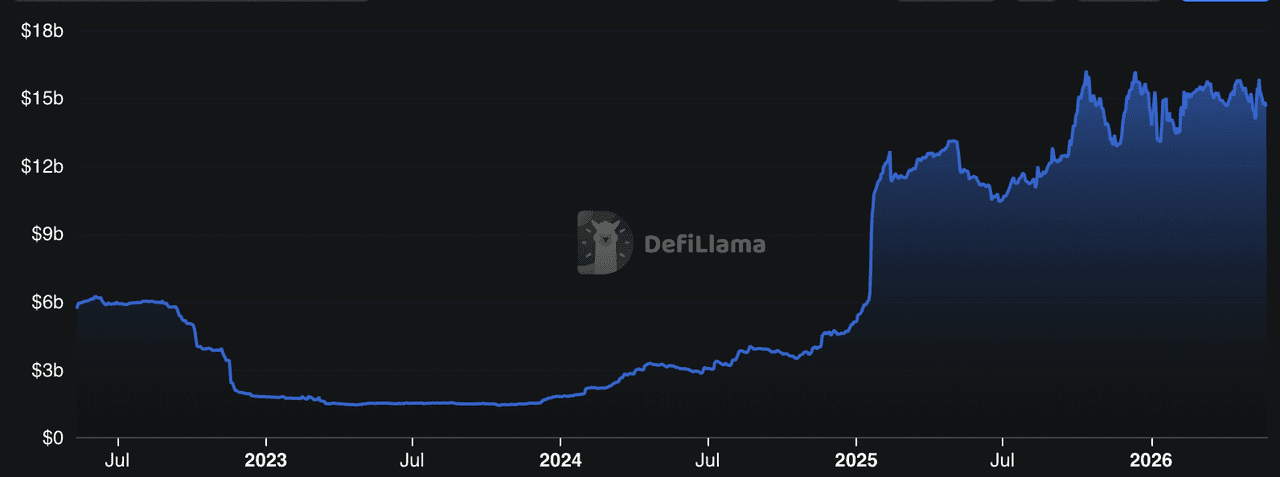
Tether (USDT) market cap on Solana Network | Source: DefiLlama
Solana (SPL) stands out as a next generation high performance network. It provides near instant transaction finality, often under 5 seconds, with virtually nonexistent fees usually just fractions of a cent. Solana is ideal for frictionless high throughput activities such as high frequency trading, gaming, payments, and micro transactions, especially as its network stability has improved markedly by 2026.
5. TON (The Open Network)
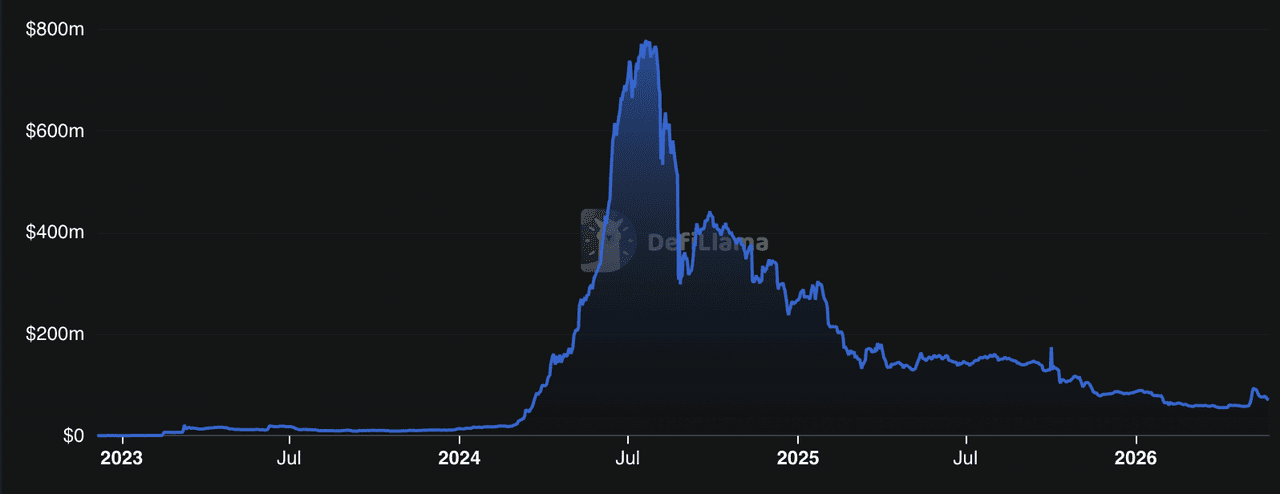
Tether (USDT) market cap on TON Network | Source: DefiLlama
TON (The Open Network) is one of the fastest growing USDT networks, powered by its deep integration with Telegram's massive user base. It offers extremely low fees under $0.05 and transaction times of just a few seconds. TON performs exceptionally well for micro payments, social commerce, and users operating within Telegram mini apps, though its DeFi ecosystem is still expanding.
Quick Summary Comparison Table (2026 Data)
|
Feature |
TRC20 (Tron) |
ERC20 (Ethereum) |
BEP20 (BNB Chain) |
Solana (SPL) |
TON |
|
Transaction Speed |
1 to 3 minutes |
5 to 15+ minutes |
30 seconds to 3 minutes |
Under 5 seconds |
1 to 10 seconds |
|
Average Fee |
$0.10 to $1.50 |
$5 to $35+ |
$0.05 to $0.50 |
$0.0001 to $0.01 |
Under $0.05 |
|
Best For |
Everyday transfers, remittances |
Institutional, DeFi, large holdings |
Balanced trading and transfers |
High frequency trading, gaming |
Telegram users, micro payments |
|
Security |
High |
Very High |
High |
High |
High |
|
Decentralization |
Moderate |
Very High |
Moderate |
High |
Moderate High |
|
Ecosystem Strength |
Strong for transfers |
Largest and most mature |
Strong |
Very strong and growing |
Growing fast (Telegram) |
Important Considerations for USDT Transfers
All USDT transfers are irreversible. Users must always double check that the receiving wallet or exchange supports the exact network being used. Sending tokens across mismatched networks, such as ERC20 to a TRC20 address, frequently results in permanent loss of funds.
To complete transactions on any network, users need a small balance of the native token to cover gas fees for example, TRX on Tron, ETH on Ethereum, or BNB on BNB Chain. Popular wallets, including MetaMask, Trust Wallet, and Tonkeeper, support multiple networks, but proper configuration is essential before initiating transfers.
Recommendation by Use Case
For cheapest everyday transfers and remittances, TRC20 and TON are the strongest options. Users seeking the fastest performance should choose Solana or TON. Those prioritizing maximum security and advanced DeFi activities will prefer ERC20. BEP20 offers the best overall balance for most general users, while Solana leads in high frequency trading, gaming, and high volume scenarios.
Read more: USAT vs. USDT: Which Tether Stablecoin Should You Use in 2026?
How to Buy Tether (USDT) on BingX
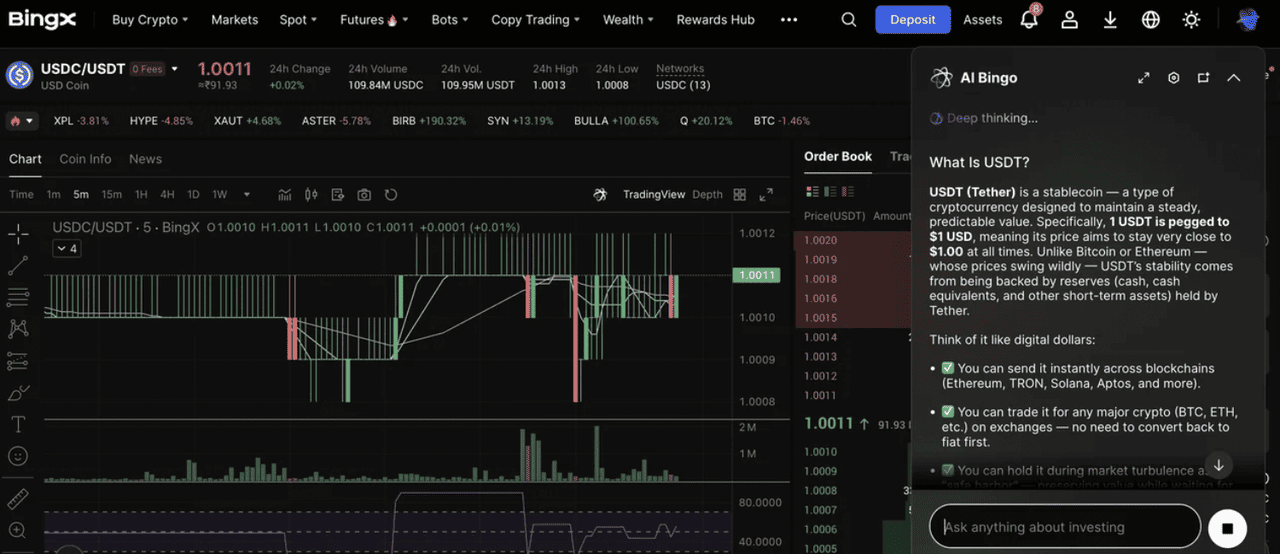
USDC/USDT trading pair on the spot market powered by BingX AI insights
On BingX, USDT is the primary global-exposure stablecoin, widely used for spot and futures trading, hedging, and value transfer.
- Create an account & verify – Sign up on BingX and complete identity verification to unlock deposits, trading, and withdrawals.
- Fund your account – Add funds via fiat on-ramps (cards, bank transfers, local rails where supported) or deposit crypto from an external wallet.
- Get USDT – Use Spot Trading to trade pairs like USDC/USDT, Convert direct swaps to USDT, or P2P, where available, to acquire USDT at market prices.
- Use USDT – Trade spot or futures pairs, manage risk, or transfer USDT across supported networks for low-cost, 24/7 settlement.
Learn more about how to buy USDT in our comprehensive guide.
In practice: USAT access is selective and compliance-first; USDT on BingX offers immediate, deep liquidity and broad utility across trading and transfers.
Read more: What Is USAT (USA₮), Tether’s U.S.-Based Stablecoin Built for GENIUS Act Compliance?
Conclusion
In 2026, the multi chain nature of USDT provides more options than ever before. There is no single best network the ideal choice depends entirely on your priorities regarding speed, cost, security, and ecosystem needs. Tron and TON win for affordability and daily use, Solana dominates in speed, BEP20 delivers excellent balance, and Ethereum remains the benchmark for institutional grade security and DeFi. Smart users typically maintain small USDT balances across two or three networks to optimize flexibility while minimizing costs and risks. Always verify network details carefully before every transfer to protect your funds.
BingX serves as the top choice for trading USDT across multiple networks, offering deep liquidity, low fees, and seamless integration for both spot and futures markets. Whether protecting against volatility, executing fast trades, or earning yield, BingX enables efficient and secure management of USDT holdings. As the crypto market matures, trading USDT on reliable platforms like BingX provides users with stability, flexibility, and confidence in navigating both bull and bear markets.
Related Reading
- USDC vs. USDT: Key Differences and Which Stablecoin to Choose in 2026?
- What Is Tether Gold (XAUT)? A Beginner's Guide to Tokenized Gold
- What Is USDT TRC‑20, Tether Stablecoin on the TRON Network?
- What Is USAT (USA₮), Tether’s U.S.-Based Stablecoin Built for GENIUS Act Compliance?
- What Is USDT in 2026? Complete Beginner's Guide to Tether's Stablecoin
