

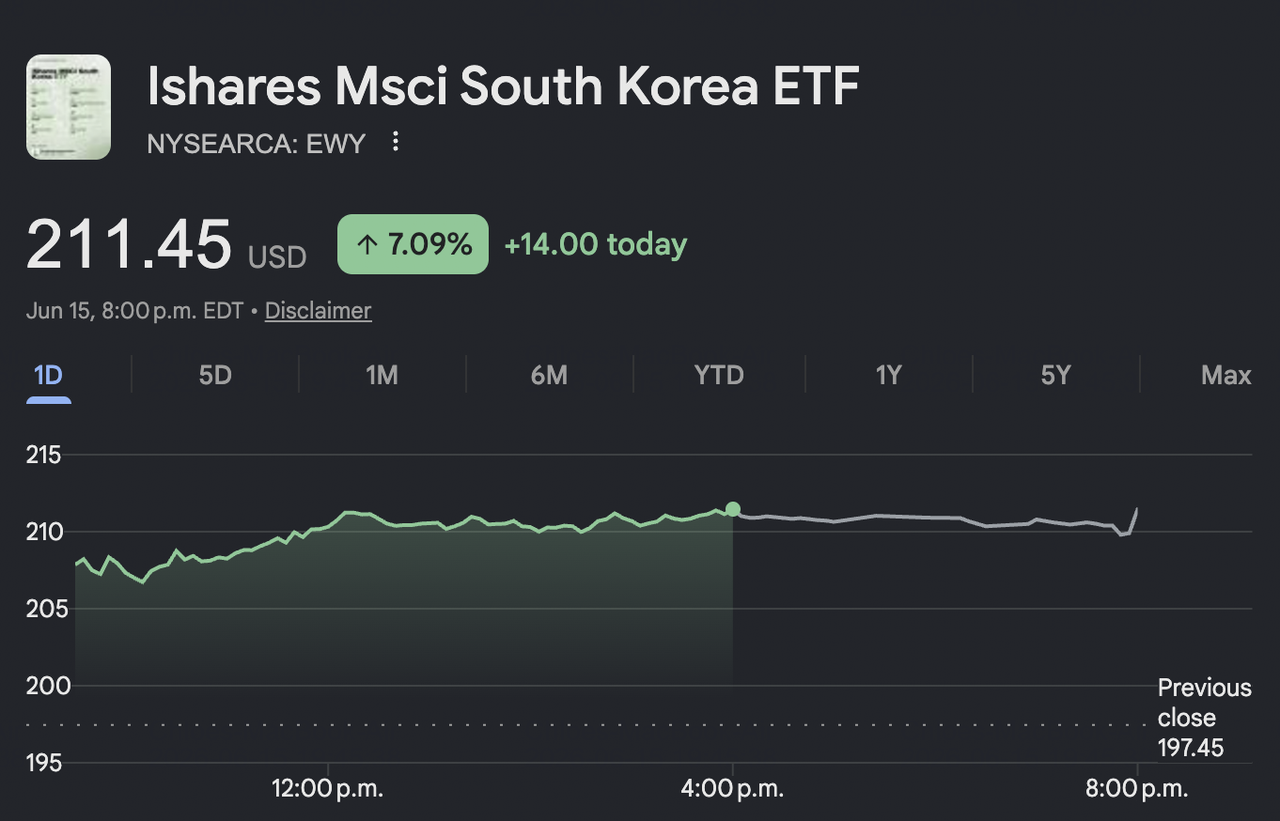
The iShares MSCI South Korea ETF (EWY) is the industry-standard exchange-traded fund tracking the performance of large- and mid-sized South Korean companies. As of June 15, 2026, the fund is experiencing an exceptional multi-year demand surge, currently trading at $211.45 USD in real-time markets (following a closing price baseline of $197.45 USD on June 12, 2026).
This explosive performance is driven by two powerful macro forces: an unprecedented structural supercycle in global semiconductor memory fueled by generative AI infrastructure, and a sweeping regulatory overhaul via South Korea's official Corporate Value-Up program aimed at permanently eliminating the historical Korea Discount.
By providing efficient, direct exposure to the world's premier hardware foundations, the fund has transformed from a highly cyclical, tech-heavy trading vehicle into an indispensable core allocation for global institutional portfolios capturing the international expansion of the artificial intelligence economy. You will also discover how to gain exposure to iShares MSCI South Korea ETF (EWY) futures through BingX TradFi.
Read more: What Is the U.S. CHIPS and Science Act? Its Impact on Semiconductors, Technology, and Crypto in 2026
Key Highlights: Top 5 Things for EWY Investors to Know in 2026
- The Epicenter of the AI Memory Supercycle: The fund is directly levered to extreme capacity demands for High Bandwidth Memory (HBM). Unprecedented capital expenditure from global cloud hyperscalers has led to severe supply deficits, driving immense pricing power and massive operating leverage for South Korea’s leading memory chip producers.
- The "Value-Up" Regulatory Catalyst: South Korea's sweeping corporate governance reforms have reached a critical maturity phase. With the benchmark KOSPI crossing historic milestones above the 5,000 mark earlier this year, structural mandates for treasury share cancellations, higher dividend payouts, and strict return-on-equity (ROE) reporting are triggering deep institutional re-ratings.
- Massive Net Asset Base and Liquid Footprint: As of June 15, 2026, EWY commands $24,864,698,933 in total Net Assets, backed by high-volume liquidity architectures featuring a tight 30-day median bid/ask spread of just 0.04%.
- Explosive Corporate Profit Acceleration: Macro projections point to historic corporate earnings growth across South Korean tech giants. High operational leverage means rising memory prices are translating into outsized bottom-line gains, leading major investment desks to highlight Korea as their highest-conviction equity market in Asia.
- Surging Single-Country Capital Inflows: Institutional allocations have rotated heavily into single-country funds. Driven by international demand for AI exposure outside the United States, year-to-date inflows into South Korean equity tracking structures have already eclipsed cumulative totals from previous cycles.
What Is the iShares MSCI South Korea ETF (EWY)?
Source: Google
Managed by BlackRock / iShares, the iShares MSCI South Korea ETF (EWY) is an equity exchange-traded fund designed to correspond generally to the price and yield performance of the MSCI Korea 25/50 Index (Net).
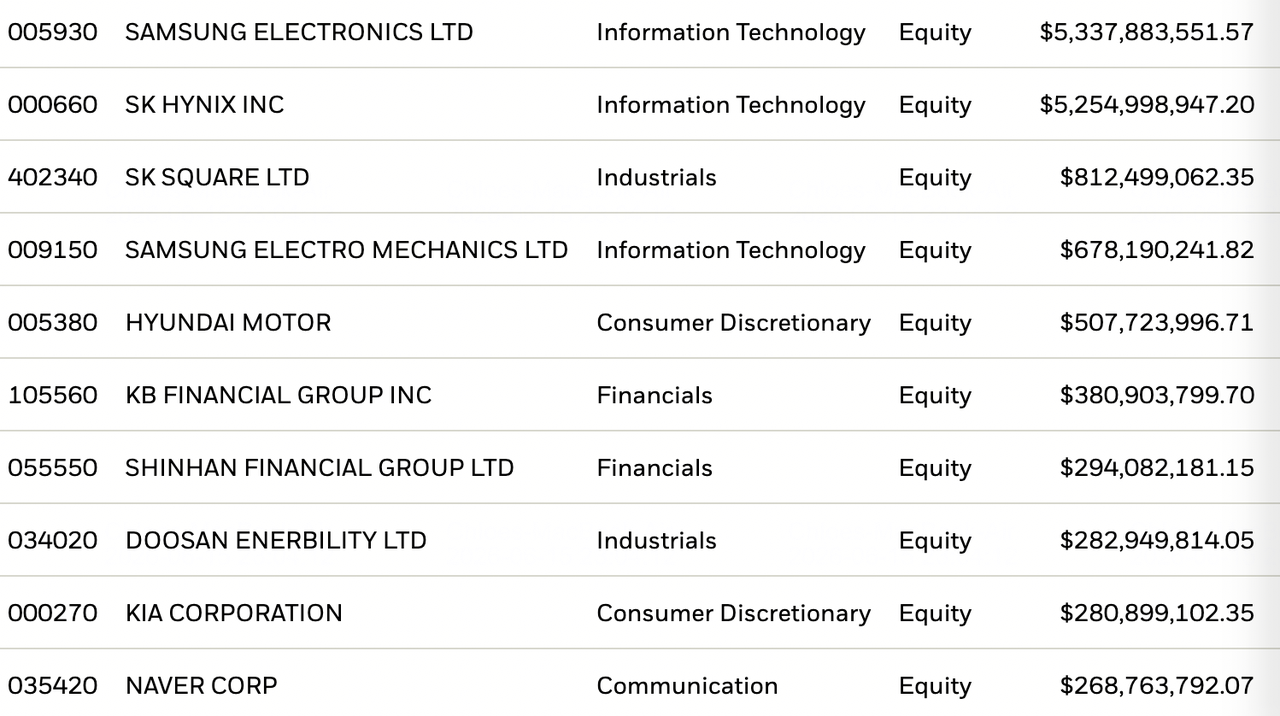
In 2026, the ETF serves as the primary operational gateway for international asset managers looking to express a single-country view on East Asia's industrial and technological engine. The fund utilizes diversification limits to cap individual issuer weights, maintaining a highly liquid basket of approximately 80 to 90 holdings including Samsung and SK Hynix that trade transparently on the NYSE Arca exchange under the Bloomberg index ticker M1KR2550.
Source: EWY Top Holdings | iShares
Key Growth Phases of EWY ETF Over the Years
1. The Industrial Growth & Technology Pivot (2000 to 2010s)
Incepted on May 9, 2000, the fund mirrored South Korea's evolution from an emerging heavy-industry economy into a specialized global tech giant. Early structural growth relied heavily on consumer electronics, automotive manufacturing, and initial digital cellular architectures.
2. The Cyclical Hardware & EV Battery Era (2018 to 2023)
The fund navigated major cyclical inventory adjustments across personal computing and consumer hardware. Concurrently, it diversified into global supply chains via heavy concentrations in next-generation electric vehicle (EV) battery manufacturers and advanced display technologies.
3. The AI Hardware Boom and Value-Up Revolution (2024 to 2026)
Faced with exponential demands for generative AI clusters, South Korea’s core tech holdings became irreplaceable components of advanced AI compute nodes alongside global graphic giants like NVIDIA. Combined with regulatory tax changes and corporate governance reforms starting in late 2024, the fund broke through previous structural resistance levels to establish fresh historic highs.
Read more: Top 10 AI Infrastructure Stocks to Buy in 2026: Chip Manufacturing and Design Leaders
EWY Fund Metrics Profile (Mid-2026)
The fundamental operational architecture of the fund reflects robust institutional stability and heavy market participation.
|
Metric |
Operational Position / Data |
|
Current Market Trading Price |
$211.45 USD (Real-time) |
|
Fund Closing Price |
$197.45 USD (As of June 12, 2026) |
|
Net Assets of Fund |
$24,864,698,933 (As of June 15, 2026) |
|
Shares Outstanding |
118,350,000 (As of June 15, 2026) |
|
Non-FV NAV |
205.13 (As of June 15, 2026) |
|
Premium / Discount |
-0.03 (As of June 12, 2026) |
|
Daily Trading Volume |
17,164,759.00 (As of June 12, 2026) |
|
30-Day Avg. Volume |
20,422,180.00 (As of June 12, 2026) |
|
30-Day Median Bid/Ask Spread |
0.04% (As of June 12, 2026) |
|
Distribution Frequency |
Annual |
|
Structure CUSIP |
464286772 |
Source: BlackRock
Sector and Stock Concentration: The Hardware Weight
Because EWY utilizes a market-capitalization-weighted approach tracking the MSCI Korea 25/50 Index, it is heavily concentrated in the engine rooms of global technology.
- Information Technology (~51.9%): This dominant sector footprint makes the fund deeply sensitive to the global hardware cycle, primarily driven by massive structural exposure to global foundry and memory brands like Samsung Electronics and SK Hynix.
- Industrials (~19.9%): Captures powerhouse positions across advanced shipbuilding, construction conglomerates, and global logistics infrastructure.
- Financials (~9.6%): Heavily impacted by the ongoing Corporate Value-Up program, as banking and financial holding groups aggressively lift dividend payouts and execute capital restructuring.
- Consumer Discretionary (~6.7%): Anchored by global automotive giants leading international transitions into high-margin electric and hybrid fleets.
Read more: Top AI Semiconductor Stocks to Buy in 2026: AI Chips and Supply Chain Complete Guide
The EWY Thesis for 2026: 5 Pillars of Index Valuation
Source: StockInvest
1. The Insatiable Global Demand for HBM Architecture
Artificial intelligence training clusters require massive pipelines of High Bandwidth Memory (HBM) to avoid compute bottlenecks. South Korea’s memory manufacturers effectively command a structural duopoly over high-density HBM3E and HBM4 fabrication, turning global AI CapEx directly into Korean corporate revenue.
2. Dissecting the "Value-Up" Structural Re-Rating
Historically, South Korean equities suffered from the "Korea Discount," trading at significantly lower price-to-book (P/B) ratios than global peers due to lower capital efficiency and conservative shareholder distributions. The government's multi-year Value-Up framework incentivizes the cancellation of treasury shares and enforces clear, multi-year return-on-equity targets, directly lifting the index's baseline valuation floor.
3. Favorable Macro Backdrop and Currency Buffers
With major global central banks navigating rangebound interest rate environments in 2026, foreign institutional capital is aggressively rotating toward asset classes with clear fundamental growth. This cash inflow provides a stable backdrop for international investors tracking the index in USD.
4. Transition to Long-Term Supply Frameworks
To secure critical hardware pipelines amidst ongoing structural deficits, top-tier global cloud operators are shifting away from short-term Spot purchases toward three- to five-year built-to-order supply agreements. This structural shift provides South Korean tech components with unprecedented revenue visibility and insulated pricing power.
5. Highly Attractive Valuation Multiples
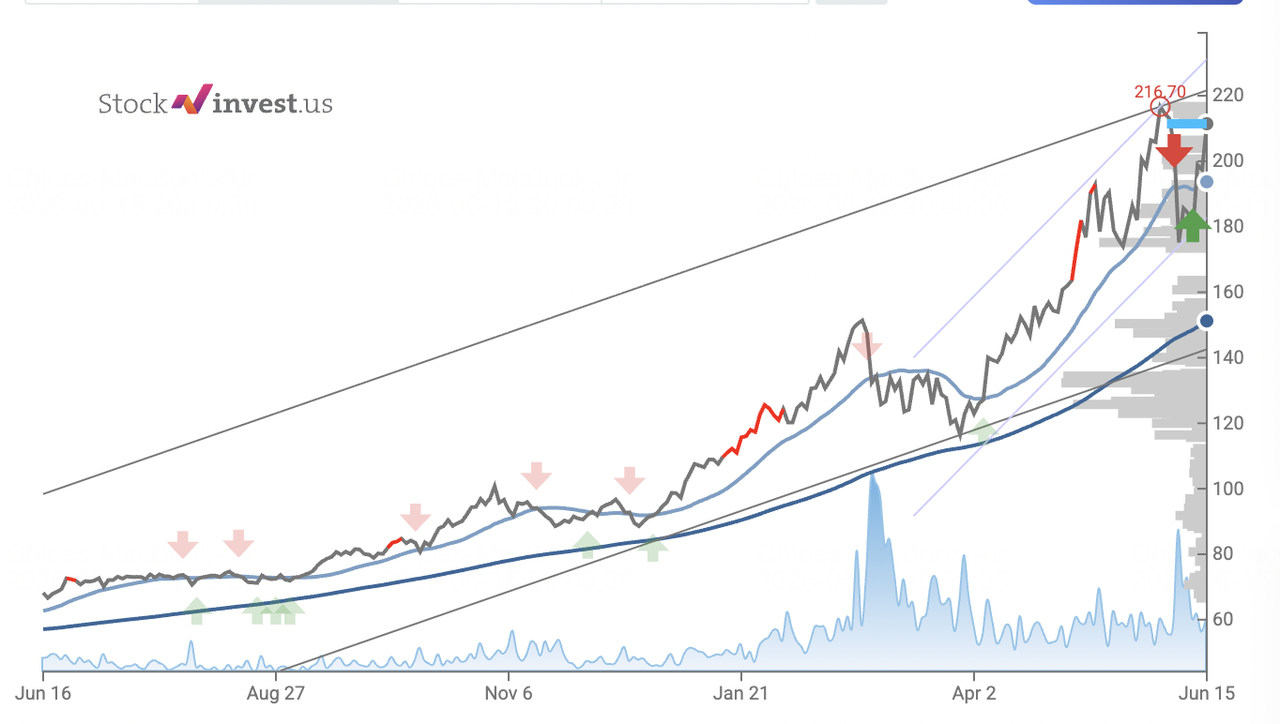
Despite hitting record equity highs in early 2026, the underlying corporate profit expansion has outpaced price gains. The index trades at highly compelling forward price-to-earnings (P/E) metrics relative to its projected earnings trajectory, making it an attractive value proposition compared to overextended domestic technology multiples.
Read more: Nvidia (NVDA) Stock Price Outlook for 2026: Can Blackwell and Vera Rubin Take NVDA Back to $300?
EWY Index Forecasts for 2026: Bull vs. Bear Outlook
Major institutional strategy desks maintain active, high-conviction outlooks on South Korean equities, balancing massive earnings momentum against broader global macroeconomic conditions.
|
Institution / Strategy Desk |
2026 Market Target Outlook |
Core Tactical Thesis |
|
Goldman Sachs Research |
KOSPI 9,000 (Raised from 8,000) |
Strong Overweight: High-conviction regional view driven by a structural semiconductor supercycle and exceptional 300% earnings growth potential. |
|
Major Institutional Desks (Aggregated) |
Korea Value-Up Index ~2,500 |
Bullish: Continued momentum in governance disclosures alongside sustained capital reallocations from domestic pension systems. |
|
Global Asset Managers (Consensus) |
EWY Target Range: $235 - $250 |
Moderate Buy: Strong tailwinds from international single-country fund flows, assuming stable semiconductor pricing power through 2027. |
|
Macro Research Groups |
Cyclical Consolidation Baseline |
Neutral: Cautious on sudden infrastructure construction bottlenecks or near-term tech sector valuation normalization following historic year-to-date runs. |
The Bull Case: Scaled Ramps and Structural Re-Rating Drive EWY Higher
Bulls project that as corporate value-up disclosures fully integrate across mid-cap names, the closing of the valuation discount will become permanent. If HBM volume allocations continue to experience structural deficits across hyperscaler nodes, outsized cash flows will enable aggressive equity buybacks, driving EWY toward long-term targets well above current baselines.
The Bear Case: Cyclical Shocks and Logistics Risks Pull Back the Index
Bears point to South Korea’s position as an open, export-dependent digital logistics hub. If global technology spend faces a temporary consolidation phase, or if supply chain dependencies for rare industrial chemical inputs encounter geopolitical friction, the index could pull back to test primary structural support levels.
5 Critical Risks to Watch for EWY Investors in 2026
- Geopolitical Vulnerabilities and Export Sensitivities: South Korea sits at the center of international trade corridors. Any sudden adjustments to global tariff regimes, technology export restrictions, or supply chain blockades directly impact export volumes.
- Hyperscaler Concentration and Capital Shocks: A substantial percentage of leading corporate semiconductor backlog originates from a select group of American and Chinese cloud giants. Sudden infrastructure CapEx adjustments or data center construction delays can cause immediate ripple effects across backlogs.
- Corporate Governance Reform Execution Risk: While over 170 major listed firms have fully enacted Value-Up programs, any localized slowdown in regulatory enforcement or resistance to independent board leadership could cool institutional sentiment.
- Currency Fluctuations (KRW vs. USD): Because EWY is a USD-denominated asset tracking Korean Won-denominated underlying stocks, sharp local currency depreciation can erode translation gains, even during positive domestic equity runs.
- Cyclical Commodity Memory Exposure: Despite the high-tech shift toward custom AI architectures, baseline legacy DRAM and NAND storage markets remain inherently cyclical. Global capacity oversupply can lead to pricing compression, impacting overall operating margins.
Read more: Micron (MU) Stock Price Forecast 2026: Can AI Memory and DRAM Demand Push MU to $500?
How to Trade EWY Index Futures on BingX TradFi
The TradFi division on BingX provides a modern environment for trading USDT-settled stock and index perpetual contracts, enabling market participants to express clear directional views on international equities without standard legacy brokerage overhead.
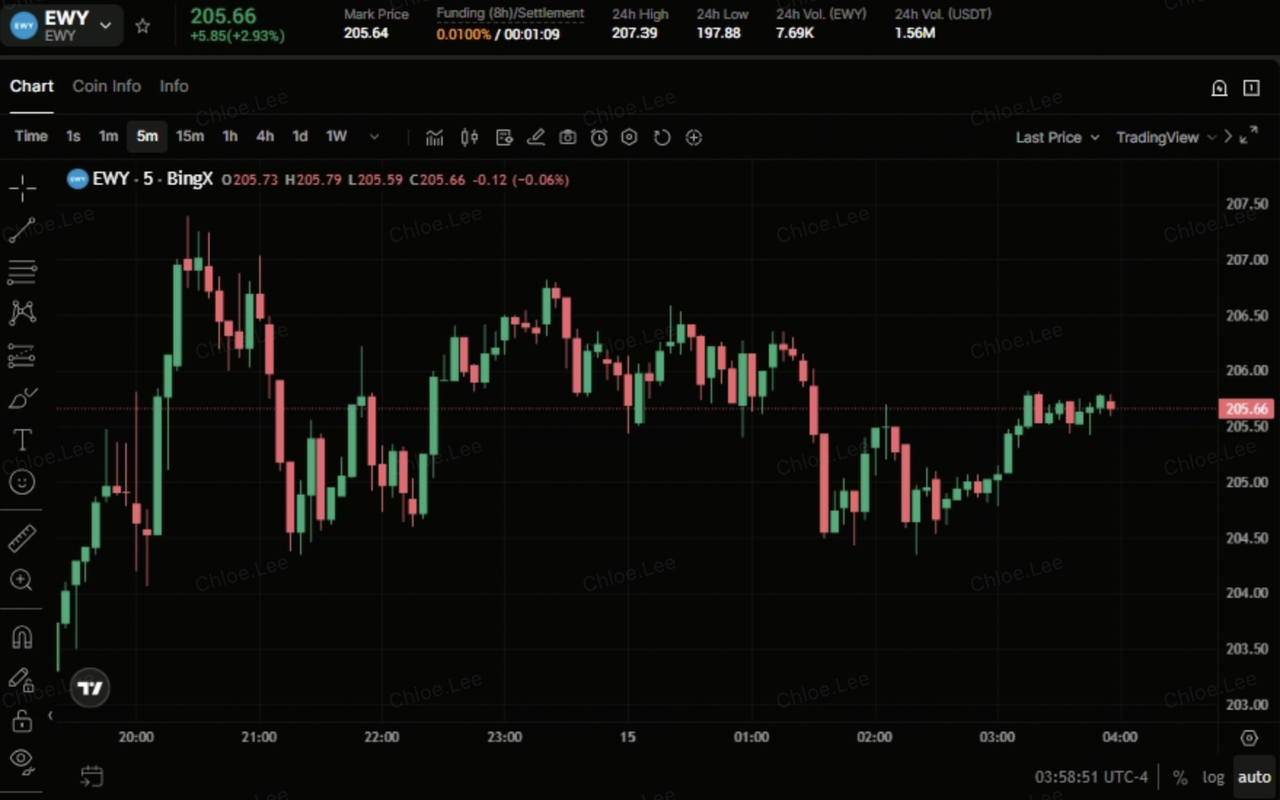
EWY/USDT perpetual contract on BingX futures market
Long or Short EWY Index Perpetuals with USDT on BingX Futures
- Navigate to the BingX TradFi platform and open the Stock/Index Futures terminal.
- Use the search interface to select the iShares MSCI South Korea ETF (EWY) perpetual contract.
- Verify active trading sessions before submitting order tickets. Spreads and localized volatility may widen during extended-hour sessions due to lower immediate order book density.
- Configure your preferred Margin Mode (Isolated for defined boundary isolation, or Cross for collective portfolio pooling) and select leverage metrics.
- Execute Open Long if you anticipate positive backlog conversions, consecutive earnings outperformance, or strong margin guidance updates. Execute Open Short if you look to hedge against tech sector pullbacks, overextended valuations, or potential manufacturing execution friction.
- Implement protective Take-Profit (TP) and Stop-Loss (SL) boundary parameters immediately upon order entry to shield capital configurations from sudden macro market swings.
Conclusion: Should You Invest in EWY in 2026?
The iShares MSCI South Korea ETF (EWY) stands as a compelling structural asset allocation for 2026. For macro investors looking to deploy capital into high-barrier global hardware production, liquid technology monopolies, and a market undergoing permanent governance optimization, the fund offers a robust institutional framework.
However, because of South Korea's high operational sensitivity to global trade and technology spending cycles, entry points and macro factors require continuous observation. Investors should closely monitor HBM pricing power, regional export data, and the progression of corporate balance sheet optimization.
Risk Reminder: Trading and investing in single-country index vehicles like EWY involves notable capital risk, including asset concentration and currency translation exposures. Market participants must perform independent due diligence and consult with certified financial advisors before committing capital allocations.
Related Reading
- Top AI Semiconductor Stocks to Buy in 2026: AI Chips and Supply Chain Complete Guide
- Top 10 AI Infrastructure Stocks to Buy in 2026: Chip Manufacturing and Design Leaders
- Top AI Compute and GPU Stocks to Buy in 2026: The Shift to Inference and Custom Silicon
- Top AI Cloud Infrastructure Stocks to Buy in 2026 Amid Hyperscaler Capex and the Neocloud Boom
- Roundhill Memory ETF (DRAM) Forecast 2026: $1.5B AI Supercycle or 'RAMmageddon' Trap?
