
For cryptocurrency investors in Taiwan, deposit and withdrawal costs are often the most overlooked yet most direct factor affecting overall returns. Most people focus ontrading fees, but in reality, deposit exchange rate differences, stablecoin conversion costs, on-chain withdrawal fees, and fixed fees and spreads during withdrawal are the hidden costs that accumulate the most over time. For example, with NT$100,000, from deposit, conversion to crypto assets, to final withdrawal back to TWD, the total cost difference can reach several thousand dollars, depending on the platform and funding path chosen.
When evaluating deposit and withdrawal methods, some users also pay attention to the price flexibility of P2P (peer-to-peer trading). However, under Taiwan's current financial and regulatory environment, most users still rely on deposit and withdrawal channels provided by exchanges, as the processes are more standardized and fund flows are clearer. P2P usually exists as a supplementary option rather than the primary method for fund entry and exit.
This article will approach from both deposit and withdrawal perspectives, organizing common fiat currency entry and exit paths for Taiwanese users, comparing differences in fees, exchange costs, withdrawal fees, and arrival times across different platforms, and summarizing relatively stable and cost-efficient operating methods.
Key Summary
- There are three main compliant deposit paths commonly used by Taiwanese users: purchasing stablecoins with TWD at Taiwanese exchanges (such as MAX, BitoPro), purchasing USDT directly with credit cards or debit cards at international exchanges (such as BingX), and first purchasing USDT at Taiwanese exchanges then transferring to international exchanges. Different paths have significant cost differences, usually ranging from approximately 1% to 2%.
- The advantage of using credit cards or debit cards to purchase stablecoins is speed and simplicity, but fees typically range from 1.5% to 3%, making it more suitable for small amounts or immediate deposit needs.
- Purchasing USDT with TWD through Taiwanese exchanges and then transferring to international exchanges like BingX typically costs less than credit card methods, making it one of the currently more cost-efficient deposit paths, though attention should be paid to exchange rate differences and withdrawal fees between exchanges.
- For withdrawals, most Taiwanese users choose to first transfer assets back to Taiwanese exchanges, then convert to TWD for withdrawal. Compared to SWIFT wire transfers, this path has lower fixed fees and more advantageous overall costs.
- P2P (peer-to-peer trading) has certain price flexibility, but its use cases in Taiwan are relatively limited, with users typically considering fund flow directions and transaction security when evaluating.
Taiwan Crypto Fiat On-Ramp 2026: Best Methods and Detailed Path Comparison
Before comparing fees across platforms, understanding the actually viable deposit methods for Taiwanese users helps grasp the sources of different cost variations. The core of deposits is "exchanging TWD for stablecoins (usually USDT)", with different paths having varying rates, speeds, and operational complexity.
Path 1: Taiwan Local Exchange Deposit → Buy USDT → Transfer to International Exchange
This is currently the most common and lowest-cost deposit method for Taiwanese users. After completing registration and KYC at MAX or BitoPro, you can deposit TWD via bank transfer and directly purchase USDT. Costs mainly come from USDT/TWD bid-ask spreads (approximately 0.1%~0.3%) and on-chain fees for withdrawing USDT to international exchanges like BingX (TRC-20 usually costs less than $1). Overall, this is currently the most cost-efficient starting point for deposits.
Path 2: Buy USDT Directly on International Exchange via Credit Card
Using credit cards or debit cards to purchase USDT through platforms like BingX is the simplest and fastest method, suitable for users who need urgent deposits or are new to cryptocurrency. The corresponding costs are also higher, with fees typically ranging from 1.5%~3% (depending on the card issuer and payment channel). For large deposit scenarios, the cost difference becomes significantly amplified.
Path 3: On-Ramp via Third-Party Payment Services
Some international exchanges support third-party payment methods like SEPA, Alipay, LINE Pay, etc. For Taiwanese users, available options may vary due to regional restrictions, with overall rates usually falling between credit cards and Taiwanese exchange deposits. These methods achieve a certain balance between operational convenience and cost, suitable for users who don't want to transfer coins through Taiwanese exchanges.
Taiwan Crypto On-Ramp Paths Comparison 2026: Fees, Speed & Best Options
|
Deposit Path |
Applicable Coins |
Estimated Total Deposit Cost |
Arrival Time |
Requires Taiwan Exchange Account |
Suitable Scenarios |
|
Taiwan Exchange → Purchase USDT → Transfer to BingX and other international exchanges |
USDT |
About 0.1%–0.5% (including spread + on-chain fees) |
About 10–30 minutes |
Required |
Lowest cost, most mainstream deposit method |
|
International exchange card payment (credit/debit card) to purchase USDT |
USDT |
About 1.5%–3% |
Instant to several minutes |
Not required |
Fastest speed, suitable for small amounts or urgent needs |
|
Third-party payment (SEPA / Alipay / LINE Pay to purchase USDT |
USDT |
About 1%–2% (depending on channel) |
Instant to several minutes |
Not necessarily |
Balance between cost and convenience |
Taiwan Crypto Fiat Off-Ramp 2026: Best Methods and Detailed Path Comparison
The essence of withdrawal is converting crypto assets back to fiat currency. The main differences between different paths are reflected in fee structures, arrival times, and fund formats (TWD or foreign currency).
Path 1: BingX → TRC-20 → MAX or BitoPro → TWD Withdrawal (Cheapest Overall)
Currently the most common and lowest overall cost withdrawal method for Taiwanese users. The operation process is: first sell held crypto assets (like BTC, ETH) to USDT on BingX, then transfer via TRC-20 network to MAX or BitoPro (fees usually less than $1), then exchange USDT to TWD on Taiwanese exchanges (spread about 0.1%~0.3%), and finally apply for bank withdrawal. The entire process doesn't require foreign currency accounts, arrival time is usually same day to next business day, and the fee structure is relatively simple.
Path 2: BingX → TRC-20 → Kraken USD Conversion → SWIFT Wire → Taiwan Foreign Currency Account
Another method is to sell assets to USD on exchanges like Kraken, then wire transfer back to Taiwan foreign currency accounts via SWIFT. This path is suitable for users with USD funding needs or who want to hold foreign currency directly. SWIFT typically charges fixed fees (about $25), making it more efficient for larger single amounts, but for frequent small withdrawals, the cost proportion becomes relatively high. Additionally, this method requires preparing foreign currency accounts in advance and completing corresponding KYC verification levels at exchanges.
Taiwan Crypto Off-Ramp Paths Comparison 2026: Lowest Cost Routes Revealed
|
Withdrawal Path |
Applicable Currency |
Estimated Total Withdrawal Cost |
Arrival Time |
Requires Foreign Currency Account |
Suitable Scenarios |
|
BingX → TRC-20 → MAX / BitoPro → TWD withdrawal |
TWD |
About NT$200–400 (for 100,000 scale) |
Same day to next business day |
Not required |
Most commonly used by Taiwan users, lowest overall cost |
|
BingX → TRC-20 → Kraken → USD → SWIFT wire transfer → Foreign currency account |
USD |
About $25 USD (fixed fee) |
1–3 business days |
Required |
Suitable for USD needs or large one-time withdrawals |
Which Platform is Better for On-Ramp vs Off-Ramp in Taiwan 2026: 4 Exchange Fee Comparisons & Lowest Cost Paths
When choosing exchanges, looking at trading fees alone is not sufficient to judge overall costs. For Taiwanese users, deposit and withdrawal methods, exchange rate differences, stablecoin conversion costs, and withdrawal fees are the key factors affecting final fund efficiency. Additionally, exchanges' market depth and slippage performance also affect execution prices during actual trading, especially in large transactions or low liquidity periods, where these costs are often overlooked.
Below is a summary of the most commonly used exchanges by Taiwanese users, comparing from deposit methods, fee structures, trading depth, and withdrawal paths to help find overall lower-cost, relatively stable fiat currency deposit and withdrawal combinations.
1. BingX
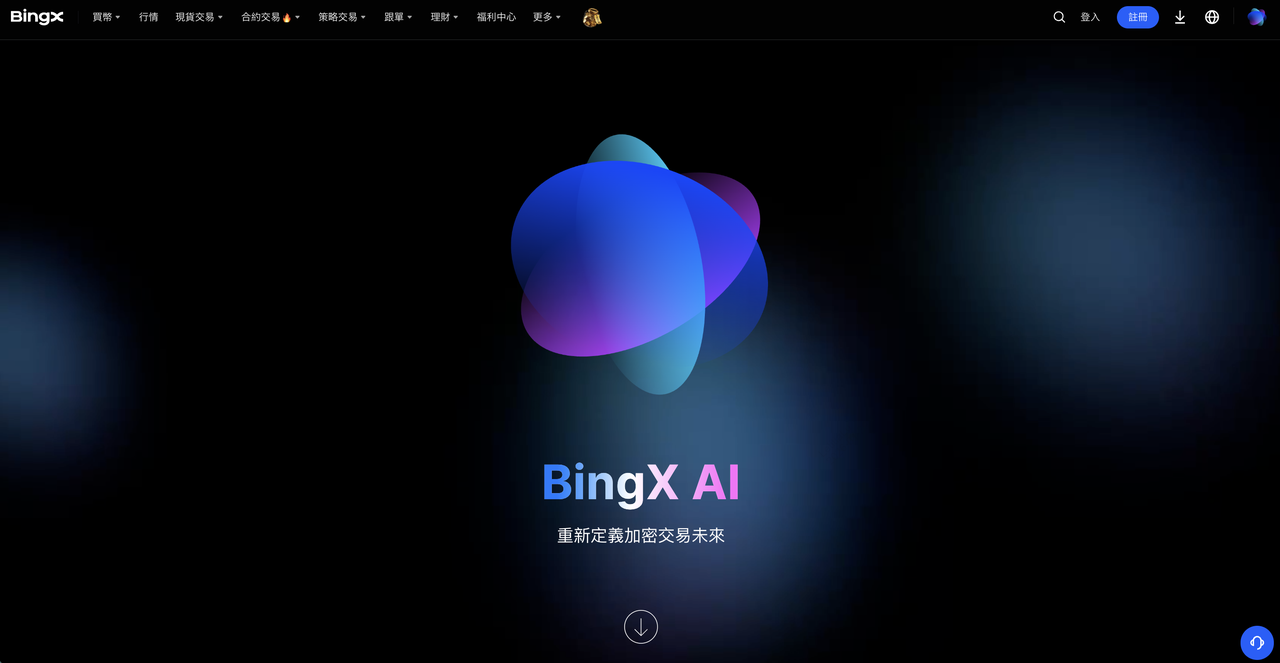
BingX provides a complete Traditional Chinese interface and is currently one of the feature-complete international exchanges that is relatively user-friendly for Taiwanese users. For deposit methods, BingX supports credit cards, debit cards, third-party payments topurchase USDT, as well as transfers from external wallets or Taiwanese exchanges and other channels. For most Taiwanese users, the more cost-efficient deposit method is still to first purchase USDT at MAX or BitoPro, then transfer to BingX via TRC-20 network, with overall costs usually controllable under 0.5%.
BingX doesn't directly support TWD deposits, but its diverse deposit options and low on-chain receiving costs (free fees for crypto deposits) make it the primary trading platform after completing deposits. After depositing, you can conduct spot trading of BTC, ETH, XRP and other mainstream assets (0.1% fee), as well as perpetual futures trading (0.02% maker fee, 0.05% taker fee). While fees don't differ much from some Taiwanese exchanges, BingX has clear advantages in overall market depth and liquidity, effectively reducingslippagecosts for large transactions, with actual execution prices usually closer to expectations. This is also an important reason why most users choose to concentrate trading on international exchanges.
BingX Deposit and Withdrawal Highlights
- Free crypto transfer-in fees: Transferring USDT and other cryptocurrencies from Taiwanese exchanges or personal wallets incurs no deposit fees, only on-chain miner fees (TRC-20 usually less than $1).
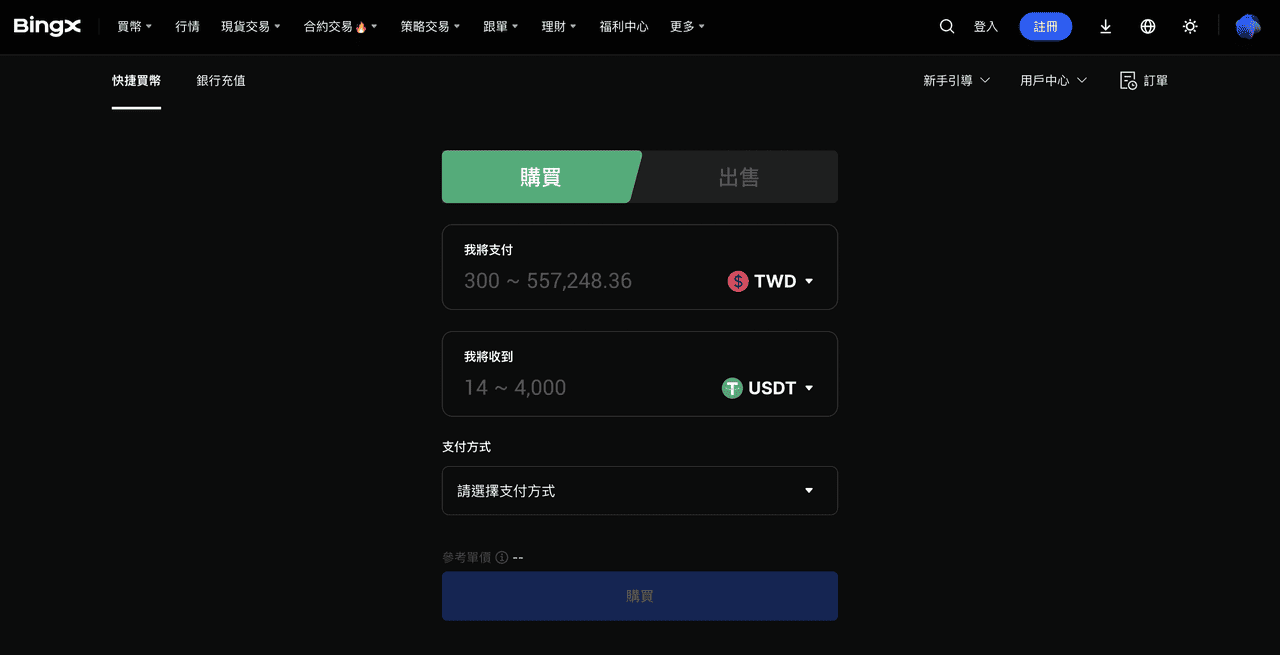
- Credit card USDT purchase: On BingX's "Quick Buy" page, select USDT, enter the TWD amount, and the system will display exchange rates and fees for credit cards and third-party payments for direct comparison, with fees typically ranging from 1.5% to 2.5%.
- Traditional Chinese interface: From deposits, exchanges to withdrawals, all support Traditional Chinese with clear operational processes, helping lower usage barriers.
- Integrated withdrawal paths: After completing trades, USDT can be transferred toTaiwanese exchangesvia low-cost TRC-20 to exchange for TWD, with relatively stable overall processes and cost structures.
2. MAX Exchange
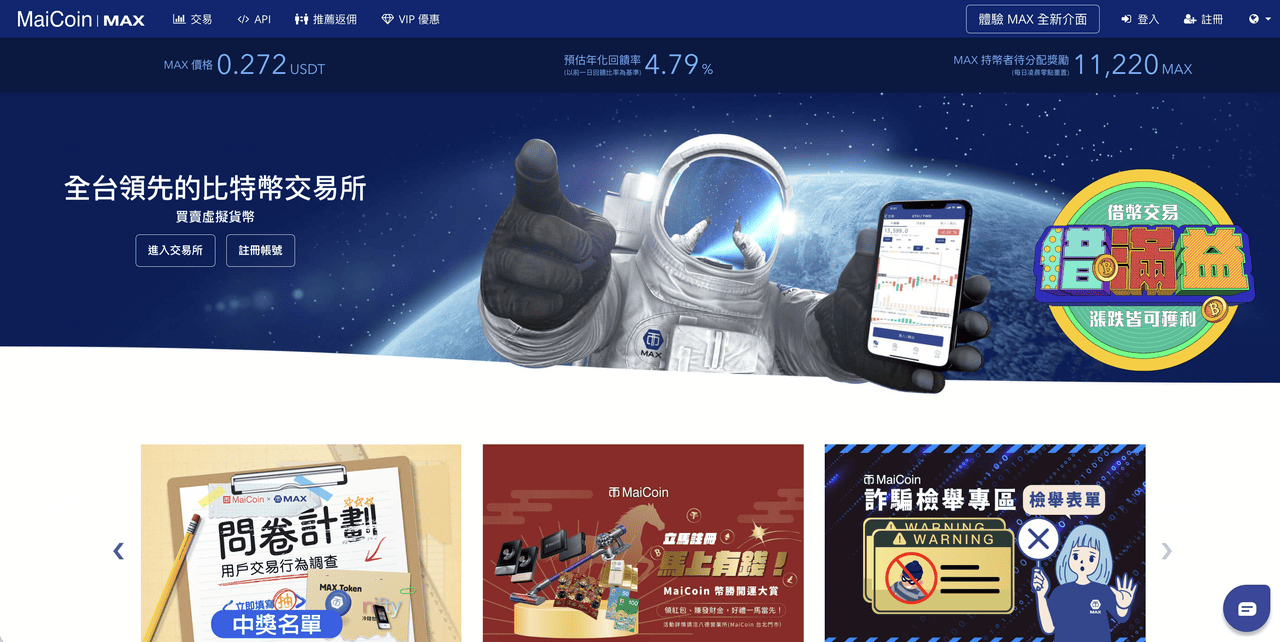
MAX is Taiwan's most mainstream local exchange, with its core advantage being support for direct TWD bank transfer deposits without any intermediate exchange steps. Taiwanese users can directly deposit TWD via bank transfer after opening accounts at MAX, with deposits themselves incurring no fees (bank transfer fees vary by bank, usually 0 to 15 TWD). The cost of purchasing USDT comes from USDT/TWD bid-ask spreads, usually between 0.1% to 0.3%, representing the lowest exchange costs among all deposit methods.
MAX's main limitation is its relatively limited trading pairs, with fewer altcoin options, and trading depth lower than international exchanges. Therefore, most Taiwanese users' usage pattern is: exchange TWD to USDT at low cost on MAX, then transfer to international exchanges like BingX for richer trading operations, forming a division of labor path of "Taiwanese exchange for conversion + international exchange for trading".
MAX Deposit and Withdrawal Highlights
- Direct TWD deposits: Bank transfer deposits incur no platform fees, making it the lowest starting cost channel among all deposit methods, especially suitable for large deposits.
- Low USDT/TWD exchange spreads: Usually between 0.1% to 0.3%, far lower than credit card purchases' 1.5% to 3%, with differences particularly significant for large exchanges.
- Convenient and low-cost TWD withdrawals: After selling USDT to TWD and applying for withdrawals, fees are fixed and low, with arrival times usually same day to next business day, making it the top choice for final withdrawal steps for Taiwanese users. After completing advanced KYC, daily withdrawal limits can reach hundreds of thousands of TWD.
- FSC regulatory compliance: Regulated by Taiwan's financial regulatory authorities, with clear legal protections for fund security and dispute resolution.
3. BitoPro
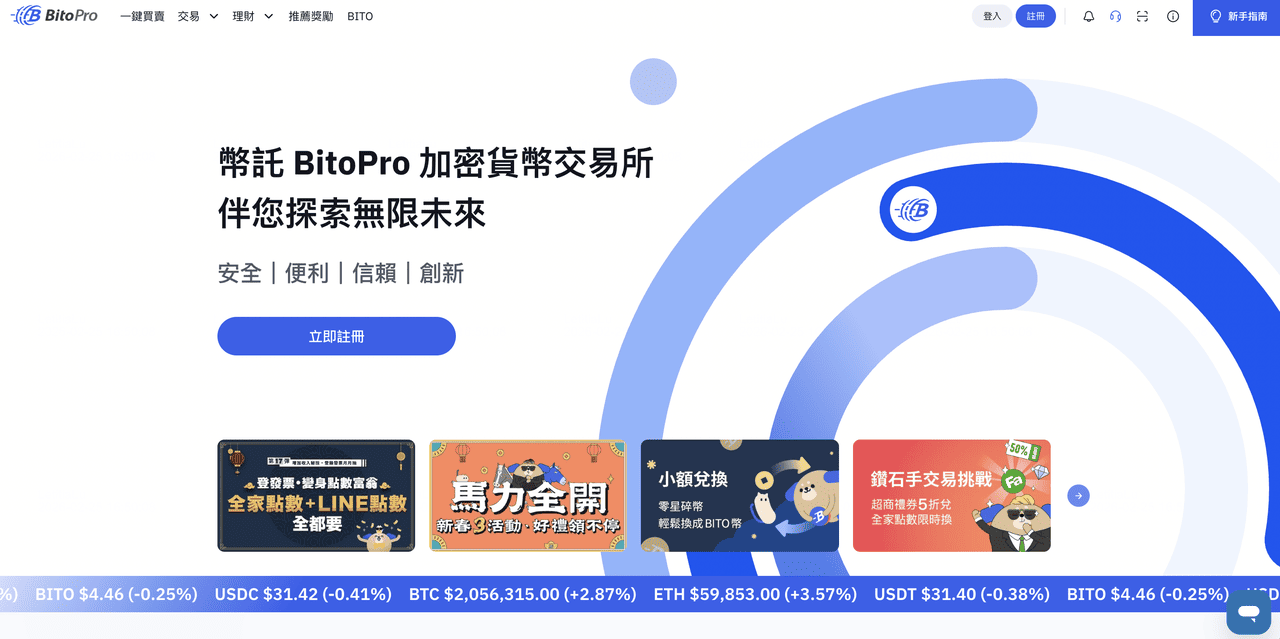
BitoPro is also a popular Taiwanese local exchange with similar functionality positioning to MAX, supporting direct TWD bank transfer deposits. BitoPro's USDT/TWD exchange spreads are similar to MAX, also between 0.1% to 0.2%, suitable as an alternative or supplement to MAX. BitoPro's interface design is relatively simplified with fewer operational steps, making it easier for first-time Taiwanese depositors to get started.
In actual usage, BitoPro's market liquidity is slightly lower than MAX. Mainstream coins can be exchanged smoothly at normal trading amounts, but large USDT purchases may require multiple transactions. For most Taiwanese users, BitoPro is more suitable as an auxiliary platform for deposits and withdrawals rather than a primary large-amount exchange channel.
BitoPro Deposit and Withdrawal Highlights
- Direct TWD deposits: Supports bank transfers with no platform fees for deposits, similar process to MAX.
- Low exchange spreads: USDT/TWD spreads usually between 0.1% to 0.2%, suitable for small to medium exchange operations.
- Simplified and user-friendly interface: Fewer operational steps, suitable for Taiwanese newcomers unfamiliar with crypto operations.
- Withdrawals to Taiwan banks: Low TWD withdrawal fees with arrival times similar to MAX, suitable as a final withdrawal platform.
4. Kraken
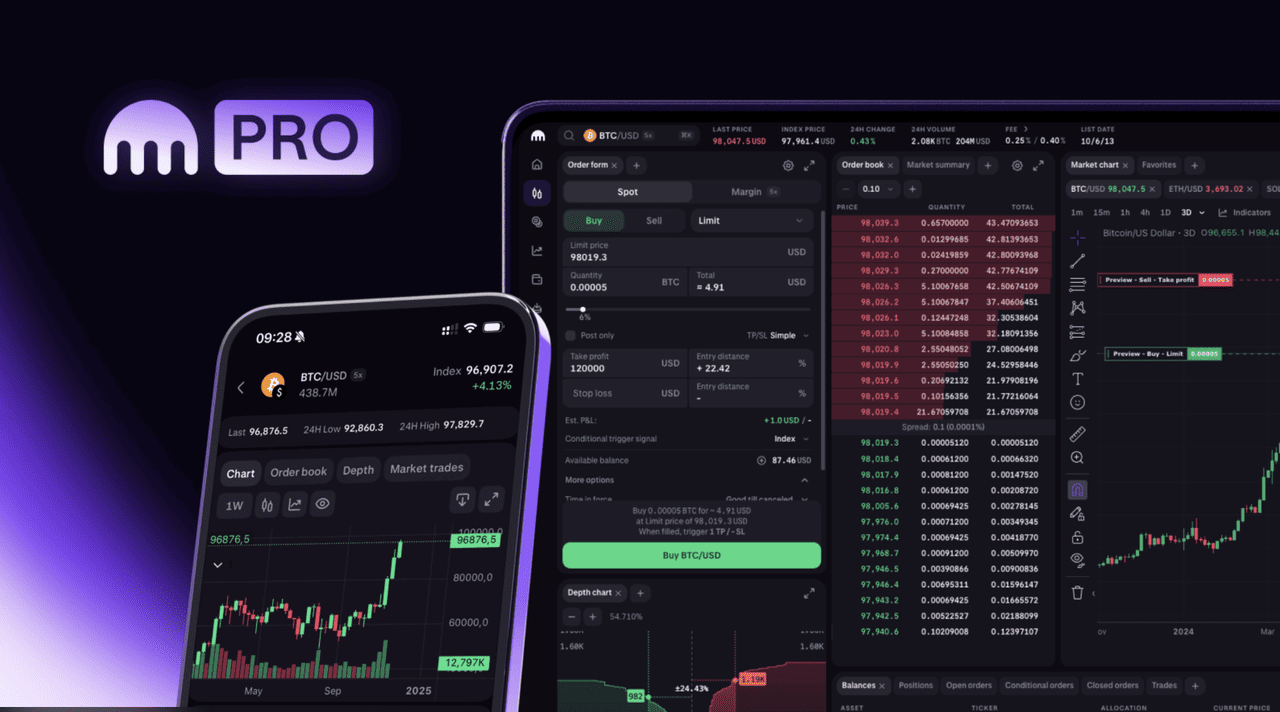
Kraken is one of the longest-established international exchanges and doesn't directly support TWD deposits. Taiwanese users typically use Kraken through stablecoin transfers. Kraken's core advantage for Taiwanese users is support for SWIFT wire transfer withdrawals, allowing USD to be directly wired to Taiwan foreign currency accounts, with SWIFT fixed fees around $25. This withdrawal path is suitable for users needing to hold or use USD, but fixed fees become proportionally high for small withdrawals. Crypto transfers to Kraken are also free, with spot entry-level rates of 0.25% maker fee and 0.40% taker fee, higher than BingX.
Kraken Deposit and Withdrawal Highlights
- Free crypto transfers: Same as BingX, transferring USDT from Taiwanese exchanges incurs no platform fees.
- No TWD deposit support: Taiwanese users must first exchange at Taiwanese exchanges then transfer, adding an exchange step.
- SWIFT USD withdrawals: Fixed fees around $25, suitable for users needing USD directly deposited to foreign currency accounts, but fixed fees become proportionally high for frequent small withdrawals.
- High spot rates: Entry-level taker fee of 0.40%, significantly higher than BingX's 0.1%, resulting in higher long-term trading costs.
|
Exchange |
TWD Deposit Support |
Deposit Cost Structure |
Spot Trading Fee (Taker) |
TWD Withdrawal Method |
Withdrawal Cost |
Arrival Time |
|
BingX |
Not supported |
Crypto deposits 0 fees; Credit card ~1.5%–2.5% |
0.10% |
Transfer to Taiwan exchange then convert to TWD |
TRC-20 withdrawal < $1 |
Same day to next business day |
|
MAX Exchange |
Supported (bank transfer) |
Deposit 0 fees; USDT/TWD spread ~0.1%–0.3% |
0.10%–0.20% |
Direct TWD withdrawal after selling USDT |
Fixed small fee |
Same day to next business day |
|
BitoPro |
Supported (bank transfer) |
Deposit 0 fees; USDT/TWD spread ~0.1%–0.2% |
0.10%–0.20% |
Direct TWD withdrawal after selling USDT |
Fixed small fee |
Same day to next business day |
|
Kraken |
Not supported |
Crypto deposits 0 fees |
0.40% |
SWIFT wire transfer to foreign currency account |
~$25 USD |
1–3 business days |
Which Platform Offers the Lowest Crypto to Fiat Conversion Fees in 2026?
|
Exchange |
Spot Fee (Taker) |
BTC/USDT Trading Depth |
Bid-Ask Spread |
Slippage Performance |
|
BingX |
0.10% |
High |
Usually < 0.05% |
Low |
|
MAX / BitoPro |
0.10%–0.20% |
Medium |
~0.05%–0.10% |
Medium |
|
Kraken |
~0.40% |
High |
Low |
Low |
Cross-currency exchange costs mainly come from trading fees and actual execution prices, with the latter affected by market depth and liquidity, reflected in bid-ask spreads and slippage. BingX maintains 0.1% fees while having stable trading depth for mainstream pairs, with bid-ask spreads usually below 0.05% under normal market conditions, and less likely to experience significant slippage in medium to large trades, making overall conversion costs relatively controllable.
In comparison, while converting assets to USD through Kraken and using SWIFT to wire back to Taiwan is suitable for specific scenarios, wire transfers typically generate fixed fees of around $25 or more, increasing overall costs. For most Taiwanese users, first depositing USDT to BingX and then completing asset conversions in the spot market is usually a more balanced approach between efficiency and cost.
Extended reading: What Are the Crypto Fiat Withdrawal Methods in 2026? Comparison of 7 Major Platforms and Channels
Which Platform Has the Lowest Spot Trading Slippage in Taiwan 2026?
|
Exchange |
Major Trading Pairs |
Order Book Depth |
Bid-Ask Spread |
Slippage Performance |
|
BingX |
BTC/USDT, ETH/USDT, XRP/USDT |
High |
Usually < 0.05% |
Low |
|
Kraken |
BTC/USD |
High |
Usually < 0.10% |
Low |
|
MAX / BitoPro |
BTC/TWD, ETH/TWD |
Medium |
~0.05%–0.15% |
Medium to high (for large amounts) |
Besides trading fees, slippage is also an important factor affecting actual trading costs. Slippage refers to the situation where, when executing market orders, the final execution price deviates from the original quote due to insufficient order book depth, with effects being more pronounced for larger trading amounts. Therefore, exchanges' market depth and liquidity often directly impact final costs more than surface rates.
For major trading pairs, BingX's market depth is relatively stable, with bid-ask spreads typically below 0.05% under normal market conditions, and large market orders less likely to produce significant slippage. Kraken also has good liquidity in the BTC/USD market, while Taiwanese local exchanges are more suitable for small-amount trading. For users with larger trading needs, it's recommended to check market depth (such as ±2% depth) on platforms like CoinGecko before placing orders and then choose appropriate platforms for execution, rather than relying solely on fees for judgment.
Which Platform Offers the Best Prices for Crypto P2P Trading in Taiwan 2026?
P2P (Peer-to-Peer trading) involves direct buying and selling of fiat currency and cryptocurrencies between users, with platforms mainly providing matching, fund escrow, and dispute resolution mechanisms. Unlike exchange quotes, P2P prices are set by users' own orders, so in certain market environments, they may indeed offer more competitive exchange rates or premium opportunities. However, actual execution prices are also affected by payment methods, regional demand, and market liquidity.
In some regions, P2P remains a compliant and common deposit and withdrawal method. BingX also provides related functionality, allowing users to complete transactions directly with counterparties through different payment methods. However, this service is currently not available to Taiwanese users. Overall, P2P markets rely on order volume and liquidity to form price competition. During active periods, quotes may approach or even outperform some instant purchase channels, but users also need to independently assess trading conditions and counterparty credibility.
For Taiwanese users, P2P is not a compliant mainstream deposit method. Since trading involves fund transfers with strangers, it's more likely to trigger bank-side risk control mechanisms, such as account anomaly monitoring or trading restrictions. In comparison, depositing and withdrawing through exchanges with complete KYC and compliance mechanisms offers more stable processes and controllable risks. Therefore, P2P is more suitable as a price reference rather than a primary deposit and withdrawal channel.
How to Do Low-Cost Fiat On-Ramp and Off-Ramp on BingX in Taiwan 2026: Complete Guide
Below is a summary of currently common and lower-cost deposit and withdrawal processes for Taiwanese users, using MAX (or BitoPro) as fiat entry and exit points and BingX as the main trading platform. Overall costs mainly come from Taiwanese exchange bid-ask spreads (~0.1%~0.3%), on-chain fees (TRC-20 usually less than $1), BingX trading fees (0.1% for spot), and exchange spreads and bank withdrawal fees during withdrawal.
1. Deposit to obtain USDT, balancing cost and convenience: There are two common methods to obtain USDT. The first is to complete KYC at MAX or BitoPro, deposit TWD via bank transfer, and purchase USDT in the USDT/TWD market with the lowest overall cost. It's recommended to use limit orders to reduce spread costs of approximately 0.1%~0.3%. The second is to directly use credit cards or debit cards to purchase USDT on BingX, which is the simplest process but with fees typically ranging from 1.5%~2.5%, more suitable for small amounts or immediate deposit needs.
2. Transfer USDT to BingX to complete fund connection: If purchasing USDT through Taiwanese exchanges, you can then use the TRC-20 network to withdraw to BingX, with fees usually less than $1 and funds arriving in minutes, completing the connection between fiat currency and international exchanges.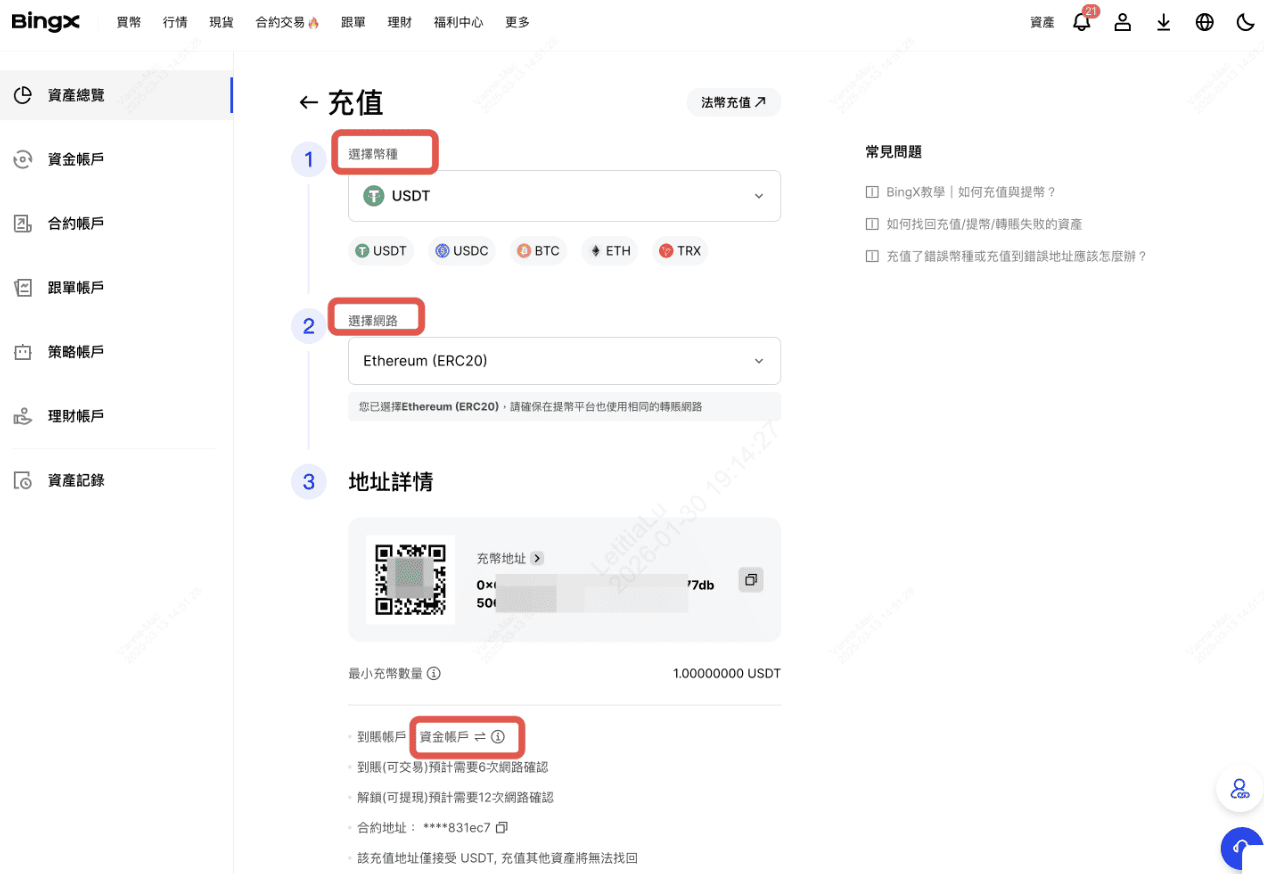
3. Exchange and trade on BingX to control overall costs: After USDT arrives, you can convert to BTC, ETH, or other assets in BingX's spot market. Actual costs include fees (0.1%) and are also affected by trading depth and slippage. It's recommended to choose market or limit orders based on trading amount. BingX's mainstream trading pairs have sufficient liquidity, helping reduce hidden costs in large transactions.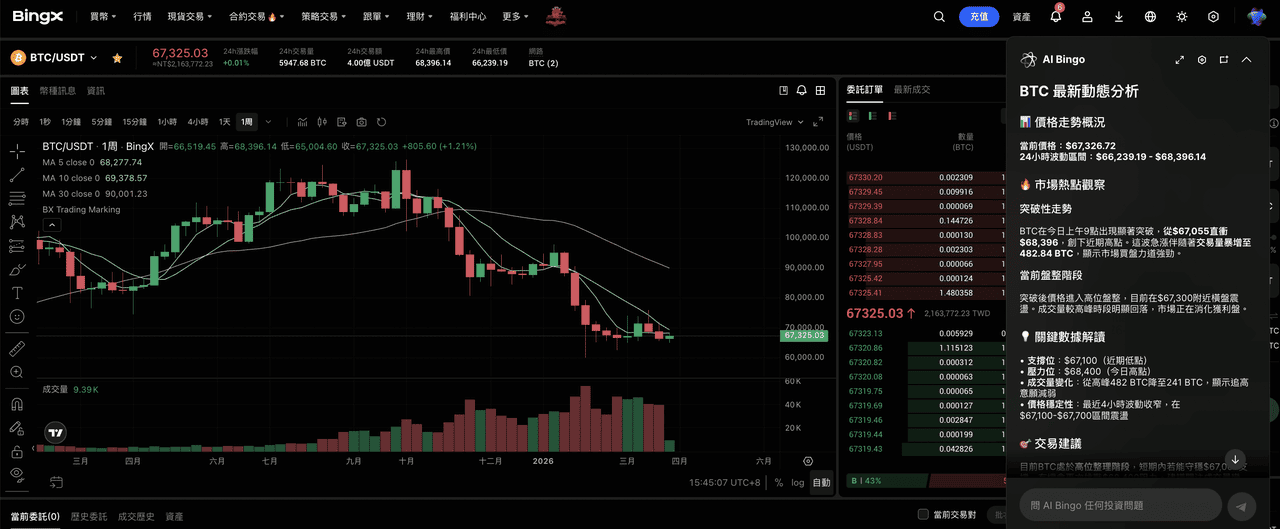
4. Use tools to assist decision-making and improve trading stability: During operations, you can use BingX AI analysis tools and price alert functions to observe market signals and risk indicators, making entry and exit decisions more informed and reducing uncertainty.
5. Withdraw back to TWD, maintaining low cost and predictability: After completing trades, convert assets back to USDT, withdraw via TRC-20 to MAX or BitoPro, then sell to TWD and apply for bank withdrawal. The entire process doesn't require foreign currency accounts, with clear and stable fee structures, making it the most common withdrawal method currently.
5 Common Questions and Pro Tips for Taiwan Crypto On-Ramp and Off-Ramp
When actually operating crypto deposits and withdrawals, besides fees, there are some easily overlooked details that directly affect fund security and overall costs. Below are several key considerations most commonly encountered by Taiwanese users to help reduce risks and unnecessary expenses during operations.
- P2P in Taiwan has regulatory and account risks: P2P (direct TWD-to-crypto exchange between individuals) is not a mainstream compliant method. Banks may view accounts frequently receiving transfers from strangers as high-risk, leading to account freezing or even closure. Without clear transaction backgrounds, fund sources are also harder to explain. Depositing through exchanges with complete KYC is usually a lower-risk choice.
- Confirm platform support before TRC-20 transfers: TRC-20 (Tron network) transfers are low-cost and common USDT transmission methods, but you must confirm receiving platform support for this network before operating. If the wrong network is selected, funds may be unrecoverable. It's recommended to conduct small-amount tests before formal transfers.
- Credit card deposits suitable for small amounts, not for long-term use: While credit card or debit card stablecoin purchases are fast, fees typically range from 1.5%~3%. For large deposits, costs increase significantly. In comparison, bank transfer exchanges through Taiwanese exchanges usually offer better cost advantages.
- Withdrawal frequency affects overall fee proportions: Whether it's TWD withdrawal fees from Taiwanese exchanges or fixed SWIFT wire transfer fees, they represent high proportions for frequent small withdrawals. Concentrating amounts for single withdrawals usually reduces overall costs.
- Complete KYC in advance: Taiwanese exchanges typically require 1-3 business days for verification completion, while international exchanges can usually complete same-day. If you have deposit or trading plans, completing KYC in advance can avoid temporary operational inability.
Final Thoughts: Why BingX Is the Best Platform for Taiwan Crypto On/Off-Ramp and Trading in 2026
Overall, the currently lowest-cost and stable compliant deposit and withdrawal path for Taiwanese users is the complete bidirectional cycle of "Taiwan exchange bank transfer deposit → purchase USDT → TRC-20 transfer to BingX trading → TRC-20 transfer back to Taiwan exchange → sell to TWD withdrawal". The total cost for the deposit segment is usually below 0.5%, the withdrawal segment is also below 0.5%, with overall round-trip costs around 1%, significantly lower than credit card deposit one-way fees of 1.5% to 3%.
In this process, BingX plays the role of core trading platform. Its Traditional Chinese interface lowers operational barriers, 0.1% spot fees are competitive among mainstream international exchanges, and sufficient trading depth helps reduce hidden costs from slippage. For users needing frequent exchanges or trading, it effectively controls long-term accumulated trading costs.
On the other hand, Taiwanese exchanges (like MAX or BitoPro) handle fiat entry and exit through bank transfers and lower exchange spreads, serving as key nodes for funds entering and exiting the crypto market. Using both together forms a cost-controllable and process-clear funding path. If you need to convert funds to USD and wire to foreign currency accounts, you can consider SWIFT wire transfers through international exchanges, but due to higher fixed fees, this is usually more suitable for large single withdrawal scenarios.
Related Reading
- Where to Buy Bitcoin in Taiwan? 2026 Bitcoin Exchange Recommendations and Complete Purchase Process Guide
- Taiwan Exchanges vs. International Exchanges: How to Choose the Right Crypto Trading Platform for You?
- How to Buy USDT in Taiwan? 2026 Crypto Exchange Recommendations and Complete Purchase Guide
- Which Platform Has the Lowest Fees for Converting ETH to USD in Taiwan? Comparison of 5 Major Exchanges' Fees and Withdrawal Costs (2026)
- Which Platform Has the Lowest Fees for Buying Bitcoin in Taiwan? BTC Spread, Fee, and Liquidity Comparison (2026)
