
Crypto prices can double overnight and collapse just as fast, often without any obvious fundamental reason. Behind some of the most dramatic moves are coordinated groups, anonymous influencers, and “insider” posts engineered to trigger FOMO. These setups rarely look dangerous at first. A small token starts trending, trading volume explodes, and social media fills with messages telling traders not to “miss out.”
But behind this excitement lies one of the oldest, and most damaging, forms of manipulation in the market: the pump-and-dump scheme. It thrives in low-liquidity assets, with misleading claims and fast price swings that can trap even experienced traders.
This guide explains how pump-and-dumps actually work, why they spread so quickly in crypto, what recent cases reveal, and the warning signs every investor should watch for. You’ll also learn how to protect yourself and how regulators are responding to these schemes across global markets.
What Is a Pump-and-Dump Scheme?
A pump-and-dump is a form of market manipulation where scammers artificially drive up a token’s price (the pump) and then rapidly unload their holdings at inflated levels (the dump). Once insiders exit, the price collapses, leaving retail traders with steep losses.
Pump-and-dumps flourish in assets with thin order books and small market capitalizations, similar to the penny-stock schemes seen in traditional finance. In crypto, this typically involves newly launched tokens or obscure micro-caps where a handful of coordinated wallets can move the market.
How the Pump Phase Works
The pump phase often begins with manufactured hype:
• Telegram and Discord groups
• Viral TikTok clips
• Coordinated posts on X (Twitter)
• Fake claims about upcoming listings or partnerships
The aim is to spark sudden price and volume spikes that make the token appear as if it’s breaking out naturally.
How the Dump Phase Unfolds
Once retail traders enter, the organizers sell into the new demand. Because liquidity is thin, prices can collapse within minutes, leaving late buyers with no exit.
Recent Pump-and-Dump Activity: Key Examples From 2024–2025
Pump-and-dumps remained active throughout the 2024–2025 cycle. Forensics firms and researchers documented patterns across newly launched tokens, especially those trading with low liquidity.
1. 2024 Token-Launch Manipulation Patterns (Chainalysis, 2024)
Chainalysis’ Crypto Market Manipulation Report 2024 found that many tokens launched in early 2024 exhibited classic manipulation patterns:
• Sharp, coordinated price pumps
• Insiders accumulating cheaply
• Rapid dumps causing immediate collapses
These cases were most common in tokens under $5 million market capitalization, where a few wallets controlled most liquidity.
2. Social-Media-Driven Price Surges (Academic Study, 2024–2025)
A peer-reviewed study published in the International Review of Financial Analysis (Ardia & Bluteau, 2024) examined more than 1,100 pump events and found that posts on X (Twitter) often spiked minutes before manipulated price moves.
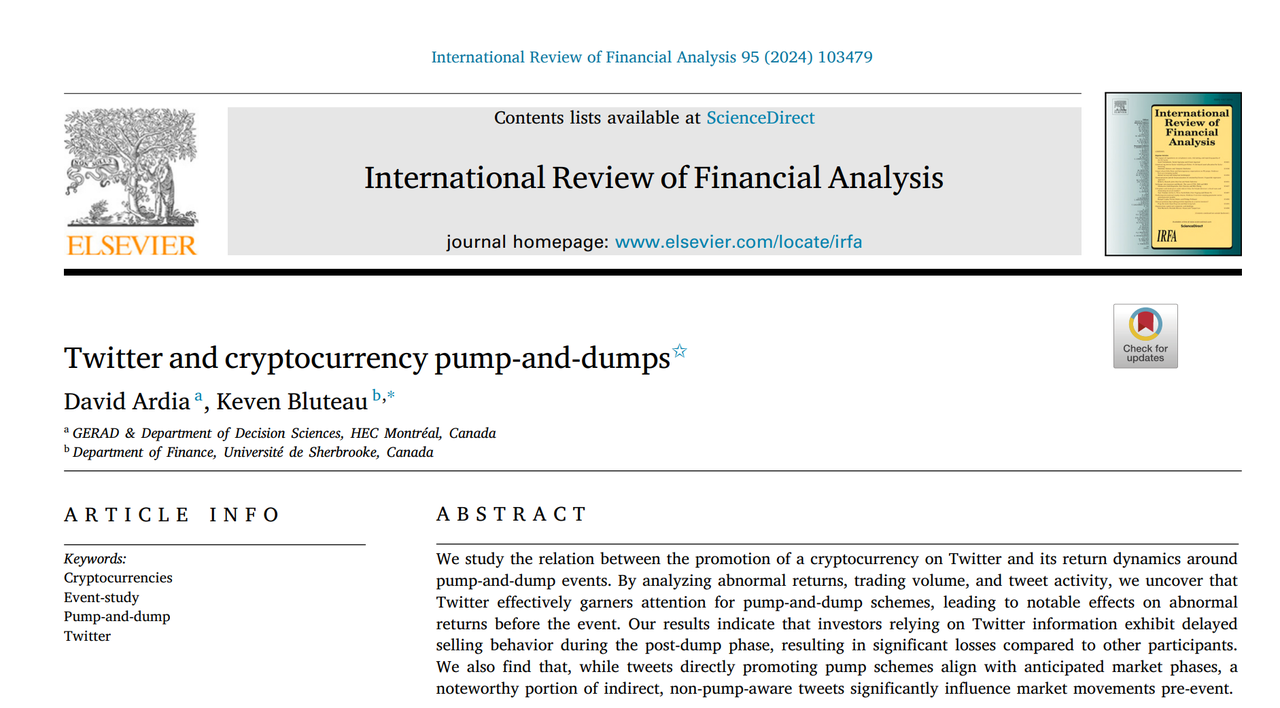
Researchers highlighted three consistent signs:
• Waves of coordinated hype tweets
• Rapid inflows of retail buyers
• Abrupt crashes once early insiders exited
The study concluded that misleading social-media narratives remain a major driver of pump-and-dump activity in low-liquidity tokens.
3. Pump.fun Micro-Cap Events (Solidus Labs, 2025)
Solidus Labs’ 2025 risk analysis found that more than 65% of micro-cap tokens launched on Pump.fun showed indicators consistent with manipulation.
One widely discussed case involved a new token that:
• Surged from a tiny valuation to a large market cap within hours
• Collapsed once insiders dumped their holdings
• Prompted the platform to enhance monitoring
This example highlighted how easily micro-cap tokens can be artificially inflated.
4. WIRED Journalist Scam (2025)
In early 2025, WIRED reported that journalist Andy Greenberg’s X account was hacked to promote a fake memecoin created on Pump.fun.
Followers bought in, the price spiked rapidly, and the scammer dumped immediately, sending the token to near zero within minutes. This became one of the most documented pump-and-dump incidents of the year.
5. Elliptic’s 2025 Outlook: Pump-and-Dumps Still Widespread
The Elliptic State of Crypto Scams 2025 report identified pump-and-dumps as one of the most common fraud types targeting retail traders. According to the report, scammers increasingly exploit low-liquidity tokens, anonymous developers, and artificially boosted trading volume to lure investors.
Many victims were misled by false claims, coordinated social-media hype, and manipulated charts, only to suffer steep losses once insiders dumped their holdings. Pump-and-dumps continue to thrive because thin markets make it easy for bad actors to inflate prices before exiting.
Why Pump-and-Dump Schemes Thrive in Crypto
Pump-and-dump schemes flourish in the crypto market because many tokens trade with low market capitalization and extremely low liquidity, making them easy to manipulate. In thin markets, a small group of coordinated wallets can push prices up quickly, creating the illusion of demand before unloading their holdings.
Crypto’s pseudonymous transactions also make it harder to identify the individuals behind these schemes, while fragmented global regulations leave many areas of the market unmonitored. This provides room for bad actors to launch new tokens, fabricate narratives, and disappear without accountability.
Social media accelerates the problem. Platforms like Telegram, X (Twitter), Discord, and TikTok allow misleading claims, fake insider news, and coordinated hype to spread rapidly, drawing in retail investors who may not realize the price action is artificially engineered.
Together, these factors create the perfect environment for pump-and-dump schemes to operate, and for unsuspecting investors to get caught at the top.
What Are the Warning Signs of a Pump-and-Dump Scheme?
Pump-and-dump schemes follow recognizable patterns, and spotting these early can help investors avoid unnecessary losses. The first red flag is a sudden, unexplained price spike in a low-liquidity or low-market-cap token. These moves often come with abnormal trading volume and no real news, development updates, or investor activity to justify them.
Another common signal is excessive marketing hype around a project with weak fundamentals. This often includes loud promotions across X, Telegram, TikTok, and Discord, where individuals or groups push misleading claims or artificial excitement. Messages promising “guaranteed profits” or urging buyers to act quickly are frequent hallmarks of pump activity.
Scammers also rely on unverified investment advice, often framed as insider tips or “once-in-a-lifetime” opportunities. These narratives are designed to trigger FOMO and draw in retail investors before the coordinated dump.
Team opacity is another concern. Although anonymity exists in crypto, legitimate teams still offer some transparency. A lack of a clear roadmap, missing documentation, or questionable tokenomics often signals elevated risk.
Key red flags to watch for:
• Sudden price spikes or abnormal trading volume
• Aggressive promotion despite no real fundamentals
• Influencers spreading exaggerated or misleading statements
• Urgent calls to “buy now” or promises of quick profits
• Anonymous teams, vague whitepapers, or unclear tokenomics
If a token’s momentum is driven mostly by hype rather than evidence of real value, you may be witnessing the setup phase of a pump-and-dump.
Pump-and-Dump vs. Rug Pull: What’s the Difference?
Pump-and-dump schemes and rug pulls both cause heavy investor losses, but they operate very differently. A pump-and-dump occurs when insiders or coordinated groups artificially inflate a token’s price through hype, misleading statements, or exaggerated claims. Once enough buyers enter the market, these insiders quickly sell their holdings, causing the price to collapse.
A rug pull, on the other hand, happens when a project’s developers intentionally drain liquidity or withdraw user funds and disappear. This typically occurs in new or unaudited tokens where the creators control liquidity pools or smart-contract permissions.
Both are serious threats in low-liquidity crypto markets, but understanding the mechanism helps investors spot early warning signs and avoid scams.
How to Protect Yourself From Pump-and-Dump Schemes
Staying safe requires discipline and verification. Most pump-and-dump scams share predictable characteristics.
1. Research the Project Thoroughly
Look for credible teams, transparent documentation, and meaningful development. Tokens involved in major pump-and-dumps, such as SQUID (2021) or many Pump.fun micro-caps in 2024–2025, shared consistent traits:
• Anonymous founders
• No verifiable company presence
• Vague roadmaps
• No audits or external partners.
Also examine token distribution. If insiders control a large percentage of supply, the risk of a coordinated dump increases dramatically.
2. Avoid Low-Liquidity Tokens - The #1 Target for Manipulation
Most documented pump-and-dumps involve assets with:
• < $5 million market cap
• Extremely thin order books
• Minimal exchange listings
Blockchain analytics firms like Chainalysis regularly report that bad actors choose these environments because a small amount of capital can create a dramatic price spike.
For example: Several 2024 Pump.fun tokens showed 300–1,000% jumps on less than $50k volume, classic early-stage pumps.
3. Verify Every Claim: Hype Is the Main Weapon
Crypto manipulators rely heavily on fake announcements:
• Exchange listing soon
• Big partnership coming
• Whales loading up
• Insider info, buy before it explodes.
These statements are rarely backed by proof. In a 2024 study led by Dr. Bofang Zhang (Journal of International Financial Markets, Institutions & Money), over 60% of sudden hype waves on X were traced to coordinated accounts pushing misleading narratives.
If you cannot verify a claim outside social media, treat it as a red flag.
4. Use Reputable Exchanges and Avoid Pump Groups
Tokens listed only on obscure DEX pairs with minimal liquidity are highly vulnerable to manipulation. Telegram and Discord “pump groups” are especially dangerous: insiders decide entry and exit prices long before retail participants join. Those entering late become exit liquidity.
5. Stay Disciplined and Don’t Chase Spikes
Almost every pump-and-dump ends the same way. Retail investors buy during the vertical spike, believing they’ve found momentum. Minutes later, insiders dump, and the price falls 70–99%.
Avoid reacting to:
• Sudden vertical green candles
• Trending tokens with no news
• Influencers shouting “next 100x”
• Extreme FOMO messaging
A slow, consistent strategy like diversification or DCA protects you far better than emotional buying.
What to Do if You Suspect a Pump-and-Dump
If you think a token is being manipulated, the first step is simple: stop buying immediately. Avoid reacting to sudden price spikes or fear-of-missing-out messaging. Next, monitor trading volume and price patterns, sharp, unnatural increases often signal coordinated activity rather than genuine demand.
Check the project’s official channels to see whether any real announcements support the move. If there’s no legitimate update, treat the surge as suspicious. Protect your remaining capital by avoiding additional exposure and consider reducing your position if liquidity is still available.
Finally, document what you observe and report it to your exchange’s support team or your local financial regulator. Early reporting helps protect other investors and strengthens future enforcement actions.
What Is the Legal and Regulatory View on Pump-and-Dump Schemes?
Pump-and-dump schemes violate securities and market-manipulation laws. In traditional markets, agencies like the United States Securities and Exchange Commission (SEC), United States Commodity Futures Trading Commission (CFTC), and the Financial Industry Regulatory Authority (FINRA) routinely prosecute such activity, often resulting in fines, asset freezes, and criminal charges.
Crypto markets are under increasing scrutiny.
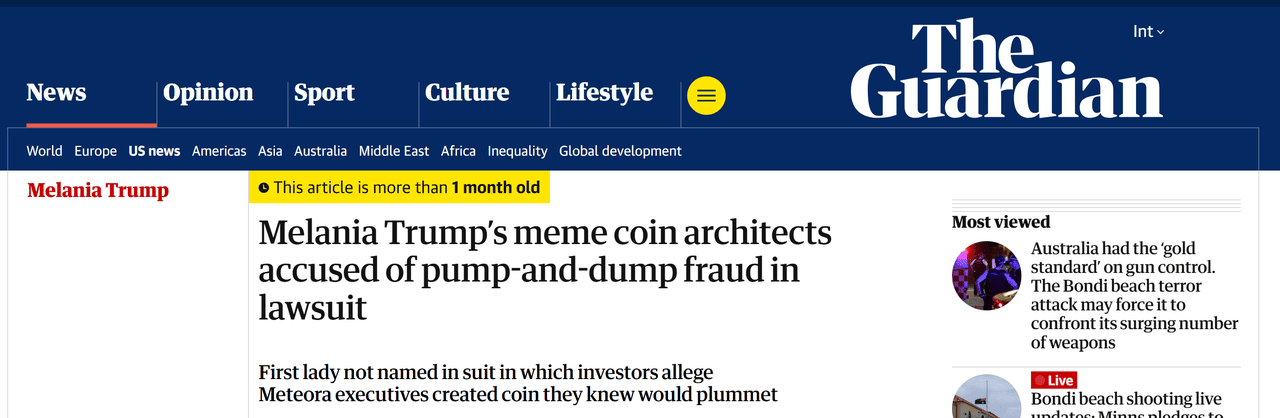
In late 2025, The Guardian reported that developers of the $MELANIA and $TRUMP tokens were sued in Manhattan federal court for allegedly running a coordinated pump-and-dump. According to the filing, insiders built large positions, hyped the tokens publicly, and sold during the surge—leaving investors with significant losses when prices crashed.
Global regulators such as the United Kingdom Financial Conduct Authority (FCA) and Australian Securities and Investments Commission (ASIC) warn that price manipulation through misleading statements or social-media campaigns can trigger enforcement even when a token is not formally classified as a security.
Conclusion: How to Navigate the Crypto Market Safely
The best protection against pump-and-dumps is a combination of research, skepticism, and disciplined investing. Scams thrive when traders rely on hype instead of verified information. Focus on liquidity, transparency, and real project fundamentals. If a token can’t answer basic questions, or its price moves without real news, it’s better to step aside.
Avoid chasing sudden spikes or social-media frenzies. Most losses occur in the final moments of a manufactured pump. Long-term strategies built around established assets, diversification, and measured position sizing offer far better outcomes.
Crypto rewards patience and informed decision-making, not speed. By taking the time to verify information and avoiding “guaranteed profit” claims, you greatly reduce your exposure to manipulation and stay on the right side of risk.
Related Reading
FAQs on Pump-and-Dumpy Crypto Scams
1. What is a pump-and-dump scheme in cryptocurrency?
A pump-and-dump scheme is a form of market manipulation where scammers artificially raise a token’s price through hype or misleading claims, then sell their holdings at the peak, causing the price to collapse and leaving late investors with losses.
2. How can I tell if a crypto token is being pumped?
Warning signs include sudden price spikes, abnormal trading volume, aggressive social-media promotion, vague or exaggerated claims, anonymous teams, and pressure to “buy now.” If the hype isn’t supported by real news or fundamentals, proceed with caution.
3. Are pump-and-dump schemes illegal in crypto?
Yes. Regulators such as the United States SEC, CFTC, and global agencies treat coordinated price manipulation as securities fraud or consumer deception. Recent lawsuits, including the 2025 case involving the $MELANIA and $TRUMP tokens, show increasing enforcement.
4. How do pump-and-dump scams differ from rug pulls?
A pump-and-dump relies on hype to inflate prices before insiders sell. A rug pull occurs when developers withdraw liquidity or user funds and disappear. Both cause severe losses, but the mechanics are different.
5. How can I protect myself from crypto pump-and-dump scams?
Research liquidity, token distribution, and team transparency. Verify claims outside social media. Avoid low-volume tokens and hype-driven promotions. Use reputable exchanges and stick to disciplined strategies like DCA instead of chasing sudden spikes.
6. What should I do if I think I'm caught in a token pump-and-dump?
Stop buying immediately. Check whether real news supports the move. Assess liquidity before exiting. Document suspicious activity and report it to your exchange or regulator to help prevent further harm.
7. Why are low-market-cap tokens more vulnerable to pumping and dumping?
Low-cap tokens often have thin liquidity, meaning a small amount of coordinated buying can move prices sharply. This makes them ideal targets for manipulators seeking to engineer large, fast price spikes.