

Eclipse est le premier Ethereum Layer 2 alimenté par la Machine Virtuelle Solana (SVM). En décomposant la pile blockchain traditionnelle, Eclipse offre des performances de niveau Solana, un débit élevé et une faible latence, tout en restant ancré à la sécurité robuste et à la liquidité profonde d'Ethereum. Alors qu'Ethereum L1 traite environ 15–30 TPS, l'architecture SVM parallélisée d'Eclipse théoriquement monte jusqu'à 65 000 TPS et, début 2026, maintient de manière constante 1 000+ TPS sous charge sans pics de frais. En déchargeant la disponibilité des données vers Celestia, Eclipse maintient les frais de transaction moyens près de 0,0002 $, environ 10 000× moins cher qu'Ethereum L1, tandis que les marchés de frais locaux garantissent que la congestion dans une application ne fait pas augmenter les coûts de gaz sur l'ensemble du réseau, positionnant Eclipse comme une couche 2 modulaire haute efficacité pour les dApps sensibles aux performances.
Dans cet article, vous apprendrez ce qu'est Eclipse, comment fonctionne son architecture unique « SVM sur Ethereum », le rôle du token ES dans le gaz et la gouvernance, pourquoi c'est un concurrent de premier plan dans la course aux applications on-chain évolutives, et comment acheter Eclipse (ES) sur BingX.
Qu'est-ce qu'Eclipse (ES) L2 Ethereum basé sur SVM ?
Eclipse est un protocole Layer 2 modulaire qui exécute les transactions en utilisant la SVM tout en se réglant sur le mainnet Ethereum. Historiquement, les blockchains étaient monolithiques, ce qui signifie qu'un seul ensemble de nœuds gérait l'exécution, le règlement et le stockage des données. Eclipse décompose cette pile, spécialisant chaque couche pour atteindre des performances de niveau institutionnel.
La pile modulaire : Performance par conception
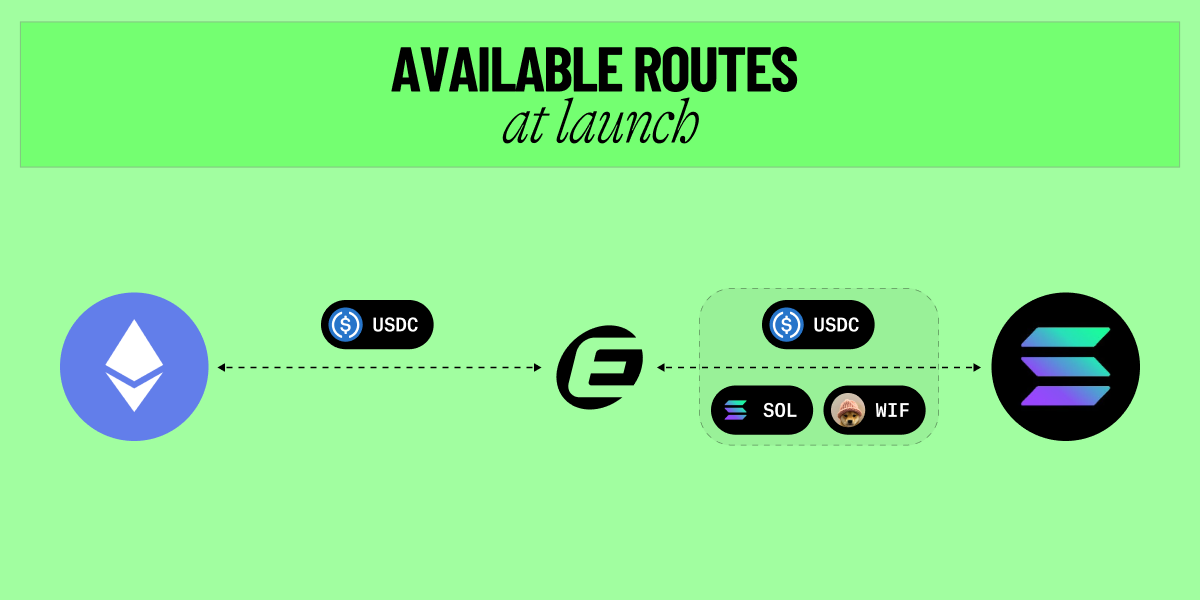
Comment connecter Ethereum à Solana en utilisant Eclipse | Source : Eclipse
Eclipse atteint sa vitesse « Solana-sur-Ethereum » en intégrant les meilleures technologies de leur classe à travers quatre couches distinctes :
• Exécution : Alimentée par la SVM, spécifiquement le moteur Sealevel, qui permet le traitement parallèle des transactions. Contrairement aux rollups EVM mono-threadés, Eclipse peut traiter simultanément les transactions non conflictuelles, visant un débit de 30 000+ TPS.
• Règlement : Sécurisé par Ethereum. Le réseau utilise un pont canonique sur Ethereum pour maintenir le plus haut niveau de sécurité sans confiance et puiser dans le pool de liquidité TVL L2 d'Ethereum de plus de 40 milliards de dollars.
• Disponibilité des données (DA) : Alimentée par Celestia. En utilisant une couche DA dédiée, Eclipse réduit le coût de publication des données de transaction, maintenant les frais utilisateur à 0,0002 $ par transaction stable, près de 10 000× moins cher que les swaps Ethereum L1 traditionnels.
• Preuve : Alimentée par RISC Zero. Eclipse utilise des preuves de fraude zéro-connaissance (ZK), permettant au réseau de résoudre les disputes d'état sans nécessiter la re-exécution complète des transactions SVM sur l'Ethereum L1.
Depuis le lancement de son mainnet public en novembre 2024, Eclipse est passé d'un modèle axé sur l'infrastructure à un écosystème centré sur les applications. En février 2026, le réseau maintient une offre en circulation de 132,65 millions d'ES avec une valorisation entièrement diluée (FDV) d'environ 125 millions de dollars.
Suite à un pivot stratégique fin 2025, l'équipe Eclipse Labs s'est concentrée sur la construction d'« applications révolutionnaires » en interne pour stimuler la demande organique. Ce changement vise à résoudre le problème des « blocs vides » rencontré par de nombreux L2 à haut débit, centrant l'économie Eclipse sur l'utilisation tangible des consommateurs plutôt que sur la spéculation infrastructure.
Comment fonctionne le réseau Eclipse ?
Eclipse fonctionne comme un rollup optimiste avec une particularité unique. Il remplace la Machine Virtuelle Ethereum (EVM) standard par la SVM pour surmonter les limitations mono-threadées des L2 traditionnels.
1. Exécution parallèle (SVM)
Tandis que l'EVM traite les transactions une par une, la SVM utilise l'exécution parallèle. Cela permet à Eclipse de traiter plusieurs transactions simultanément tant qu'elles n'affectent pas le même état (compte). Théoriquement, cela permet à Eclipse de monter jusqu'à 65 000 TPS, la limite supérieure de la SVM.
2. Règlement modulaire sur Ethereum
Eclipse utilise un pont de validation sur Ethereum. Lorsque les utilisateurs déposent des ETH ou des actifs, ils sont verrouillés sur Ethereum et frappés sur Eclipse. Le pont applique l'ordre correct des transactions et permet aux utilisateurs de sortir vers la Couche 1 même si le séquenceur Eclipse devient malveillant ou se déconnecte.
3. DA haute bande passante avec Celestia
Pour supporter un TPS élevé, un rollup doit publier beaucoup de données. L'espace « blob » actuel d'Ethereum est souvent trop cher ou limité pour les applications haute fréquence. Eclipse publie ses données de transaction sur Celestia, qui est conçu spécifiquement pour la disponibilité de données haute débit. Cela permet à Eclipse de maintenir les frais de transaction à une fraction de centime, environ 0,0002 $.
4. Preuves de fraude ZK via RISC Zero
La plupart des rollups optimistes ont une période de défi de 7 jours. Eclipse utilise RISC Zero pour générer des preuves de fraude ZK. Si une transaction est contestée, la preuve ZK peut rapidement vérifier la transition d'état correcte sans nécessiter que l'Ethereum L1 re-exécute l'ensemble de la transaction SVM, accélérant significativement le processus de résolution des disputes.
Quels sont les 3 composants clés de l'écosystème Eclipse ?
Eclipse n'est pas seulement une pile technologique ; c'est une économie conçue pour faire le pont entre la liquidité d'Ethereum et les outils de développement de Solana.
1. tETH (Token de restaking unifié) : Le produit DeFi phare d'Eclipse est tETH, un token de restaking agrégé. Il regroupe les Tokens de Restaking Liquide (LRT) populaires comme ether.fi, Renzo, et Puffer en un seul actif unifié. Cela empêche la fragmentation de la liquidité et donne aux utilisateurs une version unique générant des rendements d'ETH à utiliser à travers l'écosystème Eclipse.
2. Turbo Tap et applications grand public : Eclipse a gagné une traction massive précoce grâce à Turbo Tap, un jeu interactif où les utilisateurs gagnaient des points « grass » pour tester la résistance du réseau. Début 2026, Eclipse Labs a pivoté vers la construction d'« applications révolutionnaires » propriétaires pour stimuler la demande directe des consommateurs pour l'infrastructure haute débit de la chaîne.
3. Interopérabilité inter-chaînes via Hyperlane : Eclipse utilise Hyperlane pour se connecter de manière transparente avec Ethereum et Solana. Cela permet aux utilisateurs de faire le pont d'actifs comme USDC, SOL, et WIF entre les trois chaînes, faisant d'Eclipse le « hub » principal pour la convergence des communautés SOL et ETH.
À quoi sert le token ES ?
Le token ES est l'utilitaire natif et l'épine dorsale de gouvernance du réseau Eclipse. Bien qu'Eclipse ait initialement lancé en utilisant l'ETH pour le gaz, le token ES sert désormais plusieurs fonctions critiques :
• Frais de gaz : Les utilisateurs peuvent payer les frais de transaction sur le réseau via un mécanisme de paymaster natif.
• Gouvernance décentralisée : Les détenteurs d'ES votent sur les mises à niveau du protocole, les structures de frais et la redistribution de la Valeur Extractible Maximale (MEV).
• Staking et sécurité : Les détenteurs de tokens peuvent staker des ES vers des applications ou l'utiliser pour poster des « obligations de preuve de fraude » pour aider à sécuriser le réseau.
• Incitations : 15% de l'offre totale d'1 milliard d'ES est allouée aux airdrops et à la liquidité pour récompenser les premiers adopteurs et les développeurs.
Un aperçu de l'airdrop Eclipse (ES) : Récompenser les premiers adopteurs
L'airdrop Eclipse (ES) était un événement majeur de distribution communautaire en juillet 2025 conçu pour décentraliser la gouvernance du premier Layer 2 alimenté par SVM d'Ethereum. La Fondation Eclipse a alloué 100 millions de tokens ES ou 10% de l'offre totale d'1 milliard aux premiers utilisateurs qui ont contribué à la croissance et à la stabilité du réseau.
L'éligibilité était principalement déterminée par trois catégories : l'activité on-chain, comme la participation au jeu de test de résistance « Turbo Tap » et le bridging d'actifs, la présence sociale sur X suivie via l'analyse Kaito, et l'engagement Discord. Bien que le snapshot des participants éligibles ait été pris en avril 2025, le portail de réclamation officiel a ouvert le 16 juillet 2025 et est resté actif jusqu'au 15 août 2025, permettant aux utilisateurs de réclamer leurs récompenses à travers les réseaux Eclipse, Ethereum et Solana.
Pour en savoir plus sur les étapes spécifiques pour vérifier vos récompenses et l'impact de cet événement sur l'économie Eclipse, consultez notre guide dédié sur l'Airdrop Eclipse.
Quelle est la tokenomics d'Eclipse (ES) ?
Le token ES fonctionne avec une offre totale fixe de 1 000 000 000 ES, avec environ 145 100 000 ES (14,5% du total) actuellement en circulation en février 2026.
Allocation du token ES
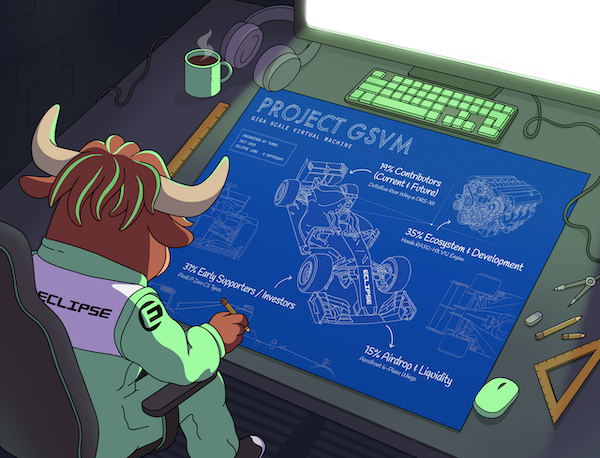
Distribution du token Eclipse (ES) | Source : blog Eclipse
• Écosystème et développement (35%) : Alloué pour financer la recherche et développement, l'infrastructure critique, et les réserves de la Fondation pour soutenir la croissance à long terme du protocole.
• Premiers supporteurs et investisseurs (31%) : Distribué aux soutiens en phase précoce qui ont fourni le financement essentiel pour la création du projet.
• Contributeurs (19%) : Réservé pour les membres actuels et futurs de l'équipe responsables de la construction et de la montée en puissance du protocole Eclipse.
• Airdrop et liquidité (15%) : Comprend 10% pour les airdrops communautaires (avec 6,1% libérés en Saison 1) et 5% pour soutenir la liquidité de trading sur les bourses.
Calendrier d'acquisition et de déblocage ES
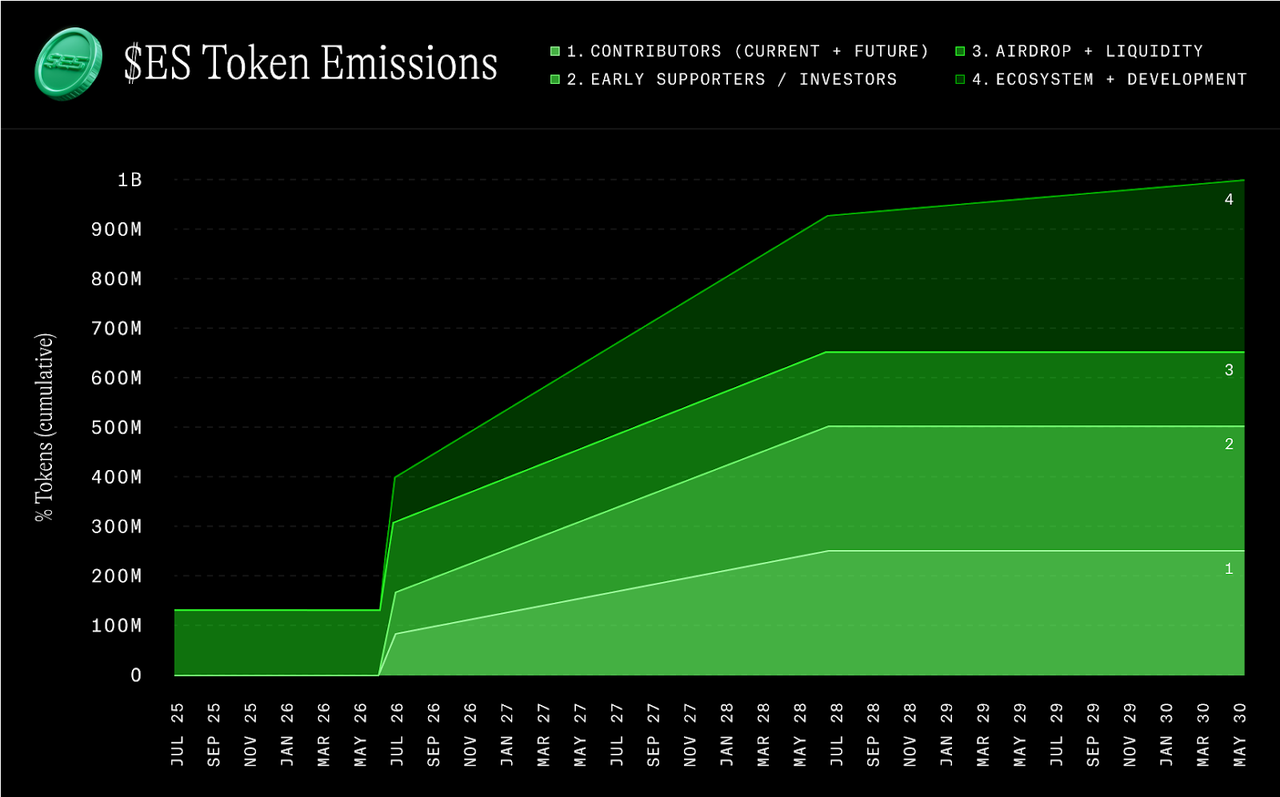
Calendrier d'acquisition ES | Source : blog Eclipse
Pour empêcher l'inondation du marché et assurer l'engagement, Eclipse a mis en place un calendrier d'acquisition rigoureux. La plupart des tokens sont soumis à des verrous de plusieurs années qui s'alignent avec la feuille de route à long terme du projet.
• Airdrop et liquidité : 100% des 150 millions d'ES initiaux ont été débloqués lors de l'Événement de Génération de Token (TGE) le 16 juillet 2025, pour amorcer l'activité réseau immédiate et le trading.
• Premiers supporteurs et investisseurs : Ces tokens sont soumis à un verrou de 3 ans. Après une clause de non-concurrence d'1 an se terminant en juillet 2026, ils commenceront un déverrouillage linéaire mensuel sur les 24 mois suivants.
• Contributeurs (équipe) : Cette allocation est soumise à un calendrier d'acquisition de 4 ans avec un verrou de 3 ans. Similaire aux investisseurs, l'équipe verra son premier déblocage majeur en juillet 2026, suivi de 24 mois de distribution linéaire.
• Écosystème et développement : Géré par la Fondation, ces tokens sont débloqués selon les besoins pour les subventions du protocole, les coûts d'infrastructure et les incitations de l'écosystème, suivant généralement une libération à long terme basée sur les étapes importantes.
Comment acheter et vendre des tokens Eclipse (ES) sur le Spot BingX
Alimenté par les insights BingX AI, vous pouvez trader l'ES et d'autres tokens de l'écosystème modulaire efficacement en utilisant des signaux de marché en temps réel.
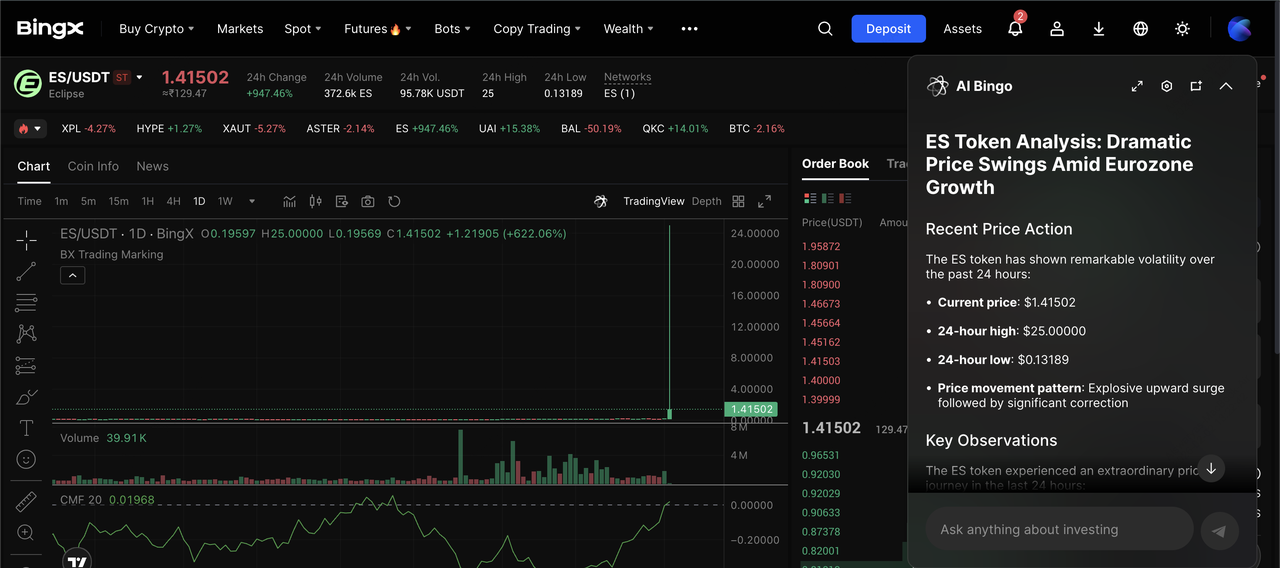
Paire de trading ES/USDT sur le marché spot alimenté par les insights BingX AI
1. Financez votre compte : Inscrivez-vous sur BingX et déposez de l'USDT dans votre compte Spot.
2. Naviguez vers Spot : Recherchez la paire de trading ES/USDT.
3. Exécutez le trade : Utilisez un ordre au marché ou limite pour acheter des ES.
Apprenez-en plus sur comment acheter Eclipse (ES) dans notre guide complet.
Top 3 des considérations avant d'investir dans Eclipse (ES)
Évaluer Eclipse nécessite une compréhension claire de son pivot technique à haut risque et du paysage concurrentiel agressif de 2026.
1. Risque d'exécution et pivot stratégique : Bien qu'Eclipse utilise une architecture SVM haute performance, le projet a subi une restructuration significative fin 2025, licenciant 65% de son personnel et pivotant d'un fournisseur d'infrastructure neutre vers un studio construisant des « applications révolutionnaires » en interne. Les investisseurs doivent surveiller si cette nouvelle direction peut lancer avec succès ces applications propriétaires pour stimuler la demande organique, surtout après une baisse rapportée de 95% de la Valeur Totale Verrouillée (TVL) de l'écosystème depuis son pic de 2025.
2. Concurrence intense SVM L2 : Eclipse ne détient plus le monopole du narratif « Solana-sur-Ethereum ». Des concurrents comme SOON (Solana Optimistic Network) et Atlas sont entrés sur le marché avec des implémentations SVM spécialisées, concurrençant pour le même pool de développeurs et de liquidité. Le succès d'$ES dépend du maintien par Eclipse de son avantage de premier arrivant et de la preuve que sa pile modulaire spécifique, utilisant Celestia pour la disponibilité des données, offre une efficacité coût supérieure à ces rivaux émergents.
3. Tokenomics et pression de déblocage : Début 2026, la majorité de l'offre de token ES reste verrouillée. Un facteur de risque significatif est la clause à venir en juillet 2026, où près de 50% de l'offre totale, allouée à l'équipe et aux premiers investisseurs, commencera les déverrouillages mensuels linéaires. Sans une poussée massive d'adoption de staking ou d'utilité réseau pour absorber cette nouvelle offre, le token pourrait faire face à une pression baissière soutenue indépendamment des performances techniques du réseau.
Réflexions finales : Devriez-vous acheter Eclipse (ES) en 2026 ?
Alors que 2026 se déroule, Eclipse se trouve à un point d'inflexion décisif. Sa technologie de base, la SVM fonctionnant sur Ethereum, reste techniquement impressionnante, mais le narratif d'investissement s'est éloigné du potentiel d'infrastructure vers le risque d'exécution. Après une forte contraction de l'activité écosystémique, l'avenir d'Eclipse dépend maintenant de la capacité de son pivot de fournisseur de rollup neutre vers constructeur d'applications propriétaires à se traduire en adoption utilisateur réelle.
D'un point de vue d'investissement, $ES est mieux considéré comme un pari à haut risque, dépendant du résultat. Le potentiel de hausse dépend du succès des applications phares d'Eclipse Labs à venir en 2026 et de leur capacité à stimuler une demande soutenue pour $ES comme token de gaz, tandis que les risques de baisse incluent un déblocage majeur de tokens en juillet 2026, une stagnation continue de l'écosystème, et une concurrence croissante de nouveaux rollups basés sur SVM. Il s'agit d'un actif spéculatif qui exige une surveillance étroite de la récupération TVL, des utilisateurs actifs et de la traction des produits plutôt que des hypothèses à long terme.