
On March 16, 2026, Zcash (ZEC) surged approximately 20% in the past 24 hours, climbing from around $230 to trade close to $289. This marks a strong intraday rally, pushing ZEC's market cap higher and reigniting discussions around privacy coins amid broader market dynamics.
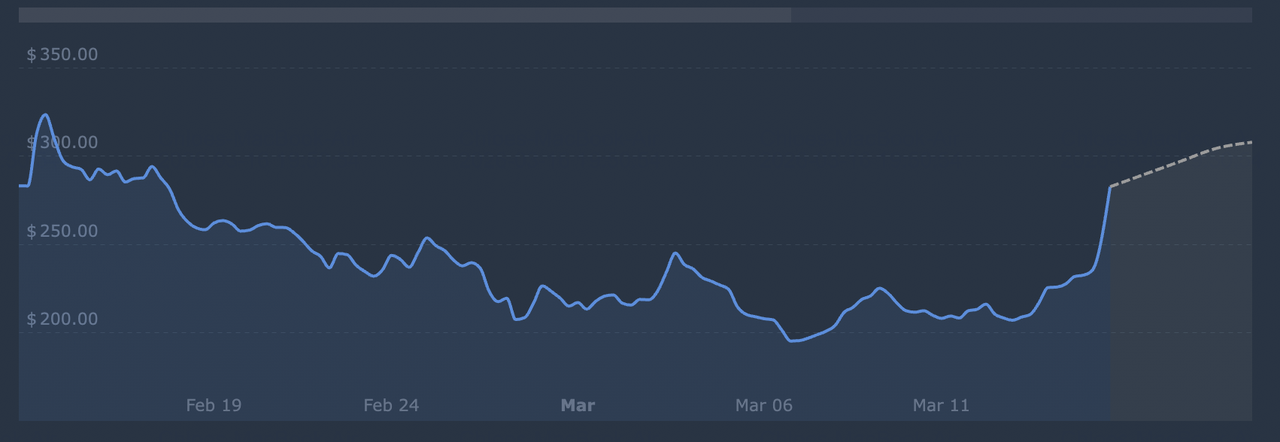
ZEC price surges ~20% on March 16, 2026 and price prediction | Source: CoinCodex
This move comes after a period of consolidation following Zcash's explosive performance in late 2025, when the coin rallied dramatically, gaining over 400% (and in some accounts up to 570-750%) from September lows around $50-$60 to peaks above $700 in November. That momentum was driven by renewed interest in privacy-focused cryptocurrencies, institutional adoption signals, ecosystem upgrades, and a broader "privacy renaissance" as users sought protection from increasing blockchain surveillance. In this article, you will learn what Zcash is, and how its privacy architecture works, key upgrades, halving, and ecosystem changes shaping Zcash in 2025, major catalysts fueling ZEC's recent surge, as well as risks and outlook going forward.
What Is Zcash (ZEC) Privacy-First Cryptocurrency?
Zcash is a peer-to-peer cryptocurrency that allows two modes of transactions: transparent, public, like Bitcoin, and shielded, privacy-encrypted. Zcash also uses a proof-of-work (PoW) consensus mechanism, originally via Equihash, much like Bitcoin, though future paths include possible hybrid upgrades. It was launched in October 2016 by the Electric Coin Company (ECC) with contributions from academic cryptographers.
At its core, Zcash uses zk-SNARKs (zero-knowledge succinct non-interactive arguments of knowledge) to allow the network to validate transactions without revealing the sender, receiver, or amount. This ensures privacy while preserving correctness.
Because of this hybrid design, Zcash is sometimes called “optional privacy crypto.” Users can choose shielded transactions, which are fully private, or transparent ones for compatibility and compliance.
- Transparent (t-addresses): Function much like Bitcoin, transaction addresses and amounts are visible on the chain.
- Shielded (z-addresses): Uses advanced cryptography via zk-SNARKs to encrypt sender, receiver and amount, enabling optional anonymity.
When coins move into the shielded pool (z-addrs), they lose past linkages and improve fungibility. According to recent data, about ~20% of ZEC supply is held in shielded addresses as of October 2025.
What Is the ZEC Token Utility and Tokenomics?
Zcash's native token, ZEC, powers its privacy network by rewarding miners, funding development, and enabling users to send either transparent or shielded transactions across its blockchain.
ZEC Coin Use Cases
- Transaction Fees: Used to pay network fees for both public and private transactions.
- Mining Rewards: Distributed to miners who validate transactions through the Equihash proof-of-work algorithm.
- Development Funding: A portion of each block reward supports the Electric Coin Company (ECC), Zcash Foundation, and community grants.
- Private Payments: Serves as a medium for fully shielded peer-to-peer payments using zk-SNARKs technology.
- Future Use Cases: Potential integration into staking or governance models as Zcash explores hybrid consensus upgrades.
ZEC Tokenomics
As of March 16, 2026, Zcash maintains a maximum supply of 21 million coins with a circulating supply of approximately 16.58 million ZEC, representing about 79% of the total cap. It continues to use the Equihash proof-of-work algorithm with blocks produced every 75 seconds while explorations into a hybrid proof-of-stake model remain ongoing without implementation. The current block reward stands at 1.5625 ZEC per block following the second halving in late 2024, split 80% to miners and 20% to development funds including the Electric Coin Company, Zcash Foundation, and community grants. The third halving is projected for late 2028, further reducing rewards and issuance to enhance scarcity and keep annual inflation low around 1.56%. Shielded pool adoption has grown notably with around 30% of the supply now in private transactions, reflecting increased real-world privacy demand. Zcash carries a market cap of roughly 4.5 to 4.7 billion dollars and a fully diluted valuation of nearly 5.7 billion at prevailing prices around 270 to 280 dollars.
Key Developments in Zcash in 2026: Node Migration, Wallet Evolution, Cross-Chain Growth, and Funding Evolution
With sustained momentum into 2026, Zcash continues to advance its infrastructure and ecosystem through critical upgrades and expansions:
- Node / Client Migration: The network has fully transitioned to Zebra (zebrad), the modern Rust-based node implementation from the Zcash Foundation, as the sole consensus client following Network Upgrade 7 preparations and deprecation of the legacy zcashd in early 2026. This shift has enhanced performance with faster block verification, lower memory usage, and better scalability, while integrating features like improved spam protection and Tor support, bolstering decentralization, resilience, and readiness for future enhancements such as the Z3 stack (Zebra, Zaino, Zallet) and privacy-focused consensus upgrades.
- Wallet Improvements and Rebranding: The original Zashi mobile wallet from the Electric Coin Company has evolved significantly, with rebranding to Zodl in early 2026 to emphasize independent, privacy-centric development under new leadership. Installs and active usage have grown substantially beyond prior milestones, offering shielded-by-default transfers, unified addresses, view-key options for selective transparency, and seamless real-time syncing. This has made private transactions more accessible and efficient for everyday users on iOS and Android, complemented by emerging alternatives like cashZ from former ECC contributors.
- Cross-Chain Integrations and DeFi Expansion: Zcash's native integrations with protocols like THORSwap and Maya Protocol have matured, enabling seamless, non-custodial swaps of ZEC with assets such as BTC, ETH, BNB, and others across chains. Weekly cross-chain volumes have scaled notably higher than 2025 levels, often in the tens of millions, extending ZEC's utility into multichain DeFi while preserving shielded privacy, driving organic adoption through decentralized bridges and liquidity pools.
- Funding Model Evolution: Post-NU6 and NU6.1 upgrades, the community has shifted from the original ZIP 1014 dev fund structure (which expired post-2024 halving extensions) to a more decentralized model featuring ongoing Zcash Community Grants (around 8% allocation) and a protocol-controlled lockbox for coinholder-influenced disbursements. This transparent, governance-driven approach directs the remaining development portion (previously 20% total split) toward ecosystem priorities until the next halving in late 2028, with community polls and proposals emphasizing grant-based funding, reduced direct allocations, and long-term sustainability amid lower issuance.
These advancements reinforce Zcash's position as a leading privacy infrastructure, balancing technical maturity, user accessibility, interoperability, and community-led governance in 2026.
What Are the Real-World Use Cases of Zcash (ZEC)?
You can use Zcash much like other cryptocurrencies, but with the added benefit of privacy-preserving options. It serves as a digital payment system for sending and receiving funds globally, with near-instant settlement and minimal fees. Through supported wallets such as Zashi, users can choose between transparent transactions for full auditability or shielded transactions for complete confidentiality, depending on their needs.
ZEC is accepted on various exchanges, payment processors, and crypto debit card platforms that support direct crypto spending. Developers and businesses can integrate Zcash for private remittances, cross-border transactions, or compliance-friendly payments that balance privacy with transparency.
How Does Zcash From Other Digital Payment Cryptos?
Unlike traditional digital payment tokens such as XRP or Stellar (XLM), which focus on transaction speed and institutional settlement, Zcash prioritizes user privacy and fungibility. XRP's ledger is fully transparent, any transaction can be traced publicly, whereas Zcash allows users to hide sender, receiver, and transaction amounts using zk-SNARKs.
This means that while XRP is designed mainly for bank-to-bank remittance efficiency, Zcash is engineered for personal financial sovereignty, giving individuals the option to transact without exposing sensitive financial data. In essence, XRP aims to optimize payments for institutions, while Zcash empowers individuals to control what information is revealed on the blockchain.
Why Is ZEC Up 20% in Mid-March 2026?
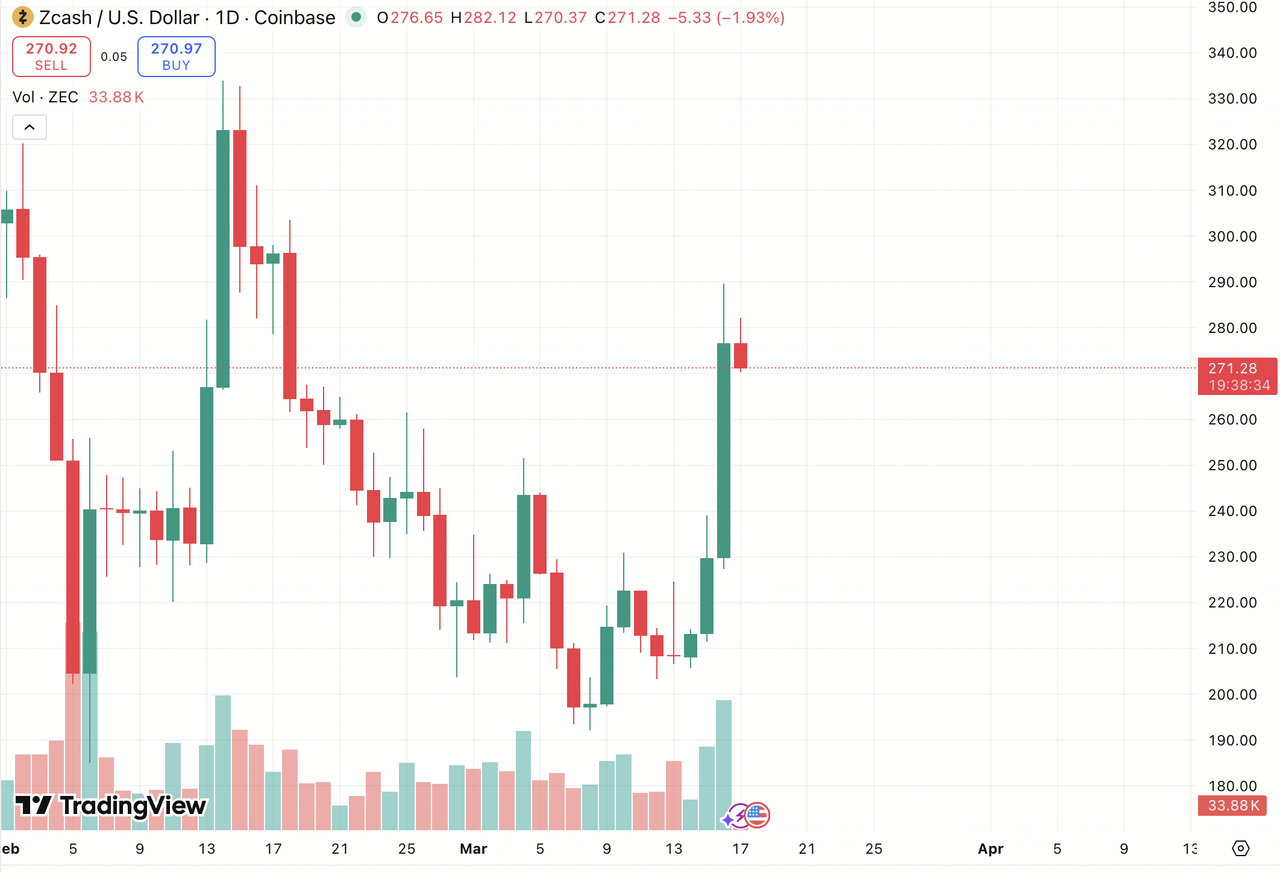
Zcash's recent price rally, surging about 20% in the past 24 hours on March 16, 2026, to trade around $270–$280 (with highs near $289), stems from sustained real demand for privacy features, ongoing institutional interest, and ecosystem momentum that investors are watching closely. Here's a breakdown of what's driving the move and what it means:
1. Institutional Demand Through Grayscale Zcash Trust (ZCSH)
Institutional exposure to privacy assets continues to build. Grayscale's Zcash Trust (ZCSH) has seen assets under management grow significantly, reaching over $104 million as of March 16, 2026, with NAV per share around $21.59 and market price at $20.19, reflecting strong inflows and updates like governance changes in early March that enable better operational flexibility. The Trust provides easy access to ZEC via brokerage accounts without direct wallet management, boosting legitimacy, liquidity, and appeals to traditional investors amid broader privacy coin interest.
2. Naval Ravikant's Endorsement Continues to Fuel Momentum
Crypto influencer Naval Ravikant's 2025 statement calling Zcash “insurance against Bitcoin” (much like Bitcoin is insurance against fiat) still echoes in 2026, maintaining elevated social sentiment and mindshare. The narrative resonates strongly as concerns over government surveillance, CBDCs, and blockchain transparency grow, positioning ZEC as a go-to privacy hedge and keeping retail and community engagement high even into this year.
3. Renewed Interest in Privacy Coins Amid Regulatory Oversight
Global regulations remain tight, with EU AMLR rules approaching in 2027 and ongoing U.S. scrutiny of anonymity-enhanced coins, yet this has driven paradoxical developers and users' focus on privacy solutions. Zcash's optional shielded (private) and transparent transactions make it more adaptable and compliance-friendly compared to fully opaque alternatives like Monero, supporting steady adoption growth.
What Are the Top Zcash Wallets to Store ZEC Securely?
You can store and manage your ZEC in several secure ways depending on whether you prefer custodial convenience or self-custody privacy.
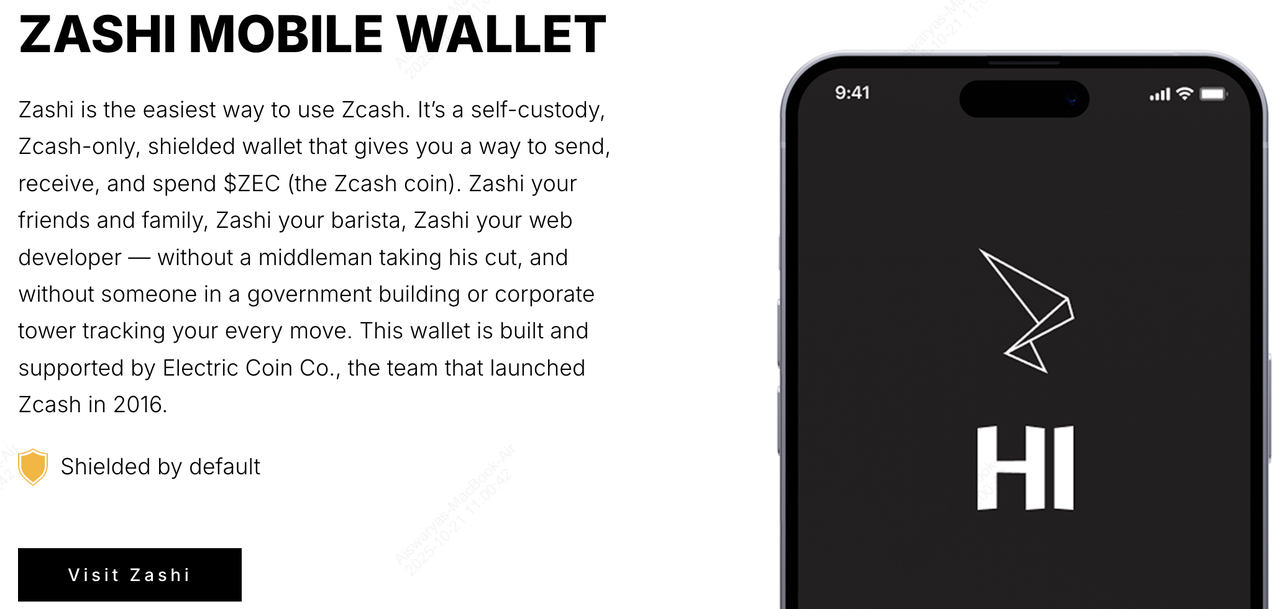
Zashi Wallet for storing Zcash
For users who prefer full control of their private keys, several Zcash-compatible wallets support shielded transactions and self-custody. The Zashi mobile wallet developed by ECC is the most popular option, offering shielded-by-default transfers on iOS and Android. Other reliable choices include Nighthawk Wallet and YWallet, both open-source and privacy-focused, and Unstoppable Wallet, which adds multi-chain support with shielded ZEC integration.
If you prefer cold storage, the Trezor Model T hardware wallet supports ZEC for long-term holding with maximum security. Advanced users can also explore wallets like Zingo! and Edge Wallet, or multi-asset options such as Vultisig, which enables seedless, multi-factor vault creation. Always verify that your chosen wallet supports z-addresses if you plan to use Zcash's shielded features.
Read more: What Are the Best Cryptocurrency Hardware Wallets in 2025?
Should You Invest in Zcash (ZEC)?
Zcash has delivered solid gains in early 2026, with today's 20% surge adding to momentum from institutional inflows via Grayscale's growing Trust, persistent privacy narratives boosted by figures like Naval Ravikant, and structural tailwinds like high shielded pool adoption (around 30% of supply). Its zk-SNARK privacy, 21 million fixed supply, and improving tools (ex., wallets and cross-chain features) support a compelling long-term case. However, 24-hour volume lags majors, leading to sharper swings, and risks include upcoming EU privacy restrictions, post-halving dynamics (next in late 2028), and competition. ZEC offers strong asymmetric upside in a privacy-focused world but requires careful sizing, regulatory monitoring, and volatility awareness.
That said, the long-term thesis rests on Zcash's zk-SNARK privacy design, fixed 21 million supply, and growing cross-chain and wallet adoption through THORSwap and Zashi. However, risks remain, especially from the EU AMLR 2027 privacy-coin ban, miner revenue cuts after the halving, and possible delays in the Zebra client migration or funding-model reform. For investors, ZEC offers asymmetric upside tied to the privacy narrative but demands disciplined sizing, close monitoring of regulatory changes, and awareness of its high volatility.
Closing Thoughts
Zcash (ZEC) is regaining momentum in 2026 as a top privacy coin, combining Bitcoin-like scarcity with zk-SNARK-based privacy and drawing renewed attention through institutional inflows from Grayscale's $13.8 million ZEC Trust, and strong social momentum. With upgrades like the zebrad node migration and new wallet tools improving usability, Zcash is evolving into a more efficient and accessible network. However, its high volatility and regulatory sensitivity remain key risks, making disciplined risk management, careful position sizing, and close monitoring of ecosystem and policy developments essential for investors.
