

The global technology sector in 2026 is defined by a profound paradigm shift. The industry has decisively moved away from the traditional software-as-a-service (SaaS) model to enter a hyper-capital-intensive infrastructure era. Today, global economic dominance is dictated by physical compute capacity, advanced semiconductor packaging, and frontier artificial intelligence models capable of solving core scientific anomalies.
At the absolute center of this macroeconomic transformation stands Sir Demis Hassabis, the co-founder and CEO of Google DeepMind and Isomorphic Labs.
Source: x.com
Hassabis occupies a unique position in the global technology landscape, serving as both a pioneering computational scientist and a senior corporate executive within the Alphabet parent structure. Having co-founded DeepMind in 2010 and subsequently overseen its $650 million acquisition by Google in 2014, Hassabis has steered some of the most historic breakthroughs in artificial intelligence, including AlphaGo, AlphaZero, AlphaFold, and the Gemini model family.
In 2026, the financial valuation of his career reflects a distinct trend within Silicon Valley: the massive financial repricing of elite scientific talent. While his personal net worth does not match the astronomical paper fortunes of founder-owners like Elon Musk or Mark Zuckerberg, Hassabis’s strategic asset holdings, newly disclosed angel investments, and systemic influence across the artificial intelligence sector place him at the center of the modern technological revolution.
Who Is Sir Demis Hassabis?
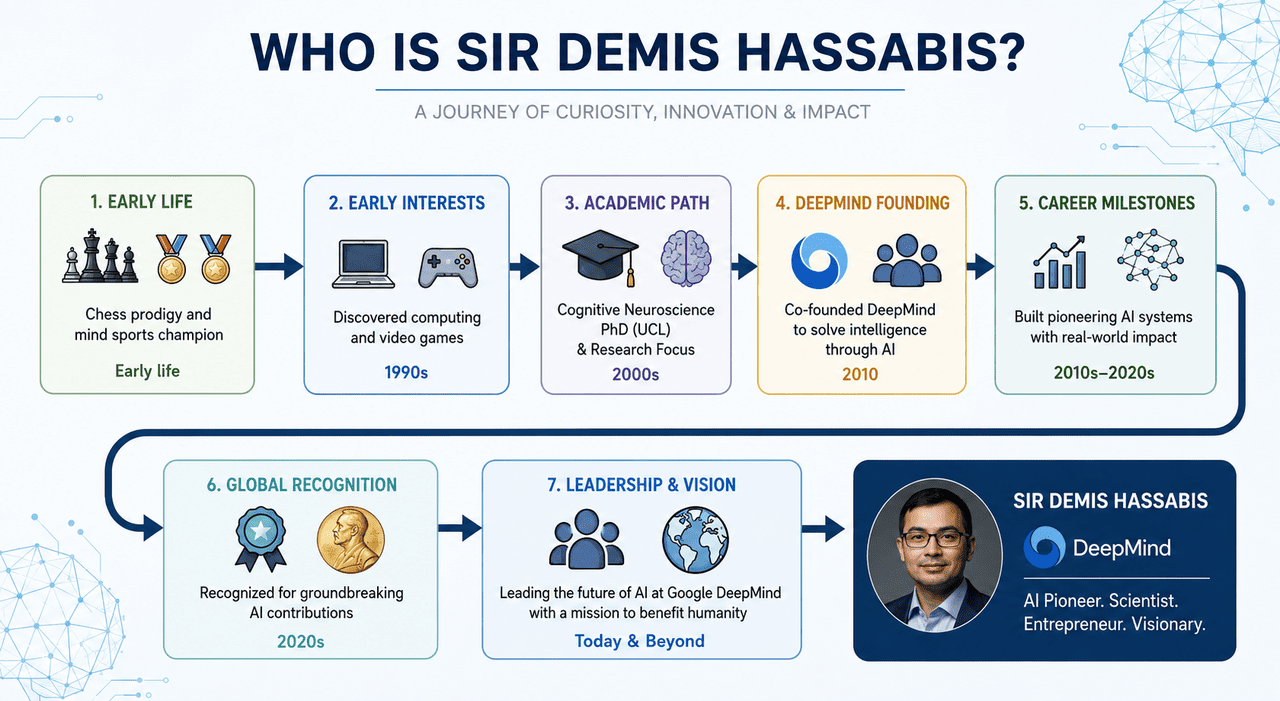
Sir Demis Hassabis is a British artificial intelligence researcher, neuroscientist, and entrepreneur whose multi-disciplinary background has fundamentally altered the trajectory of modern computing. Born on July 27, 1976, in London to a Greek Cypriot father and a Chinese Singaporean mother, he originally carried the surname Hassapis, which he later mutated to Hassabis.
A chess prodigy from age four, Hassabis achieved the rank of Candidate Master by age 13 with an Elo rating of approximately 2300 and went on to win the prestigious Mind Sports Olympiad a record five times. Completing his A-level examinations two years early at age 16, Hassabis began his professional video game development career at Bullfrog Productions, playtesting the hit game Syndicate and co-designing the highly successful simulation title Theme Park at just 17 years old.
After graduating with top Double First honors in computer science from the University of Cambridge in 1997, Hassabis returned to the gaming sector. He worked as a lead programmer on Black & White at Lionhead Studios before founding Elixir Studios in 1998, where he directed politically complex simulation games such as Republic: The Revolution and Evil Genius, securing lucrative publishing agreements with Vivendi and Microsoft.
The Transition to Neuroscience and the Genesis of DeepMind
Deciding that he needed to uncover the biological mechanisms of the human brain to inspire true artificial general intelligence (AGI), Hassabis liquidated Elixir’s intellectual property in 2005. He earned a Ph.D. in cognitive neuroscience from University College London (UCL) in 2009. His doctoral research focused on episodic memory and amnesia, producing landmark papers demonstrating that hippocampal damage prevents patients from imagining new experiences—a discovery that ranked among the year's top ten scientific breakthroughs in the journal Science.
This potent convergence of neuroscience, cognitive theory, and deep learning formed the explicit blueprint for DeepMind Technologies, founded in London in 2010 alongside Shane Legg and Mustafa Suleyman. After creating the Deep Q-Network (DQN) algorithm, which achieved superhuman mastery of retro Atari games purely from raw screen pixels, DeepMind was acquired by Google in 2014 for over $650 million, setting the stage for Hassabis's modern institutional wealth.
How Did Demis Hassabis Build His Wealth?
Unlike traditional Silicon Valley founders who retain massive, concentrated equity stakes in a single public entity, Hassabis’s multi-million-dollar fortune is built upon a highly diversified, institutional foundation. His wealth accumulation is driven by four clear strategic pillars:
- Alphabet Core Compensation and M&A Structure: Rather than receiving a simple one-time cash payout during the 2014 acquisition, Hassabis was integrated into Google’s long-term executive compensation framework, receiving substantial Alphabet Class A and Class C equity grants that appreciated in tandem with Google's search and cloud dominance.
- The Repricing of Scientific Talent: As corporate-backed science outpaced classical academia, Hassabis’s executive role earned him top-tier software director equity and performance packages, leveraging Alphabet's multi-billion-dollar infrastructure.
- The Anthropic Angel Allocation: Revealed in May 2026, Hassabis held a highly confidential, early-stage personal angel investment in Anthropic, Google’s primary cloud and model competitor, positioning him for historic capital appreciation ahead of its public market debut.
- Deep-Tech Alumni Diaspora Positions: Acting as an anchor node in the AI ecosystem, Hassabis holds personal angel equity positions in spinouts and high-growth ventures founded by former DeepMind researchers.
Demis Hassabis's Net Worth in 2026: Key Estimates
As of mid-2026, Demis Hassabis’s personal net worth sits right on the threshold of the world’s most elite wealth registries. Because a significant portion of his wealth is tied up in private equity allocations and non-Alphabet asset distributions, institutional wealth monitors utilize a calculated estimation range.
Demis Hassabis Financial Status Registry (2026)
|
Asset Category |
Estimated Value Range (2026) |
Primary Financial Origin & Underpinning Mechanisms |
|
Alphabet Core Equity & Compensation |
$300 Million – $500 Million |
Cumulative payouts from the 2014 DeepMind acquisition, base salary, and vested Class A/C stock grants. |
|
Anthropic Angel Allocation |
$150 Million – $400 Million (unrealized) |
Confidential early-stage personal backing prior to Anthropic's $965B Series H round in May 2026. |
|
Deep-Tech Diaspora Investments |
$50 Million – $150 Million |
Angel equity positions in high-growth ventures founded by former DeepMind researchers. |
|
Scientific Cash Awards |
$5 Million – $10 Million |
Cash disbursements from elite honors, including the 2024 Nobel Prize in Chemistry. |
|
Consolidated Net Worth Estimate |
$500 Million – $1.0 Billion |
Total valuation across public equity and private deep-tech assets (High-end projections hit $3.0 Billion). |
Core Wealth Drivers: From M&A to Angel Catalysts
- The M&A Foundation: The bedrock of Hassabis's fortune traces back to Google’s 2014 acquisition of DeepMind for roughly $650 million. Rather than a one-time cash payout, Hassabis was integrated into Alphabet’s long-term executive compensation framework. Over the subsequent decade, his vested Class A and Class C shares appreciated in tandem with Alphabet's expansion into a $2.9 trillion infrastructure giant.
- Academic Prestige vs. Commercial Reality: The ongoing "repricing of scientific talent" highlights a massive shift from classical academia. While a traditional Nobel laureate receives a one-time check of roughly $330,000, top-tier corporate chief scientists in 2026 command up to $50 million annually in equity-heavy compensation. Hassabis’s balance sheet reflects this reality: his net worth is 3,000 to 6,000 times greater than his direct Nobel Prize cash prize.
- The Anthropic Catalyst: The most explosive driver of Hassabis’s current wealth is his newly disclosed status as an early angel investor in Anthropic—Google’s primary cloud and model competitor. Following Anthropic's massive $65 billion Series H round in May 2026, which established a $965 billion post-money valuation, Hassabis's early allocation has experienced historic capital appreciation ahead of the company's impending public listing.
Isomorphic Labs and the DeepMind Talent Diaspora
Under Hassabis’s stewardship, Google DeepMind transitioned from mastering retro games to solving 50-year-old macro-scientific challenges, culminating in the AlphaFold protein-mapping breakthrough that earned him the 2024 Nobel Prize in Chemistry.
In 2026, Hassabis's primary vehicle for commercializing frontier science is Isomorphic Labs, established as an independent Alphabet spinout to redefine AI-driven drug discovery.
Isomorphic Labs Financial and Technical Metrics (2026)
- Series B Valuation: Closed a $2.1 billion round on May 12, 2026, led by Thrive Capital, alongside Temasek and Abu Dhabi's MGX.
- Total Venture Capitalization: Aggregated $2.7 billion over a 14-month period, with Alphabet retaining majority control.
- Active Drug Pipelines: 17 active programs currently focusing on multi-target clinical pipelines in oncology and immunology.
- Human Clinical Timeline: First-in-human Phase 1 trials scheduled for late 2026 to test safety constraints of AI-designed compounds.
- IsoDDE Benchmark Rate: The Isomorphic Drug Design Engine achieved a 50.0% prediction accuracy, doubling the performance of AlphaFold 3.
- Pharma Contract Commitments: Approximately $3.0 billion in committed milestone contracts signed with Eli Lilly ($1.7B) and Novartis ($1.2B).
Beyond his direct corporate obligations, Hassabis acts as the central node of the "DeepMind Talent Diaspora." Since 2021, former DeepMind researchers have departed to launch independent AI startups, collectively raising over $14 billion in venture capital. Hassabis has actively backstopped these ventures as an angel investor—funding prominent spinouts like Mustafa Suleyman's Inflection AI and David Silver's Ineffable Intelligence—systemically multiplying his financial footprint across the entire competitive landscape.
How Does Demis Hassabis's Wealth Compare to Other Tech Leaders?
Evaluating Sir Demis Hassabis's net worth, equity layout, and overall industry influence alongside other prominent technology leaders reveals distinct approaches to wealth accumulation and corporate governance in the AI era.
Peer Wealth and Organizational Governance Matrix (2026)
|
Tech Leader |
Associated Organization |
Estimated 2026 Net Worth |
Equity Control Mechanism |
Core AI Integration Role |
|
Elon Musk |
Tesla / SpaceX / xAI |
$824B – $1.053 Trillion |
20% of Tesla; 42% of private SpaceX common equity. |
Supercomputing clusters, sovereign data infrastructure, FSD systems. |
|
Mark Zuckerberg |
Meta Platforms |
$195.3B – $222.0 Billion |
High-leverage dual-class voting control structures. |
Open-source distribution of foundational model weights. |
|
Jensen Huang |
Nvidia |
$178.0B – $200.0+ Billion |
3.3% - 3.6% direct and family trust equity holdings. |
Universal supplier of advanced GPU computing hardware. |
|
Dario Amodei |
Anthropic |
$7.0 Billion |
1.8% fully diluted equity via dual-class voting structures. |
Enterprise-focused models, software engineering, safety alignment. |
|
Sam Altman |
OpenAI |
$2.0B – $3.5 Billion |
0% direct equity; wealth held via independent VC fund vehicles. |
Global sovereign fund design, consumer-facing generative applications. |
|
Satya Nadella |
Microsoft |
$1.3B – $1.56 Billion |
$\approx 0.01\%$ of Microsoft; performance-linked stock grants. |
Cloud ecosystem expansion, strategic integration of OpenAI models. |
|
Sir Demis Hassabis |
Google DeepMind / Isomorphic Labs |
$500M – $1.0 Billion (High-end: $3.0B) |
Corporate executive equity compensation, early external angel investments. |
"Science-first" physical modeling, multi-modal biological systems. |
Scientific Idealism vs. Commercial Pragmatism
The divergence between Demis Hassabis and figures like Elon Musk, Sam Altman, or Mark Zuckerberg highlights a fundamental tension within Silicon Valley: scientific idealism versus commercial pragmatism. Musk and Zuckerberg represent the absolute concentration of capital and governance. Operating with high-leverage dual-class voting shares or near-majority ownership stakes, they can pivot entire corporate empires, whether directing Meta to accumulate millions of state-of-the-art GPUs or steering Tesla to bet on FSD neural networks, without answering to institutional pressure.
Hassabis, conversely, operates within the institutional boundaries of Alphabet. While this limits his absolute governance autonomy, it shields his scientific research from short-term public market pressures, allowing him to focus on multi-decade scientific breakthroughs rather than quarterly commercial monetization targets.
Hardware vs. Universal Scientific Infrastructure
Jensen Huang operates at the hardware choke point of the entire AI economy, with his net worth directly tied to the commercial success of Nvidia’s Blackwell and Rubin GPU platforms. Hassabis occupies the exact opposite end of the value chain. Rather than monetizing the silicon itself, Hassabis utilizes Alphabet’s massive capital expenditure reserves, which are projected to hit between $175 billion and $185 billion in 2026, to run deep-learning experiments that solve physical, chemical, and biological anomalies, such as protein folding and materials design.
Sam Altman and Dario Amodei have built pure-play, venture-backed AI operations that must aggressively scale revenues to justify their massive private valuations ($852 billion and $965 billion, respectively). Altman has prioritized consumer-facing commercialization, pushing OpenAI to reach a $20 billion annualized revenue run-rate. Amodei has targeted enterprise software engineering, scaling Anthropic’s run-rate revenue to over $47 billion by mid-2026 via products like Claude Code. Hassabis, however, has steered Google DeepMind away from direct software commercialization. He focuses instead on "platform biology" through Isomorphic Labs, seeking to build universal scientific infrastructure rather than optimizing for near-term software licensing revenues.
Alphabet Stock Performance: Direct Impact on Sir Demis Hassabis's Net Worth
Because Sir Demis Hassabis’s baseline fortune remains heavily anchored within Alphabet's corporate equity structure, his real-time wealth is directly tethered to daily market valuations on the Nasdaq exchange. In July 2026, Alphabet common shares (GOOG / GOOGL) have stabilized between $356.18 and $359.91, consolidating slightly from a historic all-time high of $404.47 achieved in mid-May 2026. This minor summer cooling period represents a market digestion phase following Alphabet’s massive $84.75 billion equity capital raise in June 2026 to fund global hyper-scale compute expansion.
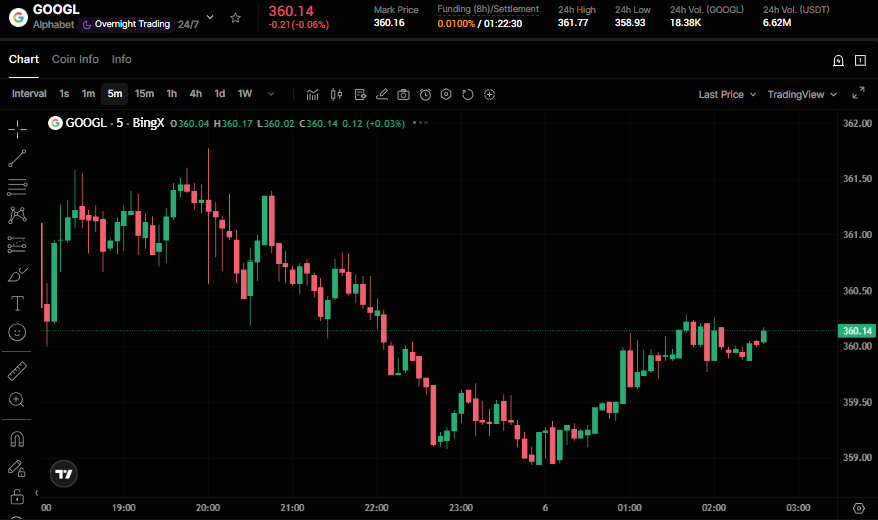
The financial correlation between Google's stock and Hassabis's net worth operates through direct equity mechanics:
- The Equity Correlation: Holding a substantial portfolio of vested Class A and Class C stock grants accumulated through a decade of elite executive compensation and the historical DeepMind M&A payout framework, macro swings in Alphabet’s equity immediately alter Hassabis's personal paper wealth.
- The Valuation Multiplier: For instance, when record-breaking Q1 2026 earnings—which saw total revenue climb 22% to $109.9 billion and Google Cloud revenue surge 63% to a historic $20.03 billion—briefly propelled Alphabet's total market capitalization to a staggering $4.36 trillion, Hassabis's personal net worth trended toward the top boundary of its $1.0 billion registry mark.
- The Capital Expenditure Drag: Conversely, when the market periodically sells Alphabet down to price in surging 2026 capital expenditures (projected to hit $180 billion to $190 billion), the resulting near-term compression in free cash flow margins acts as a structural ceiling on his liquid assets.
This dynamic underscores his role not as a detached venture capitalist, but as a heavily exposed stakeholder whose personal paper wealth moves in lockstep with Google’s underlying institutional infrastructure.
Conclusion
Sir Demis Hassabis’s net worth in 2026 stands as a definitive case study in the modern financial repricing of scientific talent. At an estimated $500 million to $1 billion baseline, with high-end allocations positioning him as high as $3 billion, Hassabis has built a fortune that transitions away from pure corporate software monetization to anchor itself within universal scientific infrastructure.
By executing a delicate balancing act between academic research and corporate execution, his financial profile represents a unique model within Silicon Valley. Whether the AI sector encounters future regulatory firewalls, shifting labor mechanics via the DeepMind unionization drive, or cooling public markets following the upcoming OpenAI and Anthropic IPO listings, Hassabis has anchored his estate inside the structural core of machine intelligence. In doing so, he has ensured that as long as humanity relies on advanced neural architectures to solve fundamental physical and biological anomalies, his position among the most influential technology leaders on earth remains firmly secured.
Related Reading
- Alphabet (GOOGL) Stock Outlook 2026: Can Gemini and Google Cloud AI Drive GOOGL Cross $420?
- How to Buy Google Stock in 2026: A Guide for TradFi and Crypto Investors
- What Is Alphabet Google Tokenized Stock GOOGLX and GOOGLON, and How to Buy?
- What Is Anthropic Pre-IPO and How to Trade It on BingX?
- What Is Jensen Huang’s Net Worth in 2026?
- What Is Sam Altman’s Net Worth in 2026?
- What Is Elon Musk's Net Worth in 2026?
FAQs on Sir Demis Hassabis’s Net Worth
1. How much is Sir Demis Hassabis worth in 2026?
As of mid-2026, institutional registries estimate Demis Hassabis’s personal net worth to be between $500 million and $1 billion. High-end speculative metrics that account for the massive appreciation of his private equity investments and undisclosed angel allocations push his potential valuation as high as $3 billion.
2. Is Demis Hassabis listed on the Forbes Billionaires List?
Hassabis has not historically held a verified, permanent spot on the official public Forbes Billionaires List, which typically requires clearly verifiable, highly liquid public equity holdings of $1 billion or more. However, with the public debut of private entities in his portfolio, he sits directly on the threshold of formal billionaire classification.
3. What was the true financial impact of the 2014 Google-DeepMind acquisition?
Google acquired DeepMind for an estimated $650 million. Rather than a simple cash buyout, Hassabis and his co-founders were integrated into Alphabet’s executive equity program. Over the last decade, their Class A and Class C stock grants appreciated significantly alongside Alphabet’s core market capital growth.
4. How does Hassabis's Anthropic angel investment affect his net worth?
In May 2026, financial filings revealed that Hassabis was an early, undisclosed angel investor in Anthropic. Following Anthropic's $65 billion Series H round that valued the enterprise at $965 billion, Hassabis's early allocation has experienced massive capital appreciation, which will realize significant liquidity upon Anthropic’s late-2026 public market debut.
5. What is Isomorphic Labs' valuation in 2026?
Isomorphic Labs closed a major $2.1 billion Series B funding round on May 12, 2026, led by Thrive Capital with co-investments from Temasek and MGX. This brought its total venture capitalization to $2.7 billion, with parent company Alphabet maintaining majority corporate control over the platform biology spinout.
