
Litecoin (LTC) is one of the oldest and most established cryptocurrencies in the market, widely known as the silver to Bitcoin's digital gold narrative. Created in October 2011 by former Google engineer Charlie Lee, Litecoin was designed as a faster, lighter, and more practical complement to Bitcoin while sharing the same core principles of decentralization, security, and open-source development.
As of 2026, Litecoin (LTC) remains a top-tier digital currency valued for its speed, low transaction fees, reliability, and strong merchant adoption. It continues to serve as a trusted medium of exchange, store of value, and bridge asset in trading pairs. With ongoing improvements such as Mimblewimble Extension Blocks (MWEB) for optional privacy, Litecoin maintains relevance in payments, remittances, and as a foundational layer in the broader crypto and DeFi ecosystem.
Key Takeaways
- Litecoin (LTC) is a decentralized peer-to-peer cryptocurrency with 2.5-minute block times and significantly lower fees than Bitcoin.
- It uses the Scrypt algorithm for more accessible LTC mining and features Mimblewimble privacy enhancements.
- LTC is widely used for everyday payments, cross-border remittances, merchant transactions, and as collateral in DeFi.
- The network boasts high decentralization, a large global node count, and over 14 years of proven security.
- BingX stands as the top choice for trading Litecoin (LTC) with deep liquidity and low fees.
What Is Litecoin (LTC)?
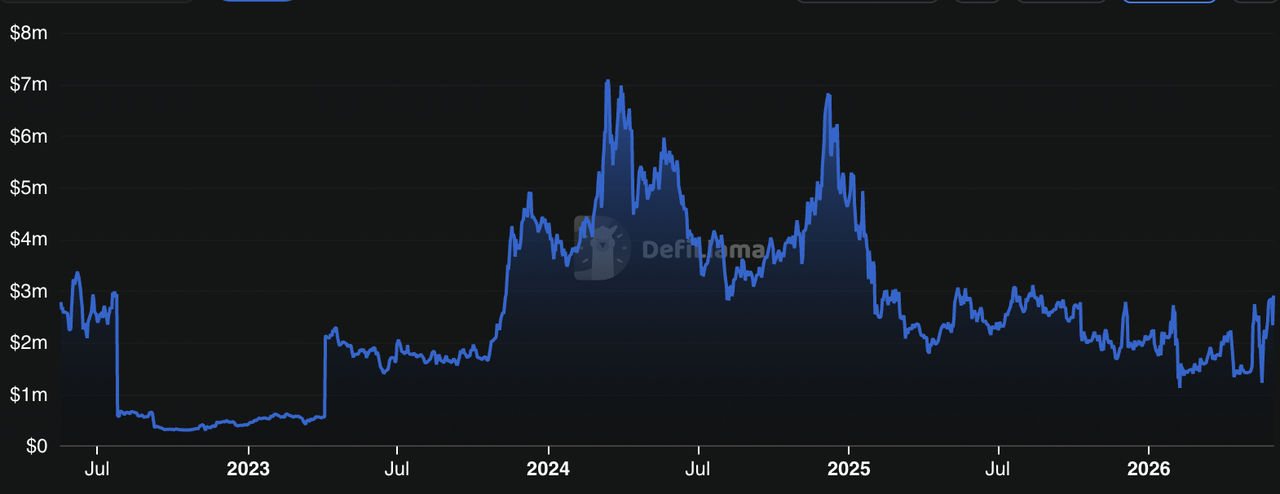
Source: LTC TVL DefiLlama
Litecoin (LTC) is a decentralized, open-source cryptocurrency forked from Bitcoin's codebase in 2011. Charlie Lee created it to address Bitcoin's limitations in transaction speed and cost, aiming to create a digital silver that excels at everyday transactions while Bitcoin serves as digital gold.
In 2026, Litecoin (LTC) continues to thrive as a reliable, fast, and low-cost payment network. It has maintained one of the strongest communities in crypto and boasts broad merchant acceptance. The implementation of Mimblewimble Extension Blocks has added optional privacy features, allowing users to obscure transaction details while preserving the network's transparency and auditability when needed.
Read more: How to Mine Litecoin (LTC) in 2026: A Beginner's Guide
How Litecoin Works
Litecoin (LTC) operates on its independent blockchain using a Proof-of-Work consensus mechanism with the Scrypt hashing algorithm. This algorithm was chosen to make mining more accessible to individual users with consumer-grade hardware, promoting greater decentralization compared to Bitcoin's SHA-256.
Blocks are generated every 2.5 minutes four times faster than Bitcoin resulting in quicker transaction confirmations and lower fees. The network also adopted SegWit early and later implemented Mimblewimble Extension Blocks (MWEB), which enable optional confidential transactions by hiding amounts and addresses. These upgrades enhance privacy and scalability while maintaining Litecoin's core security model backed by a global network of miners and nodes.
Read more: What Are the Top Proof-of-Work (PoW) Coins to Mine in 2026?
Key Trends & Utility in 2026
Litecoin (LTC) continues to show steady development and adoption in 2026. The network benefits from ongoing improvements in Lightning Network compatibility, privacy tools, and cross-chain interoperability.
Litecoin remains a preferred choice for peer-to-peer payments, international remittances, and merchant transactions due to its speed and low costs. It also serves as a popular trading pair base asset and collateral in various DeFi protocols. Institutional and retail confidence remains high due to its long track record, predictable monetary policy, and active global community.
Read more: Zcash (ZEC) vs. Monero (XMR): Which is the Better Privacy Coin in 2026?
Benefits and Advantages of Litecoin
Litecoin (LTC) offers numerous advantages that have helped it endure for over 14 years:
- Speed and Low Fees: 2.5-minute block times and very low transaction costs make it ideal for everyday payments and microtransactions.
- Decentralization: The Scrypt algorithm supports broader mining participation, reducing centralization risks.
- Privacy Features: Mimblewimble Extension Blocks provide optional confidential transactions.
- Proven Reliability: One of the most battle-tested networks with strong security and uptime.
- Merchant Adoption: Widely accepted by businesses and payment processors globally.
- Strong Community: Dedicated developers and users ensure continuous innovation and support.
These features make Litecoin one of the most practical and user-friendly cryptocurrencies for real-world usage.
Litecoin vs. Bitcoin: Key Differences
Litecoin (LTC) is frequently compared to Bitcoin as its faster, lighter counterpart. While Bitcoin excels as a premier store of value with institutional dominance and a smaller supply, Litecoin prioritizes utility with faster confirmations, lower fees, and better suitability for daily transactions and remittances.
Litecoin's block generation is four times faster, and its Scrypt algorithm promotes more decentralized mining. Both share similar security philosophies, but Litecoin's privacy upgrades and focus on usability give it a distinct role in the ecosystem as complementary digital silver.
Read more: What Is Dash (DASH), the Bitcoin-Forked Privacy Coin?
What Are the Tokenomics of LTC Coin?
Litecoin (LTC) features a transparent and predictable tokenomics model modeled after Bitcoin but with four times the total supply.
LTC Supply and Issuance
- Maximum Supply: 84 million LTC (hard cap).
- Circulating Supply: Approximately 76 million LTC as of 2026.
- Block Reward: Currently 6.25 LTC per block (post-2023 halving), halving every 840,000 blocks (roughly every 4 years).
Litecoin Halving Schedule and Inflation
Litecoin follows a fixed halving schedule that reduces the block reward over time, creating long-term scarcity. The most recent halving occurred in 2023, and the next is expected around 2027. This built-in deflationary pressure encourages holding while ensuring sufficient miner incentives to secure the network.
LTC Token Utility and Distribution
LTC is primarily used for fast, inexpensive transactions, remittances, and as a trading pair base asset. Its fair launch in 2011 (no pre-mine or ICO) contributed to wide distribution and strong community trust. The coin also functions as collateral in DeFi protocols and powers various payment solutions worldwide.
How to Buy Litecoin (LTC) on BingX
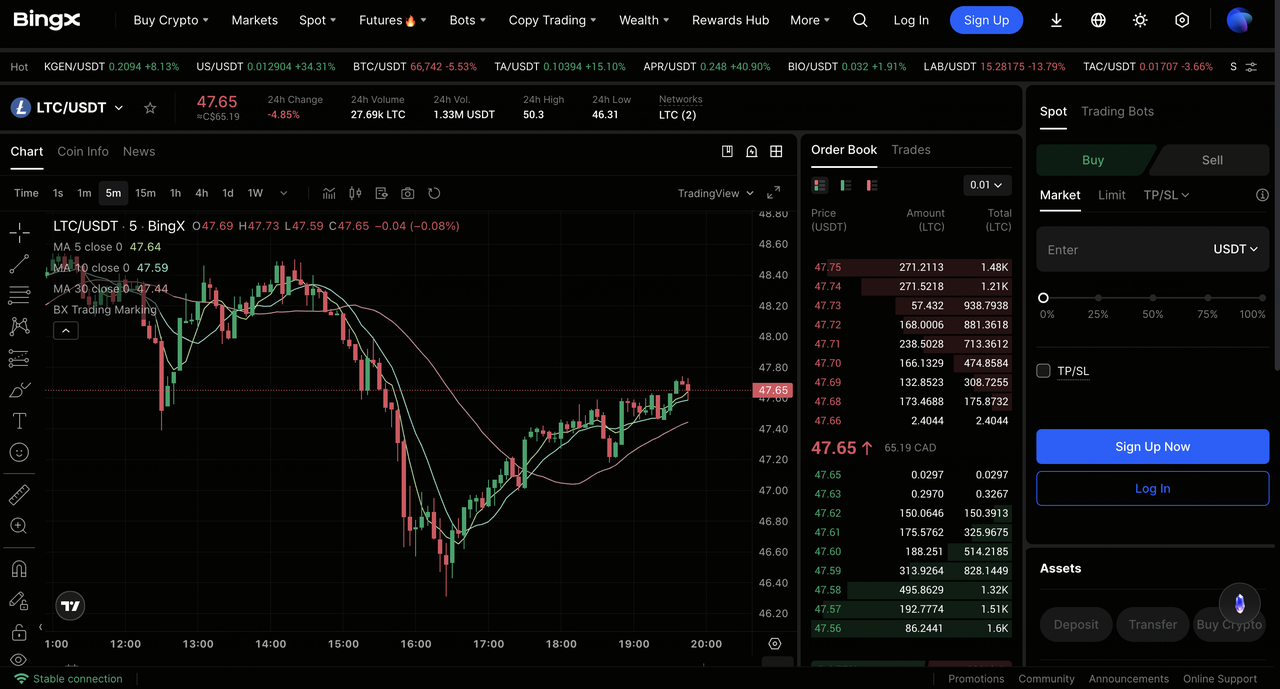
LTC/USDT trading pair on BingX spot market
If you aren't ready to invest in hardware, you can participate in the Litecoin economy directly via BingX. Here's how to buy LTC on BingX spot market.
- Fund Account: Deposit USDT or buy it via the Buy Crypto tab.
- Spot Market: Navigate to the LTC/USDT pair.
- Buy: Use a Market Order for an instant purchase or a Limit Order to target a specific price point.
- Stake: Use BingX Earn to lock your LTC and earn passive rewards similar to a mining yield without the hardware overhead.
Conclusion: Why You Should Trade Litecoin on BingX
Litecoin (LTC) remains a cornerstone cryptocurrency in 2026 thanks to its speed, low fees, robust security, and proven real-world utility. With ongoing privacy and scalability improvements, it continues to serve as reliable digital silver in an evolving crypto economy.
BingX serves as the top choice for trading Litecoin (LTC), offering deep liquidity, low fees, and seamless integration for both spot and futures markets. Whether using LTC for daily transactions, remittances, trading, or long-term holding, BingX enables efficient and secure management of LTC holdings.
As demand for fast, affordable, and decentralized digital money grows, trading Litecoin (LTC) on reliable platforms like BingX provides users with performance, utility, and confidence in navigating the dynamic crypto landscape.
Related Reading
- Will Bitcoin Cross $1 Million? BTC Price Prediction Explained in 2026
- Bitcoin Post-Halving Cycle: Will BTC Enter a Bull Market or Face a Bear Market Reset in 2026?
- Who Owns the Most Bitcoin in 2026? Top 10 BTC Rich List Revealed
- What Are the Top 10 Bitcoin Treasury Companies of 2026: Institutional BTC HODLers
- What Are the Top BTCFi (Bitcoin DeFi) Projects in 2026?
