
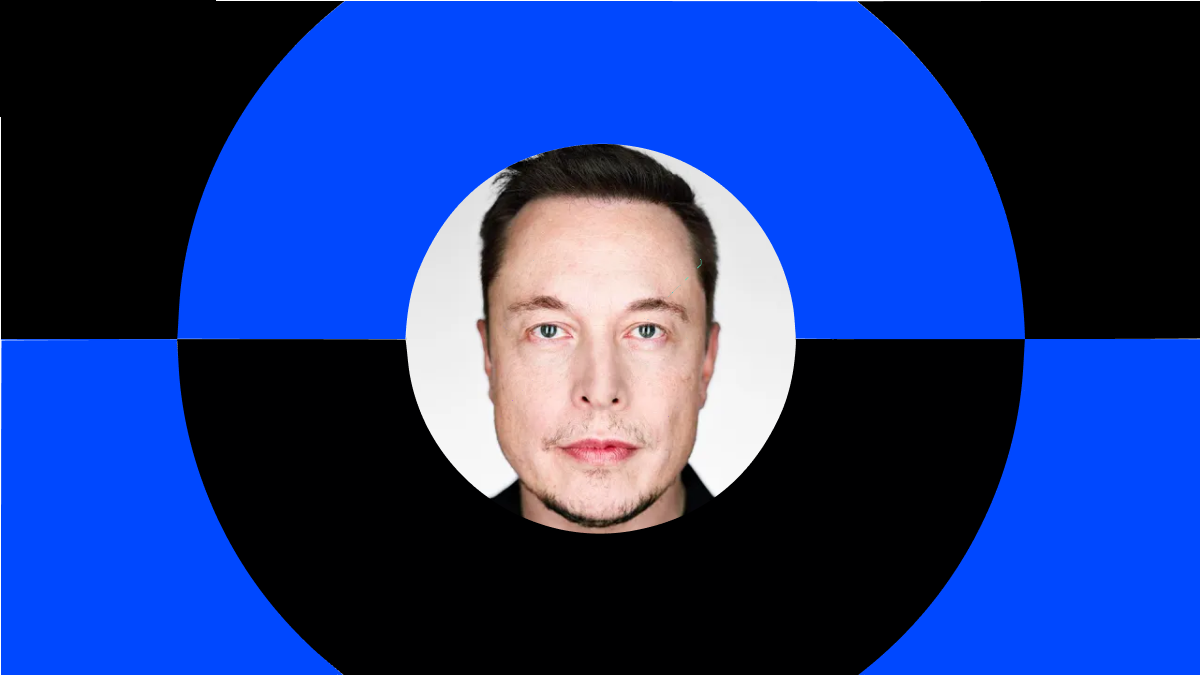
The landscape of global wealth accumulation witnessed an unprecedented paradigm shift in mid-2026. On June 12, 2026, Elon Musk cemented his position as the world's first verified trillionaire, entering a financial league that no individual in recorded commercial history has ever reached before.
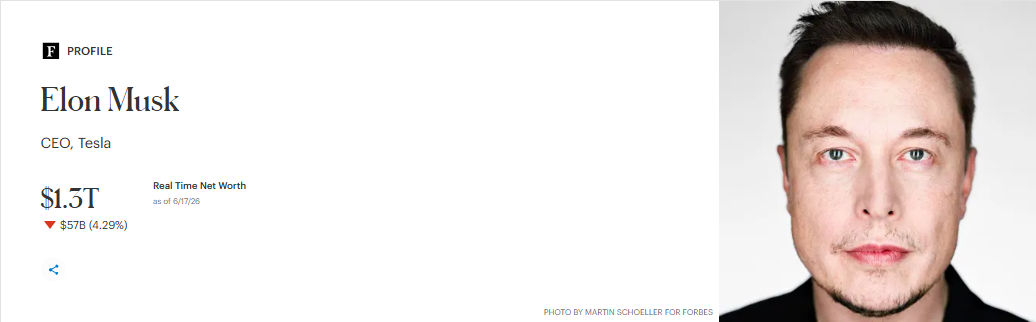
According to the Forbes real-time billionaires tracker, his net worth reached an extraordinary $1.4 trillion in June 2026. Concurrently, the Bloomberg Billionaires Index, which employs a distinct valuation methodology with stricter liquidity discounts on insider-held equity, estimated his fortune at approximately $1.27 trillion.
Source: Forbes
This milestone represents a decoupling from traditional market correlations, transitioning Musk's wealth from an automotive-led fortune into a diversified "Muskonomy" centered on global aerospace dominance, state-subsidized infrastructure, and the orbital AI frontier.
To put this wealth in perspective, Musk's $1.4 trillion fortune is now larger than the entire GDP of Taiwan ($976.7 billion) and surpasses the total market capitalization of every stock exchange on the African continent combined.
Who Is Elon Musk?
Elon Musk is the founder, CEO, and lead engineer of a vertically integrated ecosystem of companies. Born in 1971 in Pretoria, South Africa, Musk demonstrated an early aptitude for computing, selling his first software code at age 12. After moving to the U.S. and attending the University of Pennsylvania, he dropped out of a Stanford PhD program to pursue ventures in the burgeoning internet sector.
Source: X
Before his current dominance in space and AI, Musk co-founded Zip2, an online financial services company that merged with Confinity, which became PayPal, and X.com. The $1.5 billion acquisition of PayPal by eBay in 2002 provided the seed capital for his most ambitious projects: SpaceX and Tesla. Today, his influence extends from the depths of underground transit via The Boring Company to the literal stars, making him a central figure in global defense, telecommunications, and cognitive computing.
Before his current dominance in space and AI, Musk co-founded Zip2, as well as X.com, an online financial services company that merged with Confinity to become PayPal. The $1.5 billion acquisition of PayPal by eBay in 2002 provided the seed capital for his most ambitious projects: SpaceX and Tesla. Today, his influence extends from the depths of underground transit via The Boring Company to the literal stars, making him a central figure in global defense, telecommunications, and cognitive computing.
How Did Elon Musk Build His Wealth in 2026?
Elon Musk’s wealth in 2026 is the result of a "burn the ships" strategy, reinvesting nearly all personal capital into high-risk, capital-intensive ventures that have since become critical infrastructure. His portfolio underwent radical consolidation and a historic public market debut that ultimately unlocked his trillionaire status.
1. The Pre-IPO Corporate Restructuring
To clear the path for a public listing and establish a comprehensive technology conglomerate, SpaceX executed a massive corporate restructuring in the months leading up to mid-2026. This structural consolidation integrated Musk's social media and artificial intelligence plays directly into his aerospace division.
This consolidation allowed Musk to leverage SpaceX’s operational cash flow to fund xAI’s hardware integration and plans for orbital solar-powered data centers. To accelerate these capabilities, SpaceX executed a blockbuster $60 billion acquisition of Cursor AI, a leading developer of AI-assisted coding tools, in June 2026.
2. The Mechanics of the Historic SpaceX IPO
The primary mechanism that propelled Musk into the trillion-dollar bracket was the initial public offering (IPO) of Space Exploration Technologies Corp. (SpaceX) on June 12, 2026. Trading on the Nasdaq under the ticker symbol SPCX, the listing represents the largest stock market debut in financial history.
Read more: Top 10 Things to Know About the SpaceX IPO: Pricing, Valuation, and How to Trade It
SpaceX filed its S-1 prospectus targeting a valuation of $1.75 trillion to $2.0 trillion, seeking to raise $75 billion in proceeds—nearly three times the previous historical record set by Saudi Aramco’s $29.4 billion listing in 2019. Pre-market institutional demand was heavily oversubscribed, attracting over $250 billion in bids.
The corporate structuring of SPCX featured 555.56 million Class A shares offered to the public at $135 per share. On the debut day, trading opened at $150, peaked at $176, and closed at $160 per share, establishing a market capitalization of $2.1 trillion.
Musk remains the company’s largest stakeholder, holding approximately 38% of the outstanding equity. Under an unusual corporate governance structure, Musk holds 82% of a special Class B dual-class share structure, giving him absolute voting power over all corporate decisions despite his equity ownership being roughly half that figure. This IPO generated an immediate $274 billion paper wealth bump for Musk, soundly insulating his net worth from broader macroeconomic headwinds.
The Employee Wealth Effect: The IPO also created massive liquid wealth for SpaceX staff: over 4,400 current and former employees became paper millionaires, with 400 of them securing holdings worth $100 million or more.
Read more: SpaceX (SPXC) Post-IPO: Can the Company Hold a $2.5T Valuation at $230?
3. Legal Restoration of Musk's 2018 Tesla Pay Package
In addition to the SpaceX IPO, a pivotal legal victory provided the necessary equity floor for his trillion-dollar ascent. On December 19, 2025, the Delaware Supreme Court reversed a previous lower court ruling that had voided Musk's 2018 Tesla compensation package.
This decision restored approximately $139 billion in stock option value to his balance sheet. This restoration, combined with a new "Mars Shot" package approved by Texas-domiciled shareholders, ensures that Musk’s wealth remains tightly linked to the long-term performance and robotics pivot of the Tesla ecosystem.
How Much Is Elon Musk's Net Worth in 2026: Peer Hierarchy
The contrast between Elon Musk's wealth and that of other prominent tech and crypto leaders highlights the structural split in 21st-century capital accumulation. While Musk's wealth is rooted in physical, sovereign-backed industrial infrastructure, other major figures are more directly exposed to the volatility of digital assets and early-stage venture capital.
|
Global Leader |
Primary Entity |
Net Worth (Mid-2026) |
Primary Wealth Source |
Asset Liquidity Profile |
|
Elon Musk |
SpaceX / Tesla |
$1.27T – $1.40T |
Industrial & Space Equity |
High valuation, low immediate cash liquidity |
|
Changpeng Zhao (CZ) |
Binance |
$79B – $111.1B |
Private Exchange Equity, BNB |
Moderately liquid, highly volatile |
|
Giancarlo Devasini |
Tether |
$89.3B |
Stablecoin Issuer Equity |
Liquid, cash-flow-rich private reserves |
|
Brian Armstrong |
Coinbase |
$9.0B – $14.0B |
Public Equity (COIN) |
Fully transparent, high Nasdaq sensitivity |
|
Justin Sun |
TRON |
$8.5B – $12.0B |
TRX, Exchange Equity, stETH |
Moderately liquid, subject to smart-contract freezes |
|
Pavel Durov |
Telegram |
$6.6B |
Messaging App Equity |
Low liquidity, high short-term debt exposure |
|
Sam Altman |
OpenAI |
$3.3B – $3.4B |
VC Investments (Stripe, Reddit) |
Illiquid venture stakes, zero core firm equity |
|
Vitalik Buterin |
Ethereum |
$467M – $750M |
On-Chain Ethereum (ETH) |
Fully liquid, transparent on-chain assets |
Architectural Divergence: How Musk Compares to Crypto Titans
- Elon Musk vs. Changpeng Zhao (CZ): CZ remains the wealthiest figure in the cryptocurrency industry, with a net worth estimated at $111.1 billion, primarily derived from his 90% equity stake in Binance and a massive holding of 94 million BNB tokens. In mid-2026, CZ publicly criticized the rich list methodologies on X, noting that his estimated net worth climbed despite crypto prices dropping significantly. Musk's wealth, however, is more than 10 times larger, driven by hard infrastructure rather than digital market-making.
- Elon Musk vs. Giancarlo Devasini: The co-founder and CFO of Tether has emerged as a major titan in global finance with an $89.3 billion fortune. Devasini’s wealth is driven by Tether’s highly liquid, cash-flow-rich private reserves. While Devasini commands immense fiat-equivalent liquidity, Musk's empire commands structural, sovereign-backed equity.
- Elon Musk vs. Brian Armstrong: Armstrong possesses a highly transparent wealth architecture ($9B – $14B) via his 14% stake in Coinbase (COIN). Unlike Musk's enterprise, which achieved a steady price floor due to passive index fund inclusion rules, Armstrong's net worth remains heavily tethered to public crypto market cycles and ongoing regulatory hurdles.
- Elon Musk vs. Vitalik Buterin & Sam Altman: Both Buterin ($467M – $750M) and Altman ($3.3B – $3.4B) represent portfolios that prioritize systemic ecosystem influence over direct equity extraction. Buterin maintains a modest personal budget and holds roughly 240,000 ETH transparently on-chain, while Altman leads a $730 billion company (OpenAI) while drawing a $76,001 salary and holding zero equity in the firm—deriving his net worth entirely from outside VC investments like Stripe and Reddit. Musk's daily net worth fluctuations regularly exceed the entire combined fortunes of Altman and Buterin.
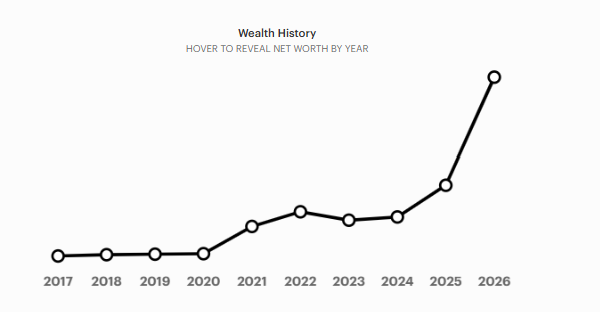
How Has Elon Musk’s Net Worth Changed Over Time?
Musk's wealth trajectory has historically been a highly volatile fourteen-year sequence characterized by massive valuation surges followed by sharp drawdowns.
- 2012–2020: First appearing on the Forbes list in 2012 with $2.0 billion, Musk's fortune grew to $27 billion by early 2020, driven by the initial Model 3 manufacturing scale.
- 2021: Driven by a surge in Tesla ownership, Hertz order momentum, and S&P 500 inclusion, his net worth jumped to $285 billion, surpassing Jeff Bezos to claim the global #1 spot.
- 2022–2023: A correction phase triggered by Twitter acquisition costs and a broader tech sector pullback knocked his net worth down to $180 billion, briefly losing the top spot to Bernard Arnault.
- 2024–2025: Musk's net worth surged past $400 billion in late 2024 post-election, but suffered a massive $126 billion drawdown between December 2024 and March 2025 due to political backlash and core equity fluctuations, briefly allowing Larry Ellison to pass him for less than a day. By late 2025, recovery of Tesla margins and xAI funding pushed him back to $216 billion.
- March 2026 ($839 Billion): Driven by heavy institutional pre-IPO demand for SpaceX and verified Starlink profitability, Musk's net worth climbed to the brink of trillionaire status.
- June 2026 ($1.4 Trillion): The blockbuster debut of SPCX on the Nasdaq adds over $274 billion in paper wealth in a single day, cementing his position as the world's first verified trillionaire.
Source: Forbes
What Are the Key Risks Affecting Elon Musk’s Net Worth?
- Institutional Valuation Disconnects: Despite market enthusiasm, institutional research groups have raised concerns over SpaceX's $2.1 trillion public valuation. Analysts at Morningstar calculated that SpaceX's fair value stands closer to $63 per share (a $780 billion valuation), warning of a major gap between speculative expectations and financials. SpaceX parent operations posted a net loss of $4.9 billion in 2025 and lost an additional $8.7 billion through early 2026, driven by massive capital expenditures on Starship and xAI hardware integration.
- Regulatory & Index Provider Backlash: The extreme "Elon Premium" values SPCX at a 92x price-to-sales multiple, prompting calls from US Senator Elizabeth Warren for the SEC to investigate governance risks. Under pressure from passive fund managers, the Nasdaq-100 and Russell 1000 fast-tracked SPCX into benchmarks within days of its IPO, forcing passive index funds to absorb roughly 43% of SpaceX's public float. Any future alterations to index inclusion criteria could remove this steady price floor.
- Tesla Deliveries & Robotics Timeline: If the mass adoption of the Optimus Gen 3 humanoid robot or steering-wheel-less Cybercab timelines stall, a continued decline in traditional EV sales could severely pressure Tesla's underlying stock price.
Conclusion
Elon Musk’s net worth in 2026 marks the dawn of the trillion-dollar "Sovereign Industrial" era. By bridging the gap between physical, state-subsidized aerospace assets and advanced artificial intelligence infrastructure, Musk has built an insulated wealth network capable of withstanding severe macroeconomic and crypto market corrections. For investors, tracking the "Muskonomy" is no longer about following a car company—it’s about observing the fusion of physical infrastructure and global liquidity.
Related Reading
- How the SpaceX IPO on June 12 Is Launching Elon Musk Past the Trillion-Dollar Net Worth Mark
- SpaceX (SPCX) Price Prediction 2026: $227 Street-High AI Fusion or Trillion-Dollar Valuation Bubble?
- SpaceX (SPCX) Price Prediction After IPO: The $2 Trillion Bull Case vs. The $75 Fundamental Floor
- SpaceX (SPXC) Post-IPO: Can the Company Hold a $2.5T Valuation at $230?
- What Is SpaceX Tokenized Stock (SPCXB) and How to Buy It?
- How Elon Musk Affects Bitcoin Price
- What Is Changpeng Zhao(CZ)’s Net Worth in 2026?
- Vitalik Buterin’s Net Worth in 2026: How Much Does the Ethereum Co-Founder Own?
- What Is Brian Armstrong’s Net Worth in 2026?
- Top Space Stocks to Buy Ahead of SpaceX IPO
FAQs on Elon Musk's Net Worth
1. What is Elon Musk’s net worth in 2026?
As of mid-2026, Elon Musk’s net worth is estimated at $1.4 trillion by Forbes and $1.27 trillion by the Bloomberg Billionaires Index, making him the world's first verified trillionaire.
2. When did Elon Musk become a trillionaire?
Musk officially crossed the trillion-dollar threshold on June 12, 2026, driven by the blockbuster public market debut of SpaceX (SPCX) on the Nasdaq.
3. How much of SpaceX does Elon Musk own after the IPO?
Musk remains the single largest shareholder in SpaceX, controlling approximately 38% of the outstanding equity and wielding 82% of the voting power via a special Class B dual-class share structure.
4. Does Musk's empire still hold cryptocurrency?
Yes. Through Tesla and SpaceX corporate treasuries, Musk’s companies control a combined total of 19,794 BTC valued at over $1.2 billion in mid-2026, alongside undisclosed allocations of Dogecoin.
