Crude Oil is one of the world’s most actively traded commodities, with prices driven by supply and demand, inventories, production decisions, and geopolitical events. Risks around major energy routes such as the Strait of Hormuz can also trigger sharp moves in crude prices because of its importance to global oil flows. With BingX CFD, traders can gain exposure to WTI crude and Brent crude without buying or storing physical oil or opening a separate commodities brokerage account.
BingX CFD brings oil markets into the BingX ecosystem through a dedicated account powered by the MetaTrader 5 (MT5) engine. This guide explains how oil CFDs work, how events such as OPEC+ decisions and Strait of Hormuz disruptions can affect prices, how CFDs compare with perpetual futures, what trading costs to expect, how leverage affects returns and risk, and how to place your first trade.
Key Takeaways About BingX Crude Oil CFDs
- Trade oil prices without owning the physical commodity: BingX CFDs let traders gain exposure to WTI crude and Brent crude through leveraged contracts.
- Trade directly through BingX TradFi: Oil CFDs run on the MT5 engine, but orders can be placed directly in the BingX App or on the web without downloading MT5.
- Fund the CFD account with USDT: USDT transferred into the dedicated CFD account appears as USDx at a 1:1 ratio and is used as trading margin.
- Oil CFDs differ from perpetual futures: CFDs use overnight swap fees and follow traditional commodity market sessions, while perpetual futures generally use funding payments and offer broader trading-hour access.
- Leverage amplifies oil-market volatility: Crude prices can react sharply to inventories, OPEC+ decisions, sanctions, and geopolitical risks around key shipping routes such as the Strait of Hormuz, making position sizing and risk controls especially important.
What Are Crude Oil CFDs?
An oil CFD lets traders speculate on the price movement of an energy instrument without buying the underlying commodity. Traders can go long if they expect prices to rise or short if they expect them to fall, making oil CFDs a simple way to trade energy market direction rather than holding physical barrels or gas.
On BingX, oil CFDs sit within a broader commodities category that covers energy benchmarks alongside metals and agricultural products, giving traders access to different market exposures from one CFD account.
|
Instrument |
Symbol |
What it tracks |
|
WTI Crude Oil |
USOUSD |
West Texas Intermediate, the US crude oil benchmark |
|
Brent Crude Oil |
UKOUSD |
Brent, the international crude oil benchmark |
|
Natural Gas |
NG-C |
Natural gas, a widely traded energy commodity |
|
Gasoline |
GAS-C |
Gasoline, a refined fuel product |
|
Low Sulphur Gasoil |
GASOIL-C |
Gasoil, a distillate fuel benchmark |
BingX also lists other commodity instruments within the same category, including copper, cotton, sugar, coffee, soybean, and wheat. Because each instrument follows different market hours and demand cycles, liquidity and volatility can vary by session, so traders should check the trading schedule before opening a position.
Why Trade Crude Oil with CFDs?
Crude oil can move sharply in either direction when supply expectations change. In 2026, the Strait of Hormuz provided a clear example. The waterway normally handles roughly one-fifth of global oil supply, so disruptions following the U.S.-Israel-Iran conflict produced an unusually large geopolitical risk premium.
Two periods illustrate the scale of those moves:
- Week ending March 6: WTI surged 35.63% and Brent gained about 27% as the conflict disrupted flows through the Strait of Hormuz.
- August 3: WTI fell 5.1% and Brent dropped 7.0% in one session as hopes for a U.S.-Iran agreement raised expectations that Gulf oil flows could improve.
CFDs allow traders to go long when they expect oil prices to rise and short when they expect prices to fall. The examples below show how the same market moves could theoretically affect margin at 2x and 5x leverage.
Read More: Crude Oil Price Forecast 2026: $140 War Premium or $60 Surplus Baseline?
|
Period and Position |
Oil Benchmark |
Market Move |
Example at 2x Leverage |
Example at 5x Leverage |
|
Mar. 2 to Mar. 6, Long |
WTI |
35.63% |
71.26% |
178.15% |
|
Mar. 2 to Mar. 6, Long |
Brent |
27.00% |
54.00% |
135.00% |
|
Aug. 3, Short |
WTI |
-5.10% |
10.20% |
25.50% |
|
Aug. 3, Short |
Brent |
-7.00% |
14.00% |
35.00% |
These examples highlight the two-way nature of oil CFD trading. A supply shock around the Strait of Hormuz can create opportunities for long positions, while easing geopolitical risk can produce sharp reversals that traders may seek to capture with short positions.
Reminder: These figures are simplified illustrations, not actual or expected CFD returns. They assume the entire market move was captured and exclude spreads, commissions, swap fees, slippage, margin changes, and liquidation effects. At higher leverage, a much smaller adverse move may substantially reduce margin or liquidate a position before the full period is completed.
How Do Crude Oil CFDs Work on BingX?
BingX crude oil CFDs let traders go long or short on instruments such as WTI and Brent through a dedicated CFD account powered by the MT5 engine. Trades can be placed directly in the BingX App or on the web, while MT5 remains optional for advanced charting and automated strategies.
Users fund the CFD account with USDT, which appears as USDx at a 1:1 ratio and is used as margin. Profit or loss is based on the difference between the opening and closing price:
Order P&L = (Closing price − Opening price) × Contract quantity × Contract multiplier
Because crude oil CFDs use leverage, traders can control a larger position with less margin, but losses are also amplified. If the account margin ratio falls too low, positions may be liquidated, making position sizing and stop-loss settings important.
Read More: What Is BingX CFD and How to Trade CFD on BingX? A Beginner's Guide (2026)
Oil CFDs vs. Oil Perpetual Futures: What Is the Difference?
Oil CFDs and oil perpetual futures both let traders take leveraged long or short positions on crude oil prices, but they differ in trading hours, fees, order sizing, and liquidation rules.
|
Feature |
Oil CFD |
Oil Perpetual Futures |
|
Interface |
BingX App, web, or optional MT5 |
BingX native contract interface |
|
Holding cost |
Overnight swap fee |
Funding payments |
|
Trading hours |
Follows underlying market hours |
Generally available 24/7 |
|
Liquidation basis |
Margin ratio and Bid/Ask prices |
Mark price |
|
Order sizing |
Standard lot sizes |
Contract-based sizing |
Oil CFDs may suit traders who prefer traditional commodity market sessions, MT5 tools, and lot-based trading. Oil perpetual futures may feel more familiar to crypto traders who prefer the BingX futures interface and around-the-clock access. Which is more cost-efficient depends on the instrument, trade direction, and holding period.
What Does It Cost to Trade Oil CFDs on BingX?
BingX oil CFD trading costs come from three main sources: the spread, commission, and overnight swap fees. Traders can choose between two fee modes depending on how often they trade and whether they prefer simpler pricing or tighter spreads.
- Zero-fee mode is the default option. Trading costs are included in the buy-sell spread, so there is no separate commission. This simpler structure is generally more suitable for beginners and traders who do not need the tightest available pricing. In this mode, symbols carry a .s suffix.
- Ultra-low-spread mode provides tighter spreads with a separate fixed commission per lot. It requires an application and becomes available after the CFD account meets the required asset threshold. This mode is better suited to active traders, larger orders, and automated strategies.
Both modes may also charge or credit a swap fee when a position remains open past the daily MT5 settlement time. Swap rates vary by instrument and position direction and can accumulate over longer holding periods, which is worth noting for energy positions held across several days. Because oil CFDs follow the underlying market rather than trading continuously through weekends, gaps can also occur when a session reopens, particularly around inventory reports or geopolitical events.
How to Trade Oil CFDs on BingX: A Step-by-Step Guide
Trading oil CFDs on BingX takes a few main steps through the BingX App or website. The MT5 desktop terminal and WebTrader are optional for traders who want more advanced tools.
Step 1: Account setup and security
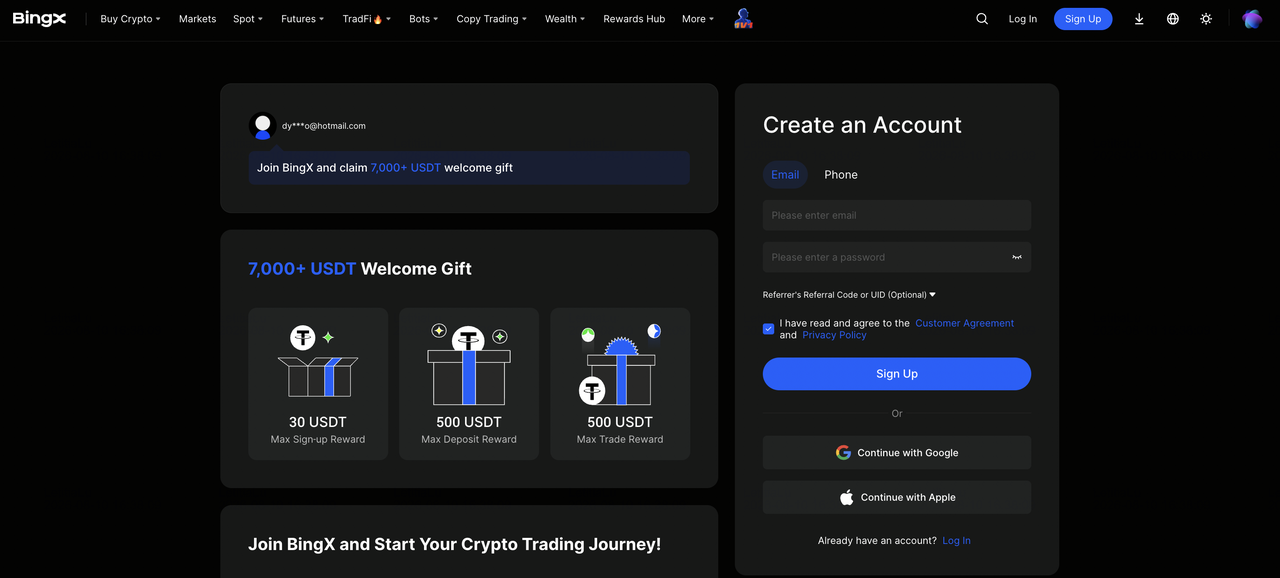
Sign up and log into your BingX account, complete the identity verification (KYC) required in your region, and enable two-factor authentication.
Step 2: Open the CFD trading page
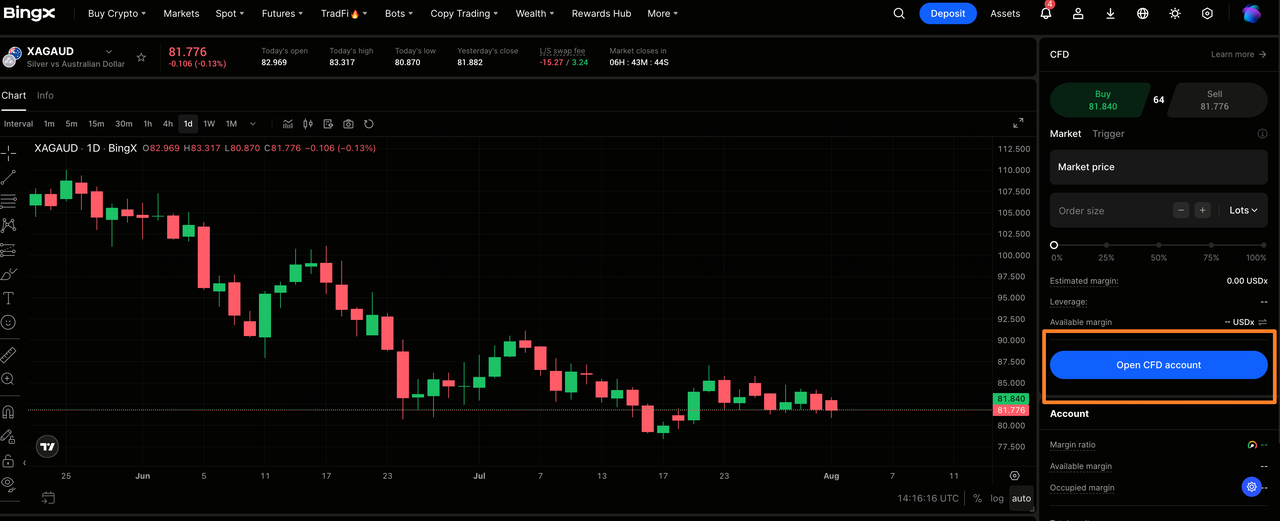
Go to TradFi > CFD from the BingX navigation bar, then open the CFD trading page. If you have not used CFDs before, activate your dedicated CFD account before continuing. BingX will display your MT5 ID and server address, which you can save for future MT5 access.
Step 3: Fund your CFD account
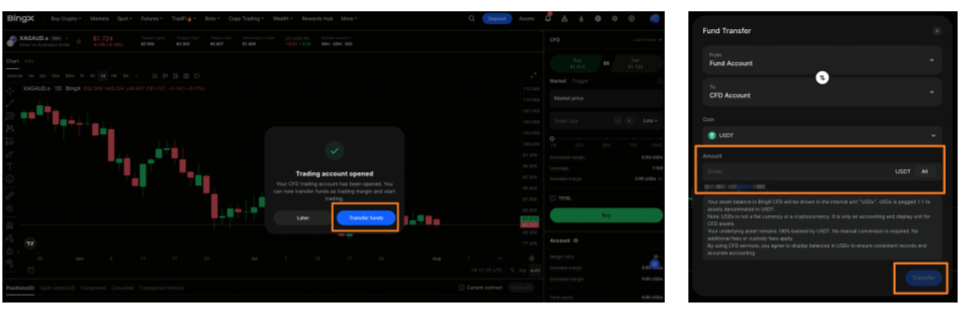
Select "Transfer" and move USDT from another BingX account into the CFD account. The funds are converted to USDx at a 1:1 ratio and used as margin for CFD positions.
Step 4: Find the energy instrument
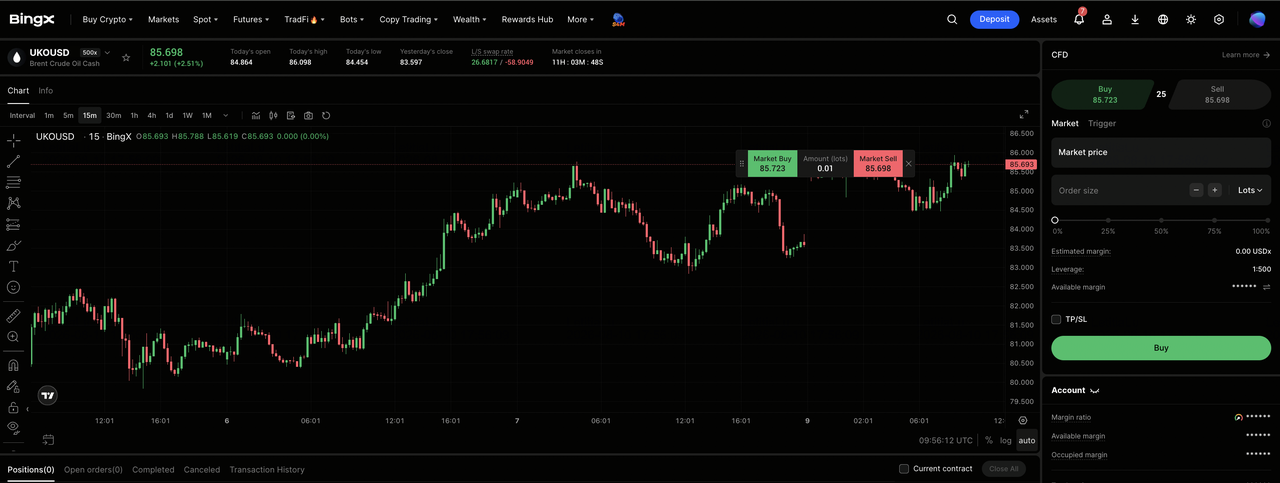
Open the "Commodities" category, or search directly for the symbol, such as USOUSD for WTI, or UKOUSD for Brent. Open the trading page to view the chart, current pricing, and order panel.
Step 5: Place your trade
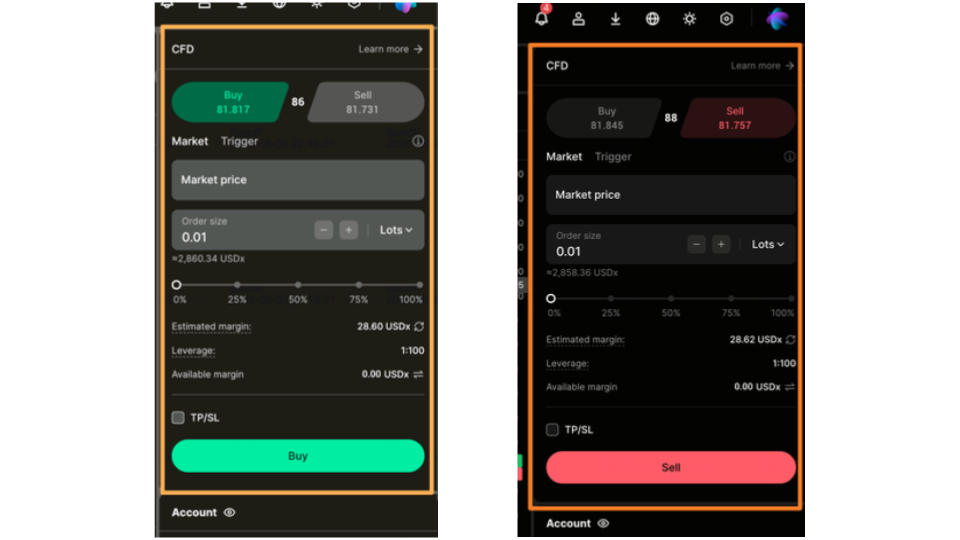
Choose a "Market Order" for immediate execution or a "Trigger Order" to enter at a specified price. Enter your position size in lots, then select "Buy" to go long or "Sell" to go short. Optionally set take-profit and stop-loss levels to manage risk.
Step 6: Manage and close the position
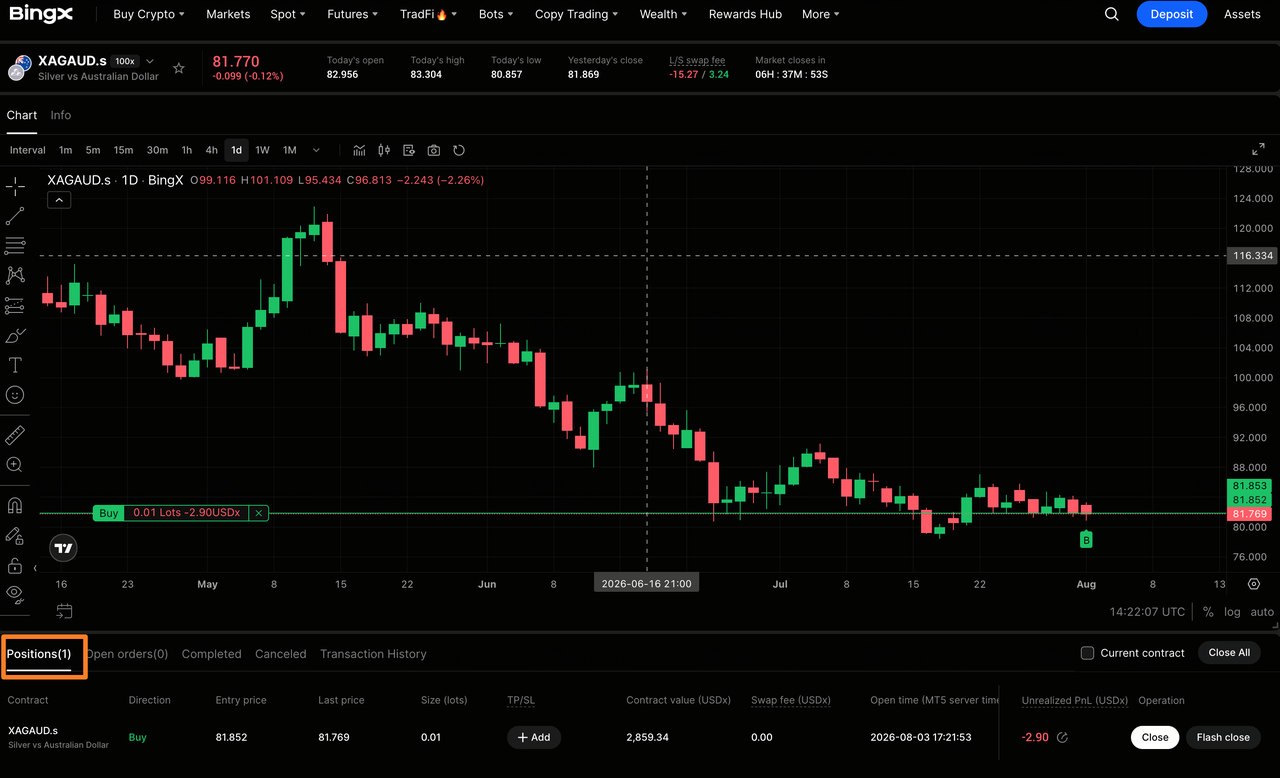
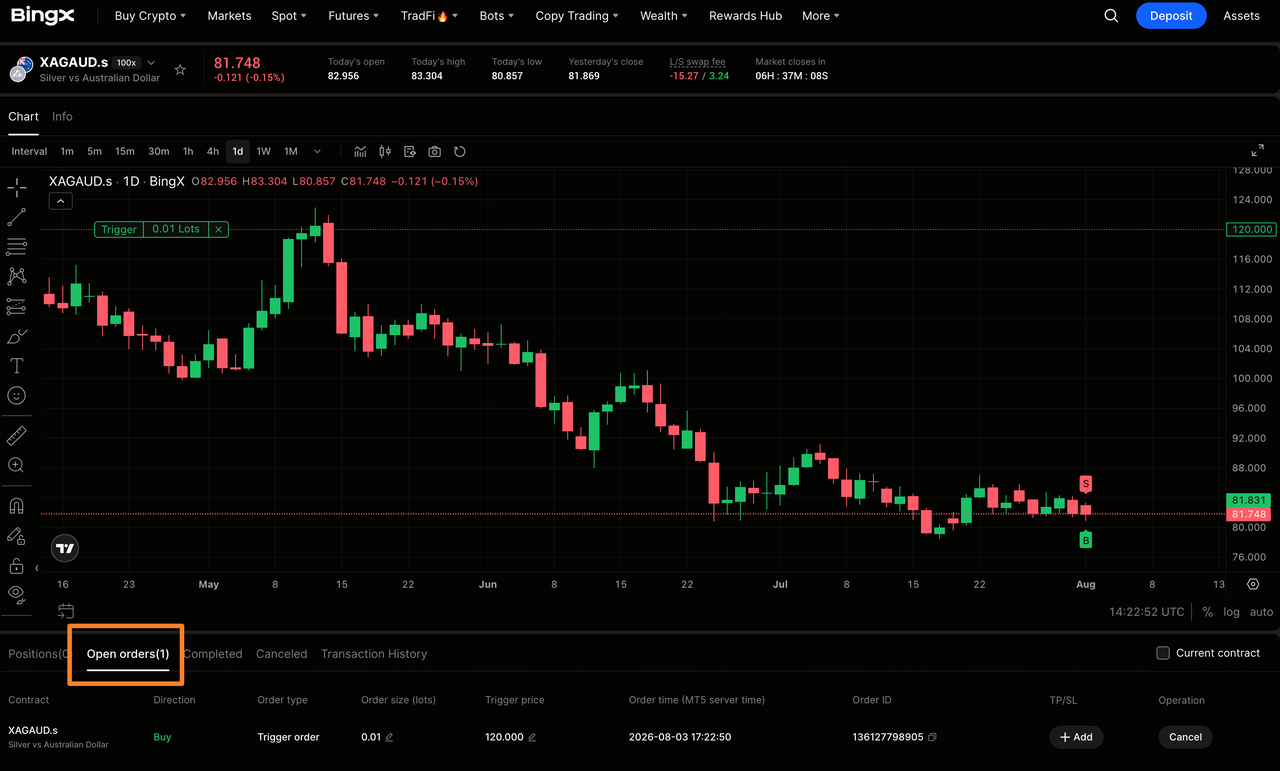
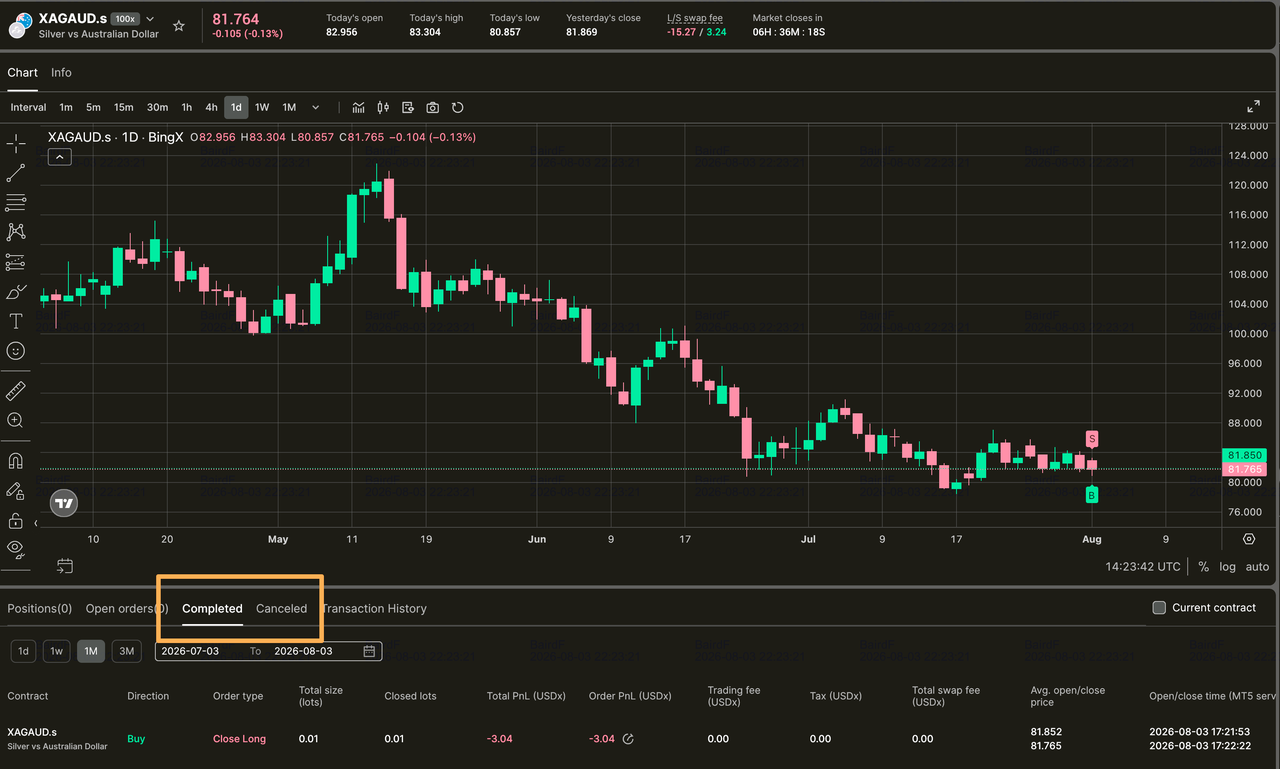
Monitor the trade under "Positions," including floating profit or loss and margin status. You can close the position manually or manage risk using take-profit, stop-loss, or trigger settings. Unfilled trigger orders appear under "Current Orders," while settled trades are available under "Completed Orders."
Top 5 Risks to Consider Before Trading Oil CFDs on BingX
Oil CFDs use leverage and follow traditional energy market conditions, so traders should understand the main risks before opening a position.
- Leverage can magnify losses: Even a small adverse price move can consume a large share of the deposited margin. Conservative position sizing and stop-loss orders are essential.
- Positions may be liquidated: If the account margin ratio falls below the required level, BingX may force-close positions using the Bid or Ask price. Keeping sufficient available margin can reduce this risk.
- Swap fees can accumulate: Positions held past the daily settlement time may incur overnight swap fees, which can materially reduce returns on trades held for several days.
- Markets can gap around events: Energy prices are event-driven and can move sharply on inventory reports, production decisions, and geopolitical news. Instruments may also pause on weekends, holidays, or during maintenance, so positions may not be adjustable during those periods.
- Availability varies by region: BingX CFDs are limited to eligible users in supported jurisdictions, and access or product rules may change based on local regulations.
Final Thoughts: Trading Oil Markets with BingX CFD
Oil CFDs offer a flexible way to trade price movements in major crude benchmarks such as WTI and Brent with leverage, without buying or storing physical oil. BingX CFD combines this exposure with MT5-powered tools, long and short trading, and access through a dedicated CFD account.
Because leverage magnifies both gains and losses, traders should understand the fees, margin requirements, trading hours, and liquidation risks before opening a position. Oil CFDs can be useful for directional trading and broader crude oil exposure, but careful position sizing and risk management remain essential.
Reminder: This article is for informational purposes only and does not constitute investment advice. CFDs are leveraged products that carry a high risk of loss, and you may lose your entire margin. Trade only after fully understanding the risks.
Related Reading
- What Is BingX CFD and How to Trade CFD on BingX? A Beginner's Guide (2026)
- Gold CFDs vs. Gold Futures vs. Tokenized Gold (XAUT): Key Differences and Which Should You Choose?
- How to Trade Commodities With Crypto in 2026 as Oil, Gold, Silver, and TradFi Go On-Chain
- How to Trade Index CFDs on BingX: S&P 500, Nasdaq 100, Nikkei 225, and More (2026)
FAQs About Trading Oil CFDs on BingX
1. Which crude oil instruments can I trade with BingX CFD?
BingX offers crude oil CFDs including WTI crude oil (USOUSD) and Brent crude oil (UKOUSD). Available instruments may change, so traders should check the CFD trading page for the latest list.
2. Do I need to download MT5 to trade oil CFDs?
No. Oil CFDs can be traded directly through the BingX App or website. MT5 is optional for traders who want advanced charting, technical indicators, or automated strategies.
3. Can I short oil with BingX CFD?
Yes. Oil CFDs support both long and short positions. Traders can select Buy when they expect crude prices to rise or Sell when they expect prices to fall.
4. Why do oil CFDs pause outside market hours?
Oil CFDs follow the trading sessions of their underlying markets rather than operating continuously. Prices may gap when markets reopen, particularly after geopolitical events, inventory data, or other major developments.
5. What leverage does BingX offer for oil CFDs?
Available leverage varies by instrument and platform rules. Traders should check the contract specifications for WTI or Brent before opening a position.
6. What fees apply to BingX oil CFDs?
Trading costs can include spreads, commissions, and overnight swap fees. The exact cost depends on the pricing mode, instrument, position direction, and holding period.
7. Where are BingX oil CFDs available?
BingX CFDs are available only to eligible users in supported regions. Availability and product rules may vary by jurisdiction, so users should check the CFD trading page or BingX support information for current requirements.
